The Integrated City: Local Cultural Policy and Sustainable Integrated Urban Development

John Martin Room, New Engineering Building Upper Campus, University of Cape Town, Cape Town, South Africa

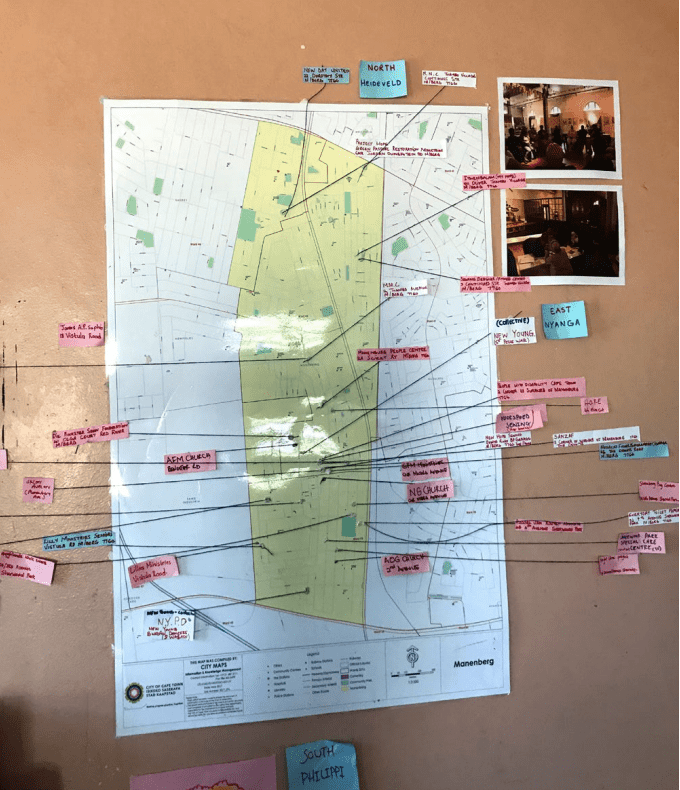
This seminar at UCT's African Centre for Cities looks to continue a set of dialogues around cultural governance and sustainable urban development in South Africa. It brings two processes together:  The Local Cultural Policy Agenda: South African cities are potential spaces for dynamic change as a result of being the nexus for flows of people and ideas. Culture is increasingly seen as significant in urban transformation.  A long-term approach to exploring innovative urban governance frameworks that forward the use of culture has been proposed as a research agenda. These speak to new national frameworks around integrated urban development as well as revisions to the Arts and Culture White paper. Integrating the Dual City:  The African Centre for Cities recent Integration and Ideas Festival continue a interest in the role of culture for sustainable development, putting forward a number of innovative provocations to address the dual city.  These included a strong focus on issues related to culture (memory, storytelling and identity), placemaking (densified, dynamic neighborhoods) and relationality (including through mobility, solidarity networks, "hubs", and the digital space). The seminar objectives Further a dialogue between researchers working in civil society and government concerned with the culture and its role in  urban transformation. To test the viability of a specific provocation - the UCLG Agenda 21 for Culture - Culture Actions: a framework for  governance that furthers the use of culture for sustainable development in cities -  against provocations at the recent  festival, and including engaging with practitioners. To identify possible future paths of inquiry and collaboration amongst researchers based in Cape Town with those elsewhere in South Africa. WHEN: 17 August 2018 TIME: 8.30 for 9:00-15:00 VENUE: John Martin Room, New Engineering Building, UCT RSVP: Places are limited. Please send an RSVP email with any dietary requirements to africancentreforcities.rsvp@gmail.com   PROGROGRAMME 8:30-9:00 Registration and coffee 9:00-9:30   Welcome, Introduction and Viewing of Exhibition Introduction.  Providing the input on Local Cultural Policy Agenda, responding to Integration ideas Festival and introducing the UCLG Agenda 21 for Culture Actions. Speaker: Zayd Minty 9:30-10:30 Cultural Narratives - Heritage, Creativity, Urban Change Working with memory and notions of heritage, building on local creativity, provide a powerful way to build meaning for citizens and so build sense of purpose. Why is this important for cities and what can we do about it? Presenters: Naomi Roux (UCT) and Valmont Layne (UWC) Respondent: Deirdre Prins-Solani (Education, Culture and Heritage Specialist) 10:30-11:00 Tea 11:00-12:00  Place Making and the potential of Socially Engaged Public Practise There is a growing need for thinking about denser, more livable spaces that are also more resonant and meaningful through socially engaged public art/practices.  How can local government make this happen? Presenters:  Rike Sitas (UCT) and Anna Selmeczi (UCT) Respondent: Brenda Skelenge (Lukhanyo Hub) 12:00-13:00  Cultural Mapping and Planning The CoCT's Cultural Mapping and Planning initiative provides an opportunity for communities to revalue their tangible and intangible assets and begin dialogues for community change.  How is this relevant for cities? Presenters: Vaughn Sadie (UCT/DUT) and Laura Nkula-Wenz (UCT) Respondent: TBC 13:00-14:00 Lunch 14:00-15:00  Closing discussion  Way forward for research, policy and practice agendas and support network.  Led by Avril Joffe (Wits)  
International Transdisciplinarity Conference 2019

Unnamed Venue Gothenburg, Sweden

The International Transdisciplinary Conference 2019, co-organised by the University of Gothenburg and Mistra Urban Futures, takes place 10 to 13 September 2019 in Gothenburg, Sweden. Our societies are facing critical points in their development, where large challenges are becoming increasingly difficult to handle. Numerous conflicts and complexities are surfacing – to which we can see societies responding with fragmentation, intolerance and exclusion. One way to address such developments is through societal transformation processes that implicitly include a variety of interest groups, stakeholders and organisations. Transdisciplinary research is one approach that focuses specifically on co-producing and integrating knowledge and expertise from a variety of sources, including communities, research, cities and businesses. It is an approach that is driven by the need to create processes where values and transformations towards a more just and sustainable society are openly debated. The aim of this conference, Joining Forces for Change, is to bring together actors from different professional mandates, disciplines and sectors to engage and discuss practical examples and case studies that approach societal transformation through boundary breaking collaboration. The conference invites practitioners and researchers from government and administrative organisations and agencies, interest groups from community and business, and researchers and students from across the university. The overall focus is on what we can learn from our collaborative experiences, case studies and practices regarding wider societal transformation, methodological innovations and theoretical development. We will specifically search for “sites for change” in terms of spaces, practices and learnings where TD research and co-production play a crucial role. The conference programme will be structure around three streams: Societal transformation What experiences in initiating and fostering transformation processes do we have and what can we learn from them? How can different theories of change contribute to sustainable transformations? What forms of organising are needed for our institutions, agencies, companies and universities to handle the necessary transformations, with particular reference to collaboration between different types of stakeholders? What skills and competences are needed by civil servants, researchers and students to co-design and lead processes that target sustainable outcomes? Methodological innovation What does individual and organisational learning in change processes – working on, challenging and transgressing borders – look like? How can universities promote collaborative learning? How can different types of transdisciplinary pedagogies, research methods and processes of co-production be developed to more effectively contribute to societal transformations? Theoretical development How can we imagine and conceptualise a sustainable and inclusive knowledge economy? What are the core challenges in transdisciplinary research regarding ontological and epistemological issues – what worldviews and paradigms are challenged and what kind of knowledge is included and produced? How does TD research engage with systems thinking, scenario planning, design thinking and other holistic theories and practices? Call for contributions Contributions from all fields and research cultures are invited, particularly submissions from practitioners and from transdisciplinary teams. Important dates: Deadline for abstract submission: extended to 31 March 2019 Notice of acceptance: mid-May 2019 For more information go to the conference website.

Realising Just Cities conference week

Unnamed Venue Sheffield , United Kingdom

The 4th Annual Realising Just Cities Conference takes place in Sheffield, UK from 13-18 October 2019. The conference focuses on lessons, impacts and outcomes since the start of Mistra Urban Futures (MUF) in 2010 but with particular emphasis on the current 2016-19 phase of closer international collaborative and comparative research now ending. MUF has sought to co-produce knowledge and action to support sustainable urban development across cities in the Global North and South, working through Local Interaction Platforms and other forms of partnership that bring together researchers from different stakeholders in transdisciplinary teams. The conference is hosted by the Sheffield-Manchester Local Interaction Platform and will include representatives from partner cities in Buenos Aires, Cape Town, Gothenburg, Kisumu, Malmö, Shimla, and Stockholm. The Week at a Glance Sunday 13th October, 1830-2030, Welcome Drinks and Reception, Sheffield Winter Gardens. Detailed Programme.  Monday 14th October, 0900-1700, Comparative Project Work, Lunch and Sheffield Walking Tours. Detailed Programme.  Tuesday 15th October, 0815-1800, Open Conference with parallel sessions, Lunch and Conference Dinner. Detailed Programme.  Wednesday 16th October, 0730-2100, Coaches to Manchester field trips and workshops with Lunch and Networking Dinner in Manchester and coaches back to Sheffield. Detailed Programme.  Thursday 17th October, 0900-1700, Board meeting, Some comparative project workshops, Keynote lecture and Lunch. Detailed Programme.  Friday 18th October, 0900-1200, LIP-directors meeting, Some comparative project workshops. Detailed Programme.  This page is only intended for Mistra Urban Futures delegates already associated with our city teams and who have been invited. Not a Mistra Urban Futures delegate? Head over to our Open Conference page, where you can find more information about how you can participate.

Cities of integrity – innovative approaches to tackling corruption and cultivating a culture of integrity, trust and openness in urban development

Hall 2, Room 1 Abu Dhabi , United Arab Emirates

Cities of Integrity project hosts a panel discussion at the World Urban Forum in Abu Dhabi, on Sunday, 9 February 2020 from 14:00 to 16:00. Urban innovation flows from multiple actors securely, independently seeking opportunities for improvement of their livelihoods, their homes and their social fabric. Urban development that is underpinned by a culture of integrity, transparency and accountability is an essential condition minimising the risks that would otherwise block this innovation and investment. You may plan and wish for a prosperous, inclusive, equitable, resilient or sustainable city but if norms of integrity and openness are corroded by corruption none of these aspirations can be achieved. Our event will provide a platform to raise our shared understanding of the urban corruption risks at hand. We will discuss the latest facts and figures related to the major integrity challenges in urban development, their scale, scope and development over time in the cities of both the global north and south. At least equally important we will take this empirical overview as a point of departure to embark on a joint exploration of the innovative tools and approaches available to build and nurture strong cultures of integrity at the city scale. By weaving together insights and perspectives from urban planners, architects and urban policy-makers on the one side and experts and practitioners on transparency, integrity and governance we will launch an inspirational, interactive conversation around the many practical tools and innovative levers that can be activated to architect and nurture such cultures of urban integrity. Questions to explore with the audience include: what are the major ”integrity vulnerabilities” in urban development? What strategies to promote urban cultures of integrity have been found to be effective so far? What roles can the professional community of urban planners and architects play in addressing these integrity risks? What is a realistic contribution that new technologies can make beyond the hype that surrounds them? What responsibility falls to the private sector and what practical action is already coming from the business side? How can the creativity of urban place-making be harnessed? We will seek to explore these questions not just through a set of inspirational panel presentations but also by tapping into the expertise and creativity of the audience through interactive conversation formats. The aim is to provoke new thinking around these issues and plant the seeds for much needed new partnerships around urban integrity issues that harness the expertise and commitment of a diverse set of urban stakeholders. MODERATOR Adi Kumar – Development Action Group, South Africa PANELISTS Gilbert Siame – Centre for Urban Research and Planning, University of Zambia Jennifer Bretana – Hivos, Philippines Dieter Zinnbauer – African Center for Cities, South Africa and Copenhagen Business School, Denmark Alex Warnock-Smith – Central Saint Martins, United Kingdom WHEN: Sunday, 9 February 2020 TIME: 14:00 to 16:00 VENUE: Hall 2, Room 1, Abu Dhabi, UAE