New Urban Worlds at Open Book Festival

D6 Homecoming Centre Workshop 15 A Buitenkant Street, .Cape Town, South Africa

Ken Liu and Edgar Pieterse speak to Mark Swilling about cities of the future. Date: 8 September Venue: HCC Workshop Time: 16.00 - 17.00 Price: R45 Read more about New Urban Worlds: Inhabiting Dissonant Times by Edgar Pieterse and Abdoumaliq Simone. Full festival programme Book tickets NOTE: A limited number of free tickets for students are available for each event of the programme. Tickets are available on a first-come, first-served basis. To apply, email openbooktickets@gmail.com by 31 August.

R45

ACC at the Open Book Festival 2018

African Centre for Cities (ACC) teams up with The Book Lounge to present five urban-focussed events at the forthcoming 2018 Open Book Festival, which takes place from 5 to 9 September, Cape Town. The five events draws on the ACC community to engage and interrogate a series of topics ranging from inclusive urban development and issues of mobility to urban activism and blackness in the city.   5 September 2018 12.00 - 13.00 Fugard Studio, Corner Caledon & Lower Buitenkant Street, Cape Town Kigali to Cape Town: Tomá Berlanda and Rick de Satge speak to Philippa Tumubweinee about inclusive urban development. 6 September 2018 10.00 - 11.00 A4 Arts Foundation - Ground, 23 Buitenkant Street, Cape Town Mobility and the City:  Phumeza Mlungwana for UniteBehind and Cllr Brett Herron, City of Cape Town join David Schmidt in conversation with Pippa Green about getting from A - B. 12.00 - 13.00 A4 Arts Foundation - Ground, 23 Buitenkant Street, Cape Town Activist Cities: Richard Dyantyi, Axolile Notywala and Ichumile Gqada speak to Ella Scheepers about militant urbanism. 14.00 - 15.00 A4 Arts Foundation - Ground, 23 Buitenkant Street, Cape Town Integration Syndicate Provocations: Tracy Jooste, Nishendra Moodley and Kate Philip speak to Andrew Gasnolar about the findings of the Integration Syndicate over the past year. 7 September 10.00 - 11.00 Homecoming Centre Workshop, 15A Buitenkant Street, Cape Town Urbanity, Blackness & Mobilities: Mpho Matsipa and Sammy Baloji speak to Mokena Makeka.   For the full festival programme click here. To purchase tickets for these events go here.  

Hacking the Future – New ideas for an urban era

The Old Granary Cnr of Longmarket Street and Harrington Street, Cape Town , South Africa

ACC and Cityscapes Collective presents experts from the worlds of architecture, public health, education, culture and technology to discuss the key ideas driving their work in a series of provocations moderated by award-winning filmmaker, community organiser and urbanist Michael Uwemedimo of CMAP.

Beyond our borders: Independent art spaces as a lens on city futures

Desmond & Leah Tutu Legacy Foundation, The Old Granary Building Buitenkant Street, Cape Town, Cape Town , South Africa

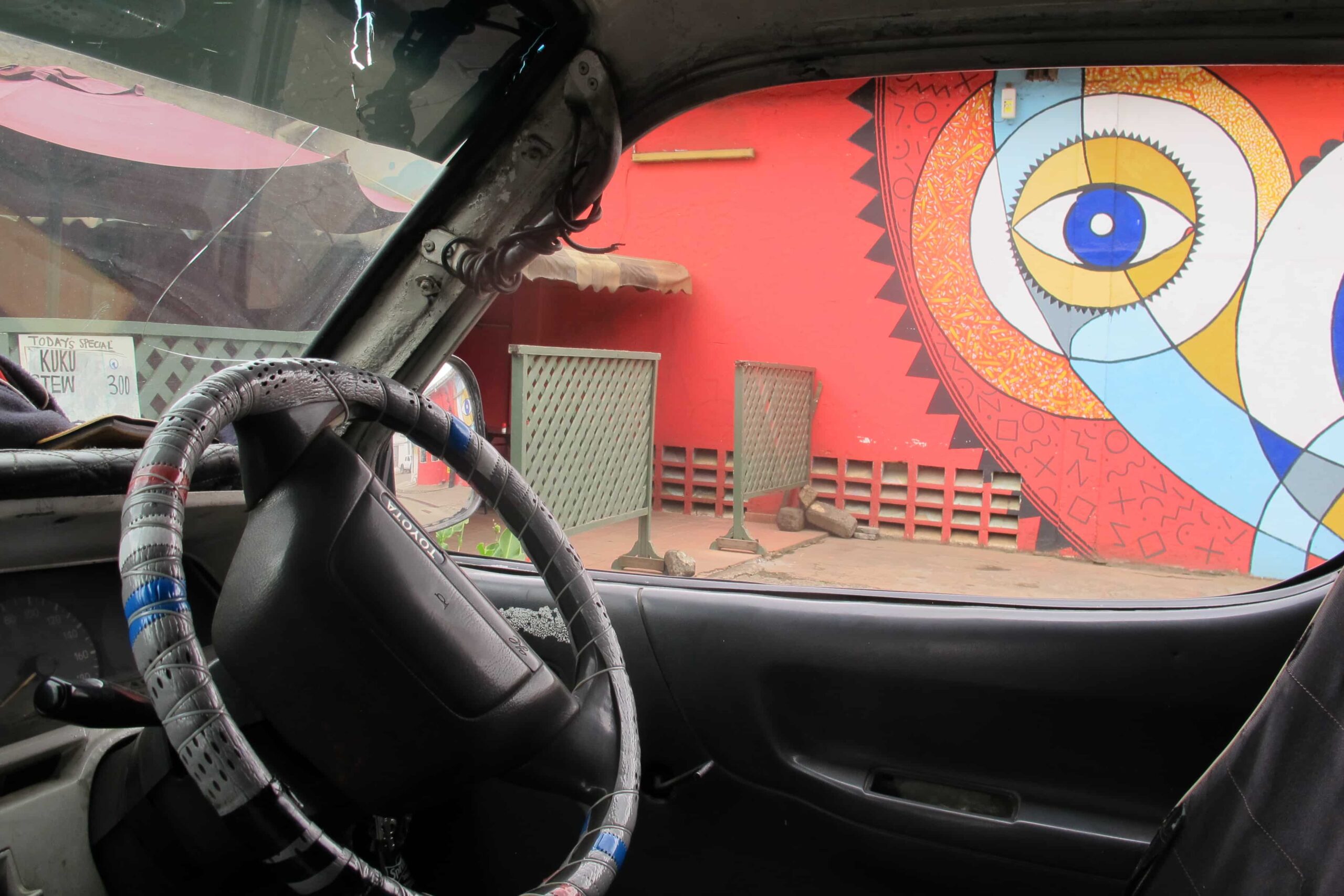
Four leading shapers of the contemporary art world from cutting-edge independent spaces on the African continent will next week share their insights and experience in a public panel hosted in central Cape Town. The panellists, who respectively manage or help direct programming for multidisciplinary contemporary art spaces in Addis Ababa, Cairo, Dar es Salaam and Nairobi respectively, will speak about the work they do and the broader value it has. Their contributions come at a time of growing global interest in contemporary art from Africa and burgeoning private museums and foundations but also increasing sustainability challenges for non-profits. The panel simultaneously coincides with a national crisis in South Africa around xenophobic attacks and gender-based violence, which gives extra resonance to hearing the compelling voices of four women from beyond our borders. The discussion panel, on Thursday 26 September at 18:00, is organised by University of Cape Town’s African Centre for Cities (ACC), which hosts a research project on the topic, called Platform. The panellists comprise the project’s key participants, whom ACC has brought to Cape Town for a two-day workshop to inform final outcomes. Prof Achille Mbembe from Wits Institute of Social and Economic Research, a well known theorist and philosopher, will chair the discussion. Prof Edgar Pieterse, the Director of the ACC, said that despite limited resources, artists are sustaining vital institutions in their cities to ensure that there are spaces for engagement with urban dynamics from an artistic perspective. This greatly enriches and extends the quality of the public sphere, pointing to novel questions and insights. “ACC believes that it is impossible to foster a rounded understanding of contemporary urbanism in Africa without engaging the perspectives and practices of African artists, especially those who operate within and through artist-led spaces dedicated to autonomy and expression.” By hosting the event, ACC was creating an opportunity to learn from the determined practices in key nodes in Africa, Pieterse added. “Political and policy discussions in South Africa often fail to appreciate the important role the arts play in giving expression to the unsayable and the unthinkable," says Pieterse Dr Kim Gurney, the researcher behind the project, identified and visited these participant spaces – plus one more in Accra, Ghana (ANO Institute) - at different times over the past year to come to grips with their working principles. They are all navigating conditions of flux in some of Africa’s fastest urbanising cities, she said. “Their emergent forms and strategies can help unlock new ways of thinking and doing with deep resonance for others in comparable places and spaces.” The discussion panel is hosted at the newly refurbished Desmond and Leah Tutu Legacy Foundation at the Old Granary Building on Buitenkant Street. The evening event is open to the public and free; all are welcome to attend. Light refreshments will be served.   The discussion panel comprises: Meskerem Assegued – Curator of numerous exhibitions both in Ethiopia and abroad and a cultural anthropologist. Together with artist Elias Sime, Meskerem co-founded and co-directs Zoma Museum (Addis Ababa), an environmentally conscious art institution recently relaunched; Rebecca Corey - The Director of Nafasi Art Space (Dar es Salaam), a creative hub and centre for contemporary visual and performing arts which provides a meeting point for intensive dialogue between artists and the public; Mariam Elnozahy - Curator, archivist, and writer based in Cairo, who focuses primarily on critical, community-based work and is Programme Manager at Townhouse Gallery (Cairo); Joy Mboya – Executive Director of The GoDown Arts Centre (Nairobi), a multidisciplinary national and regional focal point for artistic experimentation, cross-sector partnerships and creative collaboration; Edgar Pieterse  – Director of the African Centre for Cities and South African Research Chair in Urban Policy. WHEN: Thursday 26 September 2019 TIME: 17h30 for 18h00 start WHERE: Desmond & Leah Tutu Legacy Foundation, The Old Granary Building, Buitenkant Street, Cape Town – entrance on cnr Longmarket and Harrington streets Google map: https://goo.gl/maps/ukM81xiP7NwmyL7o9 IMAGE CREDIT: On the move at the GoDown Arts Centre, Nairobi. by Kim Gurney

MPhil Southern Urbanism – a celebration of the first cohort

Davies Reading Room Room 2.27, Environmental and Geographical Science, UCT, Cape Town, Western Cape, South Africa

Join us to celebrate and share the work of the first cohort of MPhil Southern Urbanism graduates, along with their first year colleagues. WHEN: Thursday, 7 November TIME: 14:00 to 17:00 with drinks and snacks afterwards VENUE: Davies Reading Room, EGS Building, UCT RSVP by Monday 4 November, to khaya.salman@uct.ac.za PROGRAMME Reflections on Thesis Work: 2nd Year Graduating MPhil Students Thesis research artefacts Fieldwork stories Arguments and contributions Finding a voice in urban studies Discussion Forthcoming Thesis Research: 1st Year Students Discussants: Anna Selmeczi – Mphil Southern Urbanisms Convenor Sophie Oldfield – Professor of Urban Studies Edgar Pieterse – Director ACC, Professor of Urban Policy

Global Agendas and Urban Equality: Exploring synthesis, connections and contestations

Studio 3 Environmental and Geographical Sciences Building, Upper Campus, UCT, Cape Town, South Africa

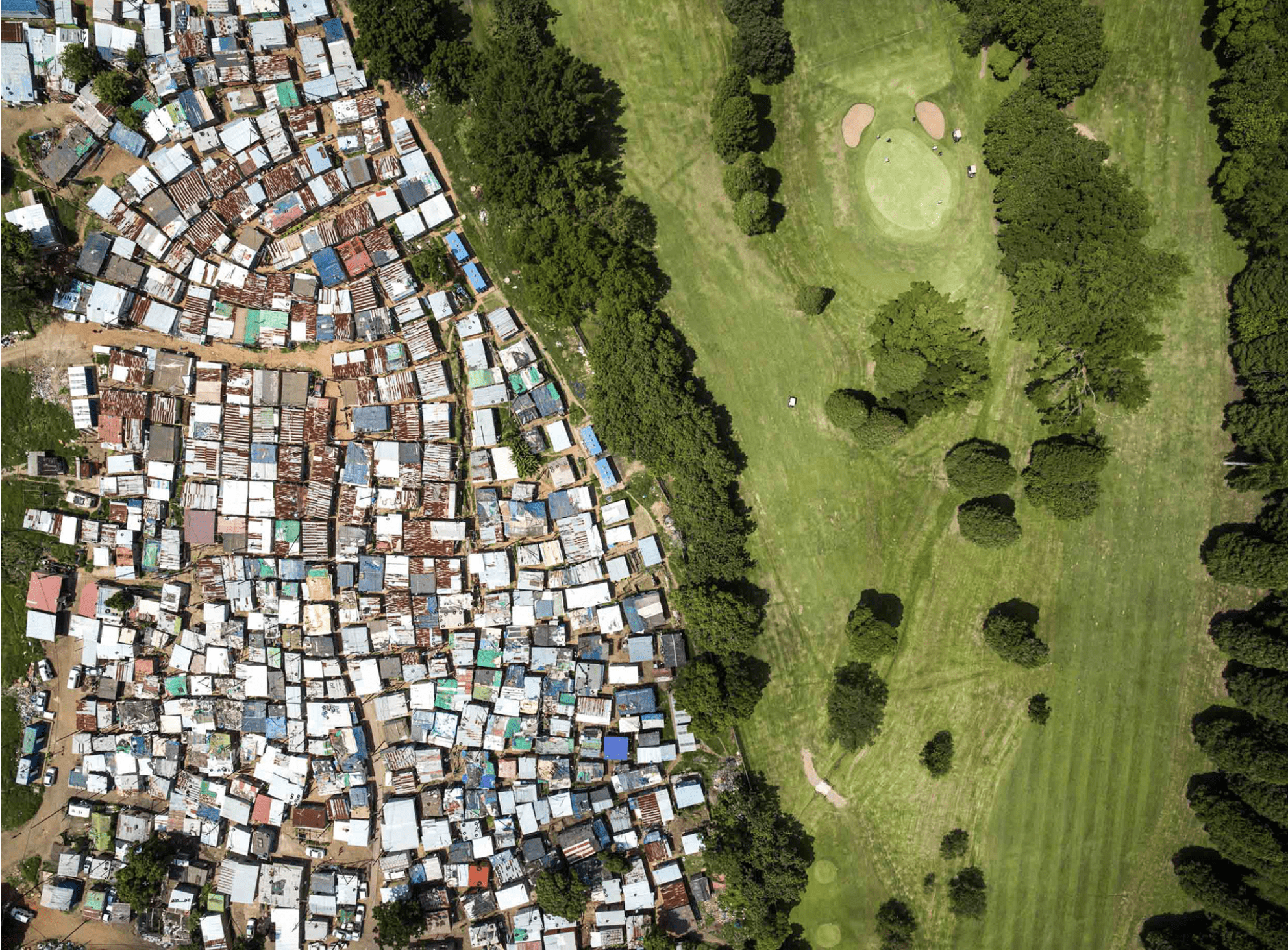
Join ACC on Friday, 8 November at 12:30 for a special seminar session entitled Global Agendas and Urban Equality: Exploring synthesis, connections and contestations. ACC Director Edgar Pieterse will be in conversation with Michele Acuto, Director of the Connected Cities Lab, The University of Melbourne, and Winnie Mitullah Director of Institute for Development Studies, University of Nairobi. The discussion will be chaired by Stephanie Butcher, a Postdoctoral Researcher with the Connected Cities Lab. While great strides have been made in recent years to help place the urban more firmly on international development agendas, questions remain as to how, and in what ways, global policy can be operationalised at an urban scale. Bringing together leading thinkers on urbanisation this moderated discussion will explore the scalar connections between global processes and policy agendas and their material, political and social impacts across urban environments in the global South. WHEN: Friday, 8 November TIME: 12:30 to 13:30 VENUE: Studio 3, Environmental and Geographical Science Building, Upper Campus, UCT   BIOGRAPHIES Professor Michele Acuto is an expert on urban politics and international urban planning. Michele is also a non-resident Senior Fellow of the Chicago Council on Global Affairs and a Senior Fellow of the Bosch Foundation Global Governance Futures Program. Before joining the Faculty, Michele was Director of the City Leadership Lab and Professor of Diplomacy and Urban Theory at University College London, having previously worked as Stephen Barter Fellow of the Oxford Programme for the Future of Cities at the University of Oxford. He also taught at the University of Canberra, University of Southern California, Australian National University and National University of Singapore. Outside academia, Michele worked for the Institute of European Affairs in Dublin, the International Campaign to Ban Landmines (ICBL), the Kimberley Process for conflict diamonds, the European Commission's response to pandemic threats. He also has worked for several years on city leadership and city networks with, amongst others, Arup, World Health Organization, World Bank Group, the C40 Climate Leadership Group, and UN-Habitat. Professor Winnie V. Mitullah is the current Director and Associate Research Professor of Development Studies at the Institute for Development Studies (IDS), and the Director Gender Affairs, University of Nairobi. She holds a PhD in Political Science and Public Administration from the University of York, UK. Her PhD thesis was on Urban Housing, with a major focus on policies relating to low income housing. Over the years, she has researched and consulted in the areas of governance, in particular in the area of provision and management of urban services and the role of stakeholders in development. Her focus in these areas has included an examination of policies, and institutional dynamics in relation to local level development, including that of devolved governments, Micro and Small Enterprises , public and Non Motorised Transport (NMT), gender, youth and media. Dr. Stephanie Butcher is a Postdoctoral Researcher with the Connected Cities lab. She is a part of the 'Knowledge in Action for Urban Equality' (KNOW) project, a global consortium which seeks to deliver transformative research and capacity in policy and planning that will promote and strengthen pathways to urban equality. Previous to this post, she worked with the Development Planning Unit (DPU) at the University College London as a Teaching Fellow, convening courses focused on the themes of participatory planning, urban inequality, and gender and diversity in the Global South. Her doctoral thesis was shaped by principles of action-research, and focused on the 'everyday politics' of water infrastructure for informal settlement residents in Kathmandu, Nepal.  It examined the micro-politics of how gender, tenure relations, and ethnicity shaped how diverse residents interacted with the socio-technical aspects of infrastructure, impacting a sense of citizenship.           IMAGE CREDIT: Unequal Scenes by Johnny Miller

Knowledge in Action for Urban Equality (KNOW): The challenges of translocal knowledge co-production

Davies Reading Room Room 2.27, Environmental and Geographical Science, UCT, Cape Town, Western Cape, South Africa

Join ACC as we host Caren Levy, Camila Cocina and Alex Frediani from KNOW on Friday, 15 November, 12:30 to 14:00, in the Davies Reading Room, Environmental and Geographical Sciences Building, Upper Campus, UCT. This talk, chaired by Vanessa Watson will introduce the KNOW programme, a 4-year research and capacity building programme funded by GCRF which works with 13 organisation across 12 cities in Africa, Asia and Latin America.  The talk will reflect on its partnerships, operational principles and the interface between research and practice.  It will draw on the KNOW work done so far as it approaches the end of its second year.  We hope that this session will open up an opportunity to exchange experiences of collaborative initiatives addressing urban equality. WHEN: Friday, 15 November 2019 TIME: 12:30 to 14:00 VENUE: Davies Reading Room, Environmental and Geographical Science Building, Upper Campus, UCT   BIOGRAPHIES Caren Levy is the Principal Investigator (PI) on the GCRF funded project, Knowledge in Action for Urban Equality (KNOW), and Professor of Transformative Urban Planning at The Bartlett Development Planning Unit, UCL. Her research focuses on community-led approaches to planning and governance of transport and infrastructure, housing and land in cities in the global South. Levy has a special interest in the institutionalisation of social justice in policy and planning, particularly related to the cross-cutting issues of gender, diversity, and environment. She has 35 years’ experience of teaching, research, training and consultancy, developing innovatory approaches to planning methodology, planning education and capacity-building. Her works engages with communities, governments and international organisations both in London and abroad in a range of countries in Africa, Asia, Latin America, and the Middle East. Camila Cocina is a Research Fellow in the working package 'Translating Research into Practice' for KNOW. We focus on investigating the challenges of knowledge translation processes at the global and local levels, and support city research partners to influence policy and planning practices. Cocina is an urbanist and architect with a PhD in Development Planning and MSc Building & Urban Design in Development, from The Bartlett Development Planning Unit, University College London. She's worked as a practitioner, researcher, and teacher in Chile and the UK, with experience of fieldwork and teaching in Latin America, Asia, Europe, and Africa. Her practice has focused primarily on urban development, housing policies, participatory urban design, urban informality, and housing reconstruction; and she's worked both in academic institutions as well as in independent NGOs. She has a special interest in linking research, advocacy, planning practices, and policies. Cocina's PhD research focused on the challenges faced by housing policies in reducing urban inequalities, in the Chilean context. Alex Frediani is a Senior Lecturer at The Bartlett Development Planning Unit. He also co-direct the MSc in Social Development Practice and direct the DPUs communications. In KNOW, he leadsWork Package 4, which focuses on translating research into practice to advance urban equality. His research interests include the application of Amartya Sen’s Capability Approach in development practice; participatory planning and design; as well as housing and informal settlement upgrading. Frediani has collaborated with academics and grassroots collectives in Brazil, Ecuador, Ghana, Nigeria, Sierra Leone, Kenya, and South Africa. Apart from research and action learning initiatives, he has provided consultancy for international development donors and agencies such as Oxfam, Comic Relief, Practical Action and UNDP. He is a founding and board member of the Sierra Leone Urban Research Centre (SLURC). He is also on the board of Habitat International Coalition and an associate of Architecture Sans Frontières–UK.  

Non-Motorised Transport Capabilities and Needs in Sub-Saharan African Cities

4th Floor Boardroom New Engineering Building, Cape Town , South Africa

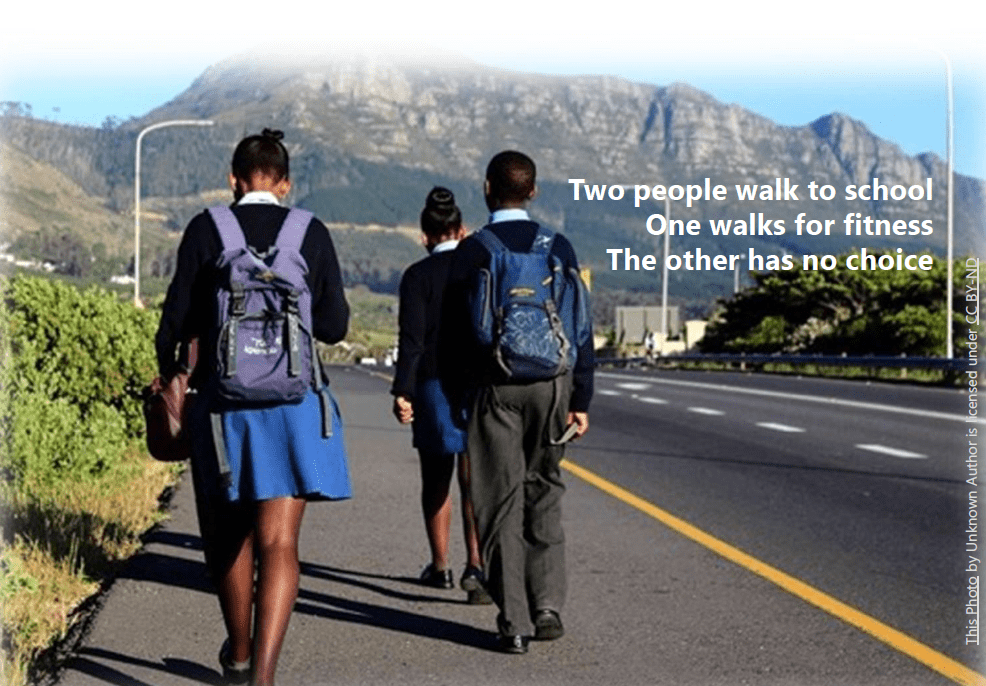
Join ACC's researcher Sean Cooke for an open discussion on non-motorised transport capabilities and needs in Sub-saharan African cities. The two-hour session will start with a presentation by Bianca Ryseck on the capabilities approach and its applications to mobility followed by an open discussion to further understanding NMT needs of vulnerable groups through their capabilities. WHEN: Thursday, 27 February 2020 TIME: 14:00 to 16:00 VENUE: 4th Floor Boardroom, New Engineering Building, Upper Campus, UCT RSVP: sean.cooke@uct.ac.za Refreshments will be served.  

MPhil Southern Urbanism Info Session

The MPhil Southern Urbanism programme is conceived of, and designed to cultivate a new generation of urban scholars rooted in the realities and theories of Southern cities. The programme as an intellectual project has its foundations in Urban Studies as a scholarly debate and as an interdisciplinary imperative situated in the complex realities of African and southern cities. Through a combination of guided learning in small-group seminars, experimentation in various spaces of urban practice and independent thesis research, the programme provides a truly unique opportunity to ground yourself in the realities, theories and practise of cities of the Global South. The programme seeks to build students' capacity to engage in epistemological debates, thinking from the vantage point of African and Southern cities, and versed in global urban debates. The core courses, namely Urban Theory, Urban Everyday and Curating Urban Regulation, are designed to impart these skills and knowledge. A cornerstone of the programme is the City Research Studio, a compulsory, year-long course that aims to cultivate methodological dexterity and the capacity for rigorous research through experimental and experiential learning. Finally the minor dissertation provides students with the opportunity to build confidence in writing, in articulating scholarly arguments, and in positioning oneself in the field effectively. Applications for the 2022 MPhil Southern Urbanism programme are open. If you are interested in applying but have some questions, join programme convenor Dr Anna Selmeczi for an info session. In the session she will give a brief overview of the programme and there will be plenty of time for your questions. WHEN | Monday, 14 June 2021TIME | 12:30-13:00 SASTREGISTER HERE

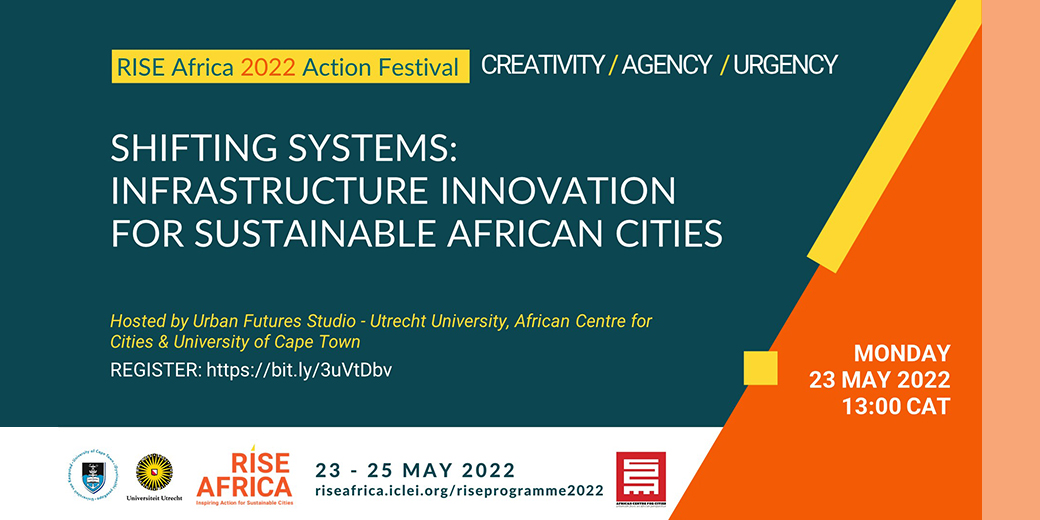
Shifting systems: infrastructure innovation for sustainable African cities

Africa’s cities are amongst the fastest growing in the world and present an unprecedented opportunity to leapfrog unsustainable urban development patterns observed elsewhere. This requires an ability to imagine the innovative possibilities for African cities, and ongoing learning by decision makers to break inertia. This is the first in a series of sessions at Rise Africa aimed at helping city decision makers to reimagine the future infrastructures of Africa’s cities, to bring more innovative and sustainable cities to life. Hosted by the African Centre for Cities and the Urban Futures Studio, this session will generate insights and spark discussion that will inform a new two-year project aimed at fostering learning around infrastructure innovation for sustainable African cities. WHEN | 23 MAY 2022 TIME | 13:00-14:45 (GMT+2) REGISTER HERE