Launch and discussion: The Art of Public Space

WiSER 6th Floor, Richard Ward Building, University of Witwatersrand, Johannesburg, Gauteng, South Africa

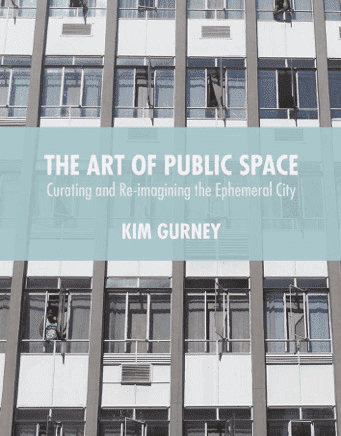
WiSER and the African Centre for Cities at the University of Cape Town invite you to a launch and discussion of The Art of Public Space: Curating and Re-imagining the Ephemeral City by Kim Gurney The Art of Public Space (Palgrave, 2015) takes as case study a trilogy of art interventions, New Imaginaries, which explored notions of public space in Johannesburg, and reflects upon its broader implications in a research partnership between African Centre for Cities and Goethe-Institut South Africa. "Kim Gurney's The Art of Public Space powerfully reiterates the ways in which urban actors do not inhabit worlds of preconceived social or subjective forms, but rather ever-shifting milieus where different ways of conceiving and enacting life intersect, and that artistic practice is a critical technology in re-imagining and reshaping these intersections. All technical practices conduct events, but artistic work is proving most salient in opening up urban contexts to events that anticipate and posit new ways of living together. Leveraging the multiplicity of performances that make up every day Johannesburg, the artistic projects offered here attempt to reconfigure what its residents already see and experience but in ways that push it somewhere else, which collate and intensify these perceptions and experiences into new common grounds." — AbdouMaliq Simone Respondents: Achille Mbembe (WiSER) with Molemo Moiloa (VANSA), Tanya Zack (urban researcher, writer & explorer) and Kim Gurney (UCT), chaired by Edgar Pieterse (UCT).

MEAN STREETS book launch

Book Lounge 71 Roeland Street, Cape Town, Western Cape, South Africa

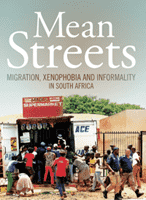
The ACC is proud to be associated with the publication of a major new title in southern African studies. Mean Streets: Migration, Xenophobia and Informality in South Africa, edited by ACC partners Jonathan Crush, Abel Chikanda and Caroline Skinner, demonstrates powerfully that some of the most resourceful entrepreneurs in the South African informal economy are migrants and refugees. Yet far from being lauded, they take their life into their hands when they trade on South Africa’s “mean streets”. Thirteen chapters draw attention to the positive economic contributions which migrants make to their adopted country. The book includes studies of: the creation of agglomeration economies in Jeppe and Ivory Park in Johannesburg; guanxi networks of Chinese entrepreneurs; competition and cooperation among Somali shop owners; cross-border informal traders; informal transport operators between South Africa and Zimbabwe. Migrant entrepreneurship is shown to involve generating employment, paying rents, providing cheaper goods to poor consumers, and supporting formal sector wholesalers and retailers. Mean Streets also highlights the xenophobic responses to migrant and refugee entrepreneurs and the challenges they face in running a successful business on the streets.

JHB launch of ‘August House is Dead, Long Live August House!’

Point of Order Project Space Wits School of Art , Johannesburg, South Africa

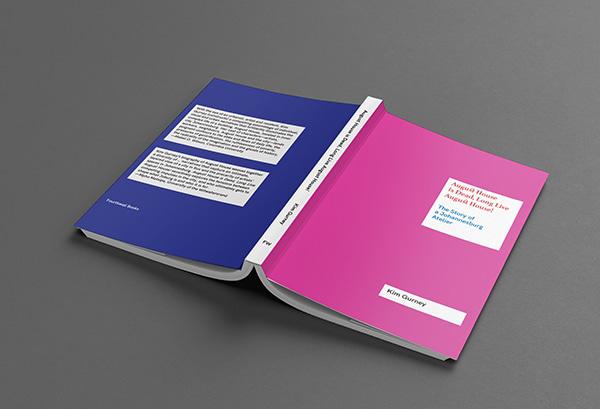
Writer, artist and research associate at the University of Cape Town’s African Centre for Cities (ACC), Kim Gurney pens a new book on the evolving art space August House in Johannesburg. August House is Dead, Long Live August House! The Story of a Johannesburg Atelier, published by FourthWall Books, is a fascinating study of the role of the atelier and its artists in South Africa’s fractious art world, and a consideration of the relationship between art and the ever-changing city of Johannesburg. Join us for the official launch in Johannesburg, at 18:00 on 27 September 2017 at Point of Order Project Space, Wits School of Arts.

CT launch of ‘August House is Dead, Long Live August House!’

A4 Arts Foundation 23 Buitenkant Street, Cape Town , South Africa

Writer, artist and research associate at the University of Cape Town’s African Centre for Cities (ACC), Kim Gurney pens a new book on the evolving art space August House in Johannesburg. August House is Dead, Long Live August House! The Story of a Johannesburg Atelier, published by FourthWall Books, is a fascinating study of the role of the atelier and its artists in South Africa’s fractious art world, and a consideration of the relationship between art and the ever-changing city of Johannesburg. Join us for the official launch in Cape Town, at 18:00 on 6 October 2017 at the A4 Arts Foundation.

LAUNCH: ‘Tomatoes & Taxi Ranks: Running our Cities to Fill the Food Cap’

The Book Lounge 71 Roeland Street, Cape Town, South Africa

Join ACC for the Cape Town launch of Tomatoes & Taxi Ranks: Running our Cities to Fill the Food Gap, by Leonie Joubert with Jane Battersby and Vanessa Watson published by the African Centre for Cities on Wednesday, 21 November 2018, 17:30 for 18:00 at The Book Lounge, 71 Roeland Street, Cape Town. Author Leonie Joubert will be in conversation with Nancy Richards. The book is based on research conducted by the Consuming Urban Poverty team comprised of urban geographers, sociologists, economists and planners from the African Centre for Cities (ACC) at the University of Cape Town, Copperbelt University in Zambia, the University of Zimbabwe, and the Kisumu Local Interaction Platform (KLIP), in Kisumu, Kenya. Tomatoes & Taxi Ranks, illustrated with evocative photography by Samantha Reinders and Masixole Feni, distills the research into a digestible read and is published alongside the academic book Urban Food Systems Governance and Poverty in African Cities (Routledge, 2018) edited by Jane Battersby and Vanessa Watson. Both book are available as Open Access downloads from www.tomatoesandtaxiranks.org.za Hard copies of the book are available for purchase from The Book Lounge for R150. All proceeds are donated to the Open Box School Library project.

Launch of ‘The Walk’

Studio 5 Environmental and Geographical Sciences Building, Upper Campus, Cape Town, South Africa

African Centre for Cities invites  you to the launch of a new publication entitled The Walk. This publication, which is based on a research study entitled The Prospects for Socio-Spatial Transformation in the Voortrekker Road Corridor by Mercy Brown-Luthango, was supported by the French Development Agency (AFD) and focuses on Maitland, Kensington and Factreton. The main concern of this study was to understand the vision of city officials and politicians, as outlined in major policy documents, and how this compares to the daily lived experiences of those who reside and conduct business in the three study areas. Please join us for a series of panel presentations followed by a facilitated discussion on the prospects and challenges for socio-spatial transformation in the Voortrekker Road Corridor Integration Zone (VRCIZ). DATE: 18 March 2019 TIME: 11:30 to 13:00 (followed by lunch) VENUE: Studio 5, Environmental and Geographical Science Building, Upper Campus, University of Cape Town PLEASE RSVP to africancentreforcities.rsvp@gmail.com by 16 March 2019 for catering purposes.

Relaunch: Cityscapes Magazine

The Book Lounge 71 Roeland Street, Cape Town, South Africa

African Centre for Cities invites you to the relaunch of Cityscapes Magazine on 19 November 2019, 17:30 at The Book Lounge. The new issue is themed 'Passages' is a collection of stories that explore the nature(s) of movement, the impact it has on how we live and who we are, as well as the lives that are made - mobile and immobile - after the passage. People move. That is what we do. We move our bodies, move house, neighbourhood; we move across and through borders. We move because we want to and sometimes because we need to. To be with or away from family, to adventure and experience new things, on pilgrimage, to escape, learn, and sometimes to return home when it calls us. We move through space, we move up(becoming wealthier, more affluent),down (becoming materially more impoverished), we also move ideas and resources. We move to work, to search, to find, and sometimes to lose. We move... It’s in our nature and has been since time immemorial. Yet, as the world becomes better connected, moving has become a challenging and divisive experience at every scale you can imagine. We are building and strengthening physical borders to keep those we feel are “not worthy” from occupying the same spaces we do, while inviting the “desirable” – the educated, “clever”, connected, wealthy and talented – in. Our interest is in where people move to, and why. Also, how ideas and capital circulate, traverse borders, and what the impacts are once “there”. This is the reason we have produced this issue. The ninth issue of Cityscapes and our new tagline—Urbanism Beyond Geography—marks a re-launch, after a hiatus (of sorts). As the abundance of figures being released on the topic attests, we have been moving to cities – everywhere. The magnetism of places larger than where we are from has attracted legions – for centuries – and is now just part of the human story. Cities are not a new construct, and moving to them is really not that new a phenomenon. What’s different is the scale. In many economies, cities are the places where opportunities lie, where dreams can be fulfilled—or dashed, but still given a chance—if you're one of the lucky ones. We will always move to such places. Some inner instinct demands that we do. What we have to figure out is how we live together once we get there. How the resources we have can be more equitably shared, and what we do when they are not. What do we do when the assets we have fuel distributional conflicts, understandably, with those who have been dealt a bad hand and have little to lose? We have dug up stories that explore the nature(s) of movement, the impact it has on how we live and who we are, as well as the lives that are made – be they mobile or immobile – after the passage. It seems we move so that we are able to move some more. We move so we can “do better”, jump from one station in life to another. We become mobile hoping that it will expand our choices and send us ever onward. Between these covers, we have tried to explore the question of what happens when we move to where we desire, or leave where we cannot be any more. In a “new” place, whether it’s for the short or long haul, how do we keep the ideas we hold dear? How do we, as “newcomers”, maintain the cultures that define us? How can we embrace our new situation in a manner that changes both us and our new settings? Often, the “new” is old too. It seeks to hold on to its idea of self and wants to be loved and embraced on its own terms. It does not want to lose itself to the influence of newcomers – reinforcements of sorts – that, willingly or not, are its lifeblood.  

Book launch: Participatory Theatre and the Urban Everyday in South Africa

Breezeblock Cafe 29 Chiswick Street, Johannesburg, South Africa

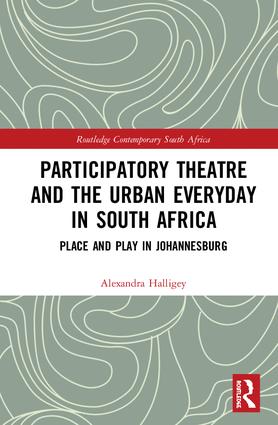
The South African Research Chair in Spatial Analysis and City Planning within the Wits School of Architecture and Planning, the Chair in Local Histories and Present Realities at the History Workshop, also at Wits, and the African Centre for Cities at UCT would like to invite you to the joint launch of Njogu Morgan and Alexandra Halligey’s new books, with guest speakers, Ruth Oldenziel and Terry Kurgan. Cycling Cities: The Johannesburg Experience by Njogu Morgan and Participatory Theatre and the Urban Everyday in South Africa: Place and Play in Johannesburg by Alexandra Halligey will be jointly launched on 27 February at the Breezeblock Cafe, Johannesburg. Ruth Oldenziel, Professor in The History of Technology at Eindhoven University of Technology and programme leader of Cycling Cities: The Global Experience will speak to Morgan's book while Terry Kurgan, artist and writer based in Johannesburg, editor and partner of Fourthwall Books and Research Associate of the Wits Institute for Social and Economic Research, will focus on Halligey's title.   DATE: Thursday, 27th February TIME: 17:00 for 17:30 VENUE: Breezeblock Café, 29 Chiswick Street, Brixton Please RSVP to alexandra.halligey@wits.ac.za by 24 February for catering and parking purposes.

LAUNCH | Masters in Sustainable Urban Practice

From siloed practitioner to urban integrator for sustainable African city futures – this new Masters programme, convened by the African Centre for Cities, at the University of Cape Town cultivates a new generation of Urban Champions. The complex, multi-dimensional demands of our rapidly urbanising world require holistic, inter-disciplinary thinking and practice. However traditional professional paradigms and often-siloed institutions seem doomed to replicate the entrenched patterns and practices of path-dependent urban infrastructure provision and management. To overcome the often-fragmented ways in which urban questions are framed, institutionalised, and engaged by varied levels of government, citizens, civil society organisations, and private sector actors, we need a new kind of urban practitioner, who can work across practices, professional norms, hierarchies, sectors and urban problems. To meet this need, the African Centre for Cities (ACC), UCT, launches a new Masters in Sustainable Urban Practice, which seeks to cultivates urban integrators who are able to discern opportunities for integration, and can build the necessary coalitions for change; who are confident in varied cultures of communication and can build bridges between sectors, fields, and scales of urban practice. Join ACC for the launch of the programme as Prof Edgar Pieterse, director of the African Centre for Cities, and South African Research Chair in Urban Policy, and programme convenor Dr Mercy Brown-Luthango introduce this exciting new degree.

A Story of a Zambian Planner: Animating Integrity in Urban Planning

The FCDO-funded Global Integrity Anti Corruption Evidence Programme supports research teams in not only creating actionable evidence, but deepening engagement with practitioners. The Cities of Integrity research team have tried many different ways to communicate research more effectively with practitioners. Over the course of the project they have developed a series of animated videos illustrating the specific issues of corruption in urban planning and its consequences for cities and their publics. These animations have been used in workshops, social media, and direct engagement with particular groups such as early career planners. As part of this event the team will screen the series followed by a panel discussion with the animators, the research team, and a representative from the Zambian Institute of Planners. We will discuss the advantages and limitations of using animated film in workshops and communications around integrity-strengthening as a response to corruption in planning. The Cities of Integrity team will reflect on their experience working with the production house in translating their research into accessible language and visuals and hone in on the question of impact together with the Zambian Institute of Planners as a key stakeholder. Join us for the official premiere of their three-part series of animated shorts. Zoom Registration PanelistsBart Love - Director, AnotherLoveProduction, Cape TownLaura Nkula-Wenz - Cities of Integrity, Project Coordinator, African Centre for CitiesVanessa Watson - Cities of Integrity, Principal Investigator, University of Cape TownGilbert Siame - Cities of Integrity, Co- Principal Investigator, University of ZambiaPlanner from Zambian Institute of Planning (ZIP) Anotherlove Productions has been creating engaging visual content for clients from around the world for over a decade. They believe that a well-told visual story - be it an animation, a documentary or an infographic - can challenge, encourage and activate audiences whilst shifting perceptions. For this creative team, a rigorous and engaged production process is as valuable as the final product. They are happiest when their clients have enjoyed working with them, and they have a piece of meaningful and effective media at the end of it. The Zambian Institute of Planning is a professional corporate body established by the Urban and Regional Planners Act of 2011 of the Laws of Zambia to register and regulate the practice of planning in Zambia Prof. Vanessa Watson is an emerita professor at the School of Architecture, Planning and Geomatics, University of Cape Town. She is the Principal Investigator for the Cities of Integrity project. Dr. Gilbert Siame is a lecturer at the Department of Geography and Environmental Studies at the University of Zambia (UNZA) as well as the Co-PI and Zambia research lead for Cities of Integrity. Dr. Laura Nkula-Wenz is a lecturer at the African Centre for Cities, University of Cape Town and the project lead for Cities of Integrity.