Rethinking Sustainable Cities: from slogan to implementation

Studio 5 Environmental and Geographical Sciences Building, Upper Campus, Cape Town, South Africa

ACC is excited to host representatives from Mistra Urban Futures who will be presenting on their forthcoming book entitled 'Rethinking Sustainable Cities: from slogan to implementation'. Overview Mistra Urban Futures’ forthcoming book provides detailed intellectual and practical histories of fair, green and accessible cities - three key urban characteristics chosen to symbolise the research centre’s approach, which utilises transdisciplinary co-production methodologies to promote sustainable urban solutions to specific local problems in each of its research platforms. These characteristics suffuse MUF’s work and Strategic Plan for 2016-19. David Simon will explain these agendas, focusing particularly on the origins and current nature of urban greening discourses and the challenges to implementation to ensure that they make a substantive as opposed to purely marginal or incremental difference. Sue Parnell will do likewise in relation to fair cities. Bios David Simon joined Mistra Urban Futures in September 2014 from Royal Holloway, University of London, where he still holds a part-time appointment as Professor of Development Geography. He was Head of theGeography Department there from 2008-11. He has vast international experience including grant-funded research on sub-Saharan Africa (especially Namibia, South Africa, Kenya and Ghana), Asia (especially Sri Lanka, Thailand and the Philippines), the UK and the USA. He has also served as specialist advisor to UN-HABITAT on cities and climate change, was one of only two academics on the UK Foreign and Commonwealth Office's specialist Africa Advisory Group prior to its disbandment, and has consulted for various NGOs and national and international development agencies. Furthermore, he is a Fellow of the UK Academy of Social Sciences. Susan Parnell’s early academic research was in the area of urban historical geography and focussed on the rise of racial residential segregation and the impact of colonialism on urbanisation and town planning in Sub-Saharan Africa. Since 1994 and democracy in South Africa her work has shifted to contemporary urban policy research (local government, poverty reduction and urban environmental justice). By its nature this research is not been purely academic, but has involved liasing with local and national government and international donors. Sue is also on the boards of several local NGOs concerned with poverty alleviation, sustainability and gender equity in post-apartheid South Africa. She serves on a number of national and international advisory research panels relating to urban reconstruction.

The urban network strategy – the panacea for urban and developmental ills?

Seminar Room 1 Environmental & Geographical Sciences Building, UCT Upper Campus

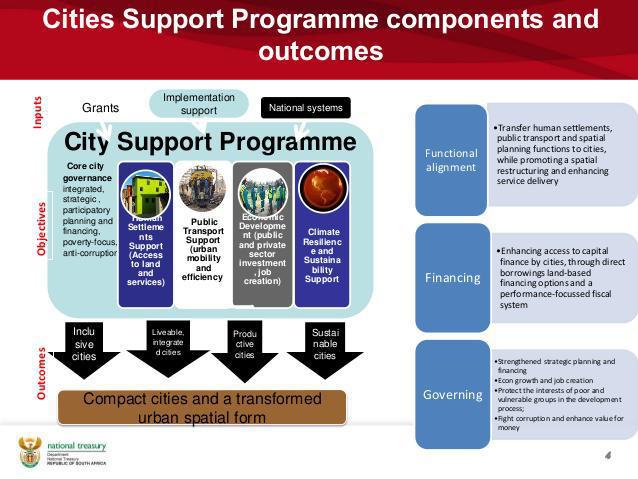
The ACC looks forward to generating a stimulating debate about the Cities Support Programme by hosting Dr Paul Hendler from iNSITE who will be presenting a paper co-authored by himself and Dr Arumugam Pillay (who will be present via Skype) entitled, 'The urban network strategy - the panacea for urban and developmental ills'. Abstract The National Treasury, through its Cities Support Programme (CSP), intends to get the eight metropolitan municipalities to run more efficiently, become financially and ecologically sustainable and give the majority of their citizens access to employment and public and social amenities. The weakness of the strategy is its assumption of the inevitable upswing in the global business cycle, the ability of cities to afford the infrastructure required for ongoing in-migration and the fact that it omits describing how broad-based, inclusive and eco-sensitive economic development with significant employment opportunities should happen. The missing factor in the programme is state intervention aimed at economic restructuring: it simply assumes that both job creation and green manufacturing will happen without explaining how. Instead, the paper argues that the challenge is to address the broader political economy context of sluggish growth, low wages and high unemployment, in order to support key CSP objectives. In this regard, the paper identifies specifically the need for municipalities as public sector developers to directly support2 improved quality of life and work opportunities for both the urban and rural working classes, and for the state to stem the outflow of funds from the country, re-direct investment funds away from finance, insurance and real estate (the jobless growth sectors) and into manufacturing and implement a coherent rural development based on technical and financial support for feasible ‘accumulation from below’ by current smallholder farmers and households in traditional areas. Bio Dr Paul Hendler is an extraordinary senior lecturer at the University of Stellenbosch's School of Public Management, and a founder of iNSITE that is working (through the Sustainability Institute, Stellenbosch University) on the formulation of a financial mechanism for the investment of a civil society green savings fund in South Africa. Hendler has been researching the intersection of housing and the political economy for over 30 years in South Africa, with an emphasis on critiquing neoliberal development. Dr Arumugam (Morgan) Pillay is CEO of The Ekurhuleni Development Company. He is responsible for delivery of finance to and Social Housing. Pillay has almost 25 years of experience in Infrastructure Development and Finance within the government sector. Having worked at the National Housing Finance Corporation, Standard Corporate and Merchant Bank, and advising national and provincial government departments, he is one of South Africa’s housing finance experts that has both theoretical and practical experience in the sector.

‘A House for Dead People’: Memory and spatial transformation in Red Location, Port Elizabeth

Studio 3 ENGEO Building, Upper Campus. University of Cape Town,, Cape Town, Western Cape, South Africa

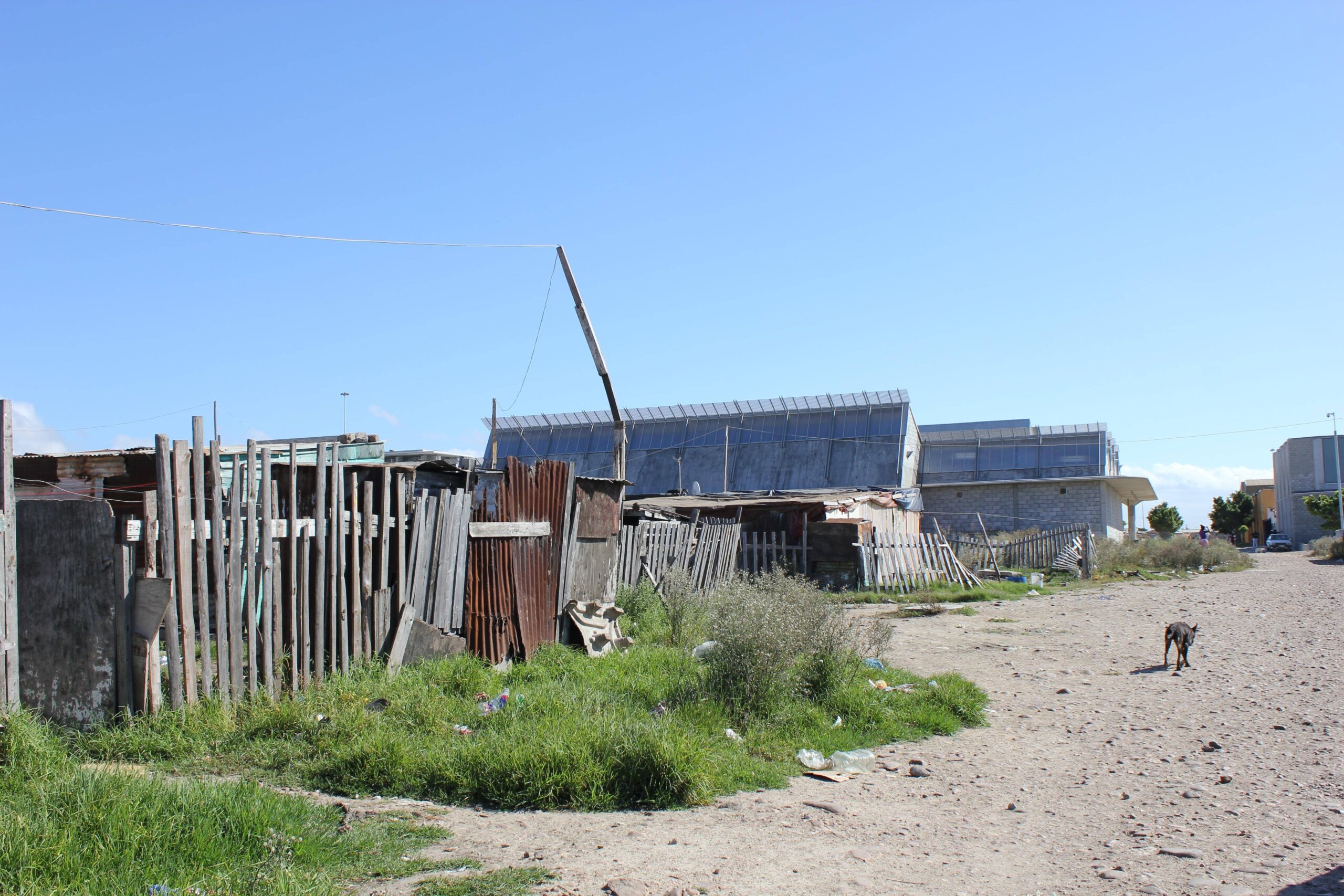
ACC is pleased to be hosting the 2016 Ray Pahl Fellow in Urban Studies, Dr Naomi Roux, who will be presenting a paper entitled, 'A House for Dead People: Memory and spatial transformation in Red Location, Port Elizabeth'. Abstract Following the end of apartheid in 1994, several new projects of public memory and urban development were established in many South African cities. In Port Elizabeth, the Red Location Museum was opened in 2006, in a century-old informal settlement with strong histories of resistance activity. The museum was intended to acknowledge the area’s contribution to the liberation struggle, and contribute to dismantling apartheid urban geographies by producing a tourist and cultural economy. However, the project was highly contested from its inception by residents who felt that the priority for the neighbourhood should be housing and service delivery. Major housing-related protests erupted on the museums doorstep between 2003 and 2005, and in late 2013 the new cultural precinct was closed down indefinitely. This paper examines the politics and controversies surrounding the Red Location developments between 1997-2013, using this case study to consider the ways in which the protests around the museum are deeply rooted in historical and political histories which are made visible through residents’ radical claiming of ownership of the museum building. Bio Naomi Roux is an urbanist and visual historian, with a particular interest in the relationships between collective memory, the politics of public space and urban transformation. She holds the Ray Pahl Fellowship in Urban Studies at the University of Cape Town’s African Centre for Cities for 2016. Prior to this she was the 2014-2015 Mellon Fellow in Cities and Humanities at LSE Cities. Her recent PhD (Birkbeck, 2015) focused on the politics of collective memory in the context of the changing post-apartheid city, using Nelson Mandela Bay in South Africa’s Eastern Cape as a case study. Previous work includes published research and exhibition projects focusing on heritage, memory and place-making in sites including Kliptown, Soweto; Yeoville, Johannesburg; and ‘Little Addis’ in central Johannesburg.

Democratic Practices of Unequal Geographies

Seminar Room 1, EGS Building, Upper Campus, University of Cape Town University of Cape Town, Cape Town , Western Cape, South Africa

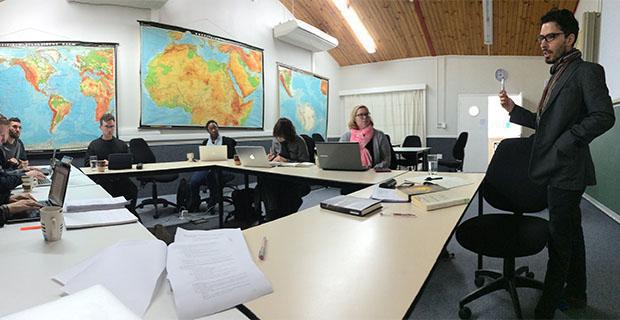
  The 2016 Annual ACC Seminar/PhD Course on Democratic Practices in Cape Town: The Aesthetical and the Political of Unequal Geographies:  Reading across Political Philosophy and Global South Urbanism July 4-8, 2016, Seminar Room 1, EGS Building, Upper Campus, University of Cape Town. Organised by Henrik Ernstson and Andrés Henao Castro. The seminar is given by the African Centre for Cities (ACC) at the University of Cape Town. To apply, please send  your letter of interest no later than 6 May 2016 to Henrik Ernstson (henrikDOTernstsonATuctDOTacDOTza). We hope the seminar with its readings and discussions can contribute new angles and perspectives to your research. More information on the 2016 theme, reading and seminar methodology is given below. Rationale for 2016: Aesthetics and politics! The task is urgent and profound: How to make sense of rapid urbanization across Africa and the global South, while (re)turning to explicitly think about emancipatory politics? What does the political mean in these contexts? What constitutes properly democratic practices of equality and freedom? What can we learn by rubbing political theory against urban studies of ‘the South’? This annual seminar series emerges out of an interest to put into conversation political philosophy and global south urbanism. Importantly, our objective is not that of supplementing a theoretical abstraction (e.g. ‘the political’) with some kind of concrete spatiality. Rather, we are interested in the global south as an epistemological position and a field of experience that has specific contemporary sociomaterial realities that we hope can trouble and re-new both radical urban theory and political theory. Following last year’s seminar, in which we related our readings of Plato to Rancière with critical urban studies of the South, this year we gather a seminar that problematizes the relationship between the political and the aesthetic. This puts more focus on artists and activists that intervene materially and socially in the fabric of urban spaces, and it brings us towards the political in a quite specific way. More concretely we aim to relate questions around what Jacques Rancière calls the distribution of the sensible with interventions in urban spaces. We aim to push the seminar to think about the representation and troubling of an aesthetic regime from the perspective of how it has become embedded in urban and non-urban settings. We will exploit texts that have linked theoretically the political with aesthetic regimes and how this translates troubles and can be re-thought in the context of the global south. We want to ask, for example: How does the symbolic remaking of a space through an artistic intervention trouble the otherwise naturalization of that space as reducible to its presumable functions (i.e., market values)? What is the relationship between this interruption of the function of a space and that of politics? How can artistic interventions force the community to confront that which it disavows? What kind of conflict do such forms of expressing the senses create within urban spaces? How are those urban spaces transgressed, circumvented, rearranged, reimagined, etc., so as to trouble the very limits of what can be perceived and sensed in the city? How do these spatial contestations take place today, under what kind of aesthetic practices? And how could this possibly lead to processes of political subjectivization, a politicization of collectivities, bodies, and spaces in the name of equality? In light of 2015 and the student movement of South Africa, questions of democracy, decolonization and profound emancipatory change have brought these questions into even sharper focus. And this does not mean to forget other recent women, workers and community rebellions, nor the slow-grinding and incremental institutional changes of empowerment that is also ongoing. Indeed, we hope this seminar/course will provide a chance for all participants to think about these recent events and processes. We hope it will contribute material and discussions through which you can re-think and sharpen your own research projects. Seminar Methodology Our seminar focuses on readings of political theory that interrogate the relationship between the aesthetical and the political, across a variety of philosophical approaches. Yet it explores such relationship with a particular and rather unusual emphasis on urban and non-urban geographies of the global south. We want to discuss questions about representation, intervention, performativity, sensuousness, visibility, audibility, occupation, inscription, by placing these theories within uneven geographies that should trouble existing theoretical findings and help us to reformulate our research questions, methodologies approaches and theoretical assumptions. In the readings we have chosen to place more emphasis on political philosophy as these are less known to most of us, and since this makes best use of Dr. Andrés Heano Castro’s visit here at ACC in Cape Town. The texts on global south urbanism will bring in contextual and theoretical aspects into the seminar, but we also rely on participants’ wider readings and their own research on urbanization, global south and decolonization. Below you will find the current list of readings, which will be updated. Schedule and Readings We will meet for 3 hours every day. Andrés will talk for the first 30 minutes, in order to provide context for the theoretical discussion: what is at stake in the texts, where does the text stand in relation to intellectual debates, and summarize main points, etc. Then we open the floor for discussion in which the global south urbanism literature will enter as ways to unpack and think about the seminar questions, how our empirical work are helped by these texts, while challenging them and ‘speaking back’. Through this we will have a chance to re-think our own research and case studies. For each day we will provide questions to orient your reading, and serve as starting point for our discussions. Based on this you can write down and raise your own questions to further give direction to the seminar. We will have a short 10 minute break two hours into the seminar and then we will return for another 45 minutes of discussion. Coffee and tea will be served during the seminar. (NB: Global south urbanism reading and questions will be complemented later alongside points 1-3 in the...


Free

The Informal Economy’s Role in Feeding Cities – a Missing Link in Policy Debates?

Studio 3 ENGEO Building, Upper Campus. University of Cape Town,, Cape Town, Western Cape, South Africa

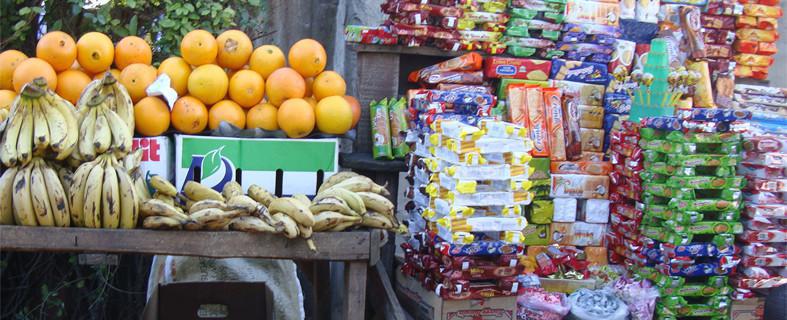
Food is fundamental not only to well-being, but to our social and economic lives. Despite this, one of the biggest challenges facing many people in cities all over the world today is hunger. As cities rapidly urbanise, different pressures are placed on the food system which has resulted in the least nutritious food being the most affordable. This seminar series will explore the informal economy, food systems, food security and urbanisation. The first seminar is entitled 'The Informal Economy’s Role in Feeding Cities - A Missing Link in Policy Debates?' and will be presented by Caroline Skinner and Gareth Haysom. Abstract The paper starts by considering the genealogy of the term ‘informal sector’ and then reviews the international context – urbanisation trends and the latest estimates on the size and contribution of the informal economy. The former confirm Crush and Frayne’s contention of the likelihood of an urban future for the majority of Africans and latter suggest that informal work is a predominant source of non-agricultural employment on the most regions of the Global South. Attention is then turned to the South African informal economy, which although smaller than our developing country counterparts, is still a significant source of employment. The informal economy is thus playing a key role in household income – a key aspect of accessibility, particularly in urban areas. The paper then outlines the evidence on the informal economies role in food sourcing of poorer households. The paper critically assesses the current food security policy position in South Africa and the post-Apartheid policy response to the informal economy in general both nationally and in key urban centres. We trace a productionist and rural bias in the food security agenda and argue that the policy environment for informal operators is at best benign neglect and at worse actively destructive. Speaker bios Caroline Skinner is a Senior Researcher at the African Centre for Cities at the University of Cape Town and Urban Policies Research Director for the global action-research-policy network Women in Informal Employment: Globalizing and Organizing (WIEGO). For over 15 years, Skinner’s work has interrogated the nature of the informal economy with a focus on informing advocacy processes and livelihood-centred policy and planning responses. She has published widely on the topic. Dr Gareth Haysom holds a Ph.D in Environmental and Geographic Sciences from UCT. The focus of his Ph.D was on urban food system governance. Gareth is the southern cities project coordinator for the Hungry Cities Partnership project at the ACC. He also works on the Consuming Urban Poverty research project. Venue: Studio 3, EGS Building, Upper Campus, UCT

A systematic review of the literature that focuses on both the ‘informal economy’ and ‘food security’ in South Africa

Studio 3 ENGEO Building, Upper Campus. University of Cape Town,, Cape Town, Western Cape, South Africa

Food is fundamental not only to well-being, but to our social and economic lives. Despite this, one of the biggest challenges facing many people in cities all over the world today is hunger. As cities rapidly urbanise, different pressures are placed on the food system which has resulted in the least nutritious food being the most affordable. This seminar series will explore the informal economy, food systems, food security and urbanisation. The second seminar is entitled 'A systematic review of the literature that focuses on both the ‘informal economy’ and ‘food security’ in South Africa' presented by Candice Kelly and Etai Even-Zahav (Research Fellows at the Sustainability Institute). Abstract Despite the importance of the informal food economy in fulfilling the daily and weekly food needs of a large proportion of South Africa’s low-income population, it appears little research exists on the exact nature of the relationship between the informal food economy and food security. This paper performed the first qualitative systematic review of research from South Africa that addresses both these aspects. The methods used in the review are described in detail, to increase the readers’ ability to assess the reliability of subsequent findings and analysis. Findings confirmed the low level of research focus on the informal food economy (and food security), in particular the stages of the value chain beyond the farm gate and before the consumer. Food safety research is common, although applied narrowly and with mixed findings. The conceptualisation of nutrition research is encouragingly wide, encompassing both over- and under-nutrition, but does not seem to consider the broader urban informal context in which consumers are embedded. Lastly, the research approaches used are predominately quantitative, and the voices of those who survive within the informal food economy are largely absent. Bios Candice Kelly's doctoral research focuses on people leading food system transitions in South Africa. She teaches into the MPhil at the Sustainability Institute, focusing on sustainable food systems. Etai Even-Zahav is also part of the Food Systems team at the Sustainability Institute. He is particularly interested in the informal food economy.

Spatial Transformation CityLab Seminar

The River Club Cnr Liesbeck Parkway & Observatory Road, Cape Town , South Africa

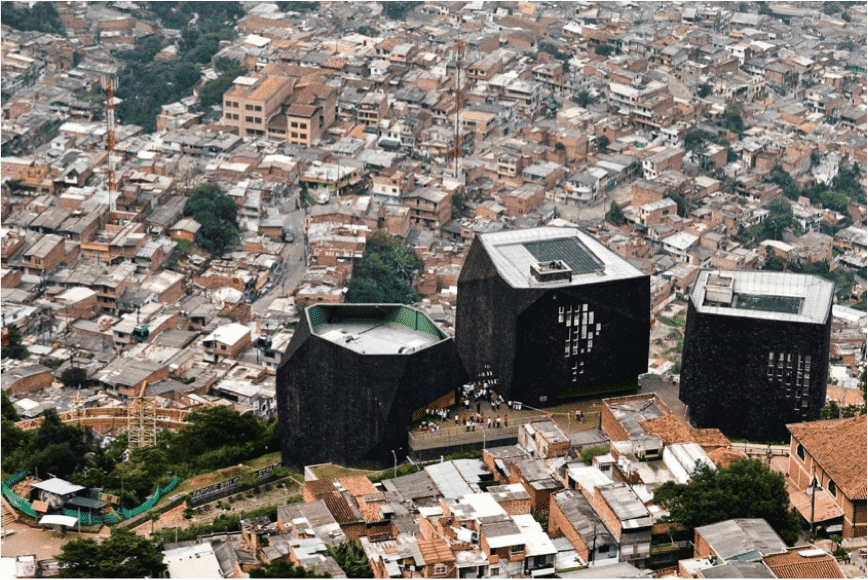
South African cities today continue to be marked by spatial fragmentation, low density sprawl and highly unequal land distribution patterns.  Cape Town as a city is plagued by the same inefficient, fragmented and exclusionary spatial patterns inherited from Apartheid. In light of this, the ACC has embarked on a new research project which focuses on the potential of the Voortrekker Road Corridor (VRC) and specifically the Western Area (including Maitland, Kensington and Facreton) to bring about spatial transformation.  This work is supported by the French Development Agency (AFD). One of the components of this research project is a bi-monthly seminar series which will draw academics, officials and other practitioners into conversation about a number of pertinent topics. These include for example: unpacking what spatial transformation means in Cape Town, the role of corridor projects in facilitating this transformation, the potential and challenges of transit-oriented development and the role of government policy  instruments and programmes like the Urban Development Zone (UDZ) tax incentive to support social and spatial integration. To kick off the seminar series, Francesco Orsini, a visiting researcher from Colombia will present a case study of Medellin’s Social Urbanism” programme. This will provide key insights and a useful basis for future deliberations about the nature and dynamics of interventions to transform Cape Town’s spatial form.

Finding Food in the post-2015 Development Agenda

Studio 3 ENGEO Building, Upper Campus. University of Cape Town,, Cape Town, Western Cape, South Africa

Food is fundamental not only to well-being, but to our social and economic lives. Despite this, one of the biggest challenges facing many people in cities all over the world today is hunger. As cities rapidly urbanise, different pressures are placed on the food system which has resulted in the least nutritious food being the most affordable. This seminar series will explore the informal economy, food systems, food security and urbanisation. This final seminar by Dr Jane Battersby explores the global implications of the post-2015 development agenda. Abstract Food has not historically been considered central to the urban agenda. However, good nutrition is essential for equitable growth and sustainable urban food systems are key to responding to many of the challenges posed to growing cities. In the wake of Habitat III, this seminar examines the gaps and opportunities to engage the food system as part of urban governance and planning that have emerged in the space generated by the SDGs and New Urban Agenda document. It draws on findings from AFSUN (African Food Security Urban Network) and the Consuming Urban Poverty project. Bio Jane Battersby is an urban geographer with an interest in all things food related. Her current areas of particular interest are urban food systems, urban food policies and the construction of food security theory in Northern and Southern research contexts. This work has both theoretical and applied components. Underpinning her food work is an ongoing interest in the linkages between spatial transformation and identity transformation in post-apartheid urban areas – a topic she has addressed through the lenses of youth identities, education, music and land restitution. Jane has been the Cape Town Partner of the African Food Security Urban Network (AFSUN) since 2008, and is currently the Research Co-ordinator of the ACC’s Consuming Urban Poverty Project, and is associated with the Hungry Cities Programme.

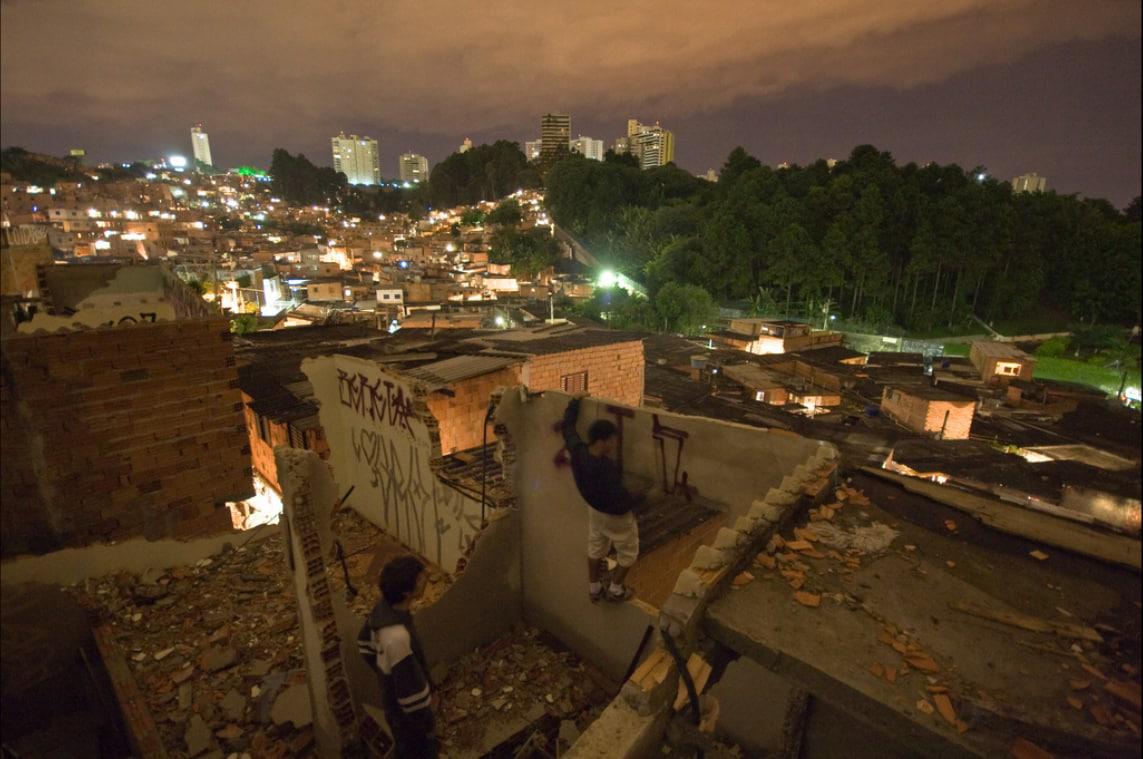
São Paulo’s Peripheries: Transformations in Modes of Collective Life

Image credit: Choque Fotos   SPEAKER: Prof Teresa Caldeira DATE: 14 December 2016 TIME: 17:30 - 19:30 VENUE: Hiddingh Hall (2nd floor), UCT’s Hiddingh Campus, 31-37 Orange Street, Gardens (opposite the Labia Theatre), Cape Town, South Africa   ACC is honoured to present a public lecture by Professor Teresa Caldeira (University of California, Berkeley) on the transformations of modes of collective life in São Paulo, Brazil, over the past two decades. About the topic: São Paulo’s peripheries, once exclusively the spaces where the poor working classes inhabited their autoconstructed houses, have changed considerably in the last two decades. They are now much more heterogeneous and their everyday dynamics are in need of new analyses. The mode of collective life based on autoconstruction, industrialism, migration, the dignity of labour, a certain hierarchy of gender roles, and the articulation of urban social movements has undergone profound changes.  This talk explores the emerging mode of collective life that is being created in what are now much improved and diverse urban spaces.  It is based on new modes of consumption, cultural production, protest, and circulation from the peripheries to the rest of the city. The transformed peripheries are fundamentally heterogeneous and new arrangements of domestic life and gender roles are at the core of their mutations. These transformations in modes of collective life happen not only in São Paulo, but also in several other autoconstructed metropolises across the global South. About the speaker: Professor Teresa Caldeira is an urban scholar from Brazil who teaches at the Department of City and Regional Planning at the University of California, Berkeley. She does research on urban violence, spatial segregation, and cultural production in cities of the global South, especially São Paulo.