Radical Incrementalism & Theories/Practices of Emancipatory Change

Studio 3 ENGEO Building, Upper Campus. University of Cape Town,, Cape Town, Western Cape, South Africa

This workshop examines ideas of radical incrementalism across our towns and cities. It seeks to explore theories and practices that can support emancipatory change across urban regions through the power of urban dwellers to challenge poverty, oppression and unjust environments.

Migration and Informality Workshop

UCT Seminar Room 1 Chemical Engineering, UCT Upper Campus, Cape Town, Western Cape, South Africa

The ACC, SAMP, GCRO, IMRC, Eduardo Mondlane University, Queens University (Canada) and Wilfred Laurier University will be hosting a dissemination workshop at UCT to present the findings from a recent multi-country research project that examined the role of migrant entrepreneurs in South Africa, Mozambique and Zimbabwe. This dissemination workshop will present the results of the IDRC-funded Growing Informal Cities project, which examined and profiled the role of migrant entrepreneurship in South Africa, Mozambique and Zimbabwe. The project was conducted jointly by the African Centre for Cities (University of Cape Town), the Southern African Migration Programme (SAMP), the Gauteng City Regional Observatory (GCRO), Eduardo Mondlane University and the International Migration Research Centre (IMRC). Interviews and surveys were conducted in Cape Town, Harare, Johannesburg and Maputo with migrant entrepreneurs and cross border traders to better understand the linkages between migration, informality, inclusive growth and violence against migrant-owned businesses.

Hungry Cities Partnership Meeting

UCT Seminar Room 1 Chemical Engineering, UCT Upper Campus, Cape Town, Western Cape, South Africa

Running from the 10th to the 13th of February 2015 is the second project meeting for the Hungry Cities Partnership, an IDRC/SSHRC (Canada) partnership programme within the International Partnership for Sustainable Societies process. The project is a collaboration between Canadian Universities and universities and organisations in the global south. The University of Cape Town is the IDRC grant holder partnering with university partners in Kingston, Jamaica; Mexico City; Maputo and Nanjing, China. Other partners include the African Population and Health Research Centre in Nairobi and the MS Swaminathan Research Foundation in Chennai. The project aims to promote inclusive growth in the informal food economy of cities of the global south.

Mainstreaming Urban Safety & Inclusion in South Africa

Studio 5 Environmental and Geographical Science, Upper Campus, UCT,, Cape Town, South Africa

A four-day course for municipal officials and other practitioners to discuss violence and its prevention, key concepts, safer cities strategies, policy frameworks, urban upgrading for violence prevention, and associated methodologies. A day-long field trip will observe measures taken in practice. The focus will be on mainstreaming issues of safety and inclusion in South African urban policy and practice. The spotlight is on the relationship between urbanisation, informality and violence. The pilot course is convened by ACC’s Dr Mercy Brown-Luthango, with input from VPUU (Michael Krause, Jakub Galuska and other work stream leaders) and GIZ/VCP (Terence Smith and Christiane Erkens). The event is funded by GIZ.

Briefing and Q&A: Public Art and the Power of Place

Guga S’Thebe Arts and Culture Centre Washington Street, Langa (right turn off Bunga Ave at Fisher's Corner Cafe) , Cape Town, South Africa

Public Art and the Power of Place, initiated by the African Centre for Cities at UCT, with support from the National Lottery Distribution Trust Fund seeks to support six public art engagements to be manifested in Cape Town’s townships in 2015 that explore the significance of place outside of the City Bowl. The African Centre for Cities is looking for proposals for public art projects that: Have been developed by township-based artists (can be original work or developments of existing projects) // Offer new understandings or perspectives of urban realities of Cape Town’s townships through creative means // Have a public dimension: engage public spaces; include people; concern public interest; or face the public in a meaningful way. On Saturday 20 June 10:00-12:00 we will be hosting a briefing and Q&A session for potential artists at Guga S'Thebe in Langa. Please join us to find out more about the project.

Realising the Just City

Studio 1 Environmental and Geographical Sciences Building, Upper Campus, UCT, Cape Town, South Africa

The African Centre for Cities in collaboration with Mistra Urban Futures is hosting a workshop on Realising the Just City. The signing of the Sustainable Development Goals in 2015 demonstrated that there is an increasing global pledge to foster just cities that are ‘inclusive, safe, resilient and sustainable’. Although there is a shared commitment to socio-spatial justice, how this can be realised is more complicated. This workshop aims to draw representatives from academic institutions, civil society and the public sector together to discuss how just cities are understood, and how to achieve them. Mistra Urban Futures is made up of five local interaction platforms in four cities around the world: Cape Town (based at ACC), Gothenburg, Greater Manchester, Kisumu and Malmö. The purpose is to develop coproduced, collaborative and comparative research across the cities. This workshop forms part of this research process. For more information, contact Rike Sitas on rike.sitas@uct.ac.za.

Workshop: Thinking infrastructure with the South

HICCUP — Heterogeneous Infrastructure Configuration of Cities in Uganda Project: Thinking Infrastructure with the South Introduction The scale, magnitude and intensity of urbanisation in Africa has attracted increasing attention given the nature of environmental, social, economic and more importantly, political challenges it presents. The diverse ecology of Africa’s urban landscape raises serious questions that have provoked debate not only within academia, but among public administrators, civil society and the private sector as well. The HICCUP research initiative was conceived to provide a platform where critical questions especially about waste resource flows and the emerging multi-actor hegemonies, the resulting networks, how these multi-actor interactions are mediated within formal and informal institutional structures and processes. In addition, the initiative will also explore other equally critical questions relating to sustainability and equality. Two subprojects will be undertaken to generate the kind of information that will shape our learning about the dynamics of urbanisation in Africa. The project will work in Kampala and Mbale, two cities in Uganda where the focus will be on waste and sanitation.   Research Team The workshop will be conducted by Drs. Henrik Ernstson, Shauib Lwasa, and Jonathan Silver, who are part of a highly experienced team from various international institutions involved in the initiative. The workshop is intend to engage four students (3 MSc and 1 PhD), who have been selected to be part of the initiative to promote critical and radical thinking about Global-South Urbanism. The event will also be attended by several civil society organisations that could potentially be partners under the HICCUP initiative. Aims of Workshop a.    To finalise planning on practicalities of the research program (i.e. roles/responsibilities, research timelines, key outputs etc.) b.    To undertake some teaching and shared learning with the four the students c.    To visit some potential fieldwork sites d.    To meet some potential partners (ACTogether/NSDFU, KALOCODE, SSA/UHSNET, LOGEL etc…)

ACC/ AFD Symposium on Informal Settlements, Slums and Precarious Neighbourhoods

Studio 3 ENGEO Building, Upper Campus. University of Cape Town,, Cape Town, Western Cape, South Africa

The African Centre for Cities (ACC) and Agence Française de Développement (AFD) host a one-day symposium on the AFD book Rethinking Precarious Neighbourhoods edited by Professor Agnès Deboulet, the work of ACC’s Urban Violence, Safety and Inclusion CityLab coordinated by Dr Mercy Bown-Luthango, and the work of the Sustainable Human Settlements CityLab coordinated by Liza Cirolia.

Cities, geo-technologies and data-driven urbanism

Room 3B, RW James Building University Avenue North, Upper Campus, University of Cape Town, Cape Town, South Africa

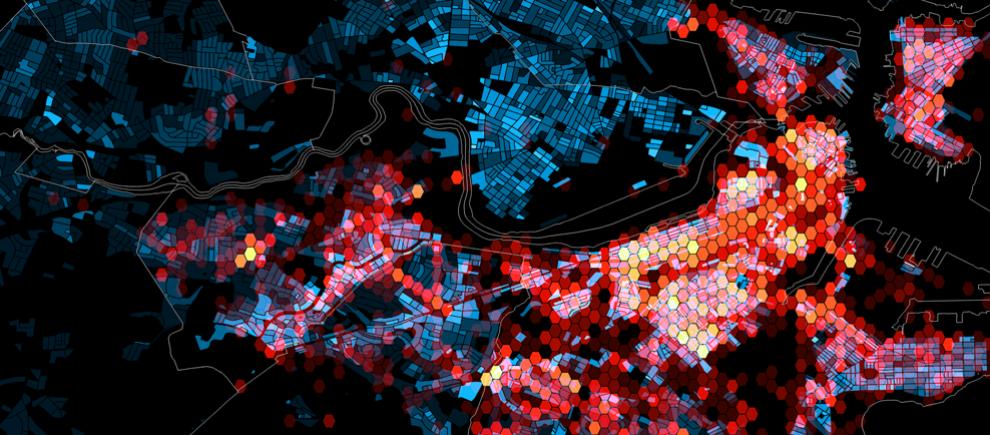
African Centre for Cities, along with Prodig, French National Centre for Scientific Research, French Institute of South Africa and the French Institute for Research in Africa, are presenting a one-day workshop entitled Cities, geo-technologies and data-driven urbanism.  The programme is structured into four sessions with two sessions of strategic input from research and practice by various presenters (see below) and two work sessions to discuss and synthesize the inputs. WHEN: Monday, 11 June 2018 TIME: 08:30 to 16:45 WHERE: Room 3B, RW James Building, Upper Campus, University of Cape Town   While a curated group of people have been invited to the workshop, five places are still available. These places will be allocated on a first come, first serve basis. To secure your spot send an email to elisabeth.peyroux@cnrs.fr or call  +2772 250 7804.   PRESENTATIONS: Interdisciplinary and transdisciplinary perspectives on cities and geo-technologies – Elisabeth Peyroux, National Centre for Scientific Research, Prodig, & Nancy Odendaal, School of Architecture, Planning and Geomatics, UCT Technology and spatial governance in Southern cities – Nancy Odendaal, School of Architecture, Planning and Geomatics, UCT (Big) Data, knowledge, and their use in decision-making and policy-making: Perspectives from ICT4D – Ulrike Rivett, Department of Information Systems, School of IT, UCT Disruptive technologies, new power relationships and challenges to urban governance – Sabelo Mahlangu, School of Architecture and Planning, Wits University & Samy Katumba, Gauteng City-Region Observatory (GCRO) Linking research, practice and higher education – Herrie Schalekamp, Centre for Transport Studies (CfTS), UCT Geospatial data analysis: The significant rise in local service levels coming from Cityspec intervention in Monwabisi Park and Lotus Park (Cape Town) – Chris Berens, GIS expert, Knowledge Management, VPUU & Nhlanhla May, Spatial Data Analyst, VPUU City making and the rise of urban and technology-oriented development interventions in Nairobi – Prince Guma, Human geography and Planning, University of Utrecht ICT for e-Culture: cultural storytelling and innovative services. The “Smart Square” in Hamburg and its application in Cape Town – Sumarie Roodt,  Department of Information Systems, Commerce Faculty UCT & Jens Bley, HafenCity University Demo of 3D scanning technologies applied to the built environment – Jason Stapleton CEO Metascale Services and Consulting (MSC)