On tactical planning
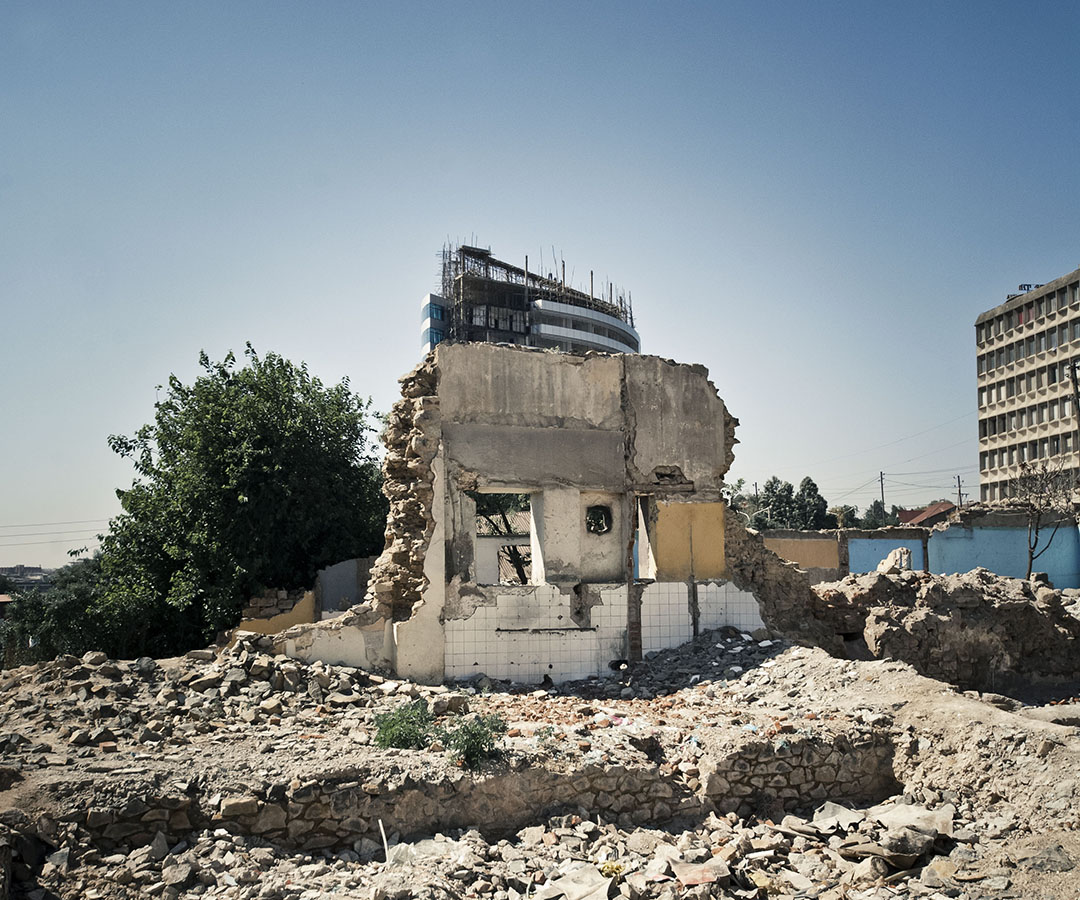
African Centre for Cities hosts visiting scholar Marco Di Nunzio for a seminar entitled On tactical planning, on Thursday, 11 May 2023, from 13:00-14:00.



African Centre for Cities hosts visiting scholar Marco Di Nunzio for a seminar entitled On tactical planning, on Thursday, 11 May 2023, from 13:00-14:00.
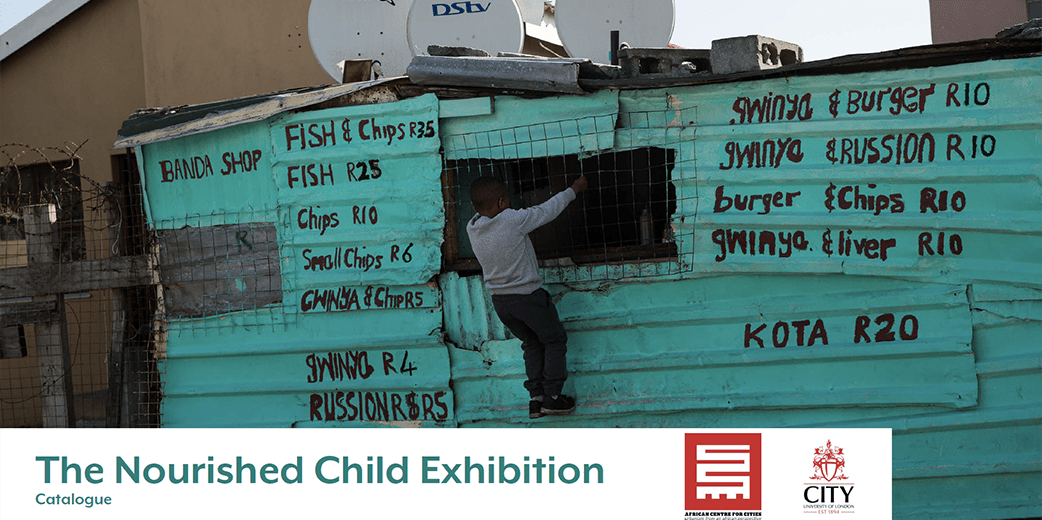
The Nourished Child project took a lived experience approach to understanding how systems interacted in the lives of women to shape their and their children's quality of diet. Central to the project was the development of a range of creative dissemination tools to engage policy makers, and increase community agency. In this presentation Jane Battersby reflects on the process, politics, and outcomes of the project, and the potential of projects of this kind to affect long term transformative change. Ahead of the presentation, you can also view the Nourished Child exhibition in the foyer of the Environmental and Geographical Sciences Building. WHEN | Monday, 15 May 2023 TIME | 13:00-14:00 VENUE |Studio 3, Environmental and Geographical Sciences Building, Upper Campus, UCT
If you are interested in applying for the MPhil Southern Urbanism programme but still have some questions? This info session, hosted by programme convenor, Dr Anna Selmeczi will provide a brief overview of the pedagogical approach, programme structure and entry requirements, as well as discussion time to answer all your questions.
From siloed practitioner to systems integrator for sustainable African city futures – the new Masters programme, convened by the African Centre for Cities, at the University of Cape Town cultivates a new generation of urban practitioner. The complex, multi-dimensional demands of our rapidly urbanising world require holistic, inter-disciplinary thinking and practice. However traditional professional paradigms and often-siloed institutions seem doomed to replicate the entrenched patterns and practices of path-dependent urban infrastructure provision and management. To overcome the often-fragmented ways in which urban questions are framed, institutionalised, and engaged by varied levels of government, citizens, civil society organisations, and private sector actors, we need a new kind of urban practitioner, who can work across practices, professional norms, hierarchies, sectors and urban problems. To meet this need, the African Centre for Cities (ACC), UCT, launched a Masters in Sustainable Urban Practice, which seeks to cultivates urban integrators who are able to discern opportunities for integration, and can build the necessary coalitions for change; who are confident in varied cultures of communication and can build bridges between sectors, fields, and scales of urban practice. Join this information session with programme convenor Dr Mercy Brown-Luthango. WHEN | Friday, 25 August 2023 TIME | 12:30-13:30 SAST REGISTER HERE MORE ABOUT THE PROGRAMME
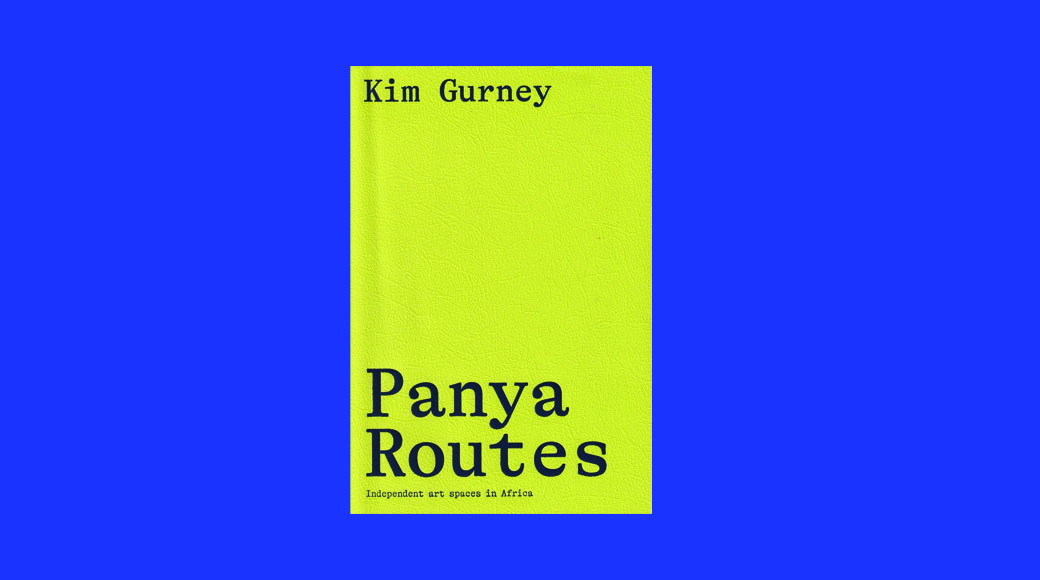
Join ACC and the Michaelis Galleries for a lunchtime lecture by Dr Kim Gurney on her latest book Panya Routes: Independent art spaces in Africa, on Thursday, 31 August 2023, 13:00-14:00 at the Michaelis Lecture Theatre.
The African Centre for Cities, through Deutscher Akademischer Austauschdienst (DAAD), are calling for scholarship applications for 2025. DAAD are offering five In-Region Scholarships* for students from Sub-Saharan Africa who enrol for the MPhil Southern Urbanism (Masters in Urban Studies) programme at the University of Cape Town. If you are interested in applying for the scholarship but have questions, join MPhil Southern Urbanism convenor Anna Selmeczi for this information session. WHEN | Monday, 25 March 2024 TIME | 12:00-13:00 SAST JOIN ZOOM MEETING MEETING ID: 874 0499 7882 PASSCODE: 254675
Speakers: Percy Toriro – University of Zimbabwe and Issahaka Fuseini – University of Ghana Join this discussion between Percy Toriro and Issahaka Fuseini, who will share findings from their work as city partners in the LOGIC (off-grid) project. Percy will engage the theme of ‘Electricity visits us’: the challenges of living with poor infrastructure and services in an off-grid settlement, with a focus on Dzivarasekwa, Zimbabwe. Issahaka will speak to the realities of off-griddedness and various assemblages to adapt to water scarcity and sanitation challenges in Tamale, Ghana. These inputs will be followed by reflections by Hayley MacGregor (IDS) locating these discussions within the overlooked intersections between urban studies, the “infrastructure turn” and emerging urban food, nutrition and wider wellbeing debates. This brownbag will build on the earlier conversations by Mercy Brown Luthango and Iromi Perera and the LOGIC (off grid) project, speaking to research in two additional project cities. WHEN: Thursday, 11 April 2024 TIME: 15h30 - 16h30 VENUE: Studio 1, Environmental and Geographical Sciences Building, Upper Campus, University of Cape Town ABOUT THE SPEAKERS Percy Toriro has over 20 years’ experience as a city planner, having been the Chief Planner for the City of Harare for 10 years. Dr Toriro also leads the Urban Planning Program at the Municipal Development Partnership (MDP) a network spanning 15 Southern African countries, engaging in urban development challenges. Percy holds a PhD from the University of Cape Town. His research has covered urban infrastructure, urban housing, urban informality, housing, governance, food systems and environment. Percy’s work sees him interacting with national, regional and local governments in different countries and cities. Percy served four terms as President of the Zimbabwe Institute of Regional and Urban Planners (ZIRUP). Percy holds an adjunct lectureship position at the University of Zimbabwe. Issahaka Fuseini is a senior lecturer at the University of Ghana, Ghana. Issahaka holds a PhD from Stellenbosch University. Issahaka’s research interest spans food systems governance, collaborative local-level governance, and inclusive urban development. Issahaka previously worked at the African Centre for Cities, University of Cape Town, during which time he was involved in multi-country, interdisciplinary projects aimed at improving urban food systems governance and nutrition security in nine cities in Kenya, Zambia, Zimbabwe, Namibia, and South Africa. Presently, Issahaka is a co-investigator responsible for the Ghanaian component of a UKRI-sponsored multi-country research project (under the Global Challenges Research Fund’s Off-Grid Cities call) that is being implemented in five cities in Ghana, South Africa, Zimbabwe, India, and Sri Lanka. This project seeks to understand how access to or the lack of infrastructure, broadly defined, impacts the food and nutrition security of marginalised populations in cities in the Global South. Issahaka is also a lead partner in a city dialogue, facilitated by RUAF/FAO, that is aimed at developing a city-level food systems governance agenda for his home city of Tamale, Ghana.
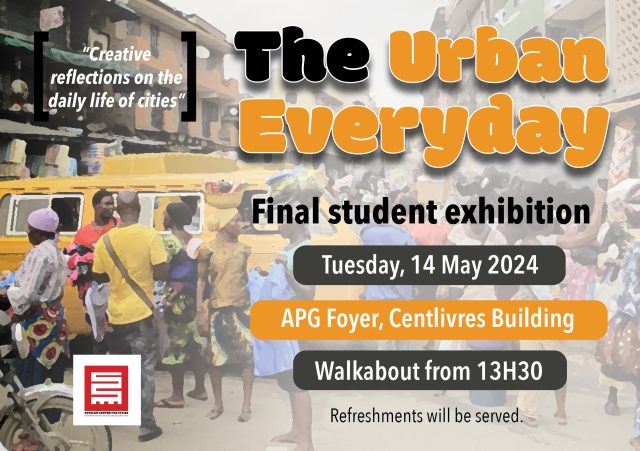
The ‘Urban Everyday’ offers a perspective on city-making that explores agency found in intersecting practices of occupation and adaptation, engagement and participation, resistance and protest, as well as waiting, encountering and imagining the city, its inhabitants and the state. In tracking diverse forms of agency, this framework of urban inquiry explores the substance of the city – its housing and land struggles, experiences of work and strategies to make ends meet, as well as questions of identity and belonging. It also examines how these diverse urban experiences frequently meet, compete with, and rub up against rights, policies, and state techniques. In this exhibition, postgraduate students present their creative reflections on different course themes and grapple with the question of how we can hold structural forces in productive tension with ordinary forms of agency. By focusing on seemingly mundane practices, their works offer provocative points of entry for questioning how we theorize Southern cities and engage in imagining and building their future. Participating students come from the following programs: MPhil Southern Urbanism (African Centre for Cities), MA Critical Urbanisms (University of Basel in collaboration with the African Centre for Cities), MA Urban Design and EGS Honours.
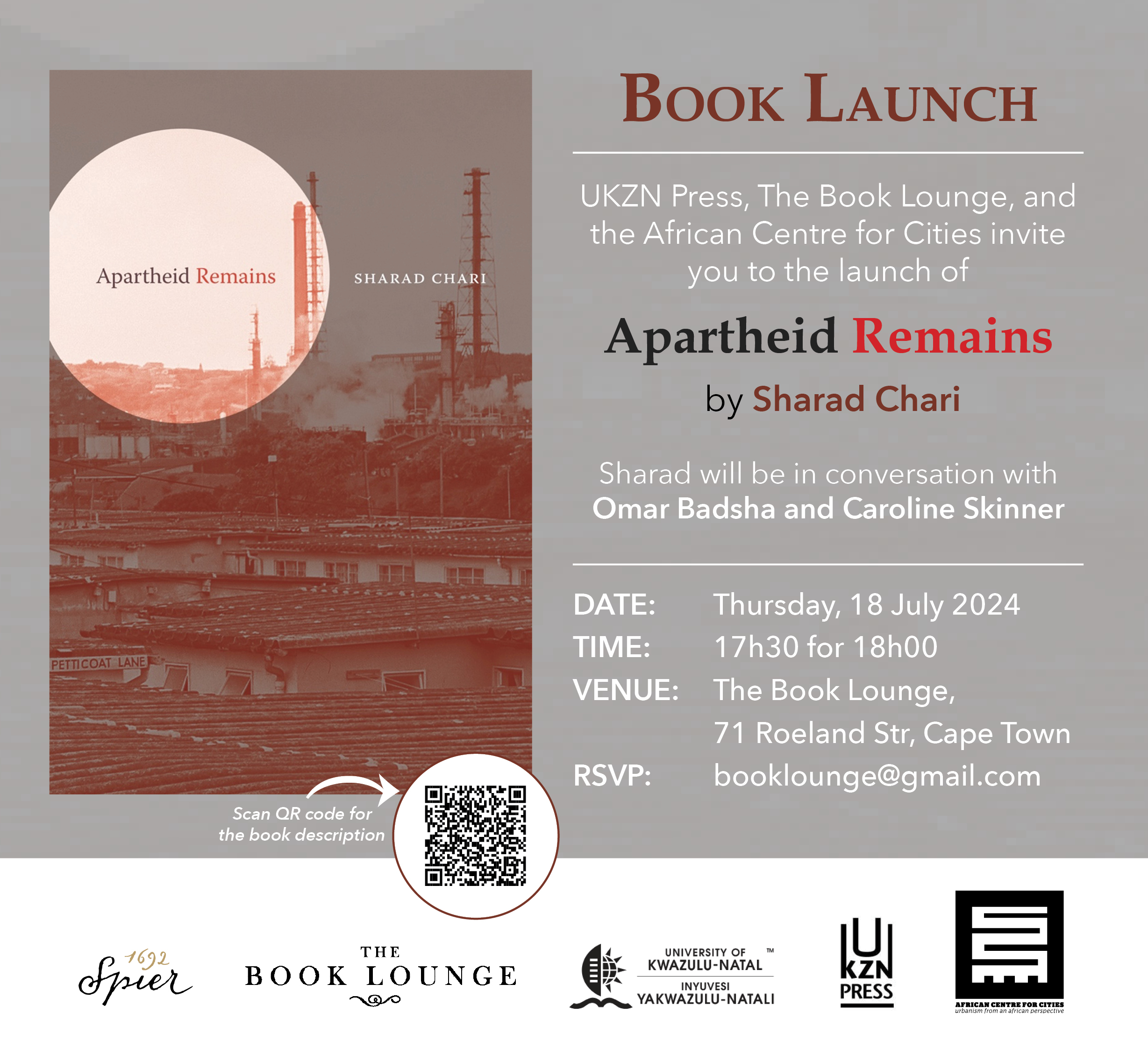
UKZN Press, The Book Lounge and the African Centre for Cities invite you to the launch of 'Apartheid Remains' by Sharad Chari. Sharad will be in conversation with Omar Badsha and Caroline Skinner. DATE | Thursday, 18 July 2024 TIME| 17h30 for 18h00 VENUE | The Book Lounge, 71 Roeland Str, Cape Town RSVP | booklounge@gmail.com About the book: In Apartheid Remains, Sharad Chari explores how people handle the remains of segregation and apartheid in South Africa as witnessed through portals in an industrial-residential landscape in the Indian Ocean city of Durban. Through long-term historical and ethnographic research, Chari portrays South Africa’s twentieth century as a palimpsest that conserves the remains of multiple pasts, including attempts by the racial state to remake territory and personhood while instead deepening spatial contradictions and struggles. When South Durban’s denizens collectively mobilised in various ways – through Black Consciousness politics and other attempts at refusing the ruinous articulation of biopolitics, sovereignty and capital – submerged traditions of the Indian Ocean and the Black Atlantic offered them powerful resources. Of these, Chari reads Black documentary photography as particularly insightful audiovisual blues critique. At the tense interface of Marxism, feminism and Black study, he offers a method and form of geography attentive to the spatial and embodied remains of history. Apartheid Remains looks out from South Durban to imaginations of abolition of all forms of racial capitalism and environmental suffering that define our planetary predicament. Sharad Chari is Associate Professor of Geography and Critical Theory at the University of California, Berkeley; Research Associate at the Wits Institute for Social and Economic Research (WiSER); and author of Gramsci at Sea and Fraternal Capital: Peasant-Workers, Self-Made Men, and Globalization in Provincial India. Apartheid Remains is published by UKZN Press.
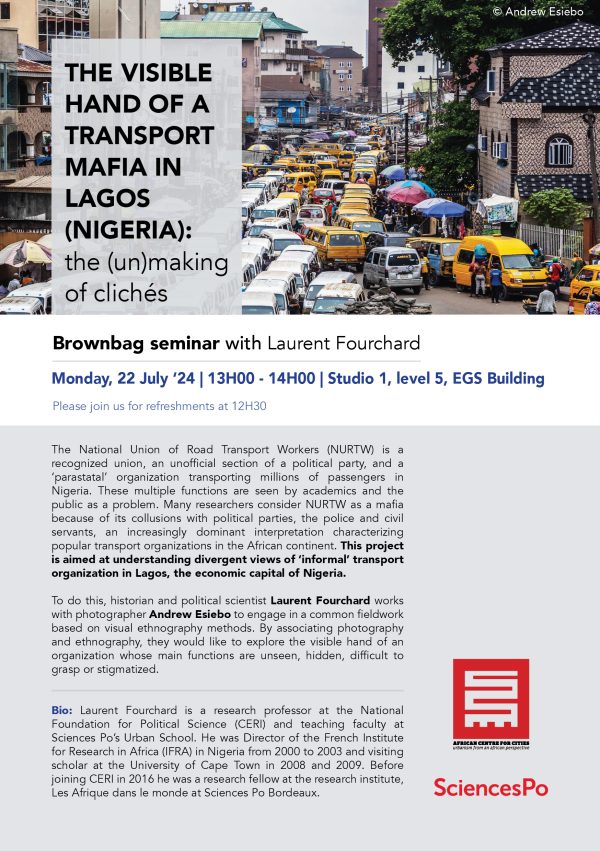
The National Union of Road Transport Workers (NURTW) is a recognized union, an unofficial section of a political party, and a 'parastatal' organization transporting millions of passengers in Nigeria. These multiple functions are seen by academics and the public as a problem. Many researchers consider NURTW as a mafia because of its collusions with political parties, the police and civil servants, an increasingly dominant interpretation characterizing popular transport organizations in the African continent. This project is aimed at understanding divergent views of 'informal' transport organization in Lagos, the economic capital of Nigeria. To do this, historian and political scientist Laurent Fourchard works with photographer Andrew Esiebo to engage in a common fieldwork based on visual ethnography methods. By associating photography and ethnography, they would like to explore the visible hand of an organization whose main functions are unseen, hidden, difficult to grasp or stigmatized. Bio: Laurent Fourchard is a research professor at the National Foundation for Political Science (CERI) and teaching faculty at Sciences Po's Urban School. He was Director of the French Institute for Research in Africa (IFRA) in Nigeria from 2000 to 2003 and visiting scholar at the University of Cape Town in 2008 and 2009. Before joining CERI in 2016 he was a research fellow at the research institute, Les Afrique dans le monde at Sciences Po Bordeaux.