Urban Humanities Seminar Series: The Invention of the ‘Sink Estate’: Consequential Categorization and the UK Housing Crisis

Studio 3 Environmental and Geographical Sciences Building, Upper Campus, UCT, Cape Town, South Africa

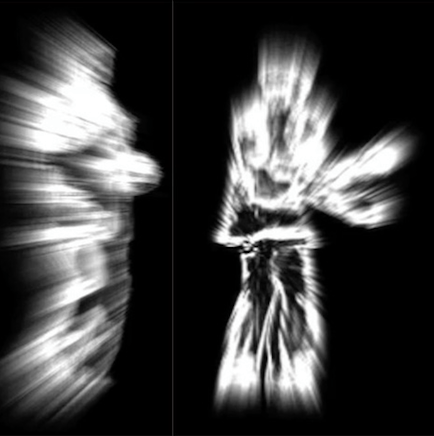
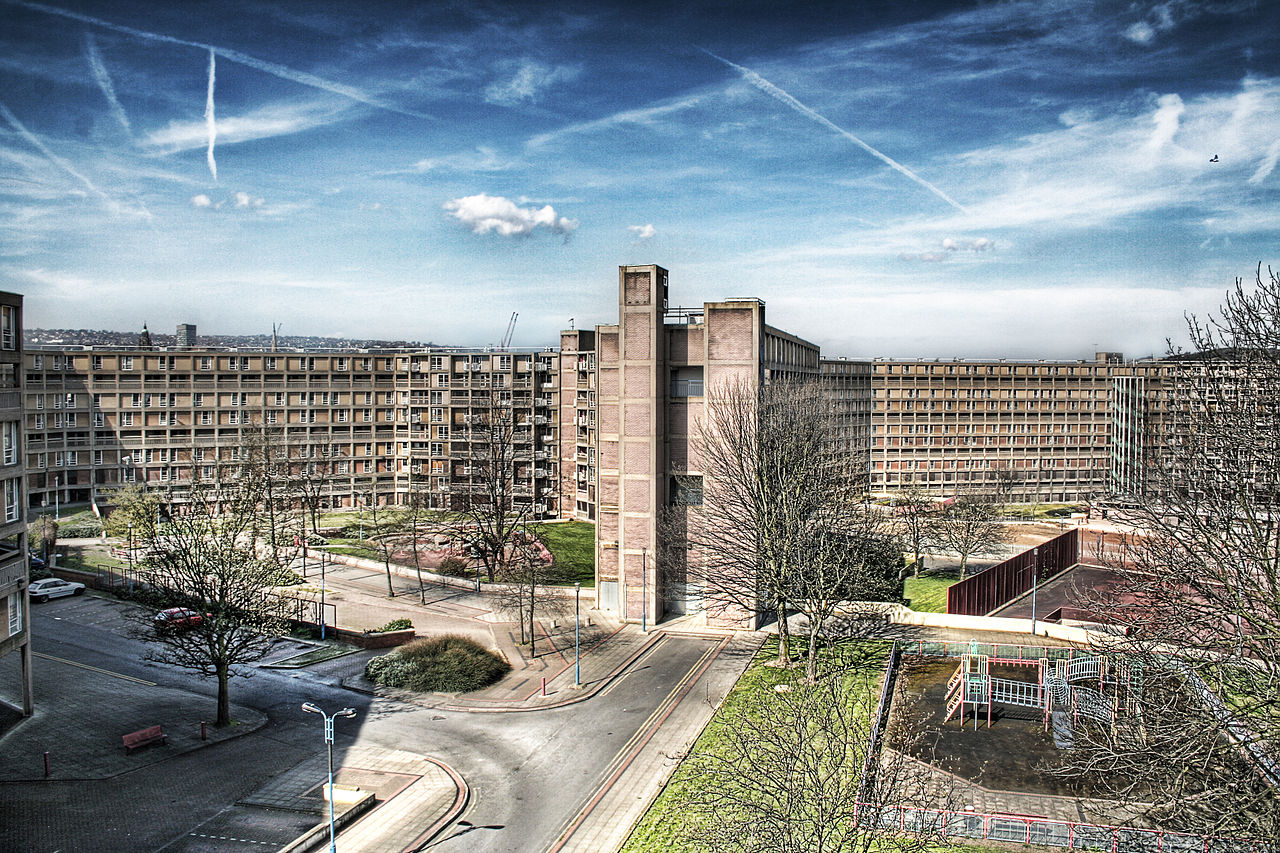
The Invention of the ‘Sink Estate’: Consequential Categorization and the UK Housing Crisis presented by Tom Slater explores the history and traces the realisation of a category that was invented by journalists, amplified by free market think tanks and converted into policy doxa (common sense) by politicians in the United Kingdom: the ‘sink estate’. This derogatory designator, signifying social housing estates that supposedly create poverty, family breakdown, worklessness, welfare dependency, antisocial behaviour and personal irresponsibility, has become the symbolic frame justifying current policies towards social housing that have resulted in considerable social suffering and intensified dislocation. The article deploys a conceptual articulation of agnotology (the intentional production of ignorance) with Bourdieu’s theory of symbolic power to understand the institutional arrangements and cognitive systems structuring deeply unequal social relations. Specifically, the highly influential publications on housing by a free market think tank, Policy Exchange, are dissected in order to demonstrate how the activation of territorial stigma has become an instrument of urban politics. The ‘sink estate’, it is argued, is the semantic battering ram in the ideological assault on social housing, deflecting attention away from social housing not only as urgent necessity during a serious crisis of affordability, but as incubator of community, solidarity, shelter and home. WHEN: Thursday 20 September 2018 TIME: 15:00 to 16:30 VENUE: Studio 3, Environmental and Geographical Science Building, Upper Campus, UCT  

Urban Humanities: Speculative Indigeneity – A (K)new Now by heeten bhagat

Studio 3, Environmental and Geographical Science Building, Upper Campus, UCT, Cape Town, South Africa

Join ACC for a brown bag lecture by PhD student heeten bhagat on entitled Speculative Indigeneity -- A (K)new Now.  Heeten holds a BA in Design and Merchandising from The American College in London and a Masters in Audio Visual Production from London Metropolitan University. His initial training as a pattern cutter has allowed him the chance to grow, and, to experience and work: designing period costumes; building sets for adventure programmes; making experimental films; curating a national gallery; teaching at a French university; providing strategic support to newer organisations; making curious podcasts; and inviting a provocative hybridity to his family’s cookbook. Currently journeying through a PhD, he simultaneously offer creative, strategic, and manual support to a number of organisations and communities regionally. His research delves into notions of indigenousness and indigeneity in contemporary Zimbabwe. Of particular focus is the objective to explore/engineer/imagine methodologies, through speculative research, that trouble indigenous essentialisms.

Urban Humanities: Conversations on cultural mapping and planning

Studio 3 Environmental and Geographical Sciences Building, Upper Campus, UCT, Cape Town, South Africa

“Cultural planning sits at the intersection of people, places and policies— It provides a framework for addressing the needs and objectives of a city’s cultural sector and cultural life including arts, culture and heritage groups and practitioners that shape a city’s cultural ecosystem.”   Dr Rike Sitas will facilitate a discussion between three panelists that will look at how cultural mapping and planning responds to different research contexts depending on the questions asked and the way in which every day cultural practises unfold in different communities, namely, Hanover Park and Mannenberg, Cosmo City and Mitchells Plain. The overall aims of this research is to unearth some of the cultural practises and narratives in deprived communities in South African cities and how people navigate and express themselves despite the lack of material resources and services. These types of research projects also help to inform policy around arts and cultural services for local government.   BIOS Shamila Rahim is a cultural worker and activist who has worked extensively in the Arts, Cultural and Heritage sector in Cape Town for the last 25 years. Currently she works at City of Cape Town as a Professional Officer in the Arts and Culture Branch. Her interests are in understanding and using arts, culture and heritage as agents to facilitate mind set change which empower the individual to voice and become active in creating positive narratives of themselves and society as a whole.   Vaughn Sadie is a conceptual artist, educator and researcher, living and working in Cape Town (South Africa). He is currently registered in the PhD Programme at the Urban Futures Centre at the Durban University of Technology and work at African Centre for Cities as a researcher. He is interested in interdisciplinary and participatory practices, and the place of art in various social contexts.   Alicia Fortuin is a Masters Graduate from the School of Architecture and Planning where she completed her Masters degree in City and Regional Planning. Her Dissertation looked at the Spaces of and for Participation in the Restitution of land in District Six. It is through this research process where her interests in urban governance, rights, community participation and healing and memory evolved. She has most recently received the Pan African College Phd Scholarship at the African Centre for Cities, where she will be embarking on a PHD journey which will look at the impacts and of land use dynamics and urban sprawl on young professionals in Cape Town.

Urban Humanities: Storytelling as method: migration, gender and inclusion in Durban

Studio 3 Environmental and Geographical Sciences Building, Upper Campus, UCT, Cape Town, South Africa

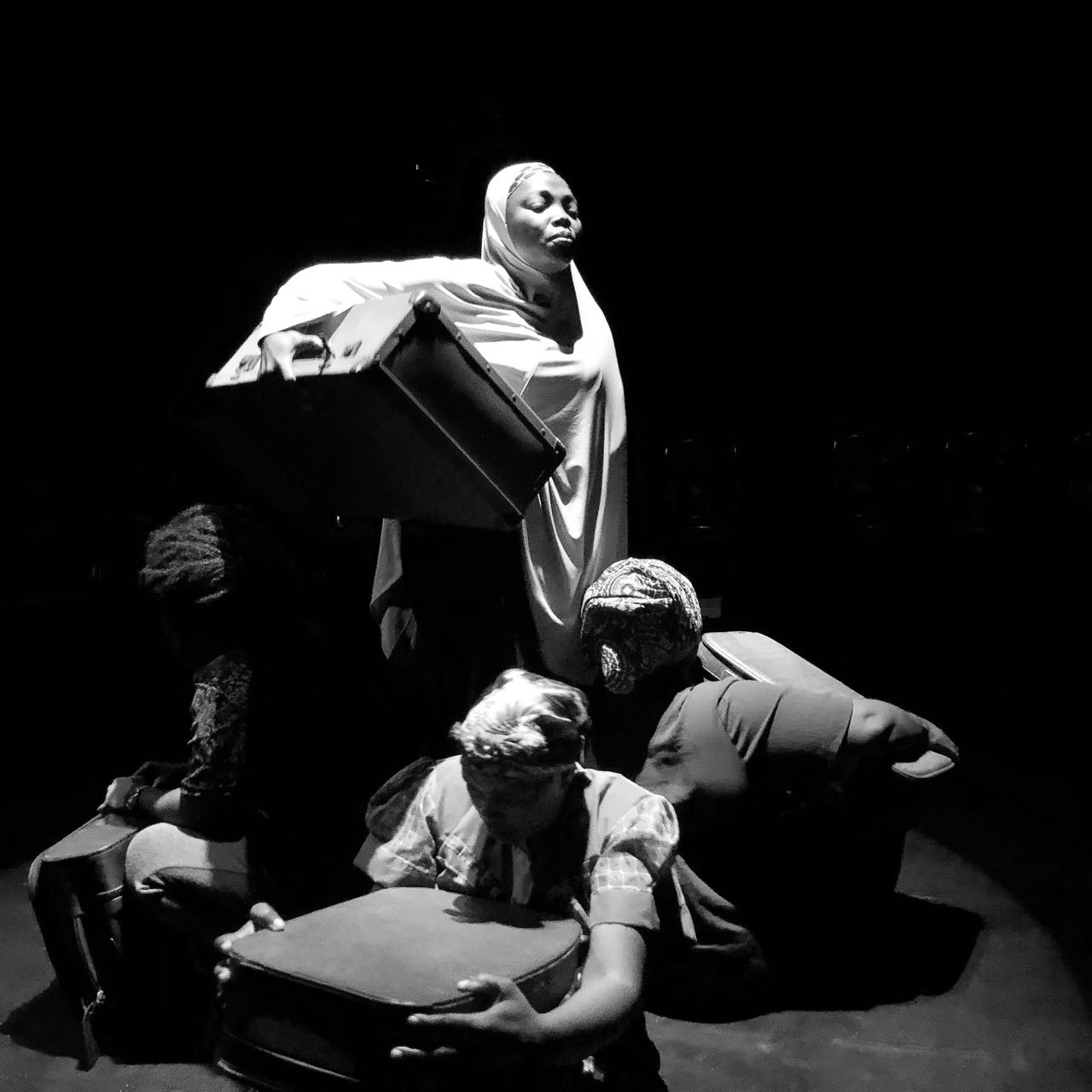
ABSTRACT Storytelling as a form of urban scholarship has the potential for empathetic ways of producing knowledge, understanding, seeing and being in the city. This seminar explores how storytelling in a multitude of forms can be a productive method for data collection, public dissemination and advocacy for social justice. It discusses this based on a year and half long partnership project between scholars and civil society organisations on Migration, Gender and Inclusion in the city of Durban. In this project women’s stories of arriving in the city and making it something like home were positioned at the centre of project activities. Thirty oral histories of migrant women, both South African women living in a Durban hostel and women arriving from the DRC, Zimbabwe, Nigeria and Uganda formed the primary data set. These narratives were then developed into a verbatim theatre performance titled The Last Country that was performed in many different settings around the city. The seminar outlines how the play was both a form of storytelling in itself, making accessible the oral history data to a broader public audience, and a form of data collection through discussion sessions with audience members and city officials. This seminar looks at the learnings and challenges we experienced through being a part of a project built around the idea of sharing stories in the city.   BIOGRAPHY Dr Kira Erwin is a sociologist and senior researcher at the Urban Futures Centre at the Durban University of Technology. Kira's research and publications focus largely around race, racialisation, racism and anti-racism work in South Africa. She is interested in how place identities related to space and the built environment impact on ideas of social difference. Kira makes use of creative participatory methods in her research and engagement projects, and collaborates with colleagues in the creative arts to design forms of storytelling that extend research findings beyond the walls of academia. WHEN: 18 October 2018 TIME: 15:00 - 16:30 VENUE: Studio 3, Environmental and Geographical Science Building, Upper Campus, UCT
Urban Humanities: False Bay: Perspectives from the Environmental Humanities

Studio 1 Environmental and Geographical Sciences Building, Upper Campus, UCT, Cape Town, South Africa

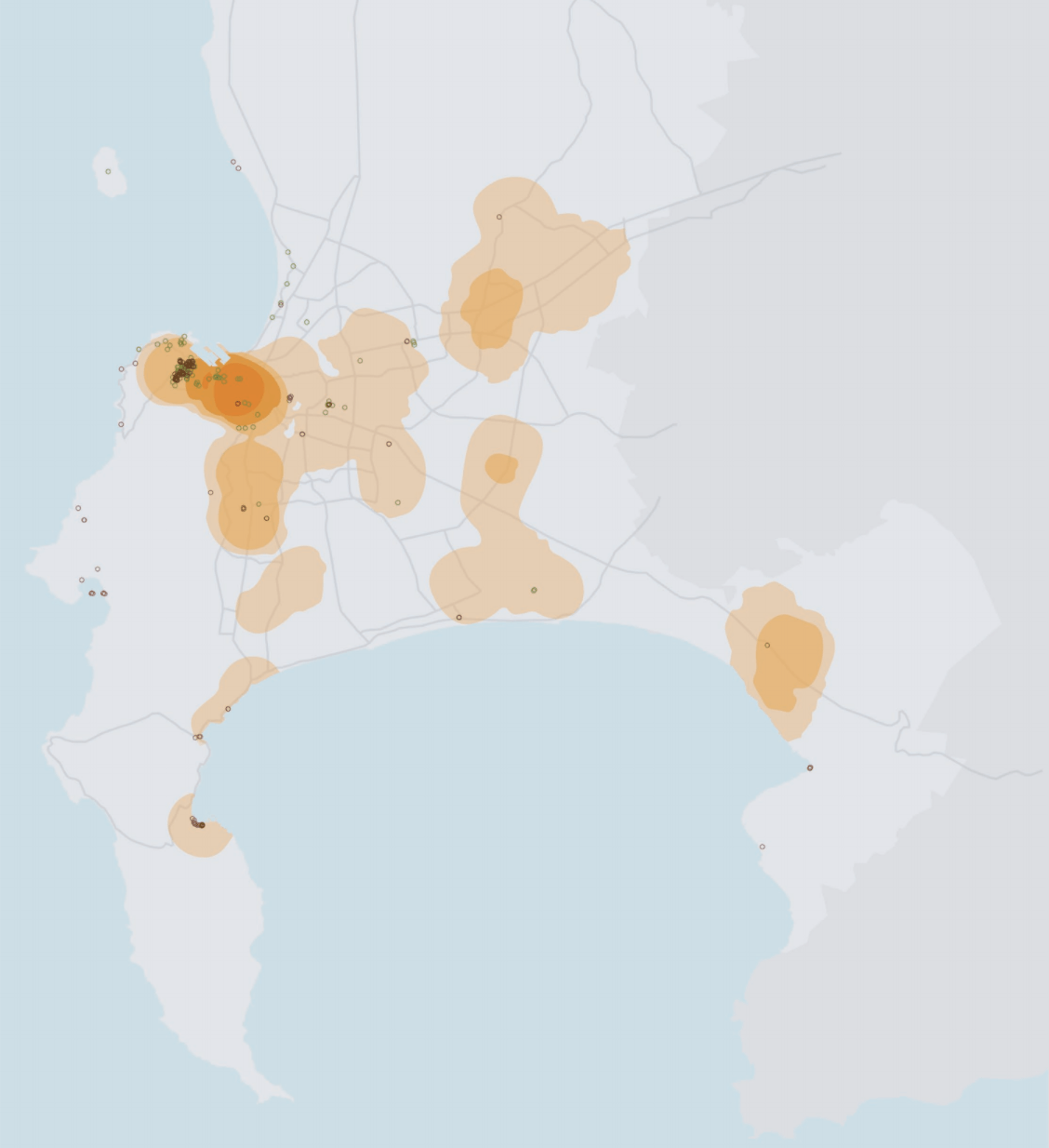
ACC is very excited to host Dr Shari Daya in conversation with Dr Hedley Twidle, reflecting on the Environmental Humanities through encounters with False Bay. Dr Twidle is a senior lecturer in the English Department at UCT. "I joined the department in 2010 as a lecturer in southern African and postcolonial literatures. Much of my current work addresses contemporary life-writing and non-fiction narrative. What, after all, does the word ‘literary’ signify in a phrase like ‘literary non-fiction’?  And how can one explore the array of non-fictional modes that are simultaneously drawn on, refashioned and blurred into each other in South African writing: experimental auto/biography, investigative journalism, the Struggle memoir, the diary, microhistorical and archival reconstruction. My research also explores the difficult relation between environmental thought and social history in southern Africa. Since 2013 I have been involved in the conceptualisation and planning of a new interdisciplinary M Phil in the Environmental Humanities, launched in February 2015. I am also a member of the Archive and Public Culture research initiative, a dynamic intellectual space where new research can be presented to experts in the field".

Urban Humanities: Contextualising strategies to enable LGBT rights in Africa: legitimacies, spatial inequalities and socio-spatial relationships

Studio 3 Environmental and Geographical Sciences Building, Upper Campus, UCT, Cape Town, South Africa

Join us for the an Urban Humanities academic seminar entitled Contextualising strategies to enable LGBT rights in Africa: legitimacies, spatial inequalities and socio-spatial relationships, by Dr Andrew Tucker on Thursday, 1 November 2018 at 15:00. ABSTRACT This paper explores the potential benefits of relationally considering the efficacy of radically different strategies to support LGBT rights in Africa. While a great deal has been written about the deployment of human rights-based framings to support LGBT needs on the continent, less attention has been paid to other emergent strategies based around HIV/AIDS programming and economic development initiatives. This paper sets out a schema to consider the relational nature of these different strategies and highlights how such a schema can also enable researchers to better understand how civil society groups strategically and pragmatically harness different approaches in particular places and at particular times. WHEN: Thursday, 1 November 2018 TIME: 15:00 to 16:30 VENUE: Studio 3, Environmental and Geographical Sciences Building, Upper Campus, UCT

Mistra Urban Futures Realising Just Cities – Comparative Co-production

SunSquare Hotel 23 Buitengracht Street, Cape Town , Western Cape, South Africa

The rapidly growing number of people moving into cities all over the world presents a challenge of unprecedented size. It is crucial to find ways to make urbanisation a source for wealth, health and sustainability – which is shared. Mistra Urban Futures arranges Annual Conferences about Realising Just Cities, which are hosted at our research platforms. The 2018 conference will take place in Cape Town, South Africa and focus on comparative co-production and how we jointly can address global urban challenges. The conference intends to share and reflect on a selection of the comparative projects that have been co-produced in Mistra Urban Futures’ second phase: Cultural Heritage and Just Cities; Knowledge Transfer through embedded research; Migration and Urban Development; Participatory Cities; Solid Waste Management; Sustainable Development Goals; Transportation and Urban Development; Urban Food Value Chain and Urban Public Finance. Dates Internal workshops The internal workshops, only available for invited participants involved in Mistra Urban Futures' comparative projects, will be held on 5 November 2018. Find the internal programme here Conference The conference takes place on 6 and 7 November 2018. Find the programme here Follow the ACC social media channels for live reporting from the conference: Facebook Twitter  

Public Finance – the Life Blood of our Cities?

Studio 1 Environmental and Geographical Sciences Building, Upper Campus, UCT, Cape Town, South Africa

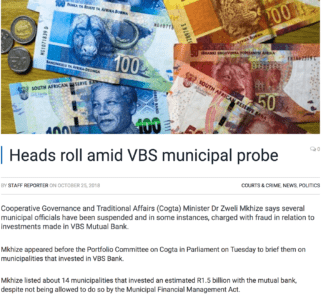
Bushbuckridge mayor embarks on debt collection exercise “The municipality has disclosed that it is owed R1 billion in unpaid municipal services such as water supply, refuse removal and property rates.” – Mpumalanga News, 1 October 2018   Heads Roll Amid VBS Municipal Probe “Cooperative Governance and Traditional Affairs (Cogta) Minister Dr Zweli Mkhize says several municipal officials have been suspended and in some instances, charged with fraud in relation to investments made in VBS Mutual Bank.”  – AllAfrica.com 23 October 2018   Join African Centre for Cities on Monday, 19 November 2018, from 15:00 to 17:00 for a lecture by Dr Matthew Glasser on public finance.  Across the globe, there is increasing emphasis on the role of cities and local government in delivering services, meeting the Sustainable Development Goals, addressing climate change, and equalizing opportunity. These assigned roles do not often translate into reality. Many South African municipalities are failing to provide effective services to their residents. Part of the reason for this are the regular financial crises which local governments face. Importantly, South Africa is one of very few countries in the world that has specific legislation intended to resolve fiscal problems at the municipal scale.  This legislation is little known and little used. In 2000-2003, Dr Matthew Glasser helped develop the legislation regarding financial problems in municipalities, as reflected in Section 139 (as amended) of the Constitution, and Chapter 13 of the Municipal Finance Management Act.  For the last two years, he has been working with National Treasury to take stock of the implementation of those provisions over the intervening 15 years. At this seminar, we will discuss the legal and regulatory framework that was developed to deal with financial emergencies in South African cities; review the experience to date with implementation of that framework; and reflect on the ways in which South Africa’s social and political context shapes local implementation. Glasser will discuss the genesis of the legislation, the divergence between legal framework and actual implementation, and the important Emalahleni litigation related to fiscal intervention in municipalities, which has set an important precedent in South Africa.  There will be ample time to discuss the fiscal challenges of South African local and city government, following the lecture. WHEN: Monday, 19 November 2018 TIME: 15:00 to 16:30 VENUE: Studio 1, Environmental and Geographical Science Building, Upper Campus, UCT
LAUNCH: ‘Tomatoes & Taxi Ranks: Running our Cities to Fill the Food Cap’

The Book Lounge 71 Roeland Street, Cape Town, South Africa

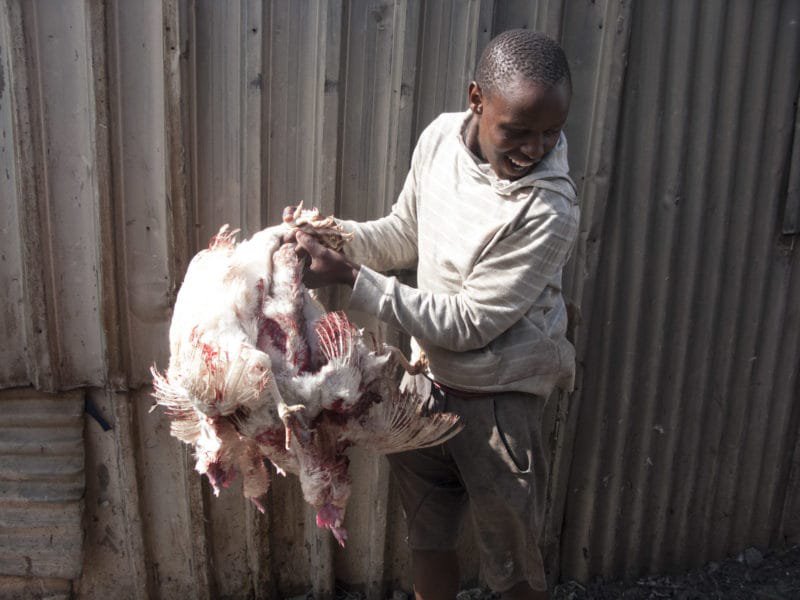
Join ACC for the Cape Town launch of Tomatoes & Taxi Ranks: Running our Cities to Fill the Food Gap, by Leonie Joubert with Jane Battersby and Vanessa Watson published by the African Centre for Cities on Wednesday, 21 November 2018, 17:30 for 18:00 at The Book Lounge, 71 Roeland Street, Cape Town. Author Leonie Joubert will be in conversation with Nancy Richards. The book is based on research conducted by the Consuming Urban Poverty team comprised of urban geographers, sociologists, economists and planners from the African Centre for Cities (ACC) at the University of Cape Town, Copperbelt University in Zambia, the University of Zimbabwe, and the Kisumu Local Interaction Platform (KLIP), in Kisumu, Kenya. Tomatoes & Taxi Ranks, illustrated with evocative photography by Samantha Reinders and Masixole Feni, distills the research into a digestible read and is published alongside the academic book Urban Food Systems Governance and Poverty in African Cities (Routledge, 2018) edited by Jane Battersby and Vanessa Watson. Both book are available as Open Access downloads from www.tomatoesandtaxiranks.org.za Hard copies of the book are available for purchase from The Book Lounge for R150. All proceeds are donated to the Open Box School Library project.

Exhibition: ‘this image may contain’ by heeten bhagat

The Quad, The Arena Theatre Cape Tpwn

Join ACC's PhD candidate heeten bhagat for 'this image may contain' - a visual articulation of research in speculative indigeneities on Wednesday, 21 November 2018, 18:00 at The Quad, The Arena Theatre. The aim of this doctoral research was to attempt an interdisciplinary approach to search for registers (and absences) of indigeneity through a close reading of the 2017 Independence day celebration, held at the National Sports Stadium in Harare, Zimbabwe. The focus of this study was motivated by two distinct elements from the event: The first is a banner that hangs over the official entrance to the performance arena, that declares – ‘ZIMBABWE WILL NEVER A BE COLONY AGAIN’. The second element is a fragment from the president’s address to the nation at this ceremony, which proclaims, "…..we can now call ourselves full the masters of our destiny". This works on show constitute the concluding articulation of this research journey into notions of speculative and speculating indigeneities.