Mistra Urban Futures Realising Just Cities – Comparative Co-production

SunSquare Hotel 23 Buitengracht Street, Cape Town , Western Cape, South Africa

The rapidly growing number of people moving into cities all over the world presents a challenge of unprecedented size. It is crucial to find ways to make urbanisation a source for wealth, health and sustainability – which is shared. Mistra Urban Futures arranges Annual Conferences about Realising Just Cities, which are hosted at our research platforms. The 2018 conference will take place in Cape Town, South Africa and focus on comparative co-production and how we jointly can address global urban challenges. The conference intends to share and reflect on a selection of the comparative projects that have been co-produced in Mistra Urban Futures’ second phase: Cultural Heritage and Just Cities; Knowledge Transfer through embedded research; Migration and Urban Development; Participatory Cities; Solid Waste Management; Sustainable Development Goals; Transportation and Urban Development; Urban Food Value Chain and Urban Public Finance. Dates Internal workshops The internal workshops, only available for invited participants involved in Mistra Urban Futures' comparative projects, will be held on 5 November 2018. Find the internal programme here Conference The conference takes place on 6 and 7 November 2018. Find the programme here Follow the ACC social media channels for live reporting from the conference: Facebook Twitter  

Public Finance – the Life Blood of our Cities?

Studio 1 Environmental and Geographical Sciences Building, Upper Campus, UCT, Cape Town, South Africa

Bushbuckridge mayor embarks on debt collection exercise “The municipality has disclosed that it is owed R1 billion in unpaid municipal services such as water supply, refuse removal and property rates.” – Mpumalanga News, 1 October 2018   Heads Roll Amid VBS Municipal Probe “Cooperative Governance and Traditional Affairs (Cogta) Minister Dr Zweli Mkhize says several municipal officials have been suspended and in some instances, charged with fraud in relation to investments made in VBS Mutual Bank.”  – AllAfrica.com 23 October 2018   Join African Centre for Cities on Monday, 19 November 2018, from 15:00 to 17:00 for a lecture by Dr Matthew Glasser on public finance.  Across the globe, there is increasing emphasis on the role of cities and local government in delivering services, meeting the Sustainable Development Goals, addressing climate change, and equalizing opportunity. These assigned roles do not often translate into reality. Many South African municipalities are failing to provide effective services to their residents. Part of the reason for this are the regular financial crises which local governments face. Importantly, South Africa is one of very few countries in the world that has specific legislation intended to resolve fiscal problems at the municipal scale.  This legislation is little known and little used. In 2000-2003, Dr Matthew Glasser helped develop the legislation regarding financial problems in municipalities, as reflected in Section 139 (as amended) of the Constitution, and Chapter 13 of the Municipal Finance Management Act.  For the last two years, he has been working with National Treasury to take stock of the implementation of those provisions over the intervening 15 years. At this seminar, we will discuss the legal and regulatory framework that was developed to deal with financial emergencies in South African cities; review the experience to date with implementation of that framework; and reflect on the ways in which South Africa’s social and political context shapes local implementation. Glasser will discuss the genesis of the legislation, the divergence between legal framework and actual implementation, and the important Emalahleni litigation related to fiscal intervention in municipalities, which has set an important precedent in South Africa.  There will be ample time to discuss the fiscal challenges of South African local and city government, following the lecture. WHEN: Monday, 19 November 2018 TIME: 15:00 to 16:30 VENUE: Studio 1, Environmental and Geographical Science Building, Upper Campus, UCT

LAUNCH: ‘Tomatoes & Taxi Ranks: Running our Cities to Fill the Food Cap’

The Book Lounge 71 Roeland Street, Cape Town, South Africa

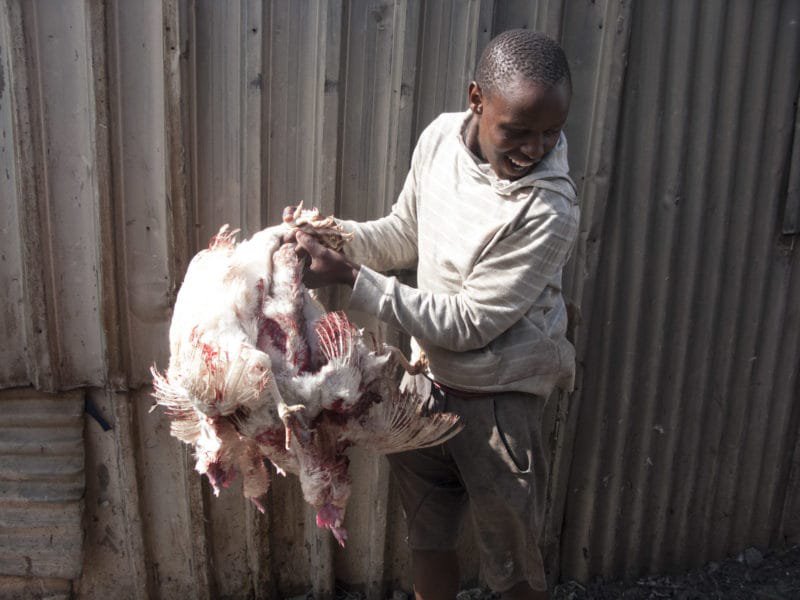
Join ACC for the Cape Town launch of Tomatoes & Taxi Ranks: Running our Cities to Fill the Food Gap, by Leonie Joubert with Jane Battersby and Vanessa Watson published by the African Centre for Cities on Wednesday, 21 November 2018, 17:30 for 18:00 at The Book Lounge, 71 Roeland Street, Cape Town. Author Leonie Joubert will be in conversation with Nancy Richards. The book is based on research conducted by the Consuming Urban Poverty team comprised of urban geographers, sociologists, economists and planners from the African Centre for Cities (ACC) at the University of Cape Town, Copperbelt University in Zambia, the University of Zimbabwe, and the Kisumu Local Interaction Platform (KLIP), in Kisumu, Kenya. Tomatoes & Taxi Ranks, illustrated with evocative photography by Samantha Reinders and Masixole Feni, distills the research into a digestible read and is published alongside the academic book Urban Food Systems Governance and Poverty in African Cities (Routledge, 2018) edited by Jane Battersby and Vanessa Watson. Both book are available as Open Access downloads from www.tomatoesandtaxiranks.org.za Hard copies of the book are available for purchase from The Book Lounge for R150. All proceeds are donated to the Open Box School Library project.

Exhibition: ‘this image may contain’ by heeten bhagat

The Quad, The Arena Theatre Cape Tpwn

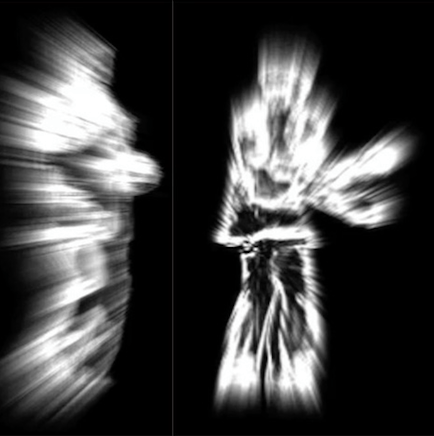
Join ACC's PhD candidate heeten bhagat for 'this image may contain' - a visual articulation of research in speculative indigeneities on Wednesday, 21 November 2018, 18:00 at The Quad, The Arena Theatre. The aim of this doctoral research was to attempt an interdisciplinary approach to search for registers (and absences) of indigeneity through a close reading of the 2017 Independence day celebration, held at the National Sports Stadium in Harare, Zimbabwe. The focus of this study was motivated by two distinct elements from the event: The first is a banner that hangs over the official entrance to the performance arena, that declares – ‘ZIMBABWE WILL NEVER A BE COLONY AGAIN’. The second element is a fragment from the president’s address to the nation at this ceremony, which proclaims, "…..we can now call ourselves full the masters of our destiny". This works on show constitute the concluding articulation of this research journey into notions of speculative and speculating indigeneities.

BROWNBAG SEMINAR: How Cities Respond to Climate Change: Ambition and Reality of European and African Cities

Studio 5 Environmental and Geographical Sciences Building, Upper Campus, Cape Town, South Africa

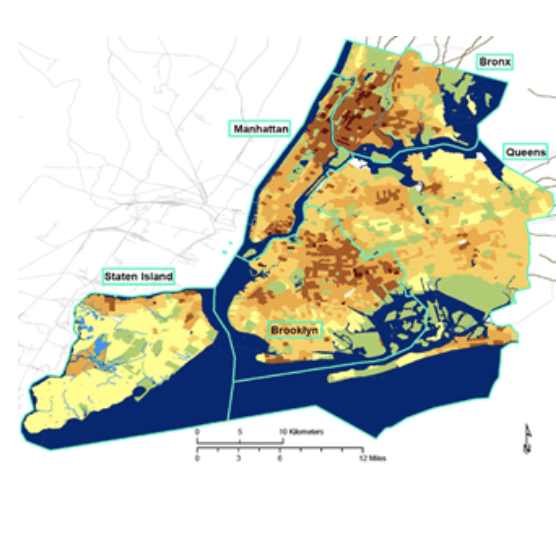
Join ACC and ACDI for a lunchtime brownbag seminar by Diana Reckien, Associate Professor, University of Twente, Netherlands entitled How Cities Respond to Climate Change: Ambition and Reality of European and African Cities. WHERE: Studio 5, Level 5, Environmental & Geographical Sciences Building (EGS) UCT Upper Campus, Rondebosch WHEN: 12.30 – 1.30pm, Monday 28 January 2019 Diana Reckien will present some of her latest research on local climate planning in European cities, that builds on a network of 30 collaborators across the EU-28. Building up a database of the climate change response of 885 cities in the EU-28 (representative of the urban profile in their country), Diana and colleagues were able to yield insights into which cities in Europe prepare climate (adaptation or mitigation) plans and what these plans entail. This provides information about, e.g., the mitigation targets/ambitions and whether these would be sufficient to reach 1.5/2C, prominent mitigation and adaptation sectors, and modes of implementation (mainstreaming or not). Diana will then move to some of her work in African cities, presenting recent research on mainstreaming in Kigali City (Rwanda) and on environmental urban migration in northern Kenya. She will close with ideas and plans for future research, e.g. potentially open up topics for collaboration, such as perception based climate change impact analyses in African cities using FCM, cascading impacts, socially sensible adaptation options, and/or the effectiveness of adaptation plans. BIOGRAPHY Diana Reckien is Associate Professor "Climate Change and Urban Inequality" at the University of Twente, the Netherlands. She specializes at the interface of climate change and urban research, with the aim to contribute to justice efforts. One of her current research question is how climate change mitigation and adaptation policies affect and interact with social vulnerability, equity and justice, and how to set up adaptation and mitigation policies in order to avoid respective negative side-effects. Other research interests include method development for impact and adaptation assessments, and modelling approaches, social vulnerability, and climate change migration. She mainly investigates urban areas in Europe, Asia (mainly India), and Africa. To do so, she employs large comparative studies using social science methods, such as questionnaires, case study analyses and multi-variate statistics, as well as Geographic Information Systems (GIS) and Fuzzy Cognitive Mapping (FCM). Diana is Coordinating Lead Author for “Chapter 17: Decision-making options for managing risk” of the Working Group II Contribution to the IPCC Sixth Assessment Report. She led parts of the Second Assessment Report for Climate Change in Cities (ARC3.2; Eds: Rosenzweig, Solecki et al.; Cambridge University Press) - those that relate to equity and environmental justice. She serves on the Editorial Board of “Renewable and Sustainable Energy Reviews”(IF 8.050). Her publication record comprises roughly 70 publications, including 25 peer-reviewed journal papers, a number of book chapters, and two special issues.


SDGs Seminar Series: Localizing the SDGs in South Africa

Environmental and Geographical Science Building South Lane, Upper Campus, UCT, Cape Town, Western Cape, South Africa

Over the course of the next semester African Centre for Cities will be curating and hosting a series of seminars and discussions on the Sustainable Development Goals. The series kicks-off with Dr Sylvia Croese with a seminar on Localizing the SDGs in South Africa on Wednesday, 13 February 2019, at 12:30 to 14:00 in the Environmental and Geographical Sciences Building, Upper Campus, University of Cape Town. The inclusion of a standalone urban goal as part of the 17 SDGs adopted in 2015 represents the culmination of the growing recognition and acknowledgement of the importance of cities as both drivers and actors in achieving sustainable development. However, nearly four years down the line very little is known about the ways in which local governments are going about the implementation and monitoring of the SDGs. This presentation draws on on-going research in and with the City of Cape Town to shed some light on some of the factors and conditions that may limit or enable SDG localization. It kicks off a series of seminars that will be held on a monthly basis throughout 2019 on the challenges and opportunities for SDG implementation in (South) Africa. WHEN: Wednesday, 13 February 2019 TIME: 12:30 to 14:00 VENUE: Environmental and Geographical Sciences Building, Upper Campus, UCT

Bad Health in a Good Retreat: Life and Death in the ‘Worst’ Neighborhood of São Paulo, Brazil

Studio 1 Environmental and Geographical Sciences Building, Upper Campus, UCT, Cape Town, South Africa

Prof Jeffrey Lesser will be presenting a seminar entitled Bad Health in a Good Retreat: Life and Death in the 'Worst' Neighborhood of São Paulo, Brazil, on Monday, 25 February 2019, 12:30 to 14:00, in the Studio 1, Environmental and Geographical Science Building, Upper Campus, UCT. ABSTRACT Bom Retiro was (and is) a small neighborhood in the huge megalopolis of São Paulo, Brazil.  The mainly working class neighborhood has been populated since the end of the 19th century by immigrants, migrants from the impoverished Brazilian northeast, and Afro-Brazilian descendants of slaves. While the cultural backgrounds of the immigrants have shifted (from Italians, Spaniards and Portuguese Catholics in the early 20th century to East European Jews in the mid-20th century to Chinese, Korean, Paraguayan, and Bolivian immigrants today), the neighborhood has been viewed internally and externally as one where health (in the broadest sense of the word) is precarious. “Bad Health in a Good Retreat” analyzes the relationship between “Public Health” (as a state driven set of policies and linked enforcement) and “The Public’s Health” (how real people understand their own experiences).   By focusing on one square block of Bom Retiro from about 1900 to the present I use archival and ethnographic methods to analyze the daily practices of residents and health officials, and the stories they tell about life, death, and the spaces in between. BIOGRAPHY Jeffrey Lesser is Samuel Candler Dobbs Professor of Brazilian Studies and Director of Emory University’s Halle Institute for Global Research.  His research focus is on the construction of national identity in Brazil, focusing on how immigrant and ethnic groups understand their own and national space.   Lesser is the author of numerous prize winning books including, Immigration, Ethnicity and National Identity in Brazil (Cambridge University Press) A Discontented Diaspora: Japanese-Brazilians and the Meanings of Ethnic Militancy (Duke University Press); Negotiating National Identity: Immigrants, Minorities and the Struggle for Ethnicity in Brazil (Duke University Press);  and Welcoming the Undesirables: Brazil and the Jewish Question (University of California Press). 

Launch of ‘The Walk’

Studio 5 Environmental and Geographical Sciences Building, Upper Campus, Cape Town, South Africa

African Centre for Cities invites  you to the launch of a new publication entitled The Walk. This publication, which is based on a research study entitled The Prospects for Socio-Spatial Transformation in the Voortrekker Road Corridor by Mercy Brown-Luthango, was supported by the French Development Agency (AFD) and focuses on Maitland, Kensington and Factreton. The main concern of this study was to understand the vision of city officials and politicians, as outlined in major policy documents, and how this compares to the daily lived experiences of those who reside and conduct business in the three study areas. Please join us for a series of panel presentations followed by a facilitated discussion on the prospects and challenges for socio-spatial transformation in the Voortrekker Road Corridor Integration Zone (VRCIZ). DATE: 18 March 2019 TIME: 11:30 to 13:00 (followed by lunch) VENUE: Studio 5, Environmental and Geographical Science Building, Upper Campus, University of Cape Town PLEASE RSVP to africancentreforcities.rsvp@gmail.com by 16 March 2019 for catering purposes.

Whose Heritage Matters? Mapping, Making and Mobilising Heritage Values for Sustainable Livelihoods in Cape Town and Kisumu

Studio 1 Environmental and Geographical Sciences Building, Upper Campus, UCT, Cape Town, South Africa

Cape Town and Kisumu are two secondary African cities with high levels of poverty, unemployment and inequality. There is much interest in developing sustainable approaches to harnessing tangible and intangible heritage to address these challenges. However, cultural heritage is a value-laden concept, particularly in the context of colonial histories and urban futures. Whose heritage matters? How can we negotiate competing and plural values? How can cultural heritage be mobilised to support sustainable livelihoods? Funded by the British Academy, this co-produced action research project will bring different stakeholders and communities together to map heritage values and develop creative interventions to harness tangible and intangible heritage for sustainable development’. This Brown Bag Seminar will introduce the project, and open up a conversation about the role and value of heritage in sustainable and just urban development. When: 10 April 2019 Time: 12:00 – 13:o0 Venue: Studio 1, Environmental and Geographical Science Building, Upper Campus, UCT

SDG Seminar: Unpacking SDG implementation in eThekwini

Studio 3 Environmental and Geographical Sciences Building, Upper Campus, UCT, Cape Town, South Africa

Puvendra Akkiah, IDP Manager of eThekwini Municipality and Technical Chair of the United Cities and Local Governments Committee on Urban Strategic Planning, will present a talk entitled Unpacking SDG implementation in eThekwini on Wednesday, 17 April, at 14:00 to 15:30 in Studio 3, Environmental and Geographical Science Building, Upper Campus, UCT. Akkiah will be talking about the City of eThekwini's bottom-up approach to aligning its Integrated Development Plan to the SDGs as part of its strategic approach to sustainability and the advocacy and training activities that the City has undertaken to raise awareness and support for SDG localization. WHEN: 17 April 2019 TIME: 14:00 to 15:30 VENUE: Studio 3, Environmental and Geographical Science Building, Upper Campus, UCT.