The Integrated City: Local Cultural Policy and Sustainable Integrated Urban Development

John Martin Room, New Engineering Building Upper Campus, University of Cape Town, Cape Town, South Africa

This seminar at UCT's African Centre for Cities looks to continue a set of dialogues around cultural governance and sustainable urban development in South Africa. It brings two processes together:  The Local Cultural Policy Agenda: South African cities are potential spaces for dynamic change as a result of being the nexus for flows of people and ideas. Culture is increasingly seen as significant in urban transformation.  A long-term approach to exploring innovative urban governance frameworks that forward the use of culture has been proposed as a research agenda. These speak to new national frameworks around integrated urban development as well as revisions to the Arts and Culture White paper. Integrating the Dual City:  The African Centre for Cities recent Integration and Ideas Festival continue a interest in the role of culture for sustainable development, putting forward a number of innovative provocations to address the dual city.  These included a strong focus on issues related to culture (memory, storytelling and identity), placemaking (densified, dynamic neighborhoods) and relationality (including through mobility, solidarity networks, "hubs", and the digital space). The seminar objectives Further a dialogue between researchers working in civil society and government concerned with the culture and its role in  urban transformation. To test the viability of a specific provocation - the UCLG Agenda 21 for Culture - Culture Actions: a framework for  governance that furthers the use of culture for sustainable development in cities -  against provocations at the recent  festival, and including engaging with practitioners. To identify possible future paths of inquiry and collaboration amongst researchers based in Cape Town with those elsewhere in South Africa. WHEN: 17 August 2018 TIME: 8.30 for 9:00-15:00 VENUE: John Martin Room, New Engineering Building, UCT RSVP: Places are limited. Please send an RSVP email with any dietary requirements to africancentreforcities.rsvp@gmail.com   PROGROGRAMME 8:30-9:00 Registration and coffee 9:00-9:30   Welcome, Introduction and Viewing of Exhibition Introduction.  Providing the input on Local Cultural Policy Agenda, responding to Integration ideas Festival and introducing the UCLG Agenda 21 for Culture Actions. Speaker: Zayd Minty 9:30-10:30 Cultural Narratives - Heritage, Creativity, Urban Change Working with memory and notions of heritage, building on local creativity, provide a powerful way to build meaning for citizens and so build sense of purpose. Why is this important for cities and what can we do about it? Presenters: Naomi Roux (UCT) and Valmont Layne (UWC) Respondent: Deirdre Prins-Solani (Education, Culture and Heritage Specialist) 10:30-11:00 Tea 11:00-12:00  Place Making and the potential of Socially Engaged Public Practise There is a growing need for thinking about denser, more livable spaces that are also more resonant and meaningful through socially engaged public art/practices.  How can local government make this happen? Presenters:  Rike Sitas (UCT) and Anna Selmeczi (UCT) Respondent: Brenda Skelenge (Lukhanyo Hub) 12:00-13:00  Cultural Mapping and Planning The CoCT's Cultural Mapping and Planning initiative provides an opportunity for communities to revalue their tangible and intangible assets and begin dialogues for community change.  How is this relevant for cities? Presenters: Vaughn Sadie (UCT/DUT) and Laura Nkula-Wenz (UCT) Respondent: TBC 13:00-14:00 Lunch 14:00-15:00  Closing discussion  Way forward for research, policy and practice agendas and support network.  Led by Avril Joffe (Wits)  
Urban Humanities Seminar Series: Valmont Layne on ‘Auditing’ vernacular Cape Town as a sonic city

Studio 3

We are excited to host Valmont Layne from the University of the Western Cape's Humanities Research Centre who will be reflecting on 'Auditing’ vernacular Cape Town as a sonic city' ABSTRACT: Cape Town offers a generative example of the postcolonial port city as an affective space – especially reading its vernacular musicking lifeworld as sonic expressions of oceanic and terrestrial worlds. In this talk, Valmont Layne share some of the opportunities and challenges of doing this work, and will reflect on the possible implications for new epistemic engagements with the postcolonial city drawing on literatures on affect and on sound studies. WHEN: Thursday, 23 August 2018 TIME: 13:00-14:00 VENUE: Studio 3, Environmental and Geographical Science Buildings, Upper Campus, UCT

SCREENING: Not in my Neighbourhood

LS3B, Leslie Social Sciences Building, Upper Campus UCT Cape Town, South Africa

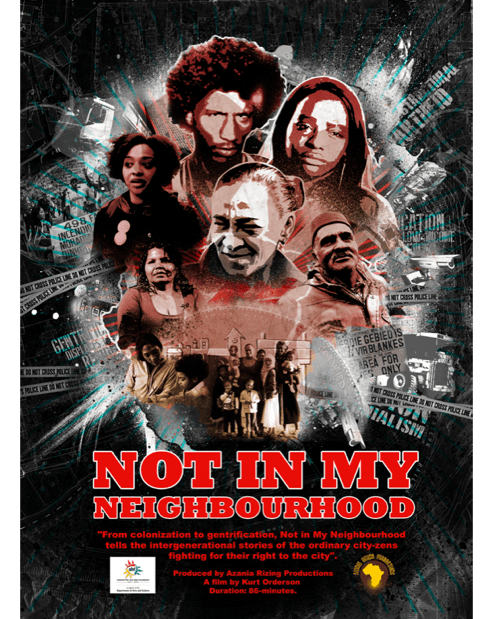
Not in My Neighbourhood (Official Trailer) from Azania Rizing Productions on Vimeo. As cities around the world catapult themselves into ‘World Class’, Global City status, we have to ask ourselves, “at what cost”? Not in my Neighbourhood (NIMN), a film by Kurt Orderson of Azania Rizing Productions, tells the intergenerational stories of the ways in which ordinary citizens respond to the policies, processes and institutions driving contemporary forms of spatial violence. With the aim of building solidarity amongst active urban citizens, the film provides insights into the tools and approaches used by urban activist to shape and navigate their cities, from the bottom up. The film explores the effects of various forms of spatial violence on the spirit and social-psyche of citizens. It follows their daily struggles, trials and triumphant moments. Portraying our characters as active citizens, fighting for their right to the city, the film acts as a portrait of stories telling the history of spatial violence within the background of colonization, architectural Apartheids and gentrification. The production of NIMN film took place over a 4-year period of exploring, unpacking and unveiling the violence of modernist political culture and its translation into spatial planning. Making the film over four years allowed for a transectional analysis of the developments in a city over time. WHEN: Friday, 31 August TIME: 14:00 to 16:00 VENUE: LS3B, Leslie Social Sciences Building, Upper Campus UCT ENTRANCE: Free of charge and open to all

Free

ACC at the Open Book Festival 2018

African Centre for Cities (ACC) teams up with The Book Lounge to present five urban-focussed events at the forthcoming 2018 Open Book Festival, which takes place from 5 to 9 September, Cape Town. The five events draws on the ACC community to engage and interrogate a series of topics ranging from inclusive urban development and issues of mobility to urban activism and blackness in the city.   5 September 2018 12.00 - 13.00 Fugard Studio, Corner Caledon & Lower Buitenkant Street, Cape Town Kigali to Cape Town: Tomá Berlanda and Rick de Satge speak to Philippa Tumubweinee about inclusive urban development. 6 September 2018 10.00 - 11.00 A4 Arts Foundation - Ground, 23 Buitenkant Street, Cape Town Mobility and the City:  Phumeza Mlungwana for UniteBehind and Cllr Brett Herron, City of Cape Town join David Schmidt in conversation with Pippa Green about getting from A - B. 12.00 - 13.00 A4 Arts Foundation - Ground, 23 Buitenkant Street, Cape Town Activist Cities: Richard Dyantyi, Axolile Notywala and Ichumile Gqada speak to Ella Scheepers about militant urbanism. 14.00 - 15.00 A4 Arts Foundation - Ground, 23 Buitenkant Street, Cape Town Integration Syndicate Provocations: Tracy Jooste, Nishendra Moodley and Kate Philip speak to Andrew Gasnolar about the findings of the Integration Syndicate over the past year. 7 September 10.00 - 11.00 Homecoming Centre Workshop, 15A Buitenkant Street, Cape Town Urbanity, Blackness & Mobilities: Mpho Matsipa and Sammy Baloji speak to Mokena Makeka.   For the full festival programme click here. To purchase tickets for these events go here.  

Urban Humanities Seminar Series: pumflet – art, architecture and stuff by Ilze Wolff

Studio 1 Environmental and Geographical Sciences Building, Upper Campus, UCT, Cape Town, South Africa

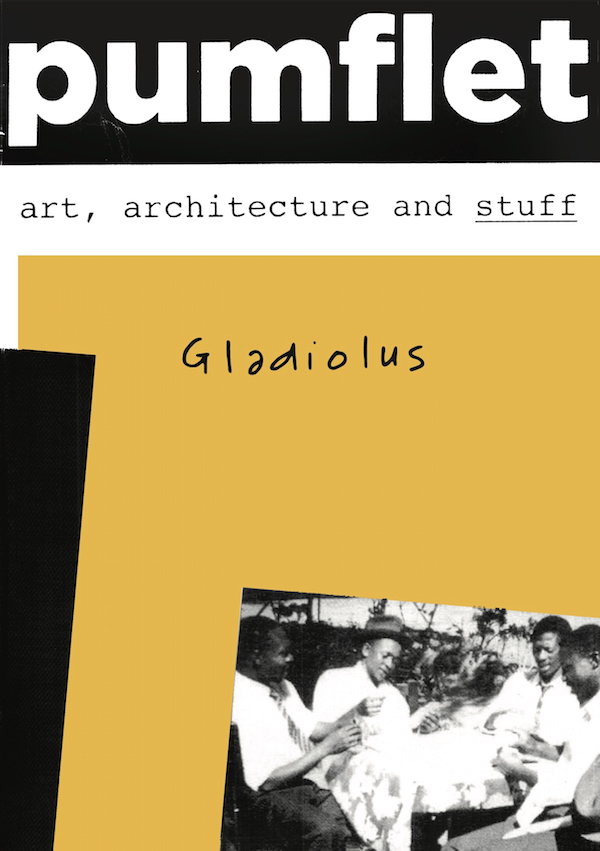
Ilze Wolff co-directs Wolff Architects with Heinrich Wolff and co-founded Open House Architecture (OHA), a research practice that documents and reflects on Southern Africa architecture in Cape Town. In 2016/7 she was the recipient of the L’erma C International Prize for Scholarly Works in Modern and Contemporary Art and Architecture, Rome, for her dissertation Unstitching Rex Trueform, the story of an African factory, published in 2018. The work of Wolff Architects has exhibited at the Venice Biennale; MOMA, New York; Louisiana MOMA, Denmark; Bi-City Biennale of Urbanism/Architecture, Shenzhen; and the Chicago Architecture Biennale. OHA/Wolff regularly host exhibitions, interventions, publications and talks in collaboration with artists and scholars so as to develop an enduring public culture around the city, space and personhood. In 2018 she was shortlisted for the Architectural Review’s Moira Gemmill Emerging Architect of the year award and is currently a fellow at the University of the Western Cape’s Centre for Humanities Research. ‘pumflet' was founded in 2016 by the pumfleteers collective (Wolff and Kemang Wa Lehulere) in order to publish interventions into the social imagination. The talk will show recent pumflet projects and reflect on some of the themes that ground the work and that are beginning to emerge such as, nostalgia vs histories of the present; the importance of the social imagination, aesthetics of repair and conversations as scholarly discourse. WHEN: Thursday, 6 September 2018 TIME: 12:30 to 13:30 VENUE: Studio 1, Environmental and Geographical Science Building, Upper Campus, UCT

Urban Humanities Seminar Series: Vital Geopolitics by Gerry Kearns

Studio 3 Environmental and Geographical Sciences Building, Upper Campus, UCT, Cape Town, South Africa

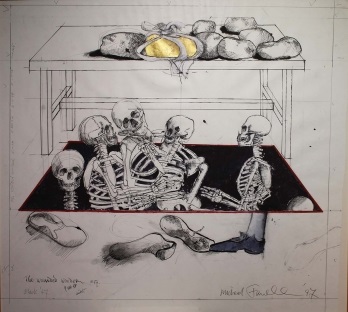
Vital Geopolitics is the study of international relations from the perspective of life itself. Colonialism and neoliberalism are not only economic forces, they shape social reproduction and the geography of labour power. Viewed in this way, demography and gender, famine and migration, intellectual property and extortion, suicide and capital punishment share a profound set of mutual determinants. Tracing marginality as a set of biological relations reveals some of the links between, for example, primitive accumulation and the Anthropocene. Gerry Kearns is Professor of Human Geography at Maynooth University, Ireland, and a Member of the Royal Irish Academy. His is the author of Geopolitics and Empire (Oxford University Press 2009) and co-editor of Spatial Justice and the Irish Crisis (Royal Irish Academy 2014). WHEN: Tuesday, 18 September 2018 TIME: 15:00 to 16:30 VENUE: Studio 3, Environmental and Geographical Science Building, Upper Campus, UCT IMAGE CREDIT: Michael Farrell, Wounded Wonder, Mixed media on paper, 96.5 x 105 cm.

Urban Humanities Seminar Series: The Invention of the ‘Sink Estate’: Consequential Categorization and the UK Housing Crisis

Studio 3 Environmental and Geographical Sciences Building, Upper Campus, UCT, Cape Town, South Africa

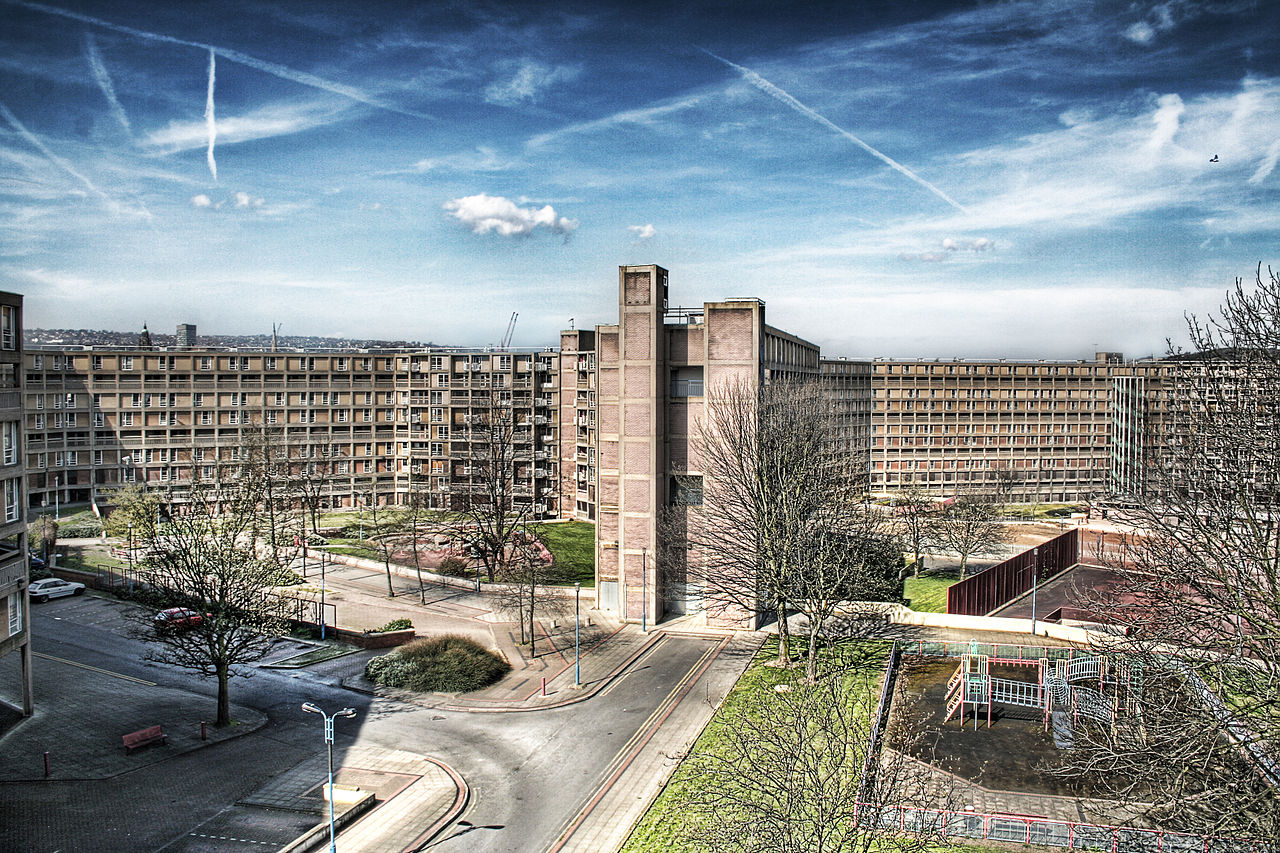
The Invention of the ‘Sink Estate’: Consequential Categorization and the UK Housing Crisis presented by Tom Slater explores the history and traces the realisation of a category that was invented by journalists, amplified by free market think tanks and converted into policy doxa (common sense) by politicians in the United Kingdom: the ‘sink estate’. This derogatory designator, signifying social housing estates that supposedly create poverty, family breakdown, worklessness, welfare dependency, antisocial behaviour and personal irresponsibility, has become the symbolic frame justifying current policies towards social housing that have resulted in considerable social suffering and intensified dislocation. The article deploys a conceptual articulation of agnotology (the intentional production of ignorance) with Bourdieu’s theory of symbolic power to understand the institutional arrangements and cognitive systems structuring deeply unequal social relations. Specifically, the highly influential publications on housing by a free market think tank, Policy Exchange, are dissected in order to demonstrate how the activation of territorial stigma has become an instrument of urban politics. The ‘sink estate’, it is argued, is the semantic battering ram in the ideological assault on social housing, deflecting attention away from social housing not only as urgent necessity during a serious crisis of affordability, but as incubator of community, solidarity, shelter and home. WHEN: Thursday 20 September 2018 TIME: 15:00 to 16:30 VENUE: Studio 3, Environmental and Geographical Science Building, Upper Campus, UCT  

Urban Humanities: Speculative Indigeneity – A (K)new Now by heeten bhagat

Studio 3, Environmental and Geographical Science Building, Upper Campus, UCT, Cape Town, South Africa

Join ACC for a brown bag lecture by PhD student heeten bhagat on entitled Speculative Indigeneity -- A (K)new Now.  Heeten holds a BA in Design and Merchandising from The American College in London and a Masters in Audio Visual Production from London Metropolitan University. His initial training as a pattern cutter has allowed him the chance to grow, and, to experience and work: designing period costumes; building sets for adventure programmes; making experimental films; curating a national gallery; teaching at a French university; providing strategic support to newer organisations; making curious podcasts; and inviting a provocative hybridity to his family’s cookbook. Currently journeying through a PhD, he simultaneously offer creative, strategic, and manual support to a number of organisations and communities regionally. His research delves into notions of indigenousness and indigeneity in contemporary Zimbabwe. Of particular focus is the objective to explore/engineer/imagine methodologies, through speculative research, that trouble indigenous essentialisms.

Urban Humanities: Conversations on cultural mapping and planning

Studio 3 Environmental and Geographical Sciences Building, Upper Campus, UCT, Cape Town, South Africa

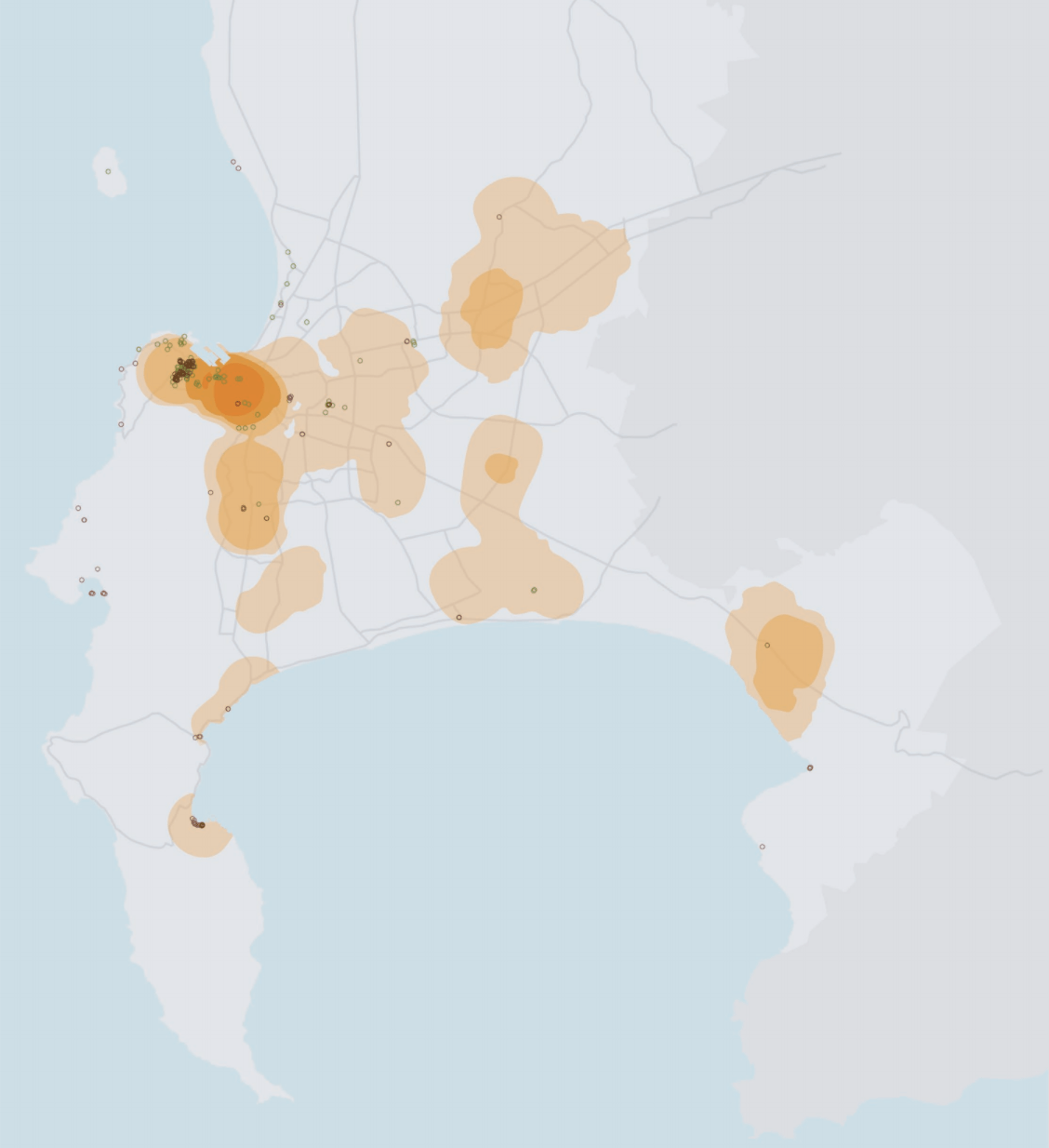
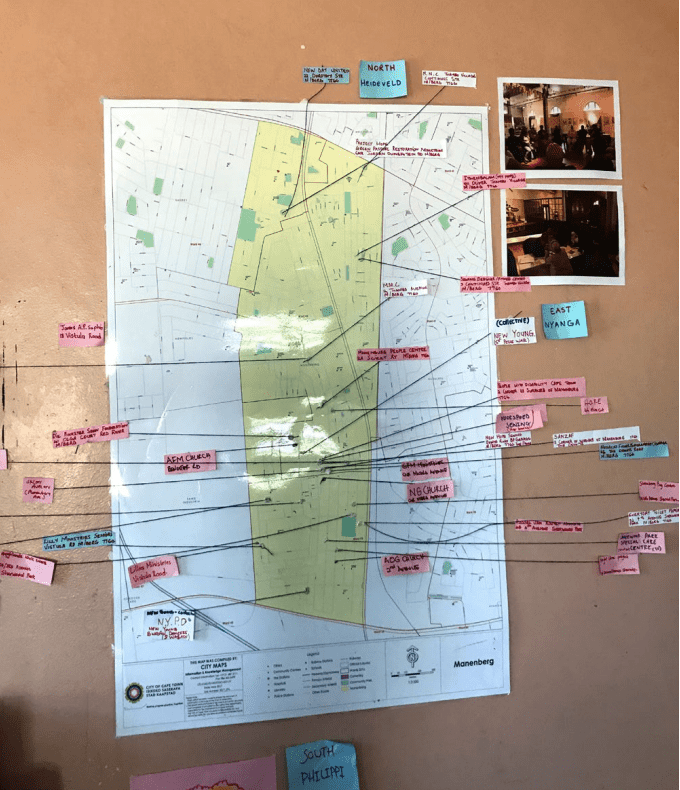
“Cultural planning sits at the intersection of people, places and policies— It provides a framework for addressing the needs and objectives of a city’s cultural sector and cultural life including arts, culture and heritage groups and practitioners that shape a city’s cultural ecosystem.”   Dr Rike Sitas will facilitate a discussion between three panelists that will look at how cultural mapping and planning responds to different research contexts depending on the questions asked and the way in which every day cultural practises unfold in different communities, namely, Hanover Park and Mannenberg, Cosmo City and Mitchells Plain. The overall aims of this research is to unearth some of the cultural practises and narratives in deprived communities in South African cities and how people navigate and express themselves despite the lack of material resources and services. These types of research projects also help to inform policy around arts and cultural services for local government.   BIOS Shamila Rahim is a cultural worker and activist who has worked extensively in the Arts, Cultural and Heritage sector in Cape Town for the last 25 years. Currently she works at City of Cape Town as a Professional Officer in the Arts and Culture Branch. Her interests are in understanding and using arts, culture and heritage as agents to facilitate mind set change which empower the individual to voice and become active in creating positive narratives of themselves and society as a whole.   Vaughn Sadie is a conceptual artist, educator and researcher, living and working in Cape Town (South Africa). He is currently registered in the PhD Programme at the Urban Futures Centre at the Durban University of Technology and work at African Centre for Cities as a researcher. He is interested in interdisciplinary and participatory practices, and the place of art in various social contexts.   Alicia Fortuin is a Masters Graduate from the School of Architecture and Planning where she completed her Masters degree in City and Regional Planning. Her Dissertation looked at the Spaces of and for Participation in the Restitution of land in District Six. It is through this research process where her interests in urban governance, rights, community participation and healing and memory evolved. She has most recently received the Pan African College Phd Scholarship at the African Centre for Cities, where she will be embarking on a PHD journey which will look at the impacts and of land use dynamics and urban sprawl on young professionals in Cape Town.