Cities, geo-technologies and data-driven urbanism

Room 3B, RW James Building University Avenue North, Upper Campus, University of Cape Town, Cape Town, South Africa

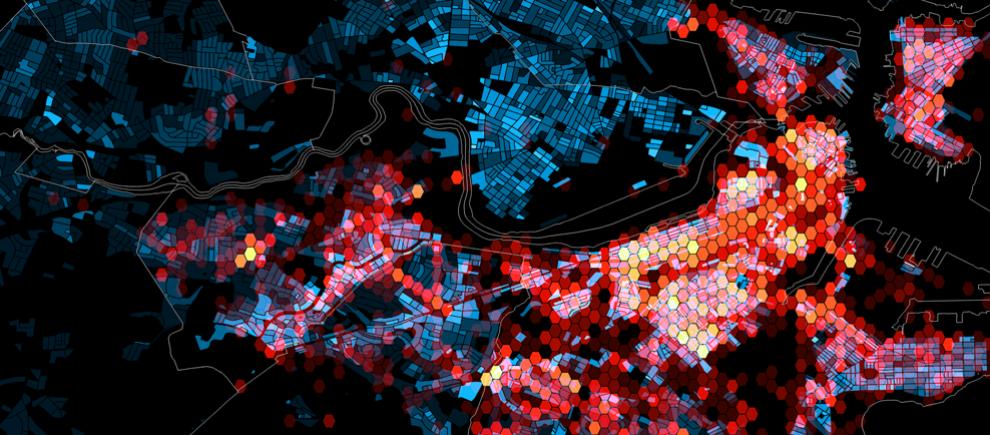
African Centre for Cities, along with Prodig, French National Centre for Scientific Research, French Institute of South Africa and the French Institute for Research in Africa, are presenting a one-day workshop entitled Cities, geo-technologies and data-driven urbanism.  The programme is structured into four sessions with two sessions of strategic input from research and practice by various presenters (see below) and two work sessions to discuss and synthesize the inputs. WHEN: Monday, 11 June 2018 TIME: 08:30 to 16:45 WHERE: Room 3B, RW James Building, Upper Campus, University of Cape Town   While a curated group of people have been invited to the workshop, five places are still available. These places will be allocated on a first come, first serve basis. To secure your spot send an email to elisabeth.peyroux@cnrs.fr or call  +2772 250 7804.   PRESENTATIONS: Interdisciplinary and transdisciplinary perspectives on cities and geo-technologies – Elisabeth Peyroux, National Centre for Scientific Research, Prodig, & Nancy Odendaal, School of Architecture, Planning and Geomatics, UCT Technology and spatial governance in Southern cities – Nancy Odendaal, School of Architecture, Planning and Geomatics, UCT (Big) Data, knowledge, and their use in decision-making and policy-making: Perspectives from ICT4D – Ulrike Rivett, Department of Information Systems, School of IT, UCT Disruptive technologies, new power relationships and challenges to urban governance – Sabelo Mahlangu, School of Architecture and Planning, Wits University & Samy Katumba, Gauteng City-Region Observatory (GCRO) Linking research, practice and higher education – Herrie Schalekamp, Centre for Transport Studies (CfTS), UCT Geospatial data analysis: The significant rise in local service levels coming from Cityspec intervention in Monwabisi Park and Lotus Park (Cape Town) – Chris Berens, GIS expert, Knowledge Management, VPUU & Nhlanhla May, Spatial Data Analyst, VPUU City making and the rise of urban and technology-oriented development interventions in Nairobi – Prince Guma, Human geography and Planning, University of Utrecht ICT for e-Culture: cultural storytelling and innovative services. The “Smart Square” in Hamburg and its application in Cape Town – Sumarie Roodt,  Department of Information Systems, Commerce Faculty UCT & Jens Bley, HafenCity University Demo of 3D scanning technologies applied to the built environment – Jason Stapleton CEO Metascale Services and Consulting (MSC)  
Cities and Climate Change Seminar 4

Studio 3 Environmental and Geographical Science Building, Upper Campus, UCT, Cape Town, South Africa

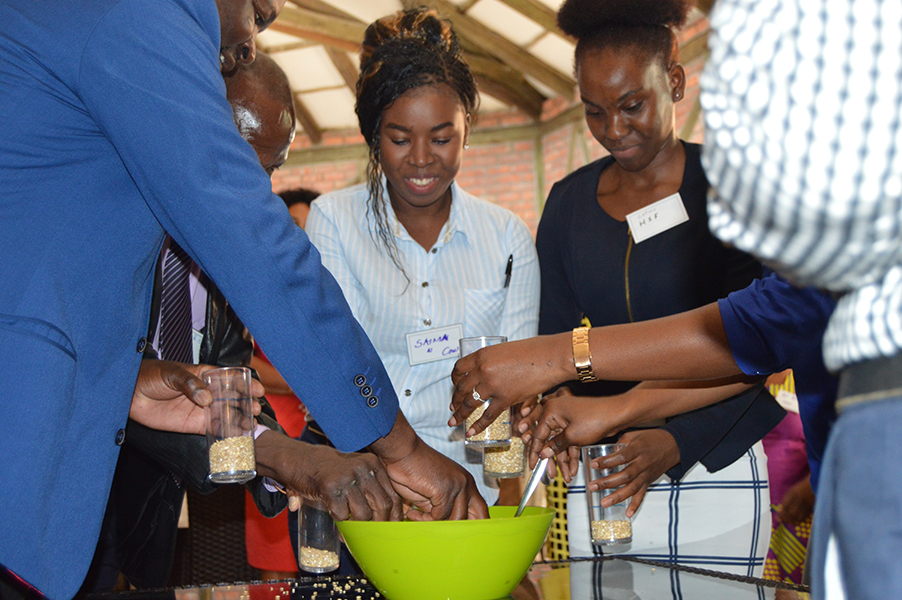
Working at the interface of climate science, urban policy and practice: developing ideas of distillation and receptivity WHEN: 12 June 2018 TIME: 3:00 to 4:30 WHERE: Studio 3, Environmental and Geographical Science Building, Upper Campus, University of Cape Town The last seminar in the 4 part series on cities and climate change will focus on how the worlds of climate science and urban policy making and implementation are being brought closer together in ways that might support more evidence-based decision making on urban matters that are climate sensitive. Drawing primarily on the efforts of, and experiences from, the Future Resilience of African Cities and Lands (FRACTAL) project, the speakers will present ideas and practices of distilling relevant, actionable climate information and fostering greater receptivity to engaging, co-producing and acting on climate information. Central to this is the creation of city learning labs as a space for bringing together a diversity of people and knowledge to generate new thinking and possibly nudge processes of decision making in new directions. Experiences of designing and implementing such labs in Maputo, Lusaka and Windhoek will be discussed in relation to emerging concepts of distillation and receptivity. The seminar will provide an opportunity to share insights about working at science-policy-practice interfaces between those working in the climate space and those working in other urban science-policy domains, like health, water management, housing and biodiversity. CHAIR: Prof Sue Parnell SPEAKERS: Dr Chris Jack, Principal Scientific Officer, Climate System Analysis Group (CSAG), and ACDI Senior Fellow Dr Di Scott, African Centre for Cities Dr Izidine Pinto, Climate System Analysis Group

Integration & Ideas Festival

Guga S'Thebe Washington Street, Langa, Cape Town, South Africa

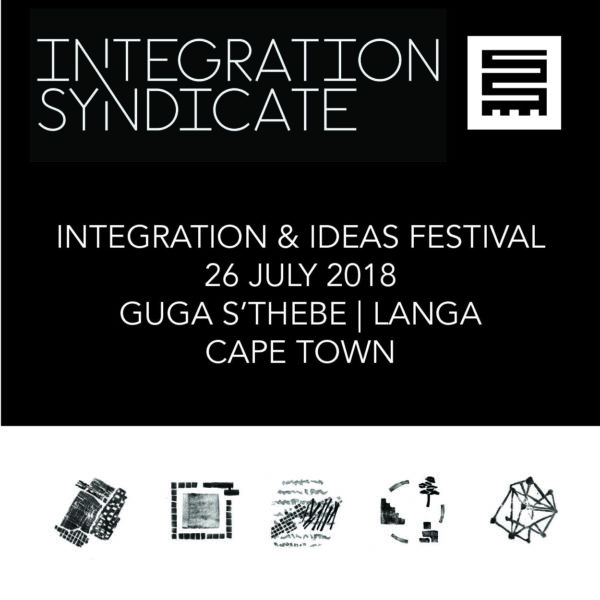
The Integration Syndicate is a three-phase project that started off with a series of nine “episodes” over the course of 2017, which explored the obstacles and solutions to social-spatial integration in the Cape Town metropolitan region. From these episodes, in which a closed group of academics, activists, public and private sector actors participated, five provocations were developed that represent five potential springboard ideas to create and facilitate greater socio-spatial integration. During the first half of 2018 the five provocations were presented to focus groups of stakeholders for critical input to further shape the ideas. Now the next step is to take these five ideas to a broader audience with a public event, the Integration & Ideas Festival. Integration & Ideas Festival programme You are invited to join us for the Integration & Ideas Festival WHEN: 26 July 2018 TIME: 08:00 to 17:30 WHERE: Guga S’thebe, Washington Street, Langa, Cape Town RSVP: Please complete the form here to RSVP for this event. If you have any queries please send an email to integration.syndicate@gmail.com    

PUBLIC LECTURE: Soft Thresholds – RMA Architects, Mumbai by Rahul Mehrotra

Centre of the Book 62 Queen Victoria Street, Cape Town, South Africa

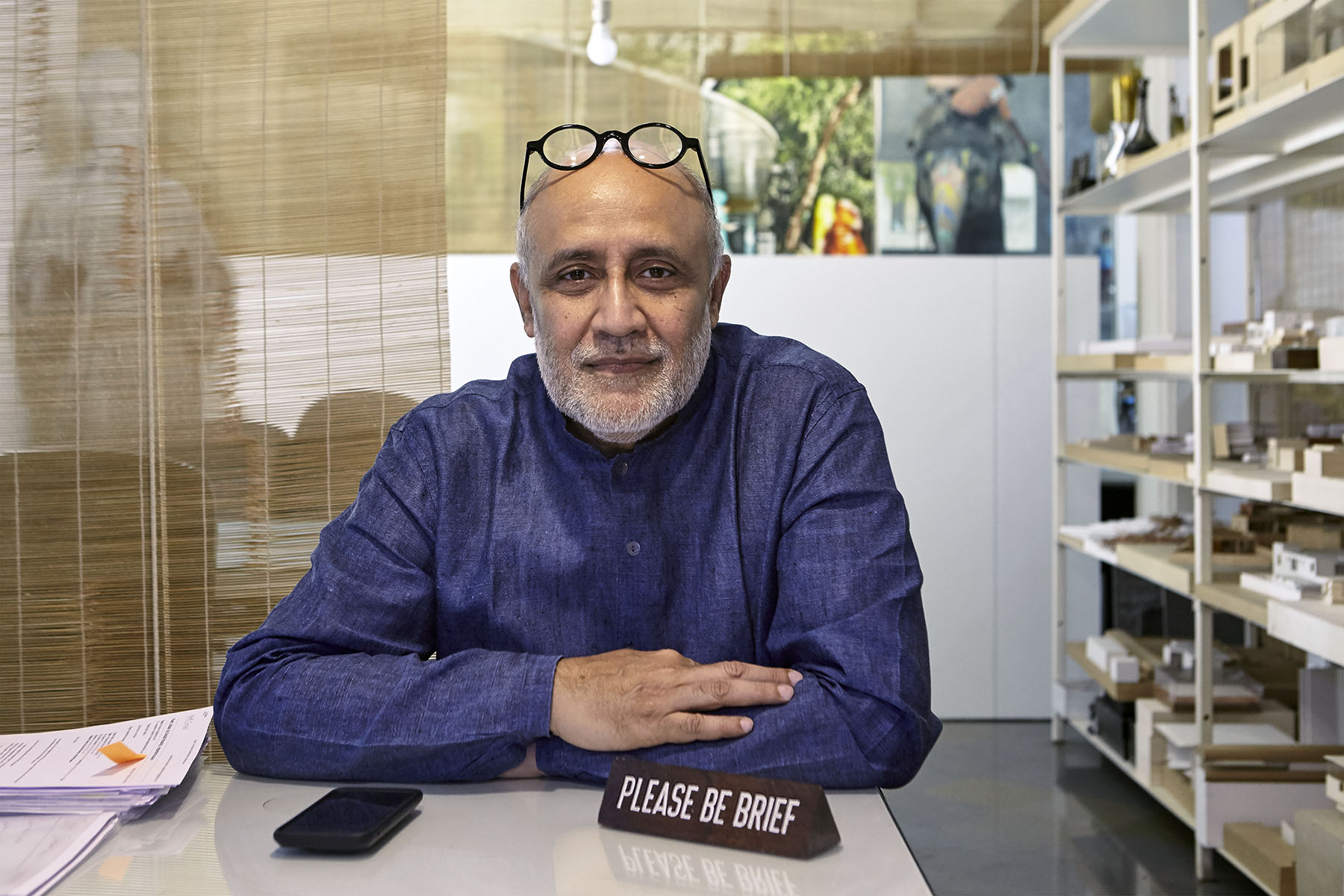
Rahul Mehrotra, Professor of Urban Design and Planning at the Harvard Graduate School of Design, will give a public lecture entitled Soft Thresholds - RMA Architects, Mumbai, co-hosted by African Centre for Cities, UCT Architecture, Planning and Geomatics, UWC Centre for Humanities Research and Wolff Architects. Mehrotra, who recently received a Special Mention at the 2018 Venice Architecture Biennale, is a practicing architect, urban designer, and educator. His Mumbai-based firm, RMA Architects, was founded in 1990 and has designed and executed projects including government and private institutions, corporate workplaces, private homes, and unsolicited projects driven by the firm’s commitment to advocacy in the city of Mumbai. The firm has designed a software campus for Hewlett Packard in Bangalore, a campus for Magic Bus (a NGO that works with poor children), led the restoration of the Chowmahalla Palace in Hyderabad, and formulated a conservation master plan for the Taj Mahal with the Taj Mahal Conservation Collaborative. The firm also recently designed and built a social housing project for 100 elephants and their caretakers in Jaipur as well as a corporate office in Hyderabad. The firm has designed several single family houses in different parts of India and one in Karachi, Pakistan. Recently, Mehrotra completed the Lab of the Future on the Novartis Campus in Basel, Switzerland and in 2015 was a finalist in an international design competition for the Museum of Modern Art in Sydney. Mehrotra has written and lectured extensively on issues to do with architecture, conservation, and urban planning and design in Mumbai and India. His writings include coauthoring Bombay: The Cities Within, which covers the city’s urban history from the 1600s to the present; Banganga: Sacred Tank; Public Places Bombay; Anchoring a City Line, A history of the city’s commuter railway; and Bombay to Mumbai: Changing Perspectives. He has also coauthored Conserving an Image Center: The Fort Precinct in Bombay. Based on this study and its recommendations, the historic Fort District in Mumbai was declared a conservation precinct in 1995 – a first such designation in India. In 2000, he edited a book for the Union of International Architects, which earmarks the end of the last century and is titled The Architecture of the 20th Century in the South Asian Region. In 2011, Mehrotra wrote Architecture in India – Since 1990, which is a reading of contemporary architecture in India which he extended through an exhibition he cocurated titled The State of Architecture: Practices and Processes in India, at the National Gallery of Modern Art in Mumbai in Jan 2016. This was followed in 2018 by an exhibition titled: The State of Housing : Realities, Aspirations and imaginaries in India which showed between Jan and March 2018 and will travel over the next two years in India. Mehrotra is a member of the steering committee of the South Asia Institute at Harvard. In 2012-2015, he led a Harvard University-wide research project with Professor Diana Eck, called The Kumbh Mela: Mapping the Ephemeral Mega City. This work was published as a book in 2014. This research was extended in 2017 in the form of a book titled Does Permanence Matter? Mehrotra’s latest co- authored book is titled Taj Mahal : Multiple Narratives which was published in Dec 2017. His current research is on the small towns and emerging urban conglomerations in India and is expected to be published as book in late 2018. Rahul Mehrotra has long been actively involved in civic and urban affairs in Mumbai, having served on commissions for the conservation of historic buildings and environmental issues, with various neighbourhood groups and, from 1994 to 2004, as Executive Director of the Urban Design Research Institute in Mumbai. He studied at the School of Architecture, Ahmedabad (CEPT), and graduated with a master’s degree with distinction in Urban Design from Harvard University. He has taught at the University of Michigan (2003–2007) and at the School of Architecture and Urban Planning at MIT (2007–2010). From 2010 to 2015, he chaired the Department of Urban Planning and Design at the Harvard Graduate School of Design. WHEN: Tuesday, 31 July 2018 TIME: 16:00 to 17:30 VENUE: Baxter Theatre, Main Road, Cape Town RSVP: Space is limited. Please send an email to africancentreforcities.rsvp@gmail.com to secure your seat.

Urban Humanities Seminar Series 2018

Environmental and Geographical Science Building South Lane, Upper Campus, UCT, Cape Town, South Africa

Academic Seminars (15:00 - 16:30) 7 August High Stakes, High Hopes: Creating Collaborative Urban Theory - Prof Sophie Oldfield 16 August Inclusive Cultural Governance: Integrating artistic and cultural practices into national urban frameworks - Avril Joffe with respondent Zayd Minty 30 August in search of thick mapping: listening to Cape Town's cities - Dr Sabina Favaro 18 September Vital Geopolitics - Gerry Kearns 20 September The invention of the 'Sink Estate': Consequential Categorization and the UK Housing Crisis - Dr Tom Slater 18 October Storytelling as method: migration, gender and inclusion in Durban - Dr Kira Erwin 1 November: Contextualising strategies to enable LGBT rights in Africa: legitimacies, spatial inequalities and socio-spatial relationships - Dr Andy Tucker 15 November Representing urban life in Africa and its diasporas - Dr Shari Daya and Dr Rike Sitas Brown Bags (13:00-14:00) 23 August 'Auditing' vernacular Cape Town as a sonic city - Valmont Layne 6 September pumflet: art, architecture and stuff - Ilze Wolff 27 September Speculative Indigeneity - A (K)new Now - heeten bhagat 11 October Conversations on cultural mapping and planning - Alicia Fortuin, Vaughn Sadie and Shamila Rahim 25 October False Bay - Dr Hedley Twidle

Urban Humanities Seminar Series: Prof Sophie Oldfield “High Stakes, High Hopes: Creating Collaborative Urban Theory”

Studio 3 Environmental and Geographical Sciences Building, Upper Campus, UCT, Cape Town, South Africa

PLEASE NOTE: THIS EVENT HAS BEEN MOVED TO TUESDAY, 7 AUGUST DUE TO A CLASH WITH THE UCT MEMORIAL SERVICE FOR THE LATE PROF BONGANI MAYOSI.  ACC is excited to invite you to the first Urban Humanities Seminar Series. Prof Sophie Oldfield will be presenting a paper entitled 'High Stakes, High Hopes: Creating Collaborative Urban Theory'. ABSTRACT: High Stakes, High Hopes creates urban theory in the political and physical realities of everyday southern city life. This work examines the high stakes at play in a decade-long research and teaching partnership, which has brought this university and the neighbourhood’s civic organization in Cape Town to research the city together to collaboratively build urban theory. In narrating the project and partnership, this lecture will explore collaborative forms of urban theory, immersed in the registers, inspirations and meanings of everyday struggles and learning across the city. This approach brings together multiple voices, registers and accounts, shaping urban theory in shared spaces across the city. In this context of extreme urban inequality, this approach to theorising infuses the personal, political, and public struggles through which urban theory is generated, expertise opened up, and solidarity and commitment built. BIO: Sophie Oldfield holds the University of Basel–University of Cape Town Professorship in Urban Studies, based at the African Centre for Cities at the University of Cape Town. Her research is grounded in empirical and epistemological questions central to urban theory. Focusing on housing, informality and governance, mobilization and social movement organizing, and urban politics, her work pays close attention to political practice and everyday urban geographies, analysing the ways in which citizens and organized movements craft agency to engage and contest the state. She has a track record of excellence in collaborative research practice, challenging how academics work in and between “university” and “community.”  

Urban Humanities Seminar Series: Inclusive Cultural Governance: Integrating artistic and cultural practices into national urban frameworks by Avril Joffe

Studio 3 Environmental and Geographical Sciences Building, Upper Campus, UCT, Cape Town, South Africa

Join African Centre for Cities for the second seminar the second seminar in our Urban Humanities series, Zayd Minty will be responding to Avril Joffe talking about Inclusive Cultural Governance: Integrating artistic and cultural practices into national urban frameworks  WHEN: 16 August 2018 TIME: 15:00 to 16:30 VENUE: Studio 3, Environmental and Geographical Science Building, Upper Campus, University of Cape Town. SPEAKER Avril Joffe is an economic sociologist with experience in the field of cultural policy, culture and development and the cultural economy. She is the head of the Cultural Policy and Management Department at the Wits School of Arts, University of the Witwatersrand in Johannesburg.  Avril is an active member of UNESCO’s Panel of Experts for Cultural Policy and Governance undertaking missions to support African governments in developing cultural policies, cultural industry strategies, reporting on their implementation of the UNESCO Convention, writing and editing training manuals and recently contributed to the Global Monitoring Report 2018 on the ‘Integration of Culture in Sustainable Development’. Avril is a member of the South African Ministerial Review Panel to draft a revised cultural policy for South Africa.  She is on the board of the National Arts Council and chairs the Audit and Risk Committee for the NAC. RESPONDENT Zayd Minty is a professional cultural development manager and curator.  He has previously, since 1993, worked in and with the cultural sector, civil society, academia and government, in various leadership roles.  In addition to cultural policy and strategy work, he has curated various arts projects and festivals. He is currently registered at the African Centre for Cities doing a doctorate looking at Cultural Clusters and Urban Development in the Johannesburg Inner City.

The Integrated City: Local Cultural Policy and Sustainable Integrated Urban Development

John Martin Room, New Engineering Building Upper Campus, University of Cape Town, Cape Town, South Africa

This seminar at UCT's African Centre for Cities looks to continue a set of dialogues around cultural governance and sustainable urban development in South Africa. It brings two processes together:  The Local Cultural Policy Agenda: South African cities are potential spaces for dynamic change as a result of being the nexus for flows of people and ideas. Culture is increasingly seen as significant in urban transformation.  A long-term approach to exploring innovative urban governance frameworks that forward the use of culture has been proposed as a research agenda. These speak to new national frameworks around integrated urban development as well as revisions to the Arts and Culture White paper. Integrating the Dual City:  The African Centre for Cities recent Integration and Ideas Festival continue a interest in the role of culture for sustainable development, putting forward a number of innovative provocations to address the dual city.  These included a strong focus on issues related to culture (memory, storytelling and identity), placemaking (densified, dynamic neighborhoods) and relationality (including through mobility, solidarity networks, "hubs", and the digital space). The seminar objectives Further a dialogue between researchers working in civil society and government concerned with the culture and its role in  urban transformation. To test the viability of a specific provocation - the UCLG Agenda 21 for Culture - Culture Actions: a framework for  governance that furthers the use of culture for sustainable development in cities -  against provocations at the recent  festival, and including engaging with practitioners. To identify possible future paths of inquiry and collaboration amongst researchers based in Cape Town with those elsewhere in South Africa. WHEN: 17 August 2018 TIME: 8.30 for 9:00-15:00 VENUE: John Martin Room, New Engineering Building, UCT RSVP: Places are limited. Please send an RSVP email with any dietary requirements to africancentreforcities.rsvp@gmail.com   PROGROGRAMME 8:30-9:00 Registration and coffee 9:00-9:30   Welcome, Introduction and Viewing of Exhibition Introduction.  Providing the input on Local Cultural Policy Agenda, responding to Integration ideas Festival and introducing the UCLG Agenda 21 for Culture Actions. Speaker: Zayd Minty 9:30-10:30 Cultural Narratives - Heritage, Creativity, Urban Change Working with memory and notions of heritage, building on local creativity, provide a powerful way to build meaning for citizens and so build sense of purpose. Why is this important for cities and what can we do about it? Presenters: Naomi Roux (UCT) and Valmont Layne (UWC) Respondent: Deirdre Prins-Solani (Education, Culture and Heritage Specialist) 10:30-11:00 Tea 11:00-12:00  Place Making and the potential of Socially Engaged Public Practise There is a growing need for thinking about denser, more livable spaces that are also more resonant and meaningful through socially engaged public art/practices.  How can local government make this happen? Presenters:  Rike Sitas (UCT) and Anna Selmeczi (UCT) Respondent: Brenda Skelenge (Lukhanyo Hub) 12:00-13:00  Cultural Mapping and Planning The CoCT's Cultural Mapping and Planning initiative provides an opportunity for communities to revalue their tangible and intangible assets and begin dialogues for community change.  How is this relevant for cities? Presenters: Vaughn Sadie (UCT/DUT) and Laura Nkula-Wenz (UCT) Respondent: TBC 13:00-14:00 Lunch 14:00-15:00  Closing discussion  Way forward for research, policy and practice agendas and support network.  Led by Avril Joffe (Wits)  

Urban Humanities Seminar Series: Valmont Layne on ‘Auditing’ vernacular Cape Town as a sonic city

Studio 3

We are excited to host Valmont Layne from the University of the Western Cape's Humanities Research Centre who will be reflecting on 'Auditing’ vernacular Cape Town as a sonic city' ABSTRACT: Cape Town offers a generative example of the postcolonial port city as an affective space – especially reading its vernacular musicking lifeworld as sonic expressions of oceanic and terrestrial worlds. In this talk, Valmont Layne share some of the opportunities and challenges of doing this work, and will reflect on the possible implications for new epistemic engagements with the postcolonial city drawing on literatures on affect and on sound studies. WHEN: Thursday, 23 August 2018 TIME: 13:00-14:00 VENUE: Studio 3, Environmental and Geographical Science Buildings, Upper Campus, UCT