Science and Cocktails: Can We Move Beyond the Divided City?

The Orbit Johannesburg, Gauteng, South Africa

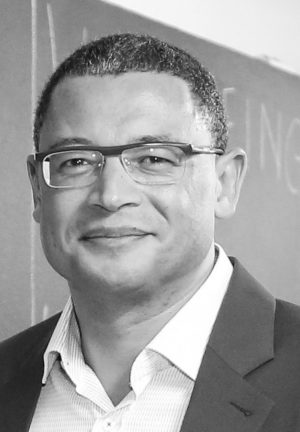
Is urban segregation simply a fact of contemporary life? Are the shopping mall and gated community to blame for new forms of urban division? What role does the real estate market play in reproducing urban patterns? Is middle-class suburbia deracializing or not? Does public investment in housing and social amenities worsen or improve urban divides? Do BRT systems help or hinder urban integration? Who, if anyone, can make a difference in altering spacial patterns of the city? It is arguable that South African cities are more divided today compared to 1994. How can this be? Why are we seemingly unable to shift the contours of division and live differently? Edgar Pieterse will review the drivers of contemporary urban divides and explore the reasons why policy after policy since 1994 say the “right” things but achieve the opposite outcome. He will place his discussion in the context of the nature of both public and private investments into South African cities and illustrate the talk with data and policy experiments in Cape Town and Johannesburg. Pieterse will conclude by putting forward what some of the preconditions for genuine urban transformation might be. Date: 28 November 2018 Time: Doors open at 18:30, no admittance after 20:00. Venue: The Orbit, Braamfontein, Johannesburg Entrance to the event: R20. No registration is necessary but guests are strongly encouraged to arrive early. Dinner is served from 18:00. Guests wishing to have dinner before the event should book in advance with The Orbit and arrive by 18:30. (Last orders for dinner at 19:15 to make it to the event). Directions to the venue.

R20

ACC NOTRUC Seminar Series: Producing water scarcity in São Paulo, Brazil: The 2014 Water Crisis and the Binding Politics of Infrastructure

Studio 1 Environmental and Geographical Sciences Building, Upper Campus, UCT, Cape Town, South Africa

The last instalment of the annual ACC NOTRUC Seminar Series is presented by Dr Nate Millington on Producing water scarcity in São Paulo, Brazil: The 2014 Water Crisis and the Binding  Politics of Infrastructure at 15:00 in Studio 1, Environmental and Geographical Sciences Building, Upper Campus, University of Cape Town. ABSTRACT In 2014, political intransigence combined with a severe drought to push São Paulo, Brazil, to the edge of a profound water crisis. In this paper, I consider the response to the crisis on behalf of the state government, focusing on both the way that the crisis was narrated as well as responded to. I consider the suite of actions taken to cope with scarcity, focusing specifically on the state’s employment of pressure reductions in the water pipes as opposed to a formal rationing. I argue that despite the state government’s claims that only a small minority was going without water, the reality was that residents of the urban periphery were facing consistent water shortages. I argue that these shortages are representative of a form of infrastructural politics, in which the seemingly most technically viable solutions to the crisis exacerbated inequality due to the inequity that is built into the city’s hydrological infrastructure itself. I conclude by thinking of the city’s crisis as indicative of the changing nature of daily life in contemporary cities in the wake of climate change at both the local and global scale. More on the full seminar series here. More on the NOTRUC programme here.

Friction in the Creative City: The Case of Bandung, Indonesia

Studio 5 Environmental and Geographical Science, Upper Campus, UCT,, Cape Town, South Africa

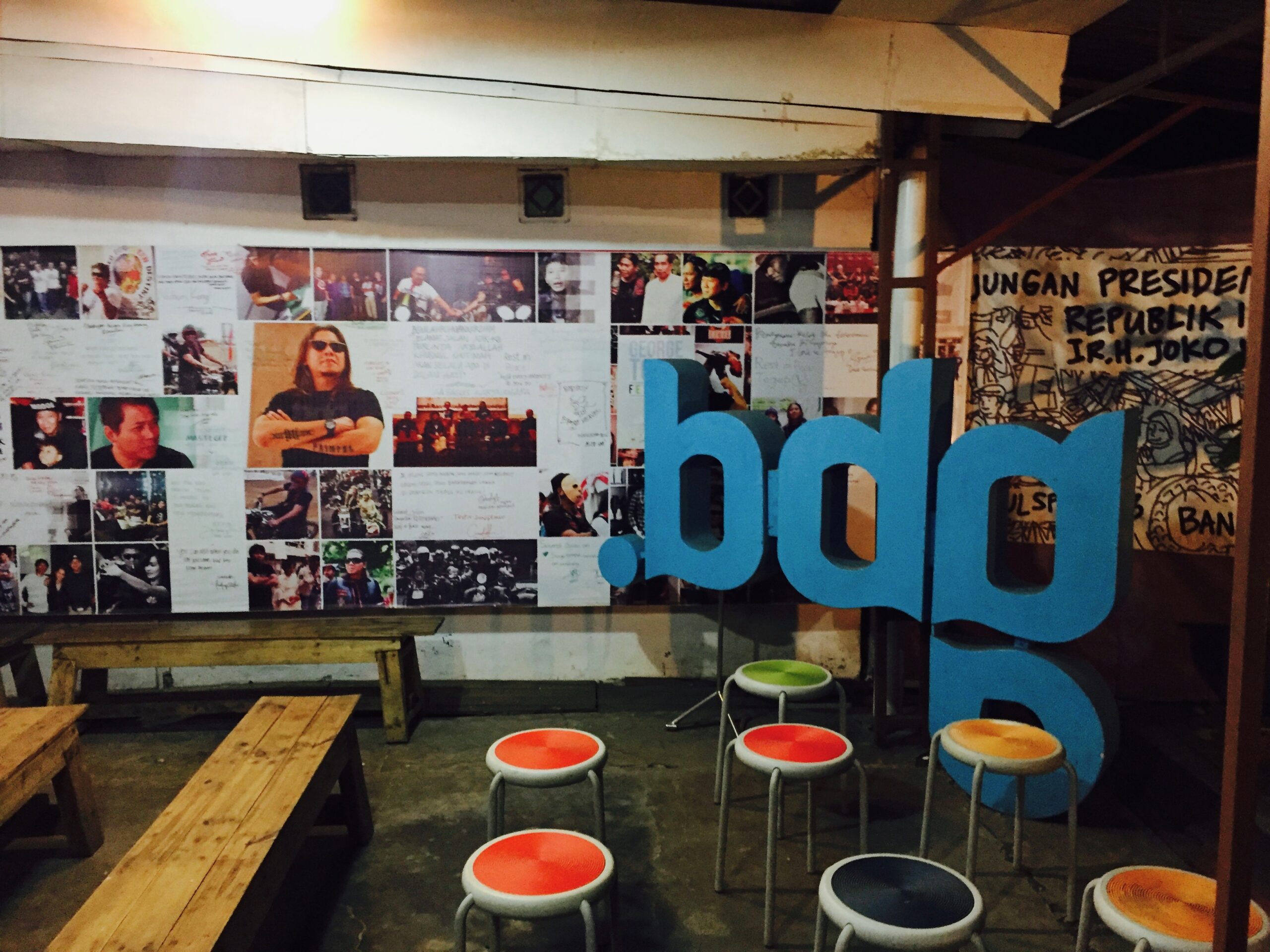
Join the African Centre for Cities for a Brownbag session on 29 January 2018 from 12:45 to 14:00 by Christiaan De Beukelaer on "Friction in the Creative City: The Case of Bandung, Indonesia" hosted in Studio 5, Environmental and Geographical Science Building, Upper Campus, University of Cape Town. Since the foundation of the Bandung Creative City Forum (BCCF) in 2008, the city of Bandung, capital of West Java has started referring to itself as an ‘emerging creative city’. Because of the significant role BCCF, a civil society organisation, played in developing this strategy, Bandung relied far less on top-down, consultant-driven strategies than most ‘creative cities’. While their largely bottom-up engagement with the ‘creative city script’ was well-received, the practical execution of their ideas poses challenges in terms of negotiating priorities and strategies. The implementation became more complex and complicated when Ridwan Kamil, BCCF’s first director, was elected Mayor in 2013. The ensuing tensions concealed two important questions: What is the creative city? How to execute creative city strategies? Rather than engaging with these unspoken questions, Bandung has become a creative city of many definitions and strategies, while maintaining its singular brand. I explain the ensuing ‘friction’ (Tsing 2005) in two overlapping ways. First, I contrast two notions of the creative city by building on the work of geographer Oli Mould. His book Urban Subversion and the Creative City distinguishes the uppercase ‘Creative City’ (the mainstream understanding of the term) – and the lowercase ‘creative city’ (the more grounded, subversive understanding of the term). Second, I build on the work of geographer Jamie Peck, who critiques the global flow of ‘policy-fixes’ as being prone to becoming ‘fast policy’ (often captured in buzzwords), which inevitably collides with ‘slow policy’ of existing bureaucracies and power structures.   More on the speaker and respondent: Christiaan De Beukelaer is a Lecturer in Cultural Policy at the University of Melbourne. He obtained a PhD from the University of Leeds and holds degrees in development studies (MSc, Leuven), cultural studies (MA, Leuven), and musicology (BA, Amsterdam). He won the 2012 Cultural Policy Research Award, which resulted in the book Developing Cultural Industries: Learning From the Palimpsest of Practice (European Cultural Foundation, 2015). He co-edited the book Globalization, Culture, and development: The UNESCO Convention on Cultural Diversity (Palgrave Macmillan, 2015, with Miikka Pyykkönen and JP Singh), and a special issue on Cultural Policy for Sustainable Development for the International Journal of Cultural Policy (2017, 23(2), with Anita Kangas and Nancy Duxbury). He is now working on the book Global Cultural Economy (co-authored with Kim-Marie Spence, forthcoming with Routledge). Laura Nkula-Wenz is an urban geographer with a keen interest in postcolonial urban theory, African urbanism and culture. Her research focuses on the transformation of urban governance and the construction of local political agency, as well as the diverse relationships between cultural production and urban change. She holds a PhD in Geography from the University of Münster/Germany, where she also completed a degree in Human Geography, Communication Studies and Political Science. Laura recently completed a postdoctoral fellowship at the Pôle de recherche pour l'organisation et la diffusion de l'information géographique (Prodig) in Paris and currently works on the Critical Urbanism Masters at the African Centre for Cities (UCT, in cooperation with the University of Basel).


African Centre for Cities International Urban Conference 2018

University of Cape Town Upper Campus, Cape Town , Western Cape, South Africa

To celebrate the ten-year anniversary of the establishment of the African Centre for Cities, we are hosting the ACC International Urban Conference from 1 to 3 February 2018, at the University of Cape Town.

One Table Two Elephants

Neville Alexander Lecture Theatre 1A Upper Campus, University of Cape Town, Rondebosch, Western Cape, South Africa

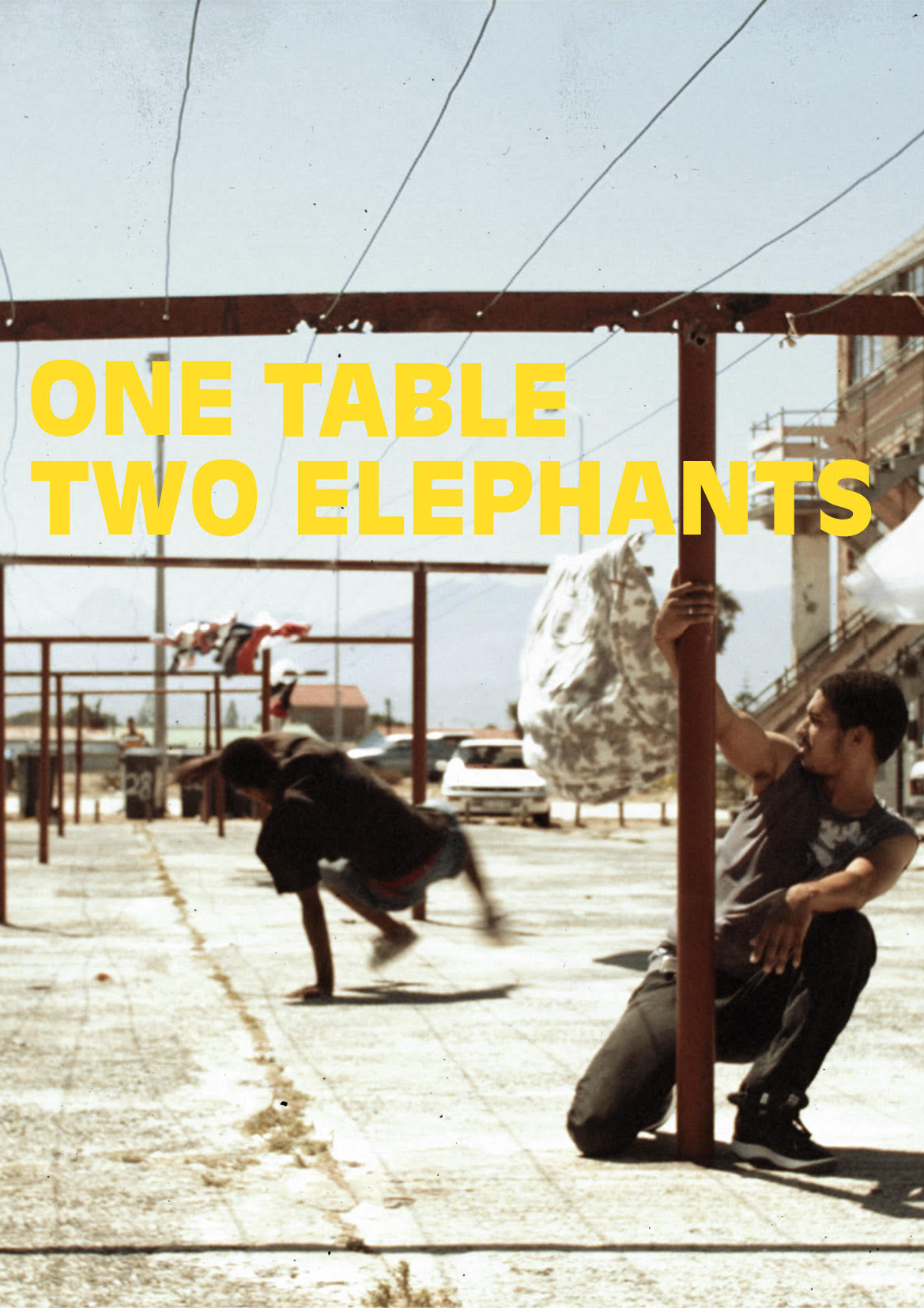
Please join us for the screening of the film ONE TABLE TWO ELEPHANTS (84 minutes, work in progress) at the ACC International Urban Conference 2018 in Cape Town. WHEN: Friday 2 Feb 2018, 13:00-15:00, and Saturday 3 Feb 2018, 13:00-15:00 WHERE: Neville Alexander Lecture Theatre 1A, Upper Campus, UCT (venue lies between the New Lecture Theatre and Leslie Social Science building) The film is based on work in Cape Town by Jacob von Heland and ACC-based researcher Henrik Ernstson. These two screenings have been especially organised for the ACC IUC 2018 delegates and UCT film students. Each screening will be followed by a Q&A with Henrik Ernstson. RSVP not needed. Synopsis ONE TABLE TWO ELEPHANTS is a film about bushmen bboys, a flower kingdom and the ghost of a princess. Entering the city through it's plants and wetlands, the many-layered, painful and liberating history of the city emerges as we see how biologists, hip hoppers, and wetland activists each searches for ways to craft symbols of unity and cohesion. But this is a fraught and difficult task. Perhaps not even desirable. Plants, aliens, memories and ghosts keep troubling efforts of weaving stories about this place called Cape Town. Situated and grounded in lived experiences across a range of groups, this film follows different ways of knowing and tries to be a vehicle toward difficult yet urgently needed conversations about how race, nature and the city are intertwined in our postcolonial world where history is ever present in subtle and direct ways. Based on years of research in Cape Town, this ‘cinematic ethnography’ is directed towards a wider audience, from the general public to students and scholars as it brings texture to understand a city like Cape Town, while providing ample possibilities to translate what is happening “there” to conversations about your own city and surroundings. Created by: Jacob von Heland and Henrik Ernstson. Photography (DOP): Johan von Reybekiel. Sound: Jonathan Chiles. Production coordination: Jessica Rattle and Nceba Mangesi.

ACC BROWNBAG Future Foreshore: are affordable housing and lowered freeways possible?

Studio 5 Environmental and Geographical Sciences Building, Upper Campus, Cape Town, South Africa

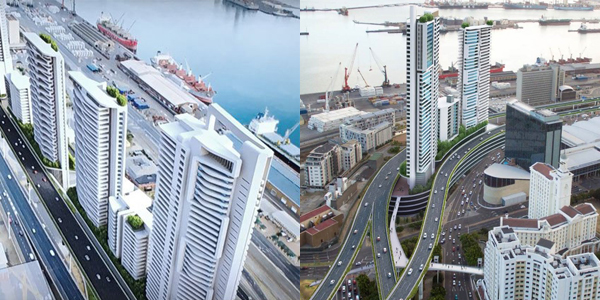
Join ACC on Thursday, 8 March at 13:00 for the first in a series of Brownbag seminars. The hot topic of discussion is the winning bid for the redevelopment of the Foreshore Freeway Precinct, Cape Town. SPEAKERS Lisa Kane Kane is a Honorary Research Associate with the Centre for Transport Studies at UCT and co-founder and board member of Open Streets, Cape Town. Her PhD thesis considered the history and politics of engineering of the Foreshore freeway projects from its initiation to the 1980s, and how that period has informed current thinking around road engineering in South Africa. Rob McGaffin McGaffin is a town planner and land economist.  He has worked as town planner with the City of Cape Town and the Gauteng Department of Economic Development, and in property finance at several financial institutions. He was a Mistra Urban Futures Researcher with the ACC. He lectures in the Department of Construction Economics and Management at the University of Cape Town and is a founding member of the UCT - Nedbank Urban Real Estate Research Unit. CHAIR Vanessa Watson WHEN: Thursday, 8 March 2018 TIME: 13:00 to 14:30 VENUE: Studio 5, Environmental and Geographical Sciences Building, Upper Campus, University of Cape Town

ACC Brown Bag: Taken for a Ride by Matteo Rizzo

Studio 3 Environmental and Geographical Science, Upper Campus, UCT,, Cape Town, South Africa

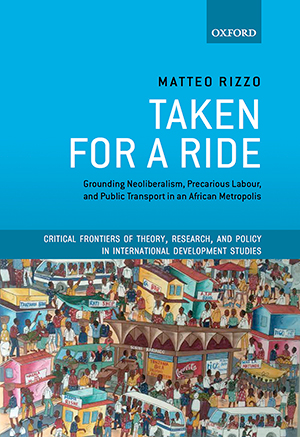
Join ACC on Tuesday, 17 April at 13:00 in Studio 3 in the Environmental and Geographical Sciences Building on Upper Campus for the second talk in a series of Brown-bag seminars. Matteo Rizzo will be discussing themes emerging from his latest book Taken for a Ride: Grounding Neoliberalism, Precarious Labour, and Public Transport in an African Metropolis.  How does public transport work in an African city under neoliberalism? Who has the power to influence its changing shape over time? What does it mean to be a precarious and informal worker in the private minibuses that provide such transport in Dar es Salaam? These are some of the main questions that inform Rizzo's in-depth case study of Dar es Salaam’s public transport system over more than forty years. According to the author Taken for a Ride "is an interdisciplinary political economy of public transport, exposing the limitations of market fundamentalist and postcolonial approaches to the study of economic informality, the urban experience in developing countries, and their failure to locate the agency of the urban poor within their economic and political structures. It is both a contribution to and a call for the contextualized study of neoliberalism." Matteo Rizzo is a Senior Lecturer in Development Studies at SOAS, University of London. Matteo has degrees in Political Sciences from "Orientale"(Naples, Italy)  and Development Studies and History from SOAS (MSc and PhD), where he also completed an ESRC postdoctoral fellowship. Matteo has taught at the LSE, at the African Studies Centre in Oxford and in Cambridge, where he was a Smuts Research Fellow in African Studies at the Centre of African Studies. Matteo is a member of the Editorial Working Group of the Review of African Political Economy and works on public transport for the International Transport Workers Federation. Taken for a Ride will be available for purchase at the Brown-bag session for a special price at only R250. Please bring along cash if you wish to purchase the book.  

Cities and Climate Change: Seminar 1

Studio 1 Environmental and Geographical Sciences Building, Upper Campus, UCT, Cape Town, South Africa

The first seminar in the academic seminar series on Cities and Climate Change reflects on the recent international conference on cities and climate change, the first of its kind convened by the Intergovernmental Panel on Climate Change. Through a panel discussion between representatives from the City of Cape Town, the African Centre for Cities, UCT’s Climate System Analysis Group and the African Climate and Development Initiative, who all participated in the conference, we will draw out key themes and debates surfacing within the climate change and cities field internationally, as well as reflect on any notable silences or gaps. We will also share a snapshot of what inputs we offered to the international science and policy community concerned with cities and climate change. This will establish the main contours of the climate change and cities research space, framing the three subsequent seminars in the series.   SPEAKERS Victor Indasi, climate science post doc, Climate System Analysis Group (CSAG) Amy Davison, Head of Environmental Strategy Implementation, City of Cape Town Alice McClure, FRACTAL coordinator, Climate System Analysis Group Lorena Pasquini, risk governance research fellow, African Climate and Development Institute DISCUSSANT Anna Taylor, urban geography post doc, ACC & CSAG

Academic Seminar Series: Cities and Climate Change

Studio 3 Environmental and Geographical Sciences Building, Upper Campus, UCT, Cape Town , South Africa

Join ACC for 'Cities and Climate Change' a four-part academic seminar series.

Cities and Climate Change: Seminar 2

Studio 3 Environmental and Geographical Sciences Building, Upper Campus, UCT, Cape Town, South Africa

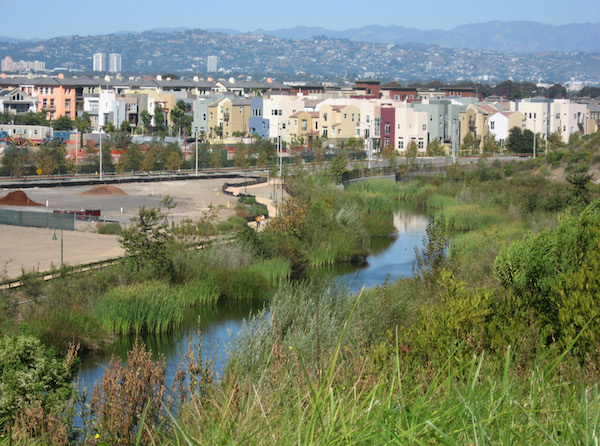
The second seminar in the Cities and Climate Change series will explore low carbon urban energy transitions in (mostly South) African cities, paying particular attention to the institutional dimensions of transforming energy systems to increase energy access and increase sustainability by reducing GHG emissions in growing cities.   In the 20th century, grid electric power radically changed the face of household and community services, industry and commerce. Influence over the electricity grid by powerful human actors also enabled establishment and maintenance of fundamental social and economic structures. However, such influence has not remained uni-directional. The grid, too, has come to influence powerful human actors in ways probably not intended. Hilton Trollip will discuss Hodder’s (2014) use of the ‘entanglement’ concept with reference to analysis of historic and recent developments in South Africa’s energy system.   Saul Roux will discuss research conducted within the Mistra Urban Futures - Knowledge Transfer Programme (MUF-KTP), which involved spending three years in the City of Cape Town, embedded in its Energy and Climate Change Unit, focussing on the conditions under which energy systems transition to more sustainable configurations, through an exploration of the City’s electricity distribution system. Theoretically, the study is situated within debates on socio-technical transitions and the multi-level perspective (MLP) of socio-technical change. Overall, the study explored the implications of applying the multi-level perspective to cities (scale) in the Global South (geographical context) and examines and the role of regulatory and organisational conditions in shaping sustainable transitions.   Anton Cartwright will bring these inputs into conversation with seminar participants around questions of governing low carbon, sustainable and inclusive transitions in African cities.   Hodder, I., 2014. The Entanglements of Humans and Things: A Long-Term View. New Literary History, 45(1), pp.19–36. Available at:http://muse.jhu.edu/content/crossref/journals/new_literary_history/v045/45.1.hodder.html.   Speakers Hilton Trollip, senior researcher in energy policy, Energy Research Centre Saul Roux, legal campaigner, Centre for Environmental Rights (previously ACC Mistra Urban Futures embedded researcher with City of Cape Town)   Chair & discussant Anton Cartwright, institutional economics research fellow, African Centre for Cities WHEN: 15 May 2018 TIME: 15:00 - 16:30 WHERE: Studio 3, Environmental and Geographical Science Building, Upper Campus, UCT