Towards Accessible Urban Areas

Davies Reading Room Room 2.27, Environmental and Geographical Science, UCT, Cape Town, Western Cape, South Africa

Towards Accessible Urban Areas for Persons with Disabilities: Over 600 million people, approximately 10% of the world’s population, have some type of a disability. In developing countries, due to the two fold correlation between disability and poverty, up to 20% of the population has a disability. Due to structural, environmental and attitudinal barriers they continue to face, persons with disabilities are often prevented from fully participating in the economic and social life, leading to their further impoverishment. Amidst a wide array of tools used to enable the full participation in the society of persons with disabilities, accessibility and universal design are of significant importance when it comes to urban planning. This presentation focuses on transport and infrastructure within the urban setting, and aims to further the understanding of the mobility and access issues experienced by persons with disabilities in developing countries, and to identify specific steps that can be taken to start addressing problems. About the speaker Maša Anišić is a doctoral candidate at the Scuola Superiore Sant’Anna in Italy. Her doctoral thesis examines the UN Convention on the Rights of Persons with Disabilities and the impact of its innovative architecture on the stronger social, economic and cultural rights fulfillment for persons with disabilities.
Politics, informality and clientelism

Studio 5 Environmental and Geographical Science, Upper Campus, UCT,, Cape Town, South Africa

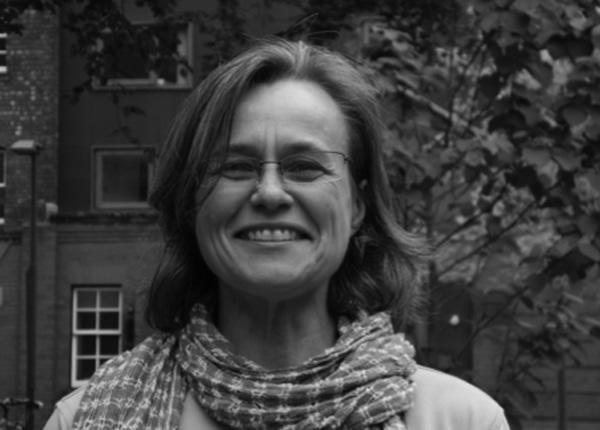
In her paper “Politics, informality and clientelism - exploring a pro-poor urban politics” Diana Mitlin explores what we have learnt about how to instigate, negotiate or otherwise secure pro-poor government in towns and cities of the global South. With competition for scarce resources, the processes of urban development and specifically the acquisition of land and basic services are intensely political. While the nature of urban poverty differs, there is a consistent set of needs related to residency in informal settlements; tenure is insecure and there is a lack of access to basic services, infrastructure, and sometimes other entitlements. Households and communities have to negotiate these collective consumption goods in a context in which political relations are primarily informal with negotiations that take place away from the transparent and accountable systems of ‘modern’ government. Clientelist bargaining prevails. Much of the existing literature is polarised either critiquing clientelism for its consequences, or arguing that it has been dismissed without any grounded assessment of what might take its place and any considered analysis of what it has managed to deliver. About the Speaker: Diana Mitlin is principle researcher in the Human Settlements Group of the International Institute for Environment and Development. Her areas of research interest and expertise include urban poverty, poverty reduction, community development and civil society. Her current work focuses on collaboration with grassroots organization and support agencies to improve urban neighbourhoods (land tenure, basic services and housing). Before starting with IIED she worked as an economist for the UK Government and has also taught at the Institute for Development Policy and Management at the University of Manchester. Advance Reading: ESID working paper_Mitlin

Density Syndicate: Studio 01

Guga S’Thebe Arts and Culture Centre Washington Street, Langa (right turn off Bunga Ave at Fisher's Corner Cafe) , Cape Town, South Africa

The Density Syndicate officially kicks off with its first studio on 12 May 2014 at Guga S’Thebe Arts and Culture Centre in Langa. Multi-disciplinary teams, consisting of Dutch and South African urbanists, researchers, and activists will collaborate to develop speculative designs that improve density, and accommodate social mix in a sustainable way. Participants include representatives from: African Centre for Cities (SA); Arup (SA); Cape Town Partnership (SA); City of Cape Town Spatial Planning & Urban Design (SA); Community Organisation Resource Centre (SA); dhk urban (SA); Doepel Strijkers (NL); Dutch Consulate (NL-SA); H+N+S Landscape Architects (NL); International New Town Institute (NL); Jakupa (SA); Land+Civilsation Compositions (NL); Provincial Department of Human Settlements (SA); Sustainability Institute (SA); Urban Water Management Research Unit (SA); Violence Prevention through Urban Upgrading (SA); Witteveen+Bos (NL). Follow us on the ACC website; Facebook and Twitter @ through #DensitySyndicate or #WDC234

Sub-Saharan Africa’s New Suburbs

Studio 5 Environmental and Geographical Science, Upper Campus, UCT,, Cape Town, South Africa

Remaking the Edges: Sub-Saharan Africa's New Suburbs — This paper examines the edge areas of Lusaka, based on fieldwork from 2013, as a broad example of the trajectory of urban expansion at the new urban frontiers in Sub-Saharan Africa. I emphasize four themes: (1) the significance of new foreign investment in urban frontier zones (particularly from China); (2) the bifurcated character of the expansion; (3) the rise of surveillance technologies; and (4) the endurance of continuities with European colonialism. About the Speaker: Garth Myers is the Paul E. Raether Distinguished Professor of Urban International Studies at Trinity College. He is Director of the Urban Studies Program. A geographer with thirty years of research experience on and in African cities, Myers teaches courses in both urban studies and international studies at Trinity. Myers has contributed to the growth of urban studies and geography research on the continent, through 5 books and more than 60 articles and book chapters. His most recent book is African Cities: Alternative Visions of Urban Theory and Practice (London: Zed Books, 2011).

BOOK LAUNCH: Africa’s Urban Revolution

Book Lounge 71 Roeland Street, Cape Town, Western Cape, South Africa

UCT and The Book Lounge will be hosting the launch of Africa's Urban Revolution, the new volume edited by Susan Parnell and Edgar Pieterse

Ronald Wall: Investment flows into African & European cities

Davies Reading Room Room 2.27, Environmental and Geographical Science, UCT, Cape Town, Western Cape, South Africa

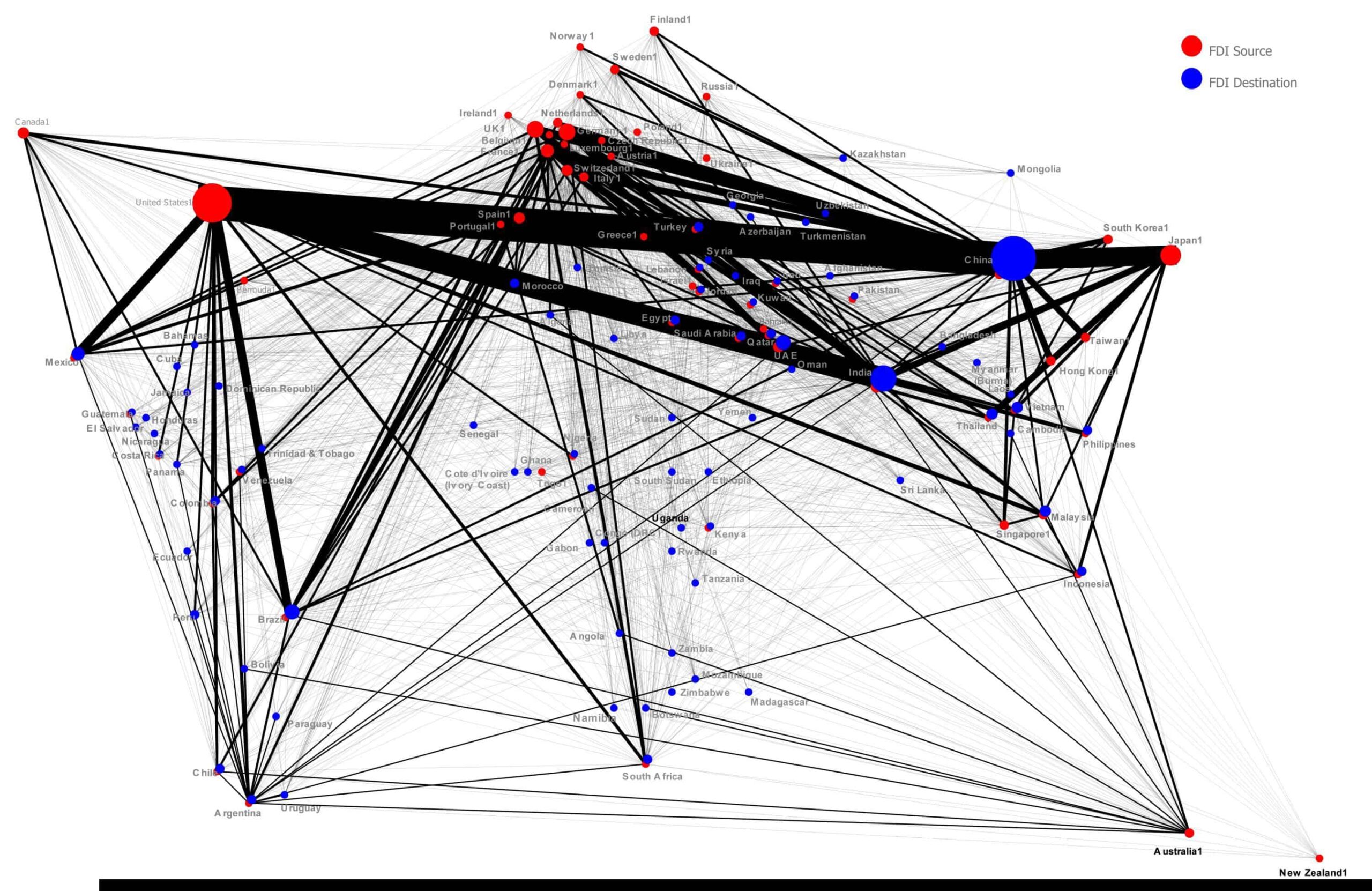
South Rising? Exploring ten years of investment flows into African and European countries and cities. An empirical analysis, comparing ten years of investment flows into African and European countries and cities. It is also shown which social, economic and spatial location factors are important for attracting these investments and how these differ across the two regions. It includes GIS mapping of the networks and econometric results. This will be followed by a discussion on how African cities could use this type of knowledge for development strategies.

Critical gaming practices: Alex Apsan Frediani in conversation with Liza Cirolia

PROVENANCE AUCTION HOUSE 6 - 8 VREDE STREET, GARDENS, CAPE TOWN, Western Cape, South Africa

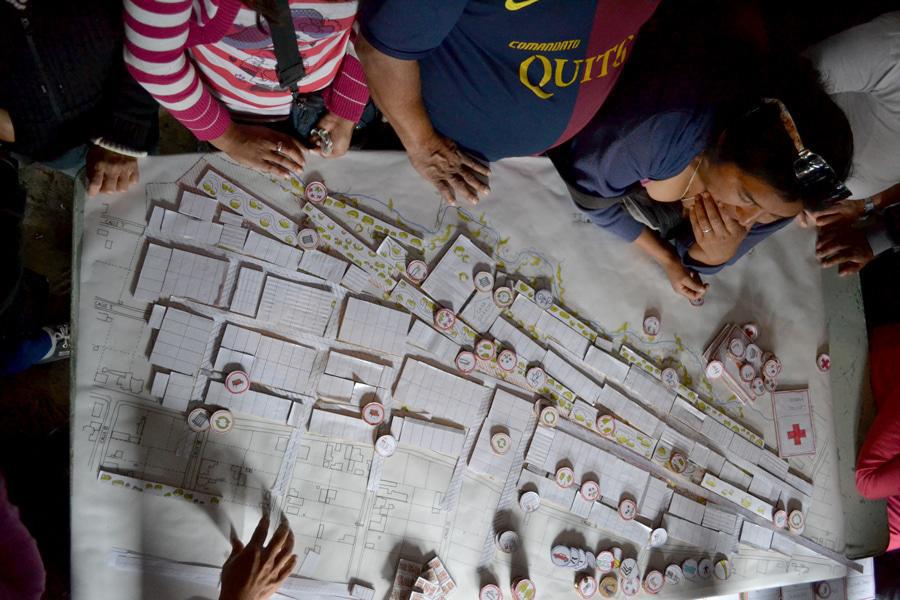
Alexandre Apsan Frediani is co-director of the masters programme in Social Development Practice at the Bartlett Development Planning Unit, University College London (UCL). He has worked extensively in various parts of the world exploring the potential of urban games to address injustices in the city — especially when applied in contexts of informal settlement upgrading. In a wide ranging conversation with Liza Cirolia, a housing policy specialist who co-convenes the Human Settlements CityLab at African Centre for Cities, Frediani will discuss the capacity of urban games to creatively engage with social diversity and power relations and foster cross-scalar thinking and share some of his experiences working with Architecture Sans Frontières and in Salvador (Brazil), Nairobi (Kenya) and Quito (Ecuador) with local collectives who embedded participatory design initiatives within their wider agenda of deepening democratic practices in the city.

Political and Affective Ecologies of the City

Davies Reading Room Room 2.27, Environmental and Geographical Science, UCT, Cape Town, Western Cape, South Africa

In her talk, Dr Karen Till will explore the limitations and possibilities of considering urban ecology as a means to 'think the city differently'. Her starting premise is simple: how might we begin to challenge dominant paradigms in urban theory, including resilience and neoliberal speculative urbanisms, that define ground merely as property and contain time according to desire and fear? Using examples from cities around the world, the talk will address the concept of the wounded city and a place-based ethics of care according to intersecting urban temporal and spatial meshworks that include: social and material environments, relational networks, local pathways, alternative exchange systems, affective ecologies, enacted assemblages, and urban ecosystem wholeness. About the speaker Dr. Karen E. Till is Senior Lecturer in the Department of Geography at the National University of Ireland at Maynooth. A cultural and urban geographer, Karen is working on a book entitled 'Wounded Cities'. It is a comparative ethnographic project about cities marked by histories of state-perpetrated violence, with case studies in Berlin, Bogota, Cape Town and Dublin. Required Reading Wounded Cities 2012

Cape Town’s new Development Charges Policy for Engineering Services

Davies Reading Room Room 2.27, Environmental and Geographical Science, UCT, Cape Town, Western Cape, South Africa

The City of Cape Town has recently approved a new Development Charges Policy for Engineering Services.  This policy pins down some vexing questions.   When land use intensifies the municipality has to increase its infrastructure networks to accommodate the increased demand for services.  There is always a cost to the city, but who should cover that cost: the developer or the body of ratepayers as a whole?  How should the municipality calculate that amount?  Should socially beneficial land use changes, like low-income housing have to pay the same as land use changes that are commercially driven?  Should there be a different method of calculating this amount for small or emerging businesses as opposed to big businesses?  Why can’t the costs of extending the infrastructure networks be covered through monthly tariffs for the different services? Nick Graham and Stephen Berrisford have been part of the professional team, headed by AECOM, drafting the new policy for the City of Cape Town.  They are also working on the National Treasury’s process to develop national law and policy on the subject.  They will share their experiences at the ACC’s Brown Bag session and explain the rationale behind the new policy as well as identify some of the implications for the city of the new approach. Nick Graham is a Director at PDG, responsible for the Urban Systems Practice Area. He is an urban geographer and registered professional engineer with Masters degrees in civil engineering, environmental policy and urban geography. Stephen Berrisford is an independent consultant specialising in the legal and policy frameworks governing urban land and development. He is trained as a lawyer and urban planner, with degrees from the Universities of Cape Town and Cambridge. He works primarily in southern and eastern Africa as well as on global initiatives for agencies such as UN-Habitat, Cities Alliance and the World Bank. Stephen is an adjunct associate professor at the African Centre for Cities at the University of Cape Town and visiting professor at the University of the Witwatersrand. He was the governance coordinator for the Urban Land Markets Programme Southern Africa (Urban LandMark), a UK aid-funded think tank focused on making urban land markets in southern Africa work better for the poor. Image credit: Barry Christianson

In the skin of the city: the street and its doubles

Davies Reading Room Room 2.27, Environmental and Geographical Science, UCT, Cape Town, Western Cape, South Africa

In this presentation, Anthropologist António Tomás (ACC's the 2014 Ray Pahl Fellow) will undertake to provide a layered description of the city of Luanda by engaging with a number of ethnographic vignettes based on his wanderings through the city. "Such a methodology has two sources" says Tomás. "First, I draw on the modernist figure of the flâneur as it was proposed by Charles Baudelaire and theorized by Walter Benjamin. Second, I also draw on the methods for wandering in the city (later on theorized by de Certeau) that was called psycho-geography by the situationists. I use this methodology in reference to the situationists who developed it as a way to ‘deconstruct' Le Corbusian’s modernist ambitions in transforming Paris." This exercise allows Tomás to provide a description not only of the surface of the city (or the city from the surface), but to also find a vantage point to “deconstruct” Luanda's colonial and postcolonial imaginaries. By annalyzing the prevailing practices of anonymous Luandans who give names to streets that disavowal their official designations, he gains a further understanding of the surface of the city that goes beyond its own (modernist) visibility. About the author António Tomás received his doctoral degree in Anthropology from Columbia University, New York. He is the author of a study on the African nationalist Amílcar Cabral titled O Fazedor de Utopias: Uma Biografia de Amílcar (The Maker of Utopias: A Biography of Amilcar Cabral (Lisbon ; Praia , Tinta da China; Spleen, 2007; 2008).  Tomás is the 2014 Ray Pahl Fellow at the African Centre for Cities, working on a book called In the skin of the city: Luanda, or the dialectics of spatial transformation.