New Urban Worlds at Open Book Festival

D6 Homecoming Centre Workshop 15 A Buitenkant Street, .Cape Town, South Africa

Ken Liu and Edgar Pieterse speak to Mark Swilling about cities of the future. Date: 8 September Venue: HCC Workshop Time: 16.00 - 17.00 Price: R45 Read more about New Urban Worlds: Inhabiting Dissonant Times by Edgar Pieterse and Abdoumaliq Simone. Full festival programme Book tickets NOTE: A limited number of free tickets for students are available for each event of the programme. Tickets are available on a first-come, first-served basis. To apply, email openbooktickets@gmail.com by 31 August.

R45

JHB launch of ‘August House is Dead, Long Live August House!’

Point of Order Project Space Wits School of Art , Johannesburg, South Africa

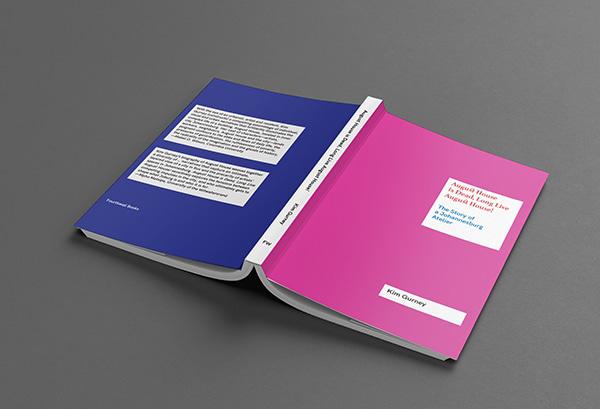
Writer, artist and research associate at the University of Cape Town’s African Centre for Cities (ACC), Kim Gurney pens a new book on the evolving art space August House in Johannesburg. August House is Dead, Long Live August House! The Story of a Johannesburg Atelier, published by FourthWall Books, is a fascinating study of the role of the atelier and its artists in South Africa’s fractious art world, and a consideration of the relationship between art and the ever-changing city of Johannesburg. Join us for the official launch in Johannesburg, at 18:00 on 27 September 2017 at Point of Order Project Space, Wits School of Arts.

CT launch of ‘August House is Dead, Long Live August House!’

A4 Arts Foundation 23 Buitenkant Street, Cape Town , South Africa

Writer, artist and research associate at the University of Cape Town’s African Centre for Cities (ACC), Kim Gurney pens a new book on the evolving art space August House in Johannesburg. August House is Dead, Long Live August House! The Story of a Johannesburg Atelier, published by FourthWall Books, is a fascinating study of the role of the atelier and its artists in South Africa’s fractious art world, and a consideration of the relationship between art and the ever-changing city of Johannesburg. Join us for the official launch in Cape Town, at 18:00 on 6 October 2017 at the A4 Arts Foundation.

ACC NOTRUC Seminar Series: Reflection is Part of Rehabilitation: Interventions in the History of a Land Occupation

African Centre for Cities UCT Upper Campus, Cape Town, South Africa

The third seminar in the annual ACC NOTRUC Seminar Series is presented by Koni Benson on Reflection is Part of Rehabilitation: Interventions in the History of a Land Occupation at 15:00 in Studio 3, Environmental and Geographical Sciences Building, Upper Campus, University of Cape Town. ABSTRACT In The Fire Next Time, James Baldwin writes: “To accept one’s past- one’s history- is not the same thing as drowning in it; it is, learning how to use it. An invented past can never be used; it cracks and crumbles under the pressures of life like clay in a season of drought.” This paper looks at the dynamics of invention and uses of history in the politics of a land occupation in Tafelsig, Mitchell’s Plain, where, in May 2011, over 5000 backyard shack dwellers occupied land to set up shacks on an empty field adjacent to the Kaptiensklip train station.  From an initial 5,000 people the group dwindled to about 30 families who continued to defend their right to erect structures under which to sleep. The city offered them temporary relocation to Blikkiesdorp, a dumping ground, miles away from their families and support networks. What ensued was a round of court cases and appeals and, eventual eviction. What started as a document to record the brutality of the Anti-Land Invasion Unit became a co-authored book, Writing Out Loud: Interventions in the History of a Land Occupation written by Faeza Meyer and Koni Benson.   The quote in the title of this paper comes from this book which creatively tracked 545 days of occupation, and raises questions about housing struggles, activism, situated solidarity, racism, writing, and feminist collaborative methodologies of approaching African history.  The paper today will present a draft of a new introduction to the book, with the aim of sparking a conversation about Baldwin’s proposition of not inventing but of reflecting and using hard ‘truths’ about the past in the present, in this case, building and engaging struggles against ongoing segregation and criminalization of landlessness in Cape Town.   More on the full seminar series here. More on the NOTRUC programme here.

The Global Nutrition Summit 2017

Unnamed Venue Milan, Italy

Nutrition plays a critical role not only in child health and survival, but also in driving economic prosperity for families and nations. It is encouraging to see increased attention from world leaders to address malnutrition in all its forms and in particular to reduce stunting everywhere. It will take continued efforts and dedication to ensure this progress continues. On Saturday, 4 November the Italian Ministry of Health and the City of Milan, will host The Global Nutrition Summit 2017 in Milan - a high-level event on nutrition and food for healthier futures. The summit will take stock of global progress toward the nutrition-related Sustainable Development Goals (SDGs) and World Health Assembly global nutrition targets. They will also make additional commitments under the umbrella of the UN Decade of Action on Nutrition (2016-2025), celebrate commitments made this year and discuss further action needed, and launch the 2017 Global Nutrition Report. ACC's Senior Researcher Dr Jane Battersby will present as part of a session entitled Improving nutrition within planetary boundaries: Cities taking the lead during which she will focus on the rapidly shifting nature of malnutrition in Sub-Saharan African cities with overweight status and obesity emerging as new forms of food insecurity while malnutrition persists. Moderator: Dr Gunhild A. Stordalen, President, EAT Foundation Speakers: Mr Tom Arnold, member of the Global Panel on Agriculture and Food Systems for Nutrition Mr Wayne Roberts, PhD, Canadian food policy analyst Dr Jane Battersby, Senior Researcher in Urban Food Systems, African Centre for Cities University of Cape Town Ms Anna Scavuzzo, Vice Mayor of Milan Mr Albert Anda Ntsodo, Councillor of the City of Cape Town

ACC NOTRUC Seminar Series: Contesting the Coast: Infrastructure, Ecology and Coastal Planning in New Orleans and the Mississippi River Delta – Cancelled

Studio 3 ENGEO Building, Upper Campus. University of Cape Town,, Cape Town, Western Cape, South Africa

This seminar focuses on environmental politics and regional urban planning based on a paper by Dr Joshua Lewis and Dr Henrik Ernstson called Contesting the Coast: Infrastructure, Ecology and Coastal Planning in New Orleans and the Mississippi River Delta. The paper is presented by Dr Henrik Ernstson who works at ACC and is affiliated to KTH Royal Institute of Technology and The University of Manchester. The presentation will take place on 8 November 2017, at 15:00 in Studio 3, Environmental and Geographical Sciences Building, Upper Campus, University of Cape Town. Please note this seminar has been cancelled.  ABSTRACT For over 150 years two major and capital-driven projects have re-worked the vast Louisiana coastal landscape. One has centered on ‘adapting’ the landscape to compete and increase for global maritime trade, shortening the time distance from New Orleans to the Gulf of Mexico. The second has been about increasing the amount of space for real estate and urban development. However, developing large-scale water infrastructure in a vast and complex ecosystem comes with unexpected social and ecological dynamics. Indeed, our argument is that infrastructure has changed biophysical relations that have been stable for hundreds and thousands of years to fundamentally change how ecosystems operate and function with social and ecological effects. Based on in-depth historical research, we develop an analytical repertoire for understanding historical interrelationships between water infrastructure, regional environmental politics, and large-scale coastal ecosystems. By further drawing on planning theory that has striven to de-center Habermasian consensus approaches (e.g., Vanessa Watson), this paper focuses on how knowledge controversies can help not only to ‘slow down reasoning’ (sensu Isabelle Stengers and Sarah Whatmore) to include more textured and situated ways of knowing the vast and complex Louisiana coastal landscape, but also drives the making of proper political subjects (Jacques Rancière) that can interrupt and shape the wider administration of large-scale planning efforts. Our analysis shows how water infrastructure has produced persistent divisions in the body politic to hinder contemporary strategies to secure New Orleans and other settlements in the region from devastating storm surge and inundation. In a world under climate change, when novel biophysical dynamics are constantly introduced, we believe our textured case study can help to think about the new kind of politics we need to understand, from the role of ‘ecological expertise’ (now siding increasingly with ‘engineering expertise’), to how ecological dynamics are shaping political subjectivities.   MORE ON JOSHUA LEWIS & HENRIK ERNSTSON  Dr Joshua Lewis is based in New Orleans where he studies how infrastructure networks transform regional ecosystems and its effects on environmental justice and political processes. His historically grounded focus on the implementation and maintenance of large-scale water infrastructure connects between the local and the regional and across human geography, ecology and sociology. He has also developed comprehensive vegetation studies in New Orleans (linked to a comparative study in Cape Town) to understand how hurricanes and urban development shape urban ecosystems and its often-unequal effect on different social groups. He completed his PhD at the Stockholm Resilience Centre at the Stockholm University in 2015 and he is now employed at Tulane University as Research Assistant Professor at the ByWater Institute where he is leading a novel ecological monitoring project in New Orleans that tracks ecological changes associated with a major green infrastructure and stormwater management project. With his studies in political ecology and urban ecology, he also networks with partners in the Rockefeller Foundation’s 100 Resilient Cities program to deepen knowledge exchanges around urban ecology in partner cities. For more information, go here: publications.   Dr Henrik Ernstson is developing a situated approach to urban political ecology that combines critical geography, urban infrastructure studies, postcolonial urbanism and collaborations with designers, artists and activists. He has lead various projects to study collective action, environmental conflicts and urban ecosystem management in Cape Town, New Orleans and Stockholm, and infrastructure politics in Kampala. Currently he is finalizing two edited books for MIT Press and Routledge, “Grounding Urban Natures” (Ernstson & Sörlin) and “Urban Political Ecology in the Anthropo-Obscene” (Ernstson & Swyngedouw). With Jacob von Heland he has created the research-based cinematic ethnography film “One Table Two Elephants,” a film that richly surfaces the politics of nature, race, and history in a postcolonial city (71 minutes, screening 2018). In 2017 he was awarded The AXA Research Award for recognition of his innovative work on urban sustainability in the global South, which will fund a research group to study petro-urbanism and urban infrastructure in Luanda with South-South connections to Brazil and China. He holds a PhD in Natural Resource Management from Stockholm University (2008) with postdoctoral positions at Stanford University (2013-2015) and the University of Cape Town (2010-2011). He lives in Cape Town and works at the African Centre for Cities, while holding a Research Fellowship at the KTH Royal Institute of Technology in Stockholm contributing to KTH Environmental Humanities Laboratory. In August 2017 he joined The University of Manchester as part-time Lecturer in Human Geography. For more information, go here: publications and projects.