ACC NOTRUC Seminar Series: Reflection is Part of Rehabilitation: Interventions in the History of a Land Occupation

African Centre for Cities UCT Upper Campus, Cape Town, South Africa

The third seminar in the annual ACC NOTRUC Seminar Series is presented by Koni Benson on Reflection is Part of Rehabilitation: Interventions in the History of a Land Occupation at 15:00 in Studio 3, Environmental and Geographical Sciences Building, Upper Campus, University of Cape Town. ABSTRACT In The Fire Next Time, James Baldwin writes: “To accept one’s past- one’s history- is not the same thing as drowning in it; it is, learning how to use it. An invented past can never be used; it cracks and crumbles under the pressures of life like clay in a season of drought.” This paper looks at the dynamics of invention and uses of history in the politics of a land occupation in Tafelsig, Mitchell’s Plain, where, in May 2011, over 5000 backyard shack dwellers occupied land to set up shacks on an empty field adjacent to the Kaptiensklip train station.  From an initial 5,000 people the group dwindled to about 30 families who continued to defend their right to erect structures under which to sleep. The city offered them temporary relocation to Blikkiesdorp, a dumping ground, miles away from their families and support networks. What ensued was a round of court cases and appeals and, eventual eviction. What started as a document to record the brutality of the Anti-Land Invasion Unit became a co-authored book, Writing Out Loud: Interventions in the History of a Land Occupation written by Faeza Meyer and Koni Benson.   The quote in the title of this paper comes from this book which creatively tracked 545 days of occupation, and raises questions about housing struggles, activism, situated solidarity, racism, writing, and feminist collaborative methodologies of approaching African history.  The paper today will present a draft of a new introduction to the book, with the aim of sparking a conversation about Baldwin’s proposition of not inventing but of reflecting and using hard ‘truths’ about the past in the present, in this case, building and engaging struggles against ongoing segregation and criminalization of landlessness in Cape Town.   More on the full seminar series here. More on the NOTRUC programme here.

The Global Nutrition Summit 2017

Unnamed Venue Milan, Italy

Nutrition plays a critical role not only in child health and survival, but also in driving economic prosperity for families and nations. It is encouraging to see increased attention from world leaders to address malnutrition in all its forms and in particular to reduce stunting everywhere. It will take continued efforts and dedication to ensure this progress continues. On Saturday, 4 November the Italian Ministry of Health and the City of Milan, will host The Global Nutrition Summit 2017 in Milan - a high-level event on nutrition and food for healthier futures. The summit will take stock of global progress toward the nutrition-related Sustainable Development Goals (SDGs) and World Health Assembly global nutrition targets. They will also make additional commitments under the umbrella of the UN Decade of Action on Nutrition (2016-2025), celebrate commitments made this year and discuss further action needed, and launch the 2017 Global Nutrition Report. ACC's Senior Researcher Dr Jane Battersby will present as part of a session entitled Improving nutrition within planetary boundaries: Cities taking the lead during which she will focus on the rapidly shifting nature of malnutrition in Sub-Saharan African cities with overweight status and obesity emerging as new forms of food insecurity while malnutrition persists. Moderator: Dr Gunhild A. Stordalen, President, EAT Foundation Speakers: Mr Tom Arnold, member of the Global Panel on Agriculture and Food Systems for Nutrition Mr Wayne Roberts, PhD, Canadian food policy analyst Dr Jane Battersby, Senior Researcher in Urban Food Systems, African Centre for Cities University of Cape Town Ms Anna Scavuzzo, Vice Mayor of Milan Mr Albert Anda Ntsodo, Councillor of the City of Cape Town

ACC NOTRUC Seminar Series: Contesting the Coast: Infrastructure, Ecology and Coastal Planning in New Orleans and the Mississippi River Delta – Cancelled

Studio 3 ENGEO Building, Upper Campus. University of Cape Town,, Cape Town, Western Cape, South Africa

This seminar focuses on environmental politics and regional urban planning based on a paper by Dr Joshua Lewis and Dr Henrik Ernstson called Contesting the Coast: Infrastructure, Ecology and Coastal Planning in New Orleans and the Mississippi River Delta. The paper is presented by Dr Henrik Ernstson who works at ACC and is affiliated to KTH Royal Institute of Technology and The University of Manchester. The presentation will take place on 8 November 2017, at 15:00 in Studio 3, Environmental and Geographical Sciences Building, Upper Campus, University of Cape Town. Please note this seminar has been cancelled.  ABSTRACT For over 150 years two major and capital-driven projects have re-worked the vast Louisiana coastal landscape. One has centered on ‘adapting’ the landscape to compete and increase for global maritime trade, shortening the time distance from New Orleans to the Gulf of Mexico. The second has been about increasing the amount of space for real estate and urban development. However, developing large-scale water infrastructure in a vast and complex ecosystem comes with unexpected social and ecological dynamics. Indeed, our argument is that infrastructure has changed biophysical relations that have been stable for hundreds and thousands of years to fundamentally change how ecosystems operate and function with social and ecological effects. Based on in-depth historical research, we develop an analytical repertoire for understanding historical interrelationships between water infrastructure, regional environmental politics, and large-scale coastal ecosystems. By further drawing on planning theory that has striven to de-center Habermasian consensus approaches (e.g., Vanessa Watson), this paper focuses on how knowledge controversies can help not only to ‘slow down reasoning’ (sensu Isabelle Stengers and Sarah Whatmore) to include more textured and situated ways of knowing the vast and complex Louisiana coastal landscape, but also drives the making of proper political subjects (Jacques Rancière) that can interrupt and shape the wider administration of large-scale planning efforts. Our analysis shows how water infrastructure has produced persistent divisions in the body politic to hinder contemporary strategies to secure New Orleans and other settlements in the region from devastating storm surge and inundation. In a world under climate change, when novel biophysical dynamics are constantly introduced, we believe our textured case study can help to think about the new kind of politics we need to understand, from the role of ‘ecological expertise’ (now siding increasingly with ‘engineering expertise’), to how ecological dynamics are shaping political subjectivities.   MORE ON JOSHUA LEWIS & HENRIK ERNSTSON  Dr Joshua Lewis is based in New Orleans where he studies how infrastructure networks transform regional ecosystems and its effects on environmental justice and political processes. His historically grounded focus on the implementation and maintenance of large-scale water infrastructure connects between the local and the regional and across human geography, ecology and sociology. He has also developed comprehensive vegetation studies in New Orleans (linked to a comparative study in Cape Town) to understand how hurricanes and urban development shape urban ecosystems and its often-unequal effect on different social groups. He completed his PhD at the Stockholm Resilience Centre at the Stockholm University in 2015 and he is now employed at Tulane University as Research Assistant Professor at the ByWater Institute where he is leading a novel ecological monitoring project in New Orleans that tracks ecological changes associated with a major green infrastructure and stormwater management project. With his studies in political ecology and urban ecology, he also networks with partners in the Rockefeller Foundation’s 100 Resilient Cities program to deepen knowledge exchanges around urban ecology in partner cities. For more information, go here: publications.   Dr Henrik Ernstson is developing a situated approach to urban political ecology that combines critical geography, urban infrastructure studies, postcolonial urbanism and collaborations with designers, artists and activists. He has lead various projects to study collective action, environmental conflicts and urban ecosystem management in Cape Town, New Orleans and Stockholm, and infrastructure politics in Kampala. Currently he is finalizing two edited books for MIT Press and Routledge, “Grounding Urban Natures” (Ernstson & Sörlin) and “Urban Political Ecology in the Anthropo-Obscene” (Ernstson & Swyngedouw). With Jacob von Heland he has created the research-based cinematic ethnography film “One Table Two Elephants,” a film that richly surfaces the politics of nature, race, and history in a postcolonial city (71 minutes, screening 2018). In 2017 he was awarded The AXA Research Award for recognition of his innovative work on urban sustainability in the global South, which will fund a research group to study petro-urbanism and urban infrastructure in Luanda with South-South connections to Brazil and China. He holds a PhD in Natural Resource Management from Stockholm University (2008) with postdoctoral positions at Stanford University (2013-2015) and the University of Cape Town (2010-2011). He lives in Cape Town and works at the African Centre for Cities, while holding a Research Fellowship at the KTH Royal Institute of Technology in Stockholm contributing to KTH Environmental Humanities Laboratory. In August 2017 he joined The University of Manchester as part-time Lecturer in Human Geography. For more information, go here: publications and projects.  

Falling Walls Conference: How Urban Studies Envision the New Era of the Metropolis

Room 3.33, Centlivres Building, Upper Campus, UCT Berlin , Germany

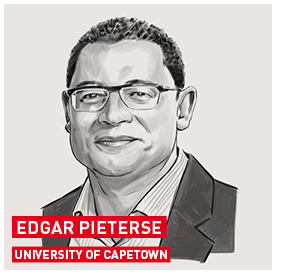
African Centre for Cities Director Prof Edgar Pieterse will be one of the speakers at the Falling Walls Conference, 8 to 9 November 2017, Berlin. His talk is entitled How Urban Studies Envision the New Era of the Metropolis.   The Falling Walls Conference is an annual global gathering of forward thinking individuals from 80 countries organised by the Falling Walls Foundation. Each year on 9 November – the anniversary of the fall of the Berlin Wall – 20 of the world’s leading scientists are invited to Berlin to present their current breakthrough research. The aim of the Conference is to: identify trends, opportunities and solutions for global challenges and discover international breakthrough research. connect outstanding researchers from different disciplines and support the interdisciplinary exchange of ideas internationally. build bridges between business, politics, academia and the arts. promote the latest scientific findings among a broader audience. inspire people to break down walls in science and society. In 15-minute-talks, researchers from all disciplines present their work in front of 700 international guests. During the breaks, the Falling Walls Forum becomes the place for high-level Q&A where the audience can ask questions and engage in discussions. A new peer-learning platform, Falling Walls Connect, gives the audience the opportunity to contribute their knowledge and expertise to fellow participants. The Conference is broadcasted online via free livestream. All presentations are available in the Falling Walls Library. Get the full programme here. 

Soft Infrastructure: Recalibrating Aesthetics, Economies, And Urban Epistemologies

Humanities Graduate Centre Seminar Room, South West Engineering Building, East Campus, University of the Witwatersrand Johannesburg, Gauteng, South Africa

The African Academy for Urban Diversity; a joint initiative of the African Centre for Migration & Society; the African Centre for Cities; and the Max Planck Institute for the Study of Religious and Ethnic Diversity invites you to a special public lecture by Dr Mpho Matsipa (Wits City Institute, University of the Witwatersrand, Johannesburg). A city like Johannesburg offers a glimpse into how immigration, black female sexuality and shifts in urban retail economies provide important economic and cultural resources to urban residents and users. By exploring black cultural practices, like braiding, as both ontology and epistemology, the lecture will explore how such practices recalibrate local economies, infrastructures, and aesthetic codes, and thus might co-constitute emergent urban identities and a way of knowing the city. The intimate, networked, and fractal nature of black hair braiding spaces disrupts the rigid colonial spatial orders of the city and its architecture. However, can such soft infrastructures sufficiently disrupt the grand narrative of African cities in ‘crisis’, while also disrupting colonial and colonizing cartographies of African urban environment? Biography Dr Mpho Matsipa is a researcher at the Wits City Institute. After completing her professional degree in Architecture at the University of Cape Town, with a distinction in design, Mpho was awarded a Fulbright Scholarship and later, a Carnegie Grant as a graduate student at the University of California, Berkeley. Her PhD in Architecture, from the University of California, Berkeley, is titled The Order of Appearances explored the entangled geographies of urban informality, urban redevelopment and the politics of race, gender and aesthetics in Johannesburg’s inner city. Mpho has written critical essays and reviews on public art, culture and space for Art South Africa, the Architectural Review and Thesis 11 (forthcoming). Mpho has worked as an architect and she has been shortlisted in two prestigious national design competitions. She has curated several exhibitions, including of the South Africa Pavilion at the 11th International Architecture Exhibition, Venice Biennale (2008).She has been an Adjunct Assistant Professor of Architecture and associate research scholar at Columbia GSAPP and Curator of Studio-X Johannesburg –  an experimental public platform on architecture and the city sponsored by Columbia University. She is currently co-curating a pan-African architecture exhibition at the Architecture Museum in Munich titled “African Mobilities: This is not a Refugee Camp Exhibition”, that will open in April 2018. For more information and to RSVP: info@migration.org.za Date:    Thursday 9 November 2017 Time:    16:00 to 17:30 Venue:  Humanities Graduate Centre Seminar Room, South West Engineering Building, East Campus, University of the Witwatersrand

Mistra Urban Futures Annual International Conference 2017

Imperial Hotel Kisumu Kisumu, Kenya

Mistra Urban Futures Annual International Conference takes place from 13 to 15 November 2017 in Kisumu, Kenya under the banner "Realising Just Cities - Learning Through Comparison". The rapidly growing number of people moving into cities all over the world also present a challenge of unprecedented size. It is crucial to find ways to make urbanisation a source for wealth, health and sustainability – which is shared. Mistra Urban Futures arranges yearly a conference about Realising Just Cities. Keynote speakers include: Caroline Wanjiku Kihato, Visiting Researcher at the School of Architecture and Planning at the University of the Witwatersrand, Johannesburg, and a Global Scholar at the Woodrow Wilson Center for International Scholars, Washington DC. Member of Mistra Urban Futures Board. Edgar Pieterse, South African Research Chair in Urban Policy & Director of African Centre for Cities. For more information click here.

Science and Cocktails: Can We Move Beyond the Divided City?

The Orbit Johannesburg, Gauteng, South Africa

Is urban segregation simply a fact of contemporary life? Are the shopping mall and gated community to blame for new forms of urban division? What role does the real estate market play in reproducing urban patterns? Is middle-class suburbia deracializing or not? Does public investment in housing and social amenities worsen or improve urban divides? Do BRT systems help or hinder urban integration? Who, if anyone, can make a difference in altering spacial patterns of the city? It is arguable that South African cities are more divided today compared to 1994. How can this be? Why are we seemingly unable to shift the contours of division and live differently? Edgar Pieterse will review the drivers of contemporary urban divides and explore the reasons why policy after policy since 1994 say the “right” things but achieve the opposite outcome. He will place his discussion in the context of the nature of both public and private investments into South African cities and illustrate the talk with data and policy experiments in Cape Town and Johannesburg. Pieterse will conclude by putting forward what some of the preconditions for genuine urban transformation might be. Date: 28 November 2018 Time: Doors open at 18:30, no admittance after 20:00. Venue: The Orbit, Braamfontein, Johannesburg Entrance to the event: R20. No registration is necessary but guests are strongly encouraged to arrive early. Dinner is served from 18:00. Guests wishing to have dinner before the event should book in advance with The Orbit and arrive by 18:30. (Last orders for dinner at 19:15 to make it to the event). Directions to the venue.

R20

ACC NOTRUC Seminar Series: Producing water scarcity in São Paulo, Brazil: The 2014 Water Crisis and the Binding Politics of Infrastructure

Studio 1 Environmental and Geographical Sciences Building, Upper Campus, UCT, Cape Town, South Africa

The last instalment of the annual ACC NOTRUC Seminar Series is presented by Dr Nate Millington on Producing water scarcity in São Paulo, Brazil: The 2014 Water Crisis and the Binding  Politics of Infrastructure at 15:00 in Studio 1, Environmental and Geographical Sciences Building, Upper Campus, University of Cape Town. ABSTRACT In 2014, political intransigence combined with a severe drought to push São Paulo, Brazil, to the edge of a profound water crisis. In this paper, I consider the response to the crisis on behalf of the state government, focusing on both the way that the crisis was narrated as well as responded to. I consider the suite of actions taken to cope with scarcity, focusing specifically on the state’s employment of pressure reductions in the water pipes as opposed to a formal rationing. I argue that despite the state government’s claims that only a small minority was going without water, the reality was that residents of the urban periphery were facing consistent water shortages. I argue that these shortages are representative of a form of infrastructural politics, in which the seemingly most technically viable solutions to the crisis exacerbated inequality due to the inequity that is built into the city’s hydrological infrastructure itself. I conclude by thinking of the city’s crisis as indicative of the changing nature of daily life in contemporary cities in the wake of climate change at both the local and global scale. More on the full seminar series here. More on the NOTRUC programme here.

Friction in the Creative City: The Case of Bandung, Indonesia

Studio 5 Environmental and Geographical Science, Upper Campus, UCT,, Cape Town, South Africa

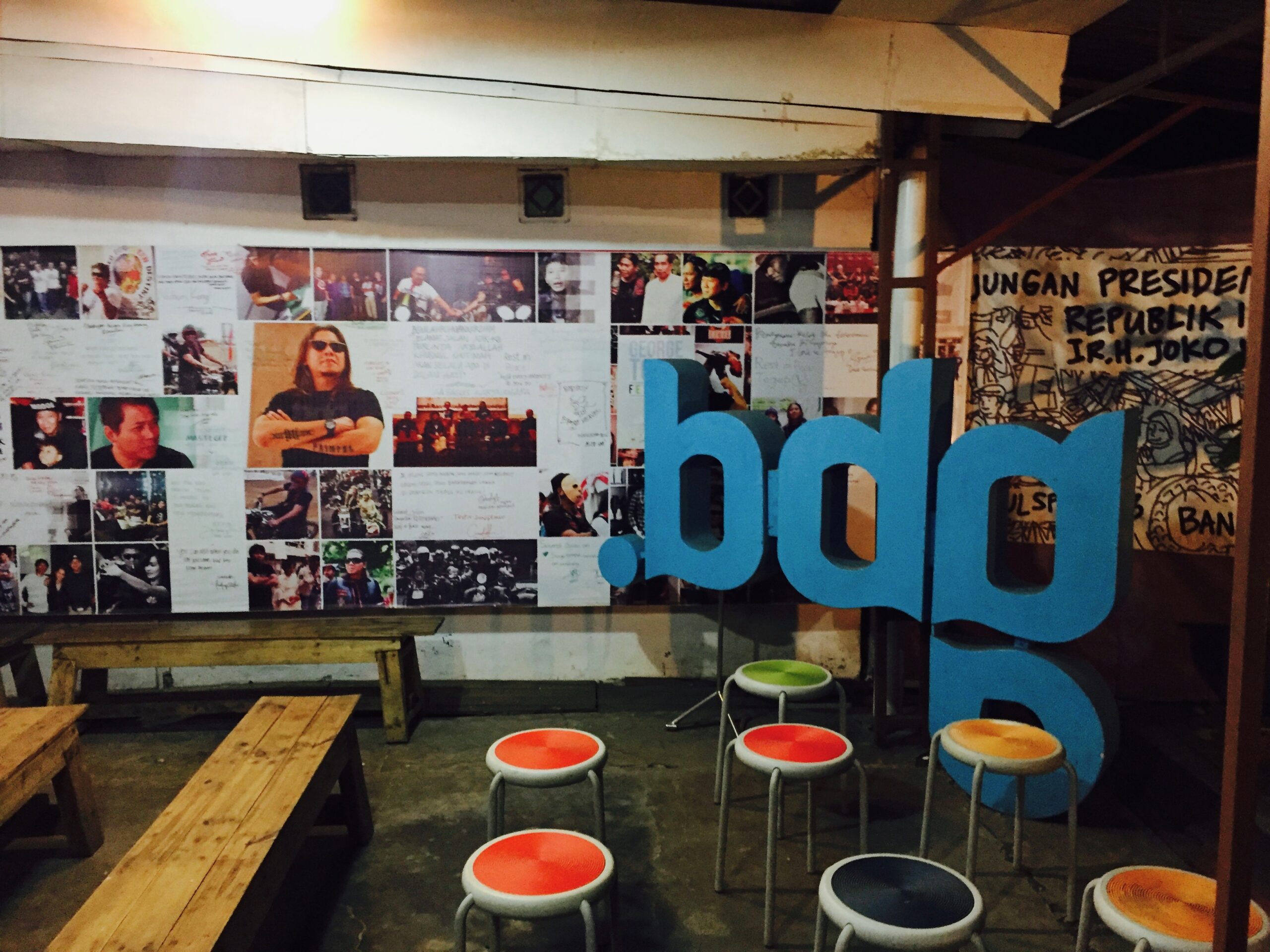
Join the African Centre for Cities for a Brownbag session on 29 January 2018 from 12:45 to 14:00 by Christiaan De Beukelaer on "Friction in the Creative City: The Case of Bandung, Indonesia" hosted in Studio 5, Environmental and Geographical Science Building, Upper Campus, University of Cape Town. Since the foundation of the Bandung Creative City Forum (BCCF) in 2008, the city of Bandung, capital of West Java has started referring to itself as an ‘emerging creative city’. Because of the significant role BCCF, a civil society organisation, played in developing this strategy, Bandung relied far less on top-down, consultant-driven strategies than most ‘creative cities’. While their largely bottom-up engagement with the ‘creative city script’ was well-received, the practical execution of their ideas poses challenges in terms of negotiating priorities and strategies. The implementation became more complex and complicated when Ridwan Kamil, BCCF’s first director, was elected Mayor in 2013. The ensuing tensions concealed two important questions: What is the creative city? How to execute creative city strategies? Rather than engaging with these unspoken questions, Bandung has become a creative city of many definitions and strategies, while maintaining its singular brand. I explain the ensuing ‘friction’ (Tsing 2005) in two overlapping ways. First, I contrast two notions of the creative city by building on the work of geographer Oli Mould. His book Urban Subversion and the Creative City distinguishes the uppercase ‘Creative City’ (the mainstream understanding of the term) – and the lowercase ‘creative city’ (the more grounded, subversive understanding of the term). Second, I build on the work of geographer Jamie Peck, who critiques the global flow of ‘policy-fixes’ as being prone to becoming ‘fast policy’ (often captured in buzzwords), which inevitably collides with ‘slow policy’ of existing bureaucracies and power structures.   More on the speaker and respondent: Christiaan De Beukelaer is a Lecturer in Cultural Policy at the University of Melbourne. He obtained a PhD from the University of Leeds and holds degrees in development studies (MSc, Leuven), cultural studies (MA, Leuven), and musicology (BA, Amsterdam). He won the 2012 Cultural Policy Research Award, which resulted in the book Developing Cultural Industries: Learning From the Palimpsest of Practice (European Cultural Foundation, 2015). He co-edited the book Globalization, Culture, and development: The UNESCO Convention on Cultural Diversity (Palgrave Macmillan, 2015, with Miikka Pyykkönen and JP Singh), and a special issue on Cultural Policy for Sustainable Development for the International Journal of Cultural Policy (2017, 23(2), with Anita Kangas and Nancy Duxbury). He is now working on the book Global Cultural Economy (co-authored with Kim-Marie Spence, forthcoming with Routledge). Laura Nkula-Wenz is an urban geographer with a keen interest in postcolonial urban theory, African urbanism and culture. Her research focuses on the transformation of urban governance and the construction of local political agency, as well as the diverse relationships between cultural production and urban change. She holds a PhD in Geography from the University of Münster/Germany, where she also completed a degree in Human Geography, Communication Studies and Political Science. Laura recently completed a postdoctoral fellowship at the Pôle de recherche pour l'organisation et la diffusion de l'information géographique (Prodig) in Paris and currently works on the Critical Urbanism Masters at the African Centre for Cities (UCT, in cooperation with the University of Basel).