City governance in new authoritarian states

Davies Reading Room Room 2.27, Environmental and Geographical Science, UCT, Cape Town, Western Cape, South Africa

The Case for Luanda Many states in Africa have been formally democratic since the 1990s and in terms of their institutional landscape, look like electoral democracies, with constitutions, elections, parliaments, courts, local governments, private media and civic associations. Yet, in practice these institutions may not operate under the kind of political freedom and legal security that can be found in liberal electoral democracies. In spite of a growing literature on the workings of this type of ‘new authoritarianism’, there is little work on how the nature of such regimes in Africa translates to city governance. On the other hand, few studies of African cities incorporate political regime theory in their analyses. As a result, they are often either overly pessimistic or too optimistic with regard to the role of local governments and civil society in city governance. Based on a discussion of the role of the Angolan government and ruling party in the planning and governance of the capital city of Luanda, this presentation argues in favour of a more grounded understanding of the African city. About the Speaker
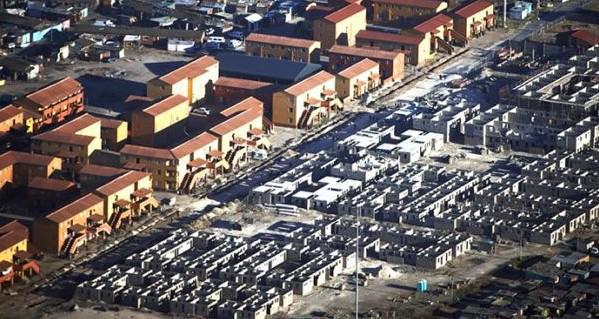
 Sylvia Croese is a post-doctoral fellow at the Department of Sociology and Social Anthropology at Stellenbosch University. Her PhD thesis, entitled Post-war state-led development at work in Angola. The Zango housing project in Luanda as a case study, looked into the ways in which distributive policies such as housing are used to contribute to regime legitimacy and survival in the city of Luanda, thereby bringing together two theoretical bodies of work: one on political regimes and one centred around urban studies in Africa. Her current research further examines how governments that are formally democratic, but authoritarian in practice manage their rapidly growing cities and how this in turn affects city dwellers’ perceptions of and engagements with the state.
Analysing regional development and policy: A structural-realist approach

Studio 5 Environmental and Geographical Science, Upper Campus, UCT,, Cape Town, South Africa

Professor Frank Moulaert will discuss his paper titled Analysing regional development and policy: A structural-realist approach, which he co-authored with Abid Mehmood. The paper gives an overview of theories and models which can be used to analyse regional development as well as to design policies and strategies for the future of regions and localities. It evaluates the analytical and policy relevance of these models, and as it moves towards analytical synthesis, makes some recommendations for a structural realist approach to spatial development analysis. About the speaker Professor Frank Moulaert (frankmoulaert.net) is Professor of Spatial Planning, Head of the Planning and Development Unit and Chairman of the Leuven Research Centre on Space and Society at the Faculty of Engineering, KU Leuven, Belgium. He was the Academic Coordinator of the Policy Research Centre ‘Spatial Planning and Housing’ of the Flemish Region (2007-2011). His research covers urban and regional development, social science theories and methods, but especially social innovation. He has coordinated six Framework projects (SOCIAL POLIS, KATARSIS, DEMOLOGOS, SINGOCOM, VALICORES, URSPIC) and has worked on a number of regional, national and international research platforms in the course of his academic career. Ongoing research includes: governance of socio-ecological systems (role of social innovation); and, operationalizing sustainable lifestyles through social innovation; transdisciplinary research on spatial quality, governance systems and food webs.  Before coming to Leuven he was a Professor at USTL (Lille, France) and Newcastle University (UK). Download the paper here  

A Brief Symposium on Accessing Land in African Cities

Studio 3 ENGEO Building, Upper Campus. University of Cape Town,, Cape Town, Western Cape, South Africa

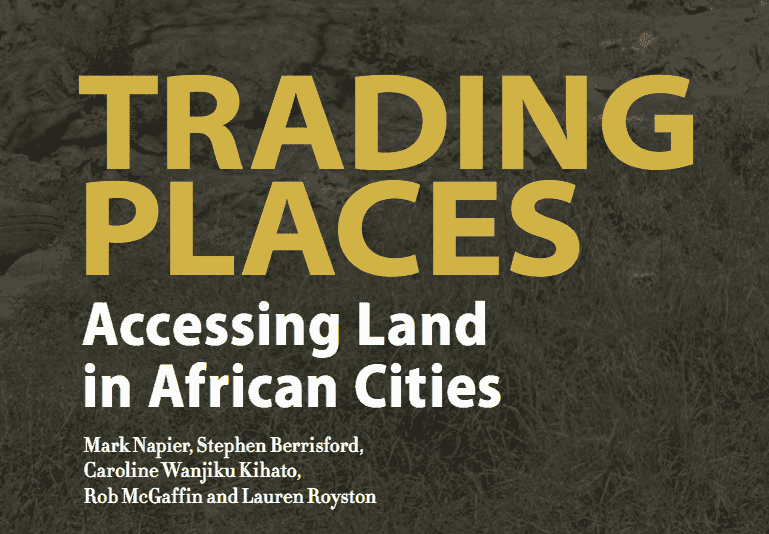
A recently released book called "Trading Places" is about how urban land markets work in African cities. The book explores how local practice, land governance and markets interact to shape the ways that people at society's margins access land to build their livelihoods.

Paula Meth — Producing ‘decent’ cities: gender and urban upgrading

Studio 5 Environmental and Geographical Science, Upper Campus, UCT,, Cape Town, South Africa

Dr Paula Meth is a lecturer in Town and Regional Planning at the University of Sheffield. Her research interests cover the areas of gender and violence, informal housing, crime management, inequality and injustice, governance, local politics and everyday power relations, all focusing on the global South, particularly South Africa,. Her current research focusses on the contributions made by citizens both in challenging and managing social problems but is also in the broader impact of national and global trends towards neo-liberalism and their effect on local participation. Her work is informed by ongoing debates within Feminism and Development Studies, as well as moves within Planning to broaden and re-examine the terms of reference of planners and their relationship with broader society. Also related to this work is an ongoing interest in developing qualitative methodology, in particular making use of diaries to inform the research process. This seminar is presented jointly by the UCT EGS Department and ACC

IIHS/ACC Seminar

UCT Seminar Room 1 Chemical Engineering, UCT Upper Campus, Cape Town, Western Cape, South Africa

PLEASE NOTE THAT THIS SEMINAR HAS BEEN POSTPONED. FURTHER DETAILS TO BE SUPPLIED WHEN AVAILABLE

SA Cities Conference

Wits University Johannesburg, Gauteng, South Africa

The third SA Cities conference takes place at Wits University in Johannesburg. This conference brings together emerging and established South African urban scholars. It is a joint project of CUBES & ACC. Details to follow.

Policy & Governance Contexts for Scalable Community-Led Slum Upgrading

Davies Reading Room Room 2.27, Environmental and Geographical Science, UCT, Cape Town, Western Cape, South Africa

The presentation first addresses the policy and governance contexts for the scalability of community-led slum upgrading based on the Shack/Slum Dweller International methodology. The methodology is based on that of the Indian Alliance (NSDF, Mahila Milan, SPARC), which comprises community-based organizations and NGOs, in partnership with government, delivering municipal services, securing tenure and promoting slum upgrading. The presentation continues with the role of the Pune and Mumbai community-led toilet block precedents in South-South knowledge exchange. About the speaker Richard Tomlinson is Chair in Urban Planning in the Faculty of Architecture Building and Planning at the University of Melbourne. Before going to Australia he served as an urban policy consultant in Southern Africa and as an academic in South Africa and the USA. His clients included the post-apartheid South African government, and provincial and local governments, The World Bank, USAID, UN Habitat international and local NGOs, and also the private sector. As an academic he has served as a Visiting Professor at the University of the Witwatersrand and Columbia University, as a Visiting Scholar and SPURS Fellow at MIT, and a Guest Scholar at the Brookings Institution. His most recent publications, research and teaching concern the effects of Google and social media on urban policy knowledge products; urban policy processes and ‘international best practice’; slum upgrading; the BRICS and the urban legacy of sports mega events; and housing and the Australian city. His most recent book is an edited publication on Australia’s Unintended Cities: The Impact of Housing on Urban Development.

African Centre for Cities at the World Urban Forum 2014

Unnamed Venue Medellín, Colombia

ACC will have a strong presence at the World Urban Forum, and will be participating in a number of events. The World Urban Forum takes place in Medellin, Colombia between 7-11 April 2014