Invitation to the next Spatial Transformation CityLab Seminar

Seminar Room 3 African Centre for Cities, Upper Campus, Cape Town, South Africa

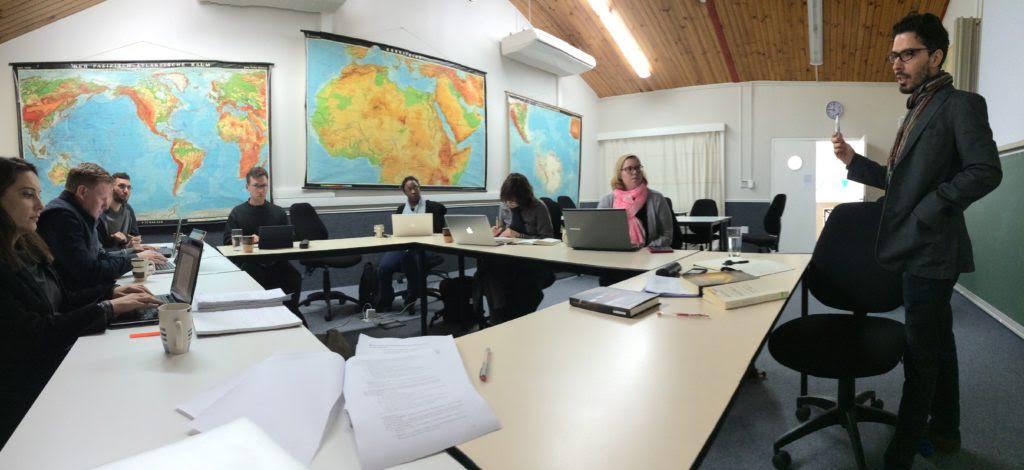
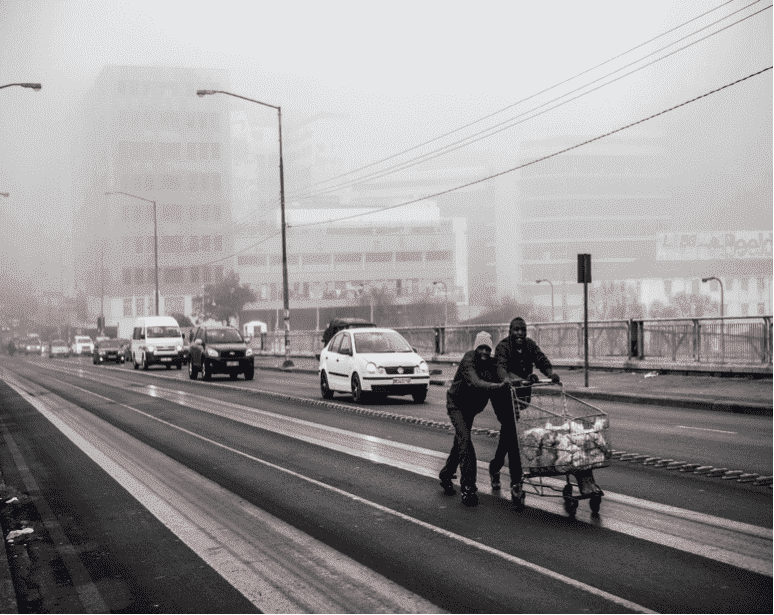
The ACC is excited to host Dr. Margot Rubin and Alexandra Appelbaum from the University of the Witwatersrand for the next instalment in the Spatial Transformation seminar series. They will share with us findings from their research into Johannesburg’s Corridors of Freedom Programme. “Neighbourhoods, NIMBYists and nobodies: the local politics of the Corridors of Freedom”   In 2013, Johannesburg’s former mayor, Parks Tau, announced the ambitious Corridors of Freedom plan to ‘restitch’ Johannesburg through a process of transit-oriented development led by the BRT and supported by a range of interventions intended to densify housing, stimulate economic opportunities, and develop mixed use activities. While the plan envisions large-scale transformation through long-term infrastructure investments, the implementation of the COF has had an immediate and substantial impact at a local level. The various responses of Johannesburg communities have revealed localized governance dynamics and complex relationships with the City and the state, speaking to significant socio-spatial politics in the city. Based on a survey and key informant interviews the seminar reflects on community organization (or lack thereof); the role of individual and organizational intermediaries; and tactics of engagement with the state. It focuses on three case studies in Johannesburg: Orange Grove and Norwood – a mixed middle class and low-income node on the Louis Botha Corridor; Westbury and Coronationville – a historically coloured area on Empire-Perth Corridor struggling with gang violence, drug abuse and high levels of unemployment; and Marlboro South – an informal community living in reterritorialised industrial buildings adjacent to the historic township of Alexandra. We argue that the Corridors of Freedom project has had a substantial impact on local politics and has revealed significant social and spatial community dynamics across Johannesburg. This seminar forms part of a research partnership between the AFD, City of Johannesburg and the South African Research Chair in Spatial Analysis and City Planning at the University of the Witwatersrand.   Dr Margot Rubin Margot Rubin is a senior researcher and faculty member in the University of the Witwatersrand (South African Research Chair in Spatial Analysis and City Planning) in Johannesburg. Since 2002, she has worked as a researcher, and policy and development consultant focusing on housing and urban development issues, and has contributed to a number of research reports on behalf of the National Department of Housing, the Johannesburg Development Agency, SRK Engineering, World Bank, Ekurhuleni Metropolitan Municipality and Urban LandMark. Her PhD in Urban Planning and Politics interrogates the role of the legal system in urban governance and its effect on the distribution of scarce resources and larger questions around democracy. She also holds a Masters in Urban Geography from the University of Pretoria, an Honours degree in Geography and Environmental Studies and a Bachelor of Arts in Geography and Philosophy. Of late, Margot has been writing about inner city regeneration, housing policy and is currently engaged in work around mega housing projects and issues of gender and the city.   Alexandra Appelbaum Alli Appelbaum is researcher at the South African Research Chair in Spatial Analysis and City Planning (SA&CP) who holds a Masters in Regional and Urban Planning Studies (with distinction) from the London School of Economics and Political Science, as well as a Bachelor of Arts Honours in Urban History (in the first class) and a Bachelor of Arts in Politics and History (with distinction), both from the University of Cape Town. Her research interests are broad, meeting at the intersection of History, Geography, Urban Studies and Gender Studies. They include African urbanisms, discourse analysis, LGBT+ and gender issues, urban poverty reduction, informal trading, gated communities and urban governance. She is passionate about research that has impacts both within and beyond academia. At SA&CP she is the project manager for the AFD-funded Corridors of Freedom project, in which she is working with a team of researchers to aid the City of Johannesburg in their ambitious plan to ‘restitch’ Johannesburg, level apartheid spatial inequality and forge a more public-transport-oriented city. Before joining SA&CP, Alli worked in consulting and the NGO sector. She received a Commonwealth Scholarship through the Canon Collins Trust in 2014 to study for her Masters at LSE and she was a member of the South Africa Washington International Programme in 2012. She was recognised by the Mail & Guardian as one of South Africa’s ‘Top 200 Young South Africans’ in 2016. RSVP: Mercy Brown-Luthango at mercy.brown-luthango@uct.ac.za  
ACC/ AFD Symposium on Informal Settlements, Slums and Precarious Neighbourhoods

Studio 3 ENGEO Building, Upper Campus. University of Cape Town,, Cape Town, Western Cape, South Africa

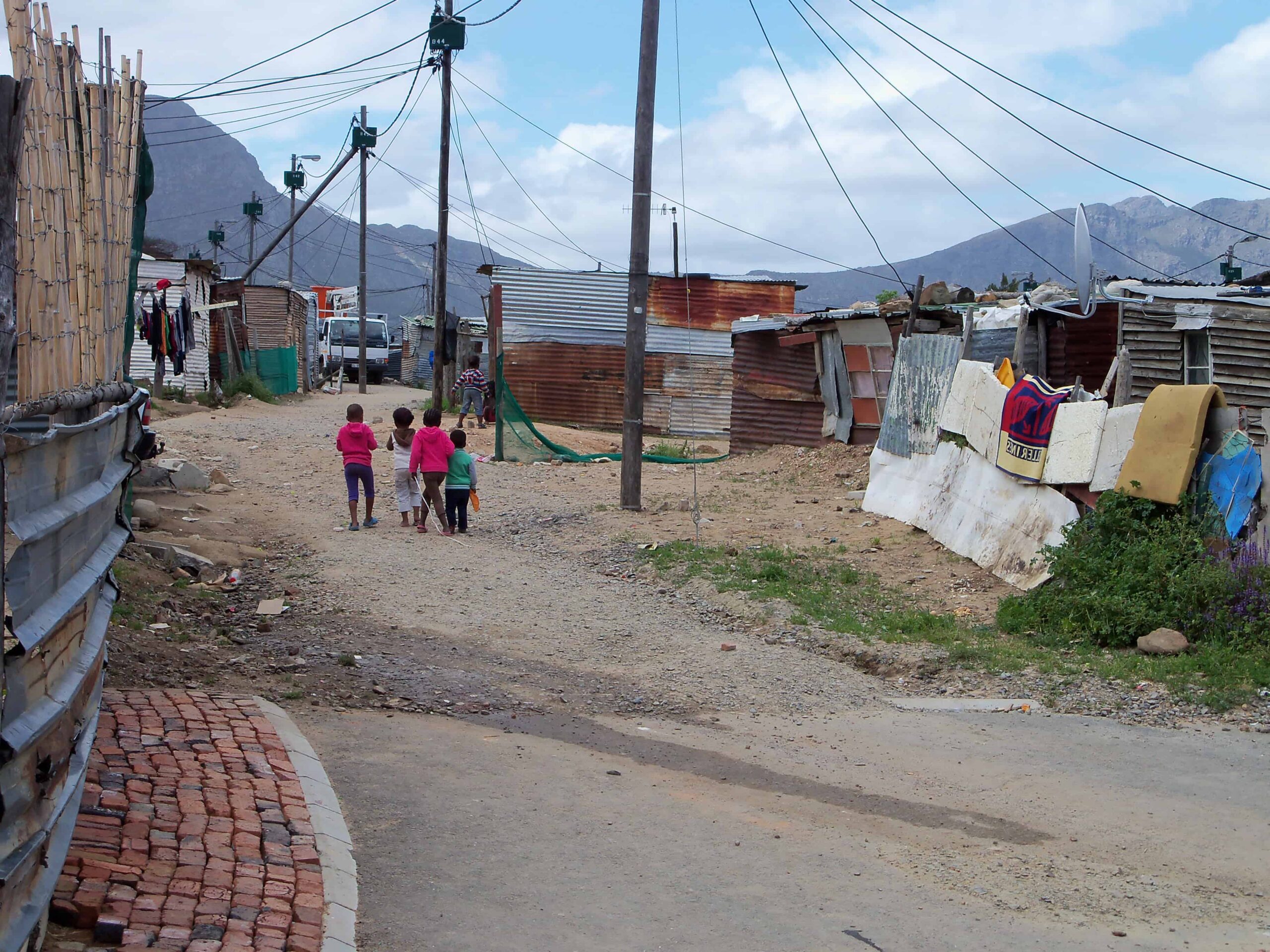
The African Centre for Cities (ACC) and Agence Française de Développement (AFD) host a one-day symposium on the AFD book Rethinking Precarious Neighbourhoods edited by Professor Agnès Deboulet, the work of ACC’s Urban Violence, Safety and Inclusion CityLab coordinated by Dr Mercy Bown-Luthango, and the work of the Sustainable Human Settlements CityLab coordinated by Liza Cirolia.

Socio-Spatial Transformation Seminar Series: TOD in Cape Town

Studio 3 ENGEO Building, Upper Campus. University of Cape Town,, Cape Town, Western Cape, South Africa

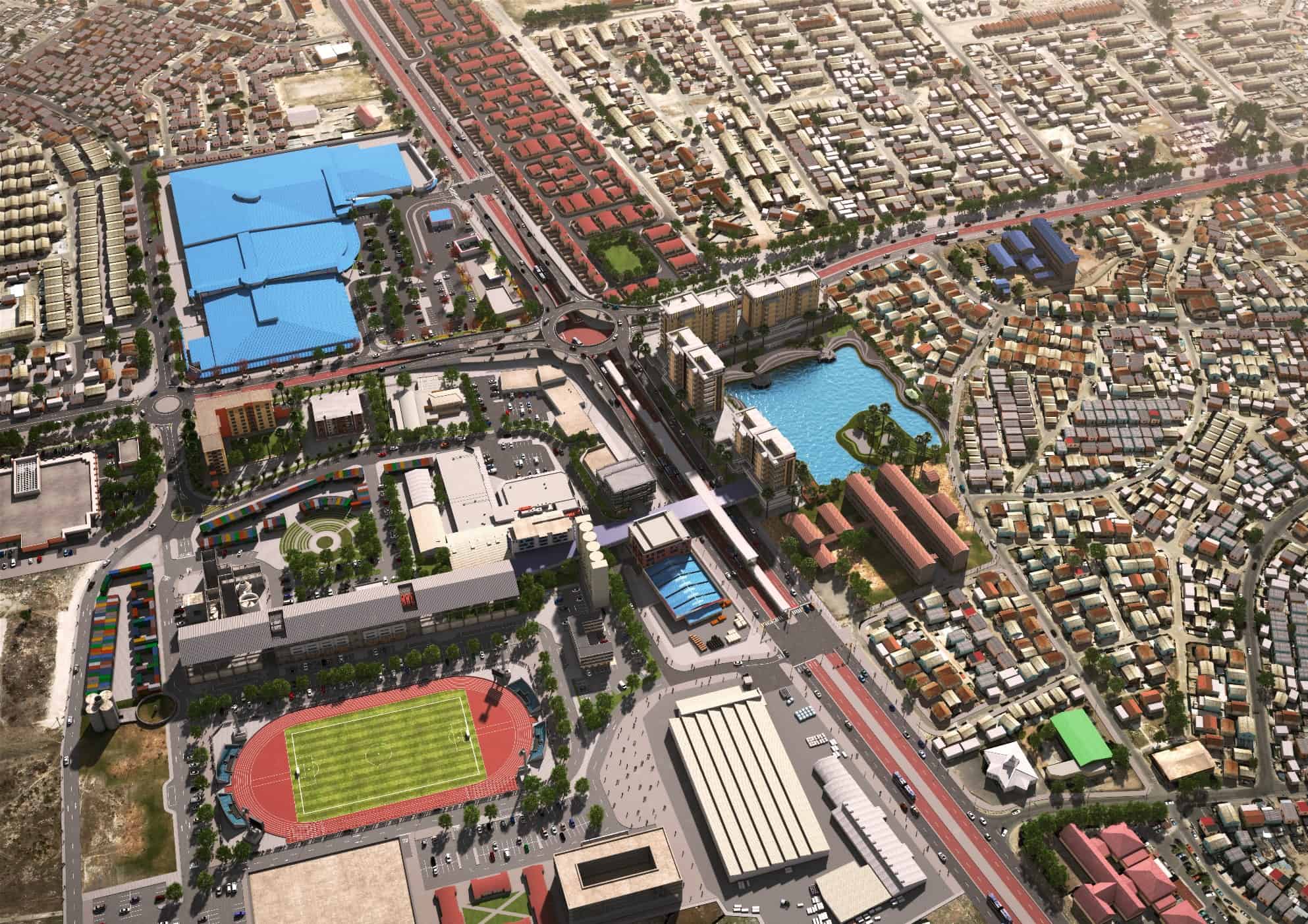
The next seminar in the ACC’s Socio-Spatial Transformation Seminar Series will take a closer look at the City of Cape Town’s plans for Transit-Oriented Development (TOD).

Annual PhD Seminar Series: Understanding Capitalism in Unequal Geographies

Seminar Room 1, EGS Building, Upper Campus, University of Cape Town University of Cape Town, Cape Town , Western Cape, South Africa

The third iteration of the annual PhD seminar series presented by ACC's Notations on Theories of Radical Urban Change project (NOTRUC), lead by Henrik Ernstson and Edgar Pieterse, on Democratic Practices focuses on "Understanding Capitalis in Unequal Geographies". The seminar series is based on reading political philosophy with and against southern urbanism. It seeks to make an intervention in how we think about the emergent city and urbanization of the global south; to seek out and make explicit its emancipatory potential, which often gets hidden or silenced, either by overly dogmatic “Northern” frameworks, “developmentalist” techno-managerial approaches; or a sense of defeat that an emancipatory horizon is not any longer possible.In 2017 the series focuses on capitalism and its wider structuration of cities, bodies and subjectivities. It seeks to understand how classic Marxist critique and its extension into intersectional analysis can be thought with and against southern/postcolonial urban geographies to make visible contemporary struggles against exploitation.Key questions:  How does capitalism function in and through its differences across time, space, and social location? How does capitalism interact with and structure gender, race, and sexuality? How does this play out, manifest and structure urban spaces and extended geographies of the south? What spaces, discourses and collectivities can a critique of capitalism help to make visible as locations to struggle against interconnected assemblages and dispositifs of oppression? Lecturers:Dr. Andrés Henao Castro, University of Massachusetts, Boston Dr. Ashley Bohrer, Hamilton College, New York City Dr. Henrik Ernstson, KTH and University of Cape Town Read more here 

Free

Refractions of the National, the Popular and the Global in African Cities

STIAS Wallenberg Research Centre 10 Marais Road, Stellenbosch, Western Cape, South Africa

The Stellenbosch Institute for Advanced Study (STIAS) and the African Centre for Cities (ACC) will jointly host a conference on Refractions of the National, the Popular, and the Global in African cities. Venue: Wallenberg Research Centre in Stellenbosch, South Africa Date: Monday, 31 July & Tuesday, 1 August 2017 There has been a significant expansion of academic research on the specificities of African urbanisms, diverse urban imaginaries and politics over the last decade. In the wake of recent formal policy shifts in acknowledging the importance of urbanisation and pro-active policy making on the one hand, and a rise in urban-based social mobilization on the other, it is opportune to create an academic space for cross-pollination and reflection. The theme of the conference is captured in its title: Refractions of the National, the Popular, and the Global in African cities. Each of the three issues may be interrogated as follows: How is the nationality and the nation-state manifested in the city, if at all? To what extent is the political and the social character of the state regime expressed in the city and its governance? To what extent, in what form, and with what effect have popular forces been able for make themselves heard and influential in the city, in recent years? Why or why not? We are here thinking of protest movements, of civic associations and of reform coalitions of progressive city government. To what extent and how has the recent and current commodity boom meant a globalization of the city? Influx of foreign capital, heating up of the real estate market, emergence or growth of financial and business services sectors, new business districts, luxury shopping, hotels, and leisure supply, immigration, skyscrapers, gated neighbourhoods, etc? How are proclaimed “world city” ambitions developing on the ground? The conference programme is designed both to focus discussion on each of the three issues outlined above as well as to allow enough time for discussion from the participants. For more information or to book your seat, click here.

R800

Integration Complexities at Open Book Festival

The Fugard Theatre Studio Corner Caledon & Lower Buitenkant Street, District Six, , Cape Town , South Africa

Adi Kumar, Premesh Lalu and Edgar Pieterse report back on the Integration Syndicate – an aimed at finding solutions to challenges facing Cape Town. Chaired by Pippa Green. Date: 6 September Venue: Fugard Studio Time: 10:00 - 11:00 Price: R45 Full festival programme. Book tickets. NOTE: A limited number of free tickets for students are available for each event of the programme. Tickets are available on a first-come, first-served basis. To apply, email openbooktickets@gmail.com by no later than 31 August.

R45

Writing Cities at Open Book Festival

A4 Arts Foundation 23 Buitenkant Street, Cape Town , South Africa

Nechama Brodie, Kim Gurney and Sean O’Toole speak to Neo Muyanga about their representations of urban spaces. Date: 6 September Venue: A4 Arts Foundation – Ground Time: 12:00 - 13:00 Price: R45 Full festival programme Book tickets NOTE: A limited number of free tickets for students are available for each event of the programme. Tickets are available on a first-come, first-served basis. To apply, email openbooktickets@gmail.com by 31 August.

R45

Cities in Fiction at Open Book Festival

D6 Homecoming Centre 15 A Buitenkant Street, Cape Town , South Africa

Elan Mastai, Fiston Mwanza Mujila and Chibundu Onuzo speak to Luso Mnthali about the craft of writing urban spaces. Date: 8 September Venue: HCC Workshop Time: 14.00 - 15.00 Price: R45 Full festival programme Book tickets NOTE: A limited number of free tickets for students are available for each event of the programme. Tickets are available on a first-come, first-served basis. To apply, email openbooktickets@gmail.com by 31 August.

New Urban Worlds at Open Book Festival

D6 Homecoming Centre Workshop 15 A Buitenkant Street, .Cape Town, South Africa

Ken Liu and Edgar Pieterse speak to Mark Swilling about cities of the future. Date: 8 September Venue: HCC Workshop Time: 16.00 - 17.00 Price: R45 Read more about New Urban Worlds: Inhabiting Dissonant Times by Edgar Pieterse and Abdoumaliq Simone. Full festival programme Book tickets NOTE: A limited number of free tickets for students are available for each event of the programme. Tickets are available on a first-come, first-served basis. To apply, email openbooktickets@gmail.com by 31 August.

R45

JHB launch of ‘August House is Dead, Long Live August House!’

Point of Order Project Space Wits School of Art , Johannesburg, South Africa

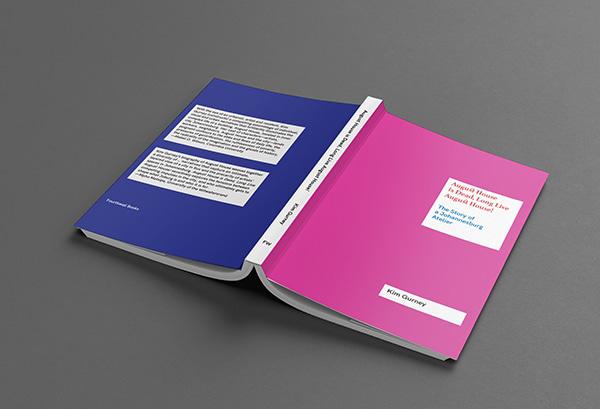
Writer, artist and research associate at the University of Cape Town’s African Centre for Cities (ACC), Kim Gurney pens a new book on the evolving art space August House in Johannesburg. August House is Dead, Long Live August House! The Story of a Johannesburg Atelier, published by FourthWall Books, is a fascinating study of the role of the atelier and its artists in South Africa’s fractious art world, and a consideration of the relationship between art and the ever-changing city of Johannesburg. Join us for the official launch in Johannesburg, at 18:00 on 27 September 2017 at Point of Order Project Space, Wits School of Arts.