Finding Food in the post-2015 Development Agenda

Studio 3 ENGEO Building, Upper Campus. University of Cape Town,, Cape Town, Western Cape, South Africa

Food is fundamental not only to well-being, but to our social and economic lives. Despite this, one of the biggest challenges facing many people in cities all over the world today is hunger. As cities rapidly urbanise, different pressures are placed on the food system which has resulted in the least nutritious food being the most affordable. This seminar series will explore the informal economy, food systems, food security and urbanisation. This final seminar by Dr Jane Battersby explores the global implications of the post-2015 development agenda. Abstract Food has not historically been considered central to the urban agenda. However, good nutrition is essential for equitable growth and sustainable urban food systems are key to responding to many of the challenges posed to growing cities. In the wake of Habitat III, this seminar examines the gaps and opportunities to engage the food system as part of urban governance and planning that have emerged in the space generated by the SDGs and New Urban Agenda document. It draws on findings from AFSUN (African Food Security Urban Network) and the Consuming Urban Poverty project. Bio Jane Battersby is an urban geographer with an interest in all things food related. Her current areas of particular interest are urban food systems, urban food policies and the construction of food security theory in Northern and Southern research contexts. This work has both theoretical and applied components. Underpinning her food work is an ongoing interest in the linkages between spatial transformation and identity transformation in post-apartheid urban areas – a topic she has addressed through the lenses of youth identities, education, music and land restitution. Jane has been the Cape Town Partner of the African Food Security Urban Network (AFSUN) since 2008, and is currently the Research Co-ordinator of the ACC’s Consuming Urban Poverty Project, and is associated with the Hungry Cities Programme.

Invitation to the 2nd Seminar in the Spatial Transformation CityLab Series

“The Voortrekker Road Corridor and the quest for Spatial Transformation” One of the key outcomes of the City of Cape Town’s Spatial Development Framework (2012) is the creation of an “inclusive, integrated and vibrant” city. Greater synergy between urban development and mobility through densification and the provision of quality public transport is considered to be central to the spatial and social restructuring of the city. In line with national policy imperatives, the City of Cape Town has identified two Integration Zones, the Metro-South East Corridor Integration Zone (MSEIZ) and the Voortrekker Road Corridor Integration Zone (VRCIZ) as critical tools for the realization of a more inclusive and integrated Cape Town. The primary objective of the VRCIZ, the focus of this CityLab seminar series, is to link the Bellville CBD with the boundary of the Metro South-East Corridor and the Cape Town CBD. The second seminar in the series will be devoted to a discussion of the City of Cape Town’s vision for the VRCIZ. Antony Marks from the City’s Spatial Planning and Urban Design department will present a detailed overview of the City’s intentions and plans; providing insight into some of the opportunities and challenges within the Corridor related to densification, integration and transport. Rob McGaffin, Senior Lecturer in UCT’s Construction Economics and Management department will share some reflections on the potential and viability of corridors, integration zones and transit-oriented development in particular, to achieve the desired transformation of the urban form. Please RSVP to Mercy Brown-Luthango on mercy.brown-luthango@uct.ac.za

Resilient Urban Development: perspective of the Massive Small Collective

African Centre for Cities UCT Upper Campus, Cape Town, South Africa

In this Brown Bag, Lauren Hermanus will introduce the work of the Massive Small Collective, which seeks to make connections between small-scale urban sustainable development and resilience thinking. The Massive Small Collective understands resilience as social, economic and environmental sustainability under conditions of dynamic complexity. As individuals, households, businesses, and governments are faced with increasing complexity, and more frequent destructive shocks, and new information and technologies, the context and need for resilience planning and implementation is growing. The assertion of the Massive Small Collective, is that top-down, large-scale, command and control strategies aimed to improve social well-being and manage ecological risks have not delivered the promised results. The collective believes that the ‘bigness’ of these projects is the source of their weakness. Local context and history are, by necessity, rendered marginal by end-state and solutions-focused wholesale reform. But we can now see that it has showed itself to be critical to long-term success. In response, the Massive Small Collective focuses on incrementalism and redundancy, dynamic interrelation, local context, learning from failure and responsive governance.  This Brown Bag will introduce the potential of small-scale urban sustainable development initiatives and investments to contribute to the resilience agenda in cities and towns around the world. This work is done in partnership with the Centre for Complex Systems in Transition, African partners of the Stockholm Resilience Centre.  About the Speaker: Lauren Hermanus is has a BA in Politics, Philosophy and Economics, and a MA in Complexity Theory and Philosophy. She is currently enrolled in MPhil in Development Policy and Practice. She is a Sustainable Development Specialist focused on urban resilience and energy innovation. Her experience is in policy, strategy and programme development in both the public and private sectors. She is interested in applying Complexity Thinking to development challenges. Date: 28th November Time: 1-2pm Venue: Davies Reading Room (library), EGS Building, Upper Campus, UCT

Tackling Lighting Inequalities

African Centre for Cities UCT Upper Campus, Cape Town, South Africa

Tackling Lighting Inequalities: About Urban Lighting, Design and ‘the Social’ The ACC is excited to introduce Mona Sloane, a visiting scholar for the London School of Economics and Politics. Mona will be presenting her work on 'Configuring Light/Staging the Social', a research programme she founded at the LSE at the final brown bag of 2016. About the topic: Light is central to how people experience and use city spaces, and to how urban systems operate. Through light, we carve out spaces for social life. Light impacts on the public space in the crucial hours after dusk, enabling or problematizing social activity, economic and commercial development, security, safety and public order, access, participation and identification with urban public life. Furthermore, public lighting also has significant cost impacts on local authorities’ budgets while currently undergoing a massive technological revolution which puts it centre stage in a number of urban discussions, ranging from big data and urban governance, cutting down economic and environmental costs in relation to climate change and sustainable urban development, to aesthetics and city branding. This brown bag seminar discusses the of status public lighting and design in the UK and in London specifically. It outlines how public lighting is a barometer of developing socio-spatial inequalities in the urban context and allows rich insight into how urban inequalities are lived out and responded to. The speaker will suggest strategies for responding to these challenges. About the Speaker: Mona Sloane is a visiting academic at the ACC and a final-year PhD student in the LSE Department of Sociology. She is an ethnographer and works and publishes on the sociology of design, material culture, aesthetics and cultural economy as well as lighting design and public space. She holds an LSE PhD scholarship, an MSc in Sociology from the LSE and a BA in Communication and Cultural Management from Zeppelin University Friedrichshafen. She also is co-founder and former member of the LSE-based research programme Configuring Light/Staging the Social which explores the role of light and lighting in everyday life and urban design.

São Paulo’s Peripheries: Transformations in Modes of Collective Life

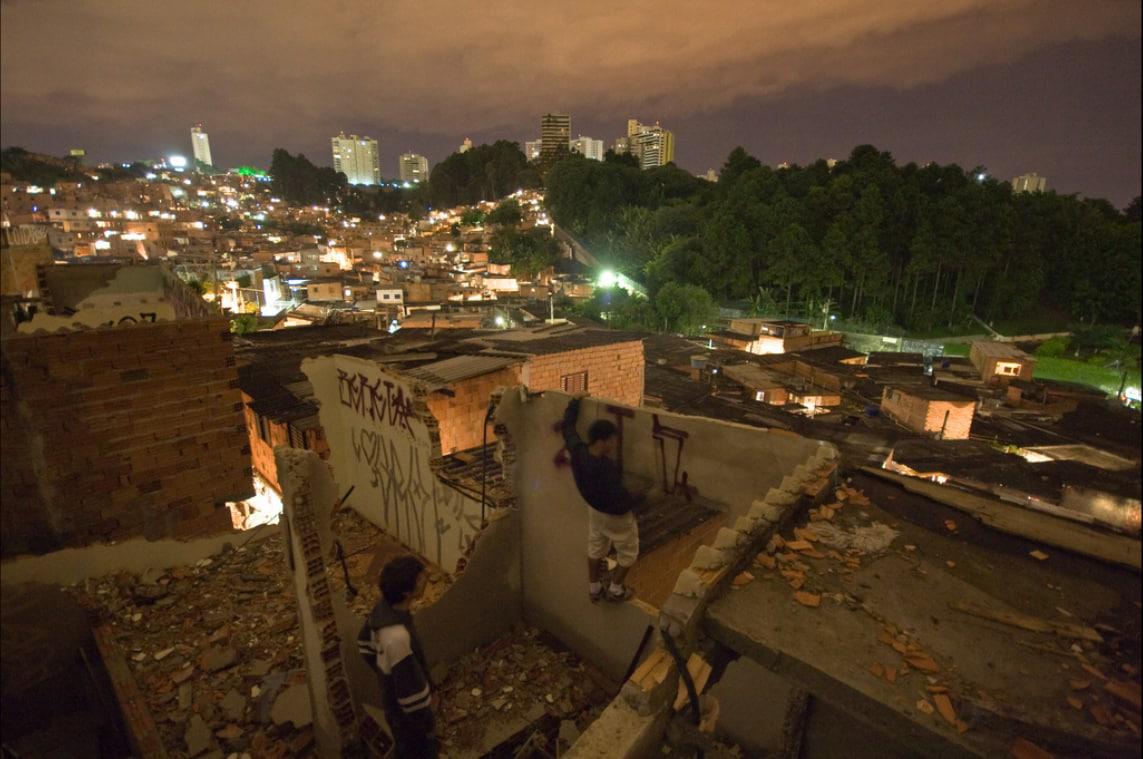
Image credit: Choque Fotos   SPEAKER: Prof Teresa Caldeira DATE: 14 December 2016 TIME: 17:30 - 19:30 VENUE: Hiddingh Hall (2nd floor), UCT’s Hiddingh Campus, 31-37 Orange Street, Gardens (opposite the Labia Theatre), Cape Town, South Africa   ACC is honoured to present a public lecture by Professor Teresa Caldeira (University of California, Berkeley) on the transformations of modes of collective life in São Paulo, Brazil, over the past two decades. About the topic: São Paulo’s peripheries, once exclusively the spaces where the poor working classes inhabited their autoconstructed houses, have changed considerably in the last two decades. They are now much more heterogeneous and their everyday dynamics are in need of new analyses. The mode of collective life based on autoconstruction, industrialism, migration, the dignity of labour, a certain hierarchy of gender roles, and the articulation of urban social movements has undergone profound changes.  This talk explores the emerging mode of collective life that is being created in what are now much improved and diverse urban spaces.  It is based on new modes of consumption, cultural production, protest, and circulation from the peripheries to the rest of the city. The transformed peripheries are fundamentally heterogeneous and new arrangements of domestic life and gender roles are at the core of their mutations. These transformations in modes of collective life happen not only in São Paulo, but also in several other autoconstructed metropolises across the global South. About the speaker: Professor Teresa Caldeira is an urban scholar from Brazil who teaches at the Department of City and Regional Planning at the University of California, Berkeley. She does research on urban violence, spatial segregation, and cultural production in cities of the global South, especially São Paulo.

Theorizing Urbanization: the Universal and the Particular in Question

Studio 3 ENGEO Building, Upper Campus. University of Cape Town,, Cape Town, Western Cape, South Africa

The African Centre for Cities is pleased to announce it's first Special Lecture for 2017. We will be hosting Prof Kevin Cox, who will be presenting a lecture on 'Theorizing Urbanization: The Universal and the Particular in Question'. Abstract Over the last twenty-five years or so urban studies has witnessed increasing skepticism towards universalizing claims and a greater interest in the particularizing. Recent arguments for a view from the global South exemplify this. This raises the question of what the relationship between universalizing and particularizing tendencies might be. This is explored firstly through an exploration of how the two might be reconciled. Two case studies then follow. One focuses on the ‘view from the South’ controversy; and the other on the politics of urban development in the US and in Western Europe and a subsequent trans-Atlantic divide. Bio KEVIN R. COX, is Emeritus Distinguished University Professor of Geography at the Ohio State University. His major research interests include the politics of urban and regional development, geographic thought and South Africa. He is the author of numerous books, the most recent of which are The Politics of Urban and Regional Development and the American Exception (2016) and Making Human Geography (2014.) He has been a Guggenheim Fellow and the recipient of two awards from the Association of American Geographers, including one for distinguished scholarship. More information can be found on his website, Unfashionable Geographies, at https://kevinrcox.wordpress.com/.  

Invitation to the 3nd Seminar in the Spatial Transformation CityLab Series

Studio 3 ENGEO Building, Upper Campus. University of Cape Town,, Cape Town, Western Cape, South Africa

The Role of Affordable Housing in advancing Socio-spatial Transformation in Cape Town Cape Town’s spatial organisation is characterised by fragmentation; expressed in a separation of residential and employment spaces and low density urban sprawl. This imposes a considerable cost on the State, the environment and increases the socio-economic burden and exclusion of a great majority of the city’s residents. The provision of affordable housing in well-located areas is critical in fostering integration and improving the social and economic conditions of poor households in Cape Town. The next seminar in the ACC’s Socio-Spatial Transformation Series will seek to unpack what “Affordable Housing” means in Cape Town; given the diversity of housing need in the city and will provide an overview of some of the available housing instruments. It will also consider how these speak to the imperatives of socio-spatial transformation and sustainability.   Speaker: Ms. Kahmiela August, Director of Affordable Housing - Western Cape Provincial Department of Human  Settlements Ms August is responsible for the management of the Affordable Housing Directorate, which incorporates Gap and the Rental Housing provision for persons earning between R1 500 – R3 500. The directorate is also responsible for Social Housing Programme. Functions include; project packaging, pipelining and approval, Integrated settlement planning, policy review and implementation.   The team is also overseeing the development of the departmental partnership strategy. Please RSVP to Mercy Brown-Luthango on mercy.brown-luthango@uct.ac.za

Africa’s Cities: Opening Doors to the World

School of Economics Seminar Room 4th Floor School of Economics

SPEAKER: Somik Lall DATE: 28 February 2017 TIME: 13:00 - 14:00 VENUE: Seminar Room (4th floor School of Economics) The African Centre for Cities is pleased to be co-hosting this seminar with The School of Economics and the Cape Town Branch of the Economic Society of South Africa. Somik Lall, a lead economist from the World Bank, will be presenting on the new World Bank publication entitled, 'Africa's Cities: Opening Doors to the World. Somik Lall is a Lead Economist for Urban Development in the World Bank’s Urban and Disaster Risk Management Department. His research and policy interests span urban and spatial economics, infrastructure development, and public finance, with more than 40 publications featured in peer-reviewed journals, edited volumes, and working papers. Cities in Sub-Saharan Africa are experiencing rapid population growth. Yet their economic growth has not kept pace. Why? Somik will present his thoughts on how urban policy plays a central role in making Africa’s cities economically competitive. Links to the report and related materials: •     Report page: www.worldbank.org/africascities •     Video: https://www.youtube.com/watch?v=PtT2RA4sDMA

‘The Return of the Political: Insurgent Architects and The City’ an ACC talk by Professor Erik Swyngedouw

The Cape Institute of Architecture (CIFA) building 71 Hout Street, Cape Town , South Africa

Professor Erik Swyngedouw will give an ACC Special Lecture at the Cape Institute for Architecture (CIFA) on the 8 March 2017. Departing from the aftermaths of the magical year of 2011’s urban insurrections across many different cities, he will aim to understand our present historical moment under capitalism through re-configuring how we think about urban struggles, politics and the political. This will be followed by a discussion moderated by Dr. Henrik Ernstson centering on what it means to politicize and radically democratize the city, making connections to ongoing urban struggles in Cape Town and South Africa. The event is co-hosted by the African Centre for Cities (ACC) and the Cape Institute for Architecture (CIFA). We welcome you at 18:00 for drinks and snacks with the talk starting at 18:30 sharp, followed by a discussion. Please join us at CIFA in Cape Town CBD, 71 Hout Street, 18:00-20:00. Free entry with drinks and snacks. RSVP by 3 March to Dr. Nate Millington at ACC (nate.millington@uct.ac.za) Featured Image: Cut-out from artwork “Ayotzinapa” by Mexican artist Carlos Carmonamedina, 2017 Abstract This talk aims to understand our present historical moment through re-configuring how we think about urban struggles and politics. How can we stop what we are doing, reflect, and maybe move towards becoming insurgent architects of a new politicized and democratized city? I will depart from the magical year of 2011, from which we have seen a seemingly unending row of rebellions in European cities and beyond. These rebellions have disturbed a cozy neoliberal status quo, and unnerved economic and political elites in cities as different as Athens, Madrid, Lyon, Lisbon, Rome, London, Berlin, Thessaloniki, Paris, Bucharest, and Barcelona. This ability to deeply challenge the elite’s political legitimacy within our (neo)liberal states, was not made by professionals—but by people, by amateurs that had had enough. Those who was not counted, went ahead to organize and demand a new process for producing space, producing the city, becoming insurgent architects, which at times also formed political movements, most notably Syriza in Greece and PODEMOS in Spain. It is the aftermath of these urban insurrections that provides the starting point for my presentation. From a political perspective, the central question that have opened up is: what to do and what to think next? What thought and practice is possible after the squares are cleared, the tents broken up, the energies dissipated, and everyday urban life resumes its routine practices? The talk will use political theory from Rancière, Žižek, Mouffe, Dikeç, Badiou and others, to re-centre the political in contemporary debates on the urban. This means to first distinguish “politics” from “the political” in order to understand how late capitalism and its obsession with governing and management have depoliticized the city. This has replaced debate and dissensus with technologies of governing, which also includes the enrollment of NGOs and many so called social movements. It seeks to nurture consensus and uphold a depoliticizing police order. However, while the city as polis may be dead, spaces of political engagement occur within the cracks, in-between the meshes and the strange inter-locations that shape places that contest the police order. It is here that concrete political interventions germinate new and fully politicized realities and imaginaries. My talk is meant to provoke us to see how we might—even if we call ourselves activists or critical intellectuals—still participate in nurturing a depoliticized police order. By recuperating the political, I hope to open a discussion that can connect across geographical locations, say between Europe and South Africa, to understand our present historical moment and provoke our thinking away from what we are busy doing now (within the police order), toward a space of politicization and the becoming of insurgent architects. About the participants: Professor Erik Swyngedouw is Professor of Geography at Manchester University and a prolific writer and speaker on political ecology, urban governance, political theory and radical thought. He was previously professor of geography at Oxford University and held the Vincent Wright Visiting Professorship at Science Po, Paris, 2014. He has recently published Liquid Power (MIT Press, 2015) on water and social power in 20th century Spain and co-edited with Jason Wilson the book The Post-Political and its Discontents (Edinburgh University Press, 2014). He is currently preparing a book manuscript politicization and “the political” through urban and environmental processes. With Dr. Henrik Ernstson he is preparing the edited volume Urban Political Ecology in the Anthropo-Obscene: Interruptions and Possibilities (for Routledge). The Cape Institute for Architecture (CIFA) was formed in 1899, and is the largest regional architecture body in South Africa, with the potential to influence development in the city of Cape Town and the wider region. The Institute’s core objectives are to promote the practice of architecture, to serve the interests of its members, and to support the integrity of the profession. Dr. Henrik Ernstson is an urban political ecologist that combines critical geography with postcolonial urbanism with studies in South Africa, Uganda and Louisiana (USA). He is a Research Fellow at the African Centre for Cities at University of Cape Town and the KTH Environmental Humanities Laboratory in Stockholm, with a Postdoc at Stanford University (2013-2015) and a PhD from Stockholm University. Apart from his writing he is currently finalizing the documentary research film One Table Two Elephants (with Jacob von Heland) that focuses on how race, nature and history is interconnected in Cape Town, and in 2016 he helped produce the theatre production STOMPIE in Grassy Park/Lavender Hill. He is also finalizing two edited book projects: Grounding Urban Natures: Histories and Futures of Urban Ecologies (for MIT Press, with Prof. Sverker Sörlin) and Urban Political Ecology in the Anthropo-Obscene: Interruptions and Possibilities (for Routledge, with Prof. Erik Swyngedouw). At UCT he gives the PhD winter school in June every year on Democratic Practices of Unequal Geographies (with Dr. Andrés Henao Castro). More information here.


What must be our urban question? Reflections on Contemporary Urban Knowledge from Delhi

Studio 3 ENGEO Building, Upper Campus. University of Cape Town,, Cape Town, Western Cape, South Africa

ACC is delighted to be hosting Gautam Bhan from the Indian Institute of Human Settlements who will be giving a seminar as part of our socio-spatial transformations seminar series. The seminar is entitled 'What must be our urban question? Reflections on Contemporary Urban Knowledge from Delhi'. About The fact of urbanization no longer needs assertion. Today, our problem is of an excess of speech. What do we talk about when we talk about the urban? Cities? Built Form? Economic Agglomerations? Violence? Modernity? Democracy? Nature? Infrastructure? Transport? As each of us – citizens, theorists, practitioners, policy makers – seeks to grasp the urban, we find ourselves navigating multiple and often competing visions of cities that seek to be smart, inclusive, resilient, sustainable, world-class, ordinary, and global all at once.  This talk reflects on how we must think of the urban in the moment of its emergence. It asks: what are the knowledge systems, cultures and practices that we need to in order live, survive and intervene into our city-regions?  It does so at a moment when the urban question is once again up for global debate, challenged to cross disciplines, offer knowledge for urgent and transformative practice to address a maddening diversity of issues from inequality to sustainability. It does so, in line with new theoretical thinking from the “south,” by beginning and rooting from place, asking questions of urban theory and practice from one its most challenging sites: the city of New Delhi. In doing so, it also takes on the task of imagining what a decolonisation of urban studies can look like. Bio Gautam Bhan has a BA from Amherst College and an MA from the University of Chicago in urban sociology. He has worked as a Research Fellow at the Society for Applied Studies, New Delhi, where is his first work was on gender and access to health in informal urban settlements and later focused on urban poverty in Indian cities and particularly on questions of eviction, resettlement and poverty within urban development. He is the author of Swept off the Map: Surviving Eviction and Resettlement in Delhi and most recently of This is Not the City I Once Knew: Evictions, Urban Citizenship and the Right to the City in Millennial Delhi (Environment & Urbanisation, Vol. 21 (1), 2009). He is also a columnist with the Indian Express, one of India’s leading English language newspapers, where he writes on urbanisation and urban issues in India. His ongoing research at Berkeley focuses on the changing politics of citizenship and poverty in post-liberalisation Indian cities. He was awarded the prestigious Berkeley Fellowship for 2008-2012 to support his doctoral studies. He is also currently a 2009 IDRF fellow of the Social Science Research Council, New York.