Sanitation politics in Mumbai and Cape Town

Davies Reading Room Room 2.27, Environmental and Geographical Science, UCT, Cape Town, Western Cape, South Africa

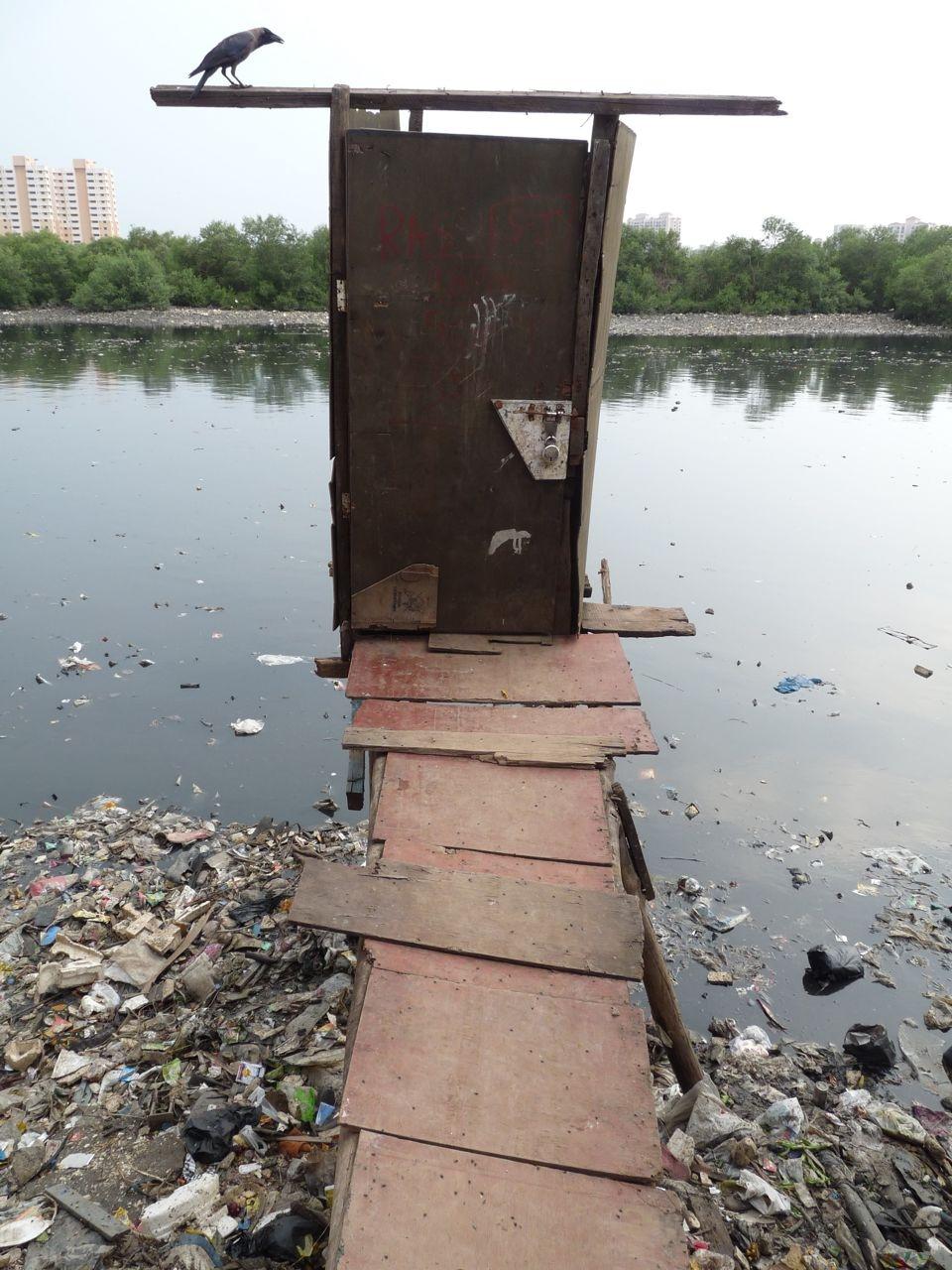
In this talk, Colin McFarlane and Jonathan Silver will reflect on  their past work in Mumbai and their new research on the politicisation of sanitation in Cape Town, with particular reference to the ‘poo protests’. Colin will reflect on his work in the politics of sanitation in Mumbai's informal settlements. He will draw out some key processes through which sanitation is organised in Mumbai, and the politics around that, as well highlighting some of the theoretical challenges the research presented for thinking about infrastructure and other strands of urban theory.   He will also briefly reflect on emerging work on the politics of sanitation in Cape Town. Their aim is to deepen understanding of how sanitation is politicised in cities, and to contribute to debate and ongoing work on sanitation politics in Cape Town. The objectives are to: examine why and how the ‘poo protests’ emerged in Cape Town; investigate why they took the form that they did; and contextualise the protests in the wider debates about service delivery, urban politics, and social justice in Cape Town.  They will conduct the research through interviews with a range of relevant actors including residents, civil society groups, municipal officials, academics and political parties. The research builds on McFarlane’s work in India on the politics of urban sanitation, and Silver’s work on the politics of urban infrastructure in South Africa. These previous research projects examined often ignored everyday experiences of sanitation and infrastructure and used the findings in discussions with municipal officials and civil society groups. Colin McFarlane is an urban geographer whose work focusses on the experience and politics of informal neighbourhoods. This has involved research into the relations between informality, infrastructure and knowledge in urban India and elsewhere. A key part of this has been a focus on the experience and politics of sanitation in informal settlements in Mumbai, which was part of an Economic and Social Research Council ethnographic project on the everyday cultures and contested politics of sanitation and water in two informal settlements. His current work examines the politicisation of informal neighbourhoods in comparative perspective, including African and South Asian cities.
POSTPONED!! Speculative Design Ecologies: exploring relations between humans, non-humans, and artificial systems

Davies Reading Room Room 2.27, Environmental and Geographical Science, UCT, Cape Town, Western Cape, South Africa

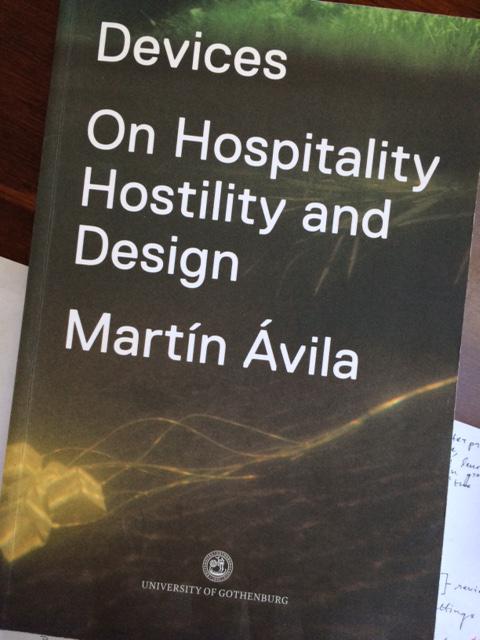
THIS EVENT IS POSTPONED UNTIL FURTHER NOTICE Speakers: Dr. Martín Ávila (Design for Sustainable Development at Konstfack Art and Design Institute in Stockholm) and Dr. Henrik Ernstson (African Centre for Cities, University of Cape Town & KTH Environmental Humanities, Division of History of Science, Technology and Environment, KTH Royal Institute of Technology, Stockholm).    Based in the emergent practices around speculative design, the seminar will depart from Dr. Martín Ávila’s thesis “Devices” that explored the notion of hospitality and hostility in design ecologies, i.e. the assemblages between human and non-human agents that have emergent properties which we cannot fully control. This will lead into a discussion of the present project “Tactical Symbiotics”  to which Dr. Henrik Ernstson is also contributing. The  project Tactical Symbiotics searches for tactics that can reinforce the interdependence between cultural and biological variation and diversity through cooperation and/or togetherness between humans and non-humans. Move beyond the comfort zone: three speculative designs During 2014, Dr. Ávila has worked in Argentina and developed three sub-projects called Doomestics, Dispersal Machines, and Spices/Species. These projects  are organized around questions such as: What if individual households would become parts of a decentred industry that capitalises on humans’ negative emotions to certain animals? What if agricultural machines would maintain the diversity of local ecosystems, helping birds and insects pollinate and fertilize, while producing food for humans? What if we could develop affection for insects and parasitoids that participate in the lifecycles of domestic plants? The projects are design-driven and uses speculative philosophy to make explicit alternative versions of the present or near future. By focusing on relations between humans and natural-artificial systems, the projects strives to de-centre anthropocentric viewpoints to become a platform from which to provoke a possibility to reimagine everyday life. Doomestics work with the tension established by the ecological need (if we are to maintain biological diversity) to cohabit with beings that are perceived as dangerous, undesirable or disgusting. Among them, spiders, scorpions and bats, to name a few. The project stages a series of products that make these beings visible and integrate them in different ways to everyday urban life. Dispersal Machines proposes interventions in agricultural systems that most humans have no direct relationship to. This project conceives machines that complement, supplement and/or maintain the activities of beings that participate in different natural processes such as the dispersion of seeds or pollen, or the secretion of nutrients to the soil. Spices/Species addresses an intimate level of human relationship with nonhuman beings. This concerns plants eaten as food or used for medicinal purposes and the ecosystem functions they perform through forms of symbioses with, for example, insects and parasitoids. The projects sketch and engage a diversity of responses that range from the intimate, to completely detached human-nonhuman relations. They still have in common that they affect the diversity of, and our relationship to, urban and agro-ecosystems. By confronting us with alternative realities—and alternative emotions, feelings and shivers—the project aims to open up new, and perhaps surprising ethical and moral dimensions to revalue and re-evaluate our present relations with non-humans.   The project strives to formulate a different response to our planetary ecological crisis than those strategies that often sort under terms like “ecosystem services” or “natural resources”. One inspiration for the project can be found in how Michel De Certeau spoke of tactics as practices that evade strategies of power. The seminar will present underlying theory and practical design projects. ---- Martín Avila is a Researcher, and Senior Lecturer in Design for Sustainable Development at Konstfack in Stockholm, Sweden. Martin obtained a PhD in design from HDK (School of Design and Crafts) in Gothenburg, Sweden, and has published his thesis entitled Devices. On Hospitality, Hostility and Design (2012). The PhD work was awarded the 2012 prize for design research by the The Swedish Faculty for Design Research and Research Education. Currently working (2013-2016) on a postdoctoral project financed by the Swedish Research Council: Symbiotic tactics. Design interventions for understanding and sensitizing to ecological complexity.    

“Not in my neighbourhood” – Filmscreening and Discussion

City Hall Darling Street, Cape Town, South Africa

FREE ENTRY Post-apartheid Woodstock is one of the few areas where low-income residents have been able to maintain a foothold close to inner-city work opportunities and cultural amenities. However, the area’s historic cultural fabric and socio-economic diversity are increasingly threatened by soaring property prices that tend to make life for long-term tenants more and more unaffordable. In light of the adverse effects of this process known as ‘gentrification’, we would like you to participate in a dialogue, inspired by the international documentary “Not in my neighbourhood” by Kurt Orderson. This event will also be an opportunity to share stories and personal experiences, as well as to explore alternatives for more inclusive urban development in Woodstock and Cape Town at large. As part of this event we will have: Kurt Orderson – Filmmaker Mohammed Rahim (Rashied) – Woodstock Community Member (respondent to film preview) Jodi Allemeier -Moderator and facilitator

Migration and Informality Workshop

UCT Seminar Room 1 Chemical Engineering, UCT Upper Campus, Cape Town, Western Cape, South Africa

The ACC, SAMP, GCRO, IMRC, Eduardo Mondlane University, Queens University (Canada) and Wilfred Laurier University will be hosting a dissemination workshop at UCT to present the findings from a recent multi-country research project that examined the role of migrant entrepreneurs in South Africa, Mozambique and Zimbabwe. This dissemination workshop will present the results of the IDRC-funded Growing Informal Cities project, which examined and profiled the role of migrant entrepreneurship in South Africa, Mozambique and Zimbabwe. The project was conducted jointly by the African Centre for Cities (University of Cape Town), the Southern African Migration Programme (SAMP), the Gauteng City Regional Observatory (GCRO), Eduardo Mondlane University and the International Migration Research Centre (IMRC). Interviews and surveys were conducted in Cape Town, Harare, Johannesburg and Maputo with migrant entrepreneurs and cross border traders to better understand the linkages between migration, informality, inclusive growth and violence against migrant-owned businesses.

Hungry Cities Partnership Meeting

UCT Seminar Room 1 Chemical Engineering, UCT Upper Campus, Cape Town, Western Cape, South Africa

Running from the 10th to the 13th of February 2015 is the second project meeting for the Hungry Cities Partnership, an IDRC/SSHRC (Canada) partnership programme within the International Partnership for Sustainable Societies process. The project is a collaboration between Canadian Universities and universities and organisations in the global south. The University of Cape Town is the IDRC grant holder partnering with university partners in Kingston, Jamaica; Mexico City; Maputo and Nanjing, China. Other partners include the African Population and Health Research Centre in Nairobi and the MS Swaminathan Research Foundation in Chennai. The project aims to promote inclusive growth in the informal food economy of cities of the global south.

Transnational Labor and Place Making in the Rustbelt US: Implications for Theorizing Place and Politics of Place in the Global Era

Studio 5 Environmental and Geographical Sciences Building, Upper Campus, Cape Town, South Africa

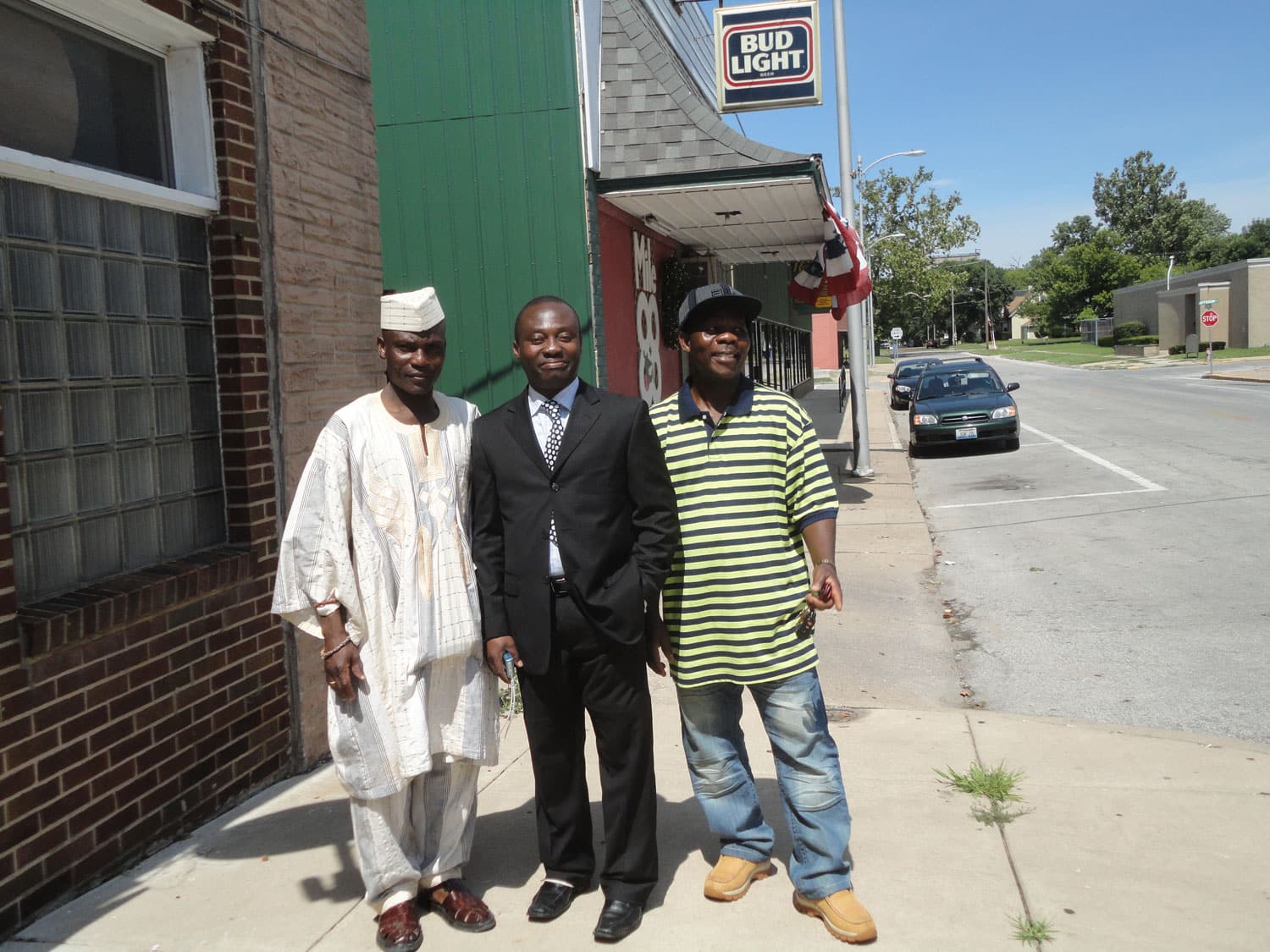
ACC is excited to host Prof Faranak Miraftab in the first of our academic Seminar Series for 2015. In this seminar 'Transnational Labor and Place Making in the Rustbelt US: Implications for Theorizing Place  and Politics of Place in the Global Era', Prof Miraftab will be presenting from her forthcoming book (2016) entitled Making a Home in the Heartland: Immigration and Global Labor Mobility. Abstract As a point observation I take an industrial town in rural rustbelt of the United States, and study the rapid social transformation of this space due to transnational labor recruitment by the meat processing industry. Drawing on ethnographic research conducted in Illinois, Mexico and Togo, I unfold the global production and social reproduction of migrant workers; how they make place globally and locally; and how they renegotiate inter-racial relations to make a former sundown town their new home in Illinois. Focusing on an often overlooked space in urban scholarship of globalization and taken-for-granted processes of global labor mobility, this study recovers voices and stories often hidden, made invisible or left out of the picture, to theorize place and place making relationally and stress the difference that place makes. Spanning urban studies, human geography, immigration and transitional studies, Making a Home in the Heartland makes important intervention in the theorization of urban, production and social reproduction of transnational migrants, politics of place and place making. Biography Faranak Miraftab is Professor of Urban and Regional Planning at the University of Illinois, Urbana-Champaign. A native of Iran, she did her undergraduate studies at the Tehran University; while in political asylum she earned her Master's degree in Norway and later moved to the US and completed her doctorate at the University of California, Berkeley. Her interdisciplinary ethnographic work crosses planning, geography and transnational studies and is empirically based in cities of Latin America, Africa and North America. As an urban scholar of globalization she is interested in the global and local development processes and contingencies involved in the formation of the city and citizens' struggles to access dignified livelihood. She was named as a 2014-15 University Scholar, a prestigious award bestowed on faculty at the University of Illinois campuses. Her most recent and forthcoming publications include Cities of the Global South Reader (Miraftab and Kudva, Routledge 2014); Cities and Inequalities in a Global and Neoliberal World (eds. Miraftab, Wilson and Salo, Routledge April 2015), and Making a Home in the Heartland: Immigration and Global Labor Mobility (Miraftab, Indiana University Press, January 2016). Her presentation will draw on the latter, a multi-sited ethnography concerning global production and social reproduction of migrant labor and how this makes for local development in the heartland US.  

The Housing Affordability Challenge: What Are the Questions?

Davies Reading Room

In this Brownbag presentation, Dr Robert Buckley will be presenting on 'The Housing Affordability Challenge: What Are the Questions?' Abstract In the past few years, sixteen developing countries have mounted multi-billion-dollar urban subsidy programs. Unfortunately, as currently structured, very few of these programs will help address the housing challenges faced by cities. They are deeply flawed even if they come with support from leading think tanks such as the McKinsey Global Institute and from foreign advisors and investors. They often repeat the now severely criticized approaches pursued by OECD countries in the early post–World War II years, when a similar moment in urban policy arose. Participants at the Rockefeller Foundation’s Bellagio Conference Center discussed the proposed approaches as well as why it is perhaps not surprising that few foreign investors take any of the risks inherent in plans to reshape the cities of the developing world. Biography Bob Buckley is a senior fellow in the Graduate Program in International Affairs at The New School. Previously, he was an advisor and managing director at the Rockefeller Foundation, and lead economist at the World Bank. Buckley’s work at both the foundation and the World Bank focused largely on issues relating to urbanization in developing countries. He is particularly interested in the policy issues related to slum formation and approaches to dealing with them (see more here).  

POSTPONED!!! _ Relationship between Infrastructure Planning and Implementation in the Global South

Davies Reading Room Room 2.27, Environmental and Geographical Science, UCT, Cape Town, Western Cape, South Africa

"Incipient thoughts about the Relationship between Infrastructure Planning and Implementation in the Global South" Current thinking on the relationship between infrastructure planning and effective implementation tends to stress the completion of a hierarchy of planning tasks well ahead of the year in which implementation must begin. This implies a process  of multi-year budgeting and knowing precisely what is to be done 3 to 4 years in advance of it actually happening. The general underpinning philosophy is that establishing implementation “certainty” well in advance is a necessary  pre-condition for successful implementation (usually defined as spending the budget allocated within the designated allocation period). Changing the game plan is seen as potentially catastrophic for implementation efficiency unless these changes are to be implemented 3 to 4 years in the future. As a consequence the delivery process becomes very rigid and it is difficult for politicians, communities and practitioners to make a practical difference because things are bespoken for well in advance. The model is also very demanding of planners and implementers alike, and often assumes the availability of reliable data for planning and the availability of competent professionals to effect delivery. In the developing world retaining rigidity in planning and implementation  is difficult in the context of volatile political and institutional environments. Moreover the reliability of planning information is often questionable. In any event planning and implementation processes in the developing world often need to be a lot more responsive and flexible than current established methodologies allow. There is as a consequence a need to develop and test new ways of conducting physical delivery processes in environments of uncertainty and complexity, where a linear sequence of planning, design, procurement and implementation fails to deliver desired outcomes. The talk will examine some incipient thoughts in this regard drawn from the world of education infrastructure implementation. Biography: Dan Smit is a highly experienced and accomplished development professional who has been involved in the international development field for more than 30 years. He has worked in many countries of the world and has undertaken substantial consulting work for inter alia the European Union, USAID, the World Bank, GIZ and NUFFIC. He has been a Professor at one of the world’s leading international development schools, the Institute of Social Studies in the Hague and has undertaken several international consultancies on their behalf. Dan Smit is a development all-rounder but has particular expertise in the fields of: international development aid; urban and regional planning; urban management and governance; housing and informal settlements; and infrastructure. In the academic arena he is well known for his writing on South African cities and on the relation between theory and practice. This ability to bridge theory and practice has enabled him to build a reputation for being able to keep the big picture squarely in mind whist simultaneously being able to systematically address the level of attention-to-detail that successful implementation requires.

Mainstreaming Urban Safety & Inclusion in South Africa

Studio 5 Environmental and Geographical Science, Upper Campus, UCT,, Cape Town, South Africa

A four-day course for municipal officials and other practitioners to discuss violence and its prevention, key concepts, safer cities strategies, policy frameworks, urban upgrading for violence prevention, and associated methodologies. A day-long field trip will observe measures taken in practice. The focus will be on mainstreaming issues of safety and inclusion in South African urban policy and practice. The spotlight is on the relationship between urbanisation, informality and violence. The pilot course is convened by ACC’s Dr Mercy Brown-Luthango, with input from VPUU (Michael Krause, Jakub Galuska and other work stream leaders) and GIZ/VCP (Terence Smith and Christiane Erkens). The event is funded by GIZ.

Josh Palfreman: Waste Ventures in East Africa

Studio 5 Environmental and Geographical Sciences Building, Upper Campus, Cape Town, South Africa

 Waste Ventures in East Africa: a critical examination of the science, collection models and innovative technologies being employed by urban planners in Kenya and Tanzania In this Brownbag, Josh Palfreman will be reflecting on the science, collection models and innovative technologies being employed by urban planners in Kenya and Tanzania in an effort to manage solid waste. Abstract: Josh Palfreman takes a market systems approach to develop a deeper understanding of solid waste management in Mombasa, Kenya and Dar es Salaam, Tanzania.  His presentation will provide insight into a waste characterization study. This study was conducted to underpin the formulation of strategic waste management policy, geospatial analysis and scientific research to map formal and informal waste management stakeholders.  It further brings to attention how action research is used to support innovation and entrepreneurship in municipal solid waste collection models while piloting various technologies designed, manufactured and maintained in East Africa that are tailored to local skill sets and infrastructure, to enhance waste collection and recovery operations across the region.    Biography: Joshua Palfreman is an urban planning and waste management professional with over six years of experience in East Africa. In 2009, he founded WASTEDAR, an NGO providing waste management services in Tanzania. Palfreman currently provides technical assistance to DFID on waste management programmes run by the development arm in Kenya and has recently published works relating to waste pickers and innovative collection models tailored to developing world waste characteristics and resources; work that will feature in this year's Fifteenth International Waste Management and Landfill Symposium in Sardinia, Italy.