Options for Reducing Violence in South African Cities

Seminar Room 1 Environmental & Geographical Sciences Building, UCT Upper Campus

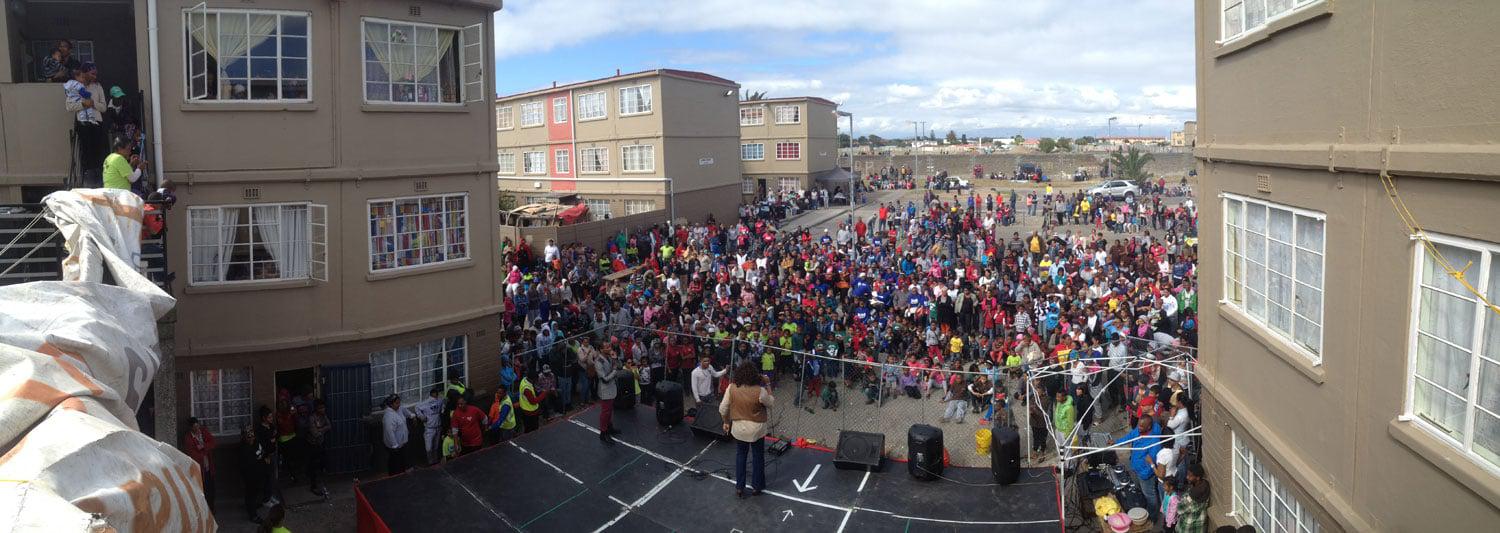
South Africa is home to some of the world’s most violent cities, with homicide rates well above global and national averages. While the homicide rate is a strong indicator of urban violence, it does not capture non-lethal violence, which is often hidden from public view, in the home or in institutions. In order to create safer spaces in which women, men, girls, and boys can live, policy makers and practitioners need to know which sort of interventions work, and which don’t. This event brings together findings from two lines of work, the African Centre for Cities’ research and analysis on the impact of informal settlement upgrading on safety and overall quality of life and the Safe and Inclusive Cities initiative which seeks to understand the drivers of urban violence and how they relate to poverty and inequalities. Discussion will focus on identifying concrete options for improving safety in South Africa’s cities. This event is free, but space is limited. Please RSVP to mercy.brown-luthango@uct.ac.za AGENDA 4:00 Welcome and opening remarks by Prof. Gordon Pirie (ACC) and Ms. Cam Do (IDRC) 4:20 Conversation with: Dr. Mercy Brown-Luthango, ACC – Improving Safety for Informal Settlement Dwellers: Urban Upgrading Dr. Hugo van der Merwe, CSVR – Reducing violence while reducing poverty: The Community Work Program Dr. Juan Pablo Pérez Sáinz, FLACSO-Costa Rica – Lessons for South Africa from Central America 5:10 Questions and Answers 6:00 Close Light refreshments will be served.   About the Presenters Dr. Mercy Brown-Luthango has a background in Sociology of Work and has an interest in the economics of land use planning and social mobilisation among poor communities. She has worked on a diverse range of research topics, including the “brain drain” in South Africa, labour practices on wine farms, gender relations in the workplace, and the effect of global restructuring in the wine industry on South African producers. Currently, Dr. Brown-Luthango is a Research Officer with the African Centre for Cities. Dr. Hugo van der Merwe is trained in Conflict Analysis and Resolution and specializes in issues of transitional justice in South Africa and the African continent. He has led several research projects evaluating the impact of local and national transitional justice processes. Currently, Dr. van der Merwe is the Head of Research at the Centre for the Study of Violence and Reconciliation in South Africa. Dr. Juan Pablo Pérez Sáinz is a Sociologist and expert in the labour market, poverty, and local economic development. He has published widely on these topics in addition to employment, globalization, social structures, and many others. Since 1981, Dr. Pérez Sáinz has worked as a researcher with FLACSO, the Faculdad Latinoamericana de Ciencias Sociales (Latin American Faculty of Social Sciences). He is currently based at FLACSO-Costa Rica.   The African Centre for Cities' work presented at this event is supported by the Inclusive Violence and Crime Prevention (VCP) programme which is implemented by Deutsche Gesellschaft für Internationale Zusammenarbeit (GIZ) GmbH. Safe and Inclusive Cities is a joint initiative of the UK’s Department for International Development and Canada’s International Development Research Centre.
“URBAN BEYOND MEASURE: Registering Urban Environments in the Global South”, 8-9 May 2015

Stanford University 450 Serra Mall, Stanford, CA 94305, United States, CA, United States

Dr. Henrik Ernstson and Dr. Jia-Ching Chen are organizing an ambitious conference at Stanford University on the meeting between environmental scientists, global South urbanists and STS scholars on the “Urban Beyond Measure: Registering Urban Environments of the Global South”, May 8-9, 2015 at Stanford University. Also included is a session on film and photography as environmental humanities response on how to register these urban environments beyond measure. For more information, visit our website: https://urbanbeyondmeasure.wordpress.com/   Organizers: Henrik Ernstson (ACC) Jia-Ching Chen (Brown University) ACC Speakers are: Henrik Ernstson and Susan Parnell External: Anne Rademacher, Awadhendra Sharan, Alisa Zomer, Angel Hsu, Garth Myers, Malini Ranganathan,  James Ferguson, Jason Corburn, Jenna Davis,  Stephen Luby, Perrine Hamel, Timothy Choy, Sarah Whatmore.

Film screening: “Knowing Urban Environments through Photography and Film”

Stanford University 450 Serra Mall, Stanford, CA 94305, United States, CA, United States

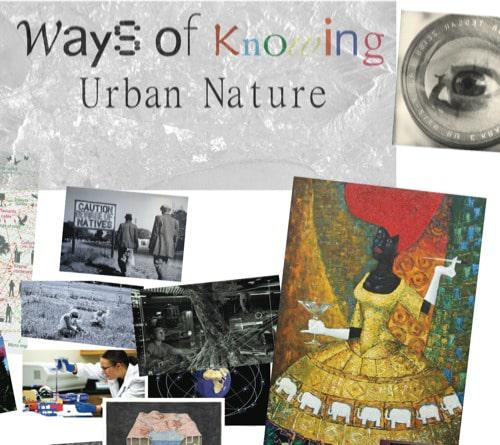
Film screening: ONE TABLE TWO ELEPHANTS: A FILM ABOUT WAYS OF KNOWING URBAN NATURE by Jacob von Heland and Henrik Ernstson. The film takes an interest in how different groups create knowledge about urban nature, thereby shaping the future of the city, its ecology, and its meaning to the people of the city. The story follows neighbourhood grassroots in Cape Town and how they relate to nature, and how history and legacies of apartheid is bound up with values and meanings of nature. It also follows municipal ecologists and the knowledge practices they have developed to protect ecological functions and the biodiversity at the city-scale. By describing the work of these different groups, and the city from their perspective, we want to surface how different values and knowledge of urban nature is articulated and become part of public debate. For more information, please visit our website: http://www.situatedecologies.net/archives/portfolio/ways-of-knowing-the-film

Performing a New Model of Active and Activist Citizenship in South Africa

Studio 5 Environmental and Geographical Sciences Building, Upper Campus, Cape Town, South Africa

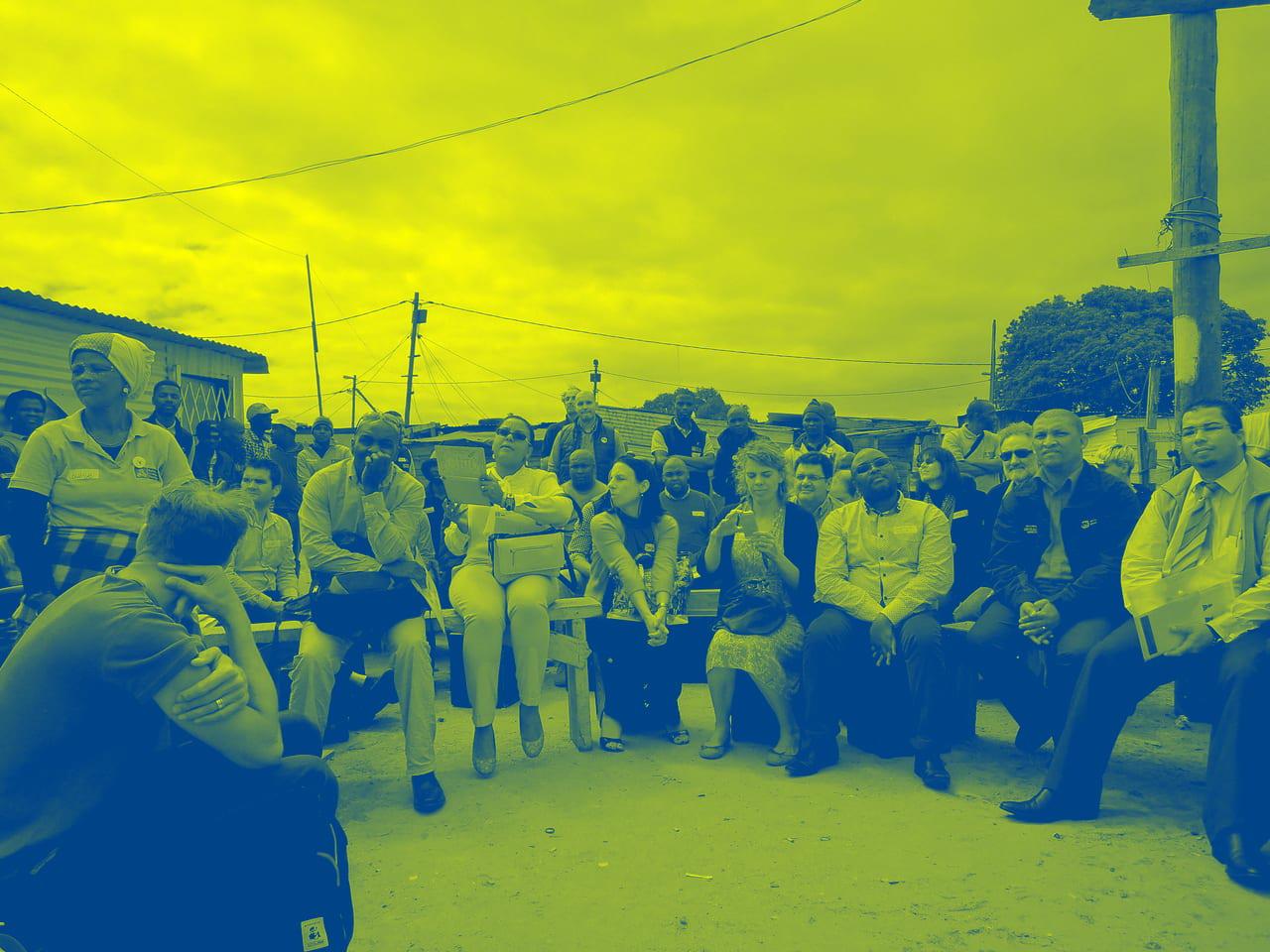
In this seminar, Dr Chloé Buire will be presenting a paper entitled 'Performing a New Model of Active and Activist Citizenship in South Africa'. Abstract In 2014, South Africa celebrated its “Twenty Years of Democracy”. Official commemorations emphasized the pride in belonging to the Rainbow Nation, but commentators recalled the fragility of the national myth.  Many of these commentators feared that young people who have not lived under apartheid could endanger democracy because of their unstable and conflicting political identities.  In this context, this paper explores the kind of citizenship promoted in youth policies and curricula, and traces how citizenship has been reframed since the heyday of the democratic transition in the 1990s.  Emerging from this analysis is an “active citizen” whose commitment to social justice is measured against her or his contribution to the national economy.  Nevertheless, interviews with key actors from government and civil society conducted in Cape Town reveal that the definition of a self-sufficient, responsible, and caring citizen is contested, as projects developed to produce young citizens engage with critical thinking as well as with personal economic advancement. While academic education remains seen as the primary tool for building citizenship, many are exploring alternative pedagogies and experimental training to challenge the status-quo of a profoundly unequal society.  The learning process of various actors involved in youth development suggests that South African citizenship is performed through this complex relationship between a model of economically active citizens and a model of politically conscious citizens. Biography Chloé completed her PhD in geography at the University of Paris Ouest (France). Her doctoral work examined the practices of urban citizenship in Gugulethu and Heideveld (Cape Town). She worked as a postdoctoral fellow at the University of the Witwatersrand (Johannesburg) in 2012 and 2013, where she explored the construction of political identities in Luanda, Angola. Since January 2014, Chloé is a post-doctoral research associate at Durham University (UK). She is currently doing fieldwork in Cape Town for YouCitizen, a research project examining the meaning and experience of citizenship for young people in societies with histories of conflict and division (www.youcitizen.org).

Comparing urban civic networks: Insights from Britain

Studio 1 Environmental and Geographical Sciences Building, Upper Campus, UCT, Cape Town, South Africa

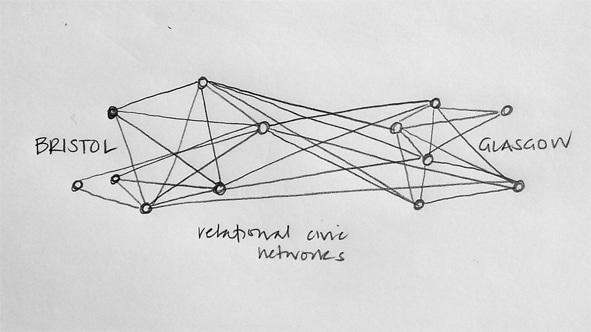
In this seminar Prof Mario Diani from the University of Trento and ICREA at the Universitat Pompeu Fabra, Barcelona will be presenting a paper entitled 'Comparing urban civic networks: Insights from Britain'. Abstract Comparative analyses of urban political civic networks are still relatively rare, and those available are mostly conducted by an “aggregative” rather than a “relational” logic. They focus, in other words, on the distribution of the characteristics of individual and organizational actors rather than on the patterns of relation and interdependence between them. Drawing upon my just published book The Cement of Civil Society (Cambridge UP, 2015), and focusing on civic networks in two British cities, Bristol and Glasgow, my talk illustrates how network analysis can contribute to a more nuanced understanding of local political networks. It shows in particular how the concept of “mode of coordination” may enable us to capture the differences between different styles of collective action. Bio Mario Diani is professor of sociology at the University of Trento, and ICREA research professor at the Universitat Pompeu Fabra, Barcelona. His research focuses primarily on social movements, collective action, and political networks. Publications include The Cement of Civil Society: Studying Networks in Localities (Cambridge University Press, 2015), Social Movements (with Donatella della Porta, Blackwell, 20062),  and Social Movements and Networks (co-edited with Doug McAdam, Oxford University Press, 2003), as well as articles in leading journals such as American Sociological Review, American Journal of Sociology, Social Networks, and Mobilization.

Briefing and Q&A: Public Art and the Power of Place

Guga S’Thebe Arts and Culture Centre Washington Street, Langa (right turn off Bunga Ave at Fisher's Corner Cafe) , Cape Town, South Africa

Public Art and the Power of Place, initiated by the African Centre for Cities at UCT, with support from the National Lottery Distribution Trust Fund seeks to support six public art engagements to be manifested in Cape Town’s townships in 2015 that explore the significance of place outside of the City Bowl. The African Centre for Cities is looking for proposals for public art projects that: Have been developed by township-based artists (can be original work or developments of existing projects) // Offer new understandings or perspectives of urban realities of Cape Town’s townships through creative means // Have a public dimension: engage public spaces; include people; concern public interest; or face the public in a meaningful way. On Saturday 20 June 10:00-12:00 we will be hosting a briefing and Q&A session for potential artists at Guga S'Thebe in Langa. Please join us to find out more about the project.

“Political Theory Meets Global South Urbanism: Where is the Political?”

African Centre for Cities UCT Upper Campus, Cape Town, South Africa

Dr. Henrik Ernstson and Dr. Andrés Henao Castro are organising a week-long #SUPE literature seminar on “Political Theory Meets Global South Urbanism: Where is the Political?”, July 27-31, 2015 at ACC, University of Cape Town. For more information visit http://www.situatedecologies.net/archives/1417

UN Sustainable Development Goals Target 11: Urban Indicators Pilot

Davies Reading Room Room 2.27, Environmental and Geographical Science, UCT, Cape Town, Western Cape, South Africa

UN Sustainable Development Goals Target 11: Urban Indicators Pilot – City of Cape Town     This pilot study sought to test the proposed indicators for Goal 11 of the UN Sustainable Development Goals that succeed the Millennium Development Goals. Goal 11 marks the first explicit urban goal: To Make Cities and Human Settlements inclusive, safe, resilient and sustainable. The ACC was appointed by Mistra Urban Futures to test the Goal 11 indicators in Cape Town and partnered with Palmer Development Group (PDG) and the City of Cape Town (CCT) to do so, as part of a larger pilot process in five cities worldwide. The pilot tested each proposed indicator against four parameters: data availability, measurability, utility and custodianship. It used an indicator specification format with which PDG engaged with a CCT team, who in turn engaged with internal CCT stakeholders on the feasibility and usefulness of the indicators and collected data from them for analysis. The findings show that there are limitations regarding the informal context that characterises significant facets of the CCT, the type of data that the CCT has at its disposal and the regularity with which it is able to access household and population data. However, the majority of primary indicators are measurable and valuable and with improved collaboration with Statistics South Africa these will be increasingly measurable. Across the five cities it emerged that there are great gaps and concerns, in terms of universality, common international standards and coherence of reporting mechanisms. The pilot also demonstrated the tension in striking a balance between reducing the number of indicators and increasing the policy relevance. The CCT found that being part of the research pilot was valuable for the CCT in a range of ways including internal CCT learnings and the direct influence on future CCT indicator work; CCT’s access to current indicator thinking, processes, tools and resources, as well as the insights for CCT in terms of urban sustainable development priorities and challenges and how these are being managed by other cities. The pilot study has demonstrated the importance of having undertaken live testing of the draft targets and indicators for Goal 11 in a set of diverse secondary and intermediate cities. If the urban SDG is to prove to be a useful tool to encourage local and national authorities alike to make positive investments in the various components of urban sustainability transitions as its proponents and developers intend, then it is vital that it should prove widely relevant, acceptable and practicable. Key recommendations from the final report to achieve these aims will be discussed. This seminar will be presented by the following members of the pilot study team: Nishendra Moodley was the PDG project lead and lead researcher for the pilot in Cape Town. He is a director of PDG and Chairperson of its Board. Carol Wright was the City Lead of the USDG pilot, and co-ordinated the inputs from the City of Cape Town. Carol is Manager of Development Information in the City of Cape Town. Natasha Primo provided the alignment to the current CCT indicator and related work and active links to the City’s indicator working group which she leads. Natasha is the Head: Policy and Research in the DI&GIS Department of the CCT. Helen Arfvidsson has been the lead researcher for the Mistra Urban Futures' Pilot Project to test potential targets and indicators for the urban sustainable development goal 11 across 5 cities.