The Cape Town Civil Society Conference
Chemical Engineering Building UCT Upper Campus, Cape Town, South AfricaThe Cape Town Civil Society Conference, June 6, 2015.



The Cape Town Civil Society Conference, June 6, 2015.
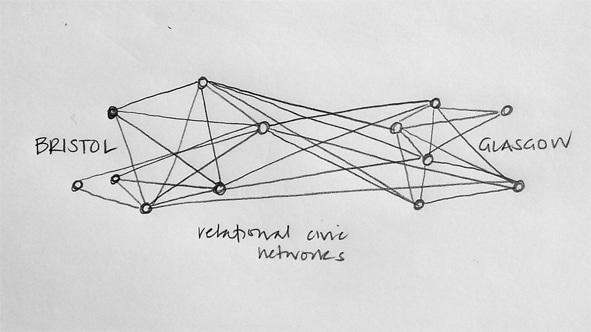
In this seminar Prof Mario Diani from the University of Trento and ICREA at the Universitat Pompeu Fabra, Barcelona will be presenting a paper entitled 'Comparing urban civic networks: Insights from Britain'. Abstract Comparative analyses of urban political civic networks are still relatively rare, and those available are mostly conducted by an “aggregative” rather than a “relational” logic. They focus, in other words, on the distribution of the characteristics of individual and organizational actors rather than on the patterns of relation and interdependence between them. Drawing upon my just published book The Cement of Civil Society (Cambridge UP, 2015), and focusing on civic networks in two British cities, Bristol and Glasgow, my talk illustrates how network analysis can contribute to a more nuanced understanding of local political networks. It shows in particular how the concept of “mode of coordination” may enable us to capture the differences between different styles of collective action. Bio Mario Diani is professor of sociology at the University of Trento, and ICREA research professor at the Universitat Pompeu Fabra, Barcelona. His research focuses primarily on social movements, collective action, and political networks. Publications include The Cement of Civil Society: Studying Networks in Localities (Cambridge University Press, 2015), Social Movements (with Donatella della Porta, Blackwell, 20062), and Social Movements and Networks (co-edited with Doug McAdam, Oxford University Press, 2003), as well as articles in leading journals such as American Sociological Review, American Journal of Sociology, Social Networks, and Mobilization.
Public Art and the Power of Place, initiated by the African Centre for Cities at UCT, with support from the National Lottery Distribution Trust Fund seeks to support six public art engagements to be manifested in Cape Town’s townships in 2015 that explore the significance of place outside of the City Bowl. The African Centre for Cities is looking for proposals for public art projects that: Have been developed by township-based artists (can be original work or developments of existing projects) // Offer new understandings or perspectives of urban realities of Cape Town’s townships through creative means // Have a public dimension: engage public spaces; include people; concern public interest; or face the public in a meaningful way. On Saturday 20 June 10:00-12:00 we will be hosting a briefing and Q&A session for potential artists at Guga S'Thebe in Langa. Please join us to find out more about the project.
An invitation is extended to this symposium organised by the African Centre for Cities at the University of Cape Town.
Dr. Henrik Ernstson and Dr. Andrés Henao Castro are organising a week-long #SUPE literature seminar on “Political Theory Meets Global South Urbanism: Where is the Political?”, July 27-31, 2015 at ACC, University of Cape Town. For more information visit http://www.situatedecologies.net/archives/1417
UN Sustainable Development Goals Target 11: Urban Indicators Pilot – City of Cape Town This pilot study sought to test the proposed indicators for Goal 11 of the UN Sustainable Development Goals that succeed the Millennium Development Goals. Goal 11 marks the first explicit urban goal: To Make Cities and Human Settlements inclusive, safe, resilient and sustainable. The ACC was appointed by Mistra Urban Futures to test the Goal 11 indicators in Cape Town and partnered with Palmer Development Group (PDG) and the City of Cape Town (CCT) to do so, as part of a larger pilot process in five cities worldwide. The pilot tested each proposed indicator against four parameters: data availability, measurability, utility and custodianship. It used an indicator specification format with which PDG engaged with a CCT team, who in turn engaged with internal CCT stakeholders on the feasibility and usefulness of the indicators and collected data from them for analysis. The findings show that there are limitations regarding the informal context that characterises significant facets of the CCT, the type of data that the CCT has at its disposal and the regularity with which it is able to access household and population data. However, the majority of primary indicators are measurable and valuable and with improved collaboration with Statistics South Africa these will be increasingly measurable. Across the five cities it emerged that there are great gaps and concerns, in terms of universality, common international standards and coherence of reporting mechanisms. The pilot also demonstrated the tension in striking a balance between reducing the number of indicators and increasing the policy relevance. The CCT found that being part of the research pilot was valuable for the CCT in a range of ways including internal CCT learnings and the direct influence on future CCT indicator work; CCT’s access to current indicator thinking, processes, tools and resources, as well as the insights for CCT in terms of urban sustainable development priorities and challenges and how these are being managed by other cities. The pilot study has demonstrated the importance of having undertaken live testing of the draft targets and indicators for Goal 11 in a set of diverse secondary and intermediate cities. If the urban SDG is to prove to be a useful tool to encourage local and national authorities alike to make positive investments in the various components of urban sustainability transitions as its proponents and developers intend, then it is vital that it should prove widely relevant, acceptable and practicable. Key recommendations from the final report to achieve these aims will be discussed. This seminar will be presented by the following members of the pilot study team: Nishendra Moodley was the PDG project lead and lead researcher for the pilot in Cape Town. He is a director of PDG and Chairperson of its Board. Carol Wright was the City Lead of the USDG pilot, and co-ordinated the inputs from the City of Cape Town. Carol is Manager of Development Information in the City of Cape Town. Natasha Primo provided the alignment to the current CCT indicator and related work and active links to the City’s indicator working group which she leads. Natasha is the Head: Policy and Research in the DI&GIS Department of the CCT. Helen Arfvidsson has been the lead researcher for the Mistra Urban Futures' Pilot Project to test potential targets and indicators for the urban sustainable development goal 11 across 5 cities.
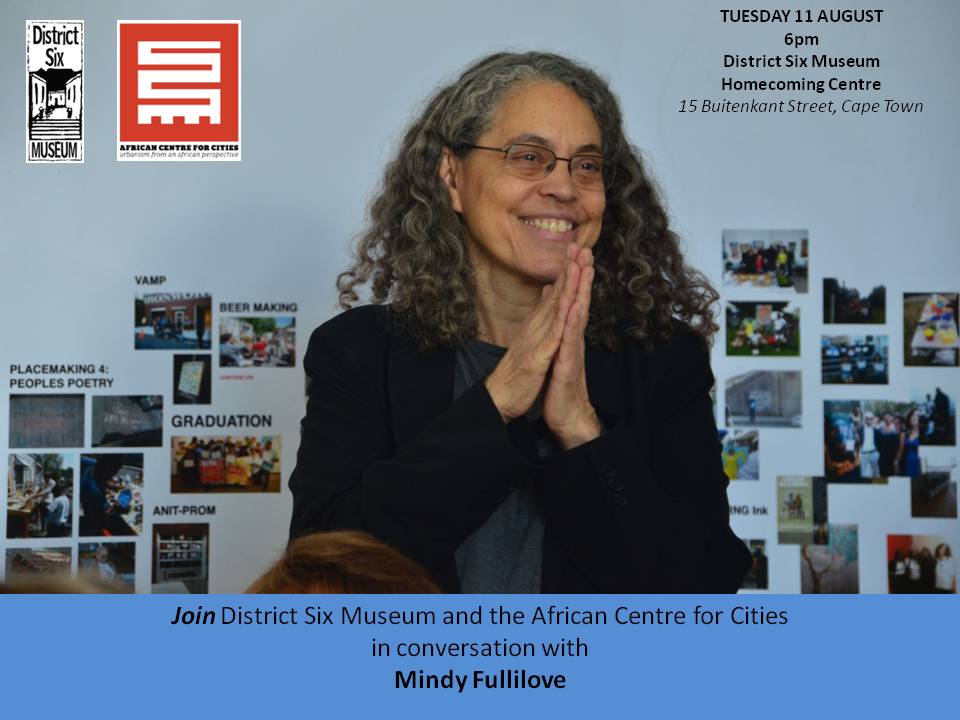
It is with great pleasure that the District Six Museum and the African Centre for Cities invite you to meet Dr Mindy Thompson Fullilove, visiting from Columbia University in New York. Dr Fullilove is a professor of Clinical Psychology and Public Health, and is interested in the links between the environment and mental health. She has researched, written and designed projects which speak to this concern, and is well-known for her critique as well as the development of various initiatives in New York and surrounding neighbourhoods. In the introduction to her book Root Shock’, she writes: "I present here the words of the people who have lived upheaval: the uprooted, the planners, the advocates, the historians. Read their words with care for them and for yourself. Read their words, not as single individuals living through a bad time, but as a multitude all sharing their morsel of the same bad time. Read in that manner and I believe that you will get the true nature of root shock. Read in that manner, and I believe you will be able to embrace the truth, not as a fearful thing, but as a call to join the struggle for a better tomorrow". Join District Six Museum and the African Centre for Cities in a round-table discussion with Dr Fullilove during which time she will share with us some of the practical expressions of her work, as well as her impressions of the mental health of Cape Town as a ‘recovering’ city. Discussion to be led by Rike Sitas of the African Centre for Cities and Bonita Bennett of the District Six Museum. Bio Dr. Mindy Thompson Fullilove is a board-certified psychiatrist who is interested in the links between the environment and mental health. She started her research career in 1986 with a focus on the AIDS epidemic, and became aware of the close link between AIDS and place of residence. Under the rubric of the psychology of place, Dr. Fullilove began to examine the mental health effects of such environmental processes as violence, rebuilding, segregation, urban renewal, and mismanaged toxins. She has published numerous articles and six books including "Urban Alchemy: Restoring Joy in America's Sorted-Out Cities," "Root Shock: How Tearing Up City Neighborhoods Hurts America and What We Can Do About It," and "House of Joshua: Meditations on Family and Place."
Professor Edgar Pieterse and Adjunct Professor Stephen Berrisford are attending this high-level meeting organised by the Research Project on Employment, Income Distribution and Inclusive Growth (REDI3x3) at the Centre for African Studies, University of Cape Town (UCT). Professor Pieterse is delivering a keynote address entitle 'Reimagining the City' in a Session about using urban development to promote inclusive growth. Stephen Berrisford is speaking about how land use management impacts on public finance in urban and rural areas. The meeting is being attended by representatives from the Presidency, National Treasury and National Planning Commission.
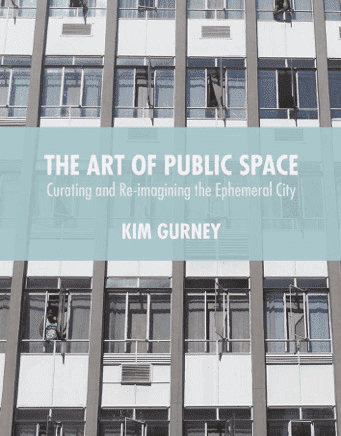
WiSER and the African Centre for Cities at the University of Cape Town invite you to a launch and discussion of The Art of Public Space: Curating and Re-imagining the Ephemeral City by Kim Gurney The Art of Public Space (Palgrave, 2015) takes as case study a trilogy of art interventions, New Imaginaries, which explored notions of public space in Johannesburg, and reflects upon its broader implications in a research partnership between African Centre for Cities and Goethe-Institut South Africa. "Kim Gurney's The Art of Public Space powerfully reiterates the ways in which urban actors do not inhabit worlds of preconceived social or subjective forms, but rather ever-shifting milieus where different ways of conceiving and enacting life intersect, and that artistic practice is a critical technology in re-imagining and reshaping these intersections. All technical practices conduct events, but artistic work is proving most salient in opening up urban contexts to events that anticipate and posit new ways of living together. Leveraging the multiplicity of performances that make up every day Johannesburg, the artistic projects offered here attempt to reconfigure what its residents already see and experience but in ways that push it somewhere else, which collate and intensify these perceptions and experiences into new common grounds." — AbdouMaliq Simone Respondents: Achille Mbembe (WiSER) with Molemo Moiloa (VANSA), Tanya Zack (urban researcher, writer & explorer) and Kim Gurney (UCT), chaired by Edgar Pieterse (UCT).
Join us in sharing the experiences of the Embedded Researchers at the conclusion of the first phase of the KTP partnership between the African Centre for Cities and the City of Cape Town. Bringing together academic and practitioner knowledge can co-produce defensible and legitimate responses to policy challenges. The Knowledge Transfer Programme, launched in 2012, proceeded through the placement of four embedded researchers in departments at the City, working on City projects and processes. The KTP, through both the Embedded Researcher Programme and the City Officials Exchange Programme has sought to make policy and decision-making processes more accessible and applicable through the co- production of knowledge and the dissemination of both scholarship and practice. This event focuses primarily on showcasing and learning from the work conducted by the four embedded researchers, who have experimented with new ways of engaging and working with the City. The Panel Discussion will draw on the researchers’ lengthy engagement with urban policy processes and consider ways of tracking the impacts of co-produced knowledge. Date: 20 August 2015 3-4pm: Panel discussion: Co-producing knowledge for urban change: reflections on understanding impact Panellists: Anton Cartwright, Anna Taylor, Robert McGaffin and Saul Roux, chaired by Edgar Pieterse 4-5pm: Drinks reception celebration of the partnership RSVP to Saskia Greyling (saskia.greyling@uct.ac.za) by Friday 14th August 2015