“Political Theory Meets Global South Urbanism: Where is the Political?”

African Centre for Cities UCT Upper Campus, Cape Town, South Africa

Dr. Henrik Ernstson and Dr. Andrés Henao Castro are organising a week-long #SUPE literature seminar on “Political Theory Meets Global South Urbanism: Where is the Political?”, July 27-31, 2015 at ACC, University of Cape Town. For more information visit http://www.situatedecologies.net/archives/1417

UN Sustainable Development Goals Target 11: Urban Indicators Pilot

Davies Reading Room Room 2.27, Environmental and Geographical Science, UCT, Cape Town, Western Cape, South Africa

UN Sustainable Development Goals Target 11: Urban Indicators Pilot – City of Cape Town     This pilot study sought to test the proposed indicators for Goal 11 of the UN Sustainable Development Goals that succeed the Millennium Development Goals. Goal 11 marks the first explicit urban goal: To Make Cities and Human Settlements inclusive, safe, resilient and sustainable. The ACC was appointed by Mistra Urban Futures to test the Goal 11 indicators in Cape Town and partnered with Palmer Development Group (PDG) and the City of Cape Town (CCT) to do so, as part of a larger pilot process in five cities worldwide. The pilot tested each proposed indicator against four parameters: data availability, measurability, utility and custodianship. It used an indicator specification format with which PDG engaged with a CCT team, who in turn engaged with internal CCT stakeholders on the feasibility and usefulness of the indicators and collected data from them for analysis. The findings show that there are limitations regarding the informal context that characterises significant facets of the CCT, the type of data that the CCT has at its disposal and the regularity with which it is able to access household and population data. However, the majority of primary indicators are measurable and valuable and with improved collaboration with Statistics South Africa these will be increasingly measurable. Across the five cities it emerged that there are great gaps and concerns, in terms of universality, common international standards and coherence of reporting mechanisms. The pilot also demonstrated the tension in striking a balance between reducing the number of indicators and increasing the policy relevance. The CCT found that being part of the research pilot was valuable for the CCT in a range of ways including internal CCT learnings and the direct influence on future CCT indicator work; CCT’s access to current indicator thinking, processes, tools and resources, as well as the insights for CCT in terms of urban sustainable development priorities and challenges and how these are being managed by other cities. The pilot study has demonstrated the importance of having undertaken live testing of the draft targets and indicators for Goal 11 in a set of diverse secondary and intermediate cities. If the urban SDG is to prove to be a useful tool to encourage local and national authorities alike to make positive investments in the various components of urban sustainability transitions as its proponents and developers intend, then it is vital that it should prove widely relevant, acceptable and practicable. Key recommendations from the final report to achieve these aims will be discussed. This seminar will be presented by the following members of the pilot study team: Nishendra Moodley was the PDG project lead and lead researcher for the pilot in Cape Town. He is a director of PDG and Chairperson of its Board. Carol Wright was the City Lead of the USDG pilot, and co-ordinated the inputs from the City of Cape Town. Carol is Manager of Development Information in the City of Cape Town. Natasha Primo provided the alignment to the current CCT indicator and related work and active links to the City’s indicator working group which she leads. Natasha is the Head: Policy and Research in the DI&GIS Department of the CCT. Helen Arfvidsson has been the lead researcher for the Mistra Urban Futures' Pilot Project to test potential targets and indicators for the urban sustainable development goal 11 across 5 cities.    

Root Shock: How Tearing Up City Neighborhoods Hurts

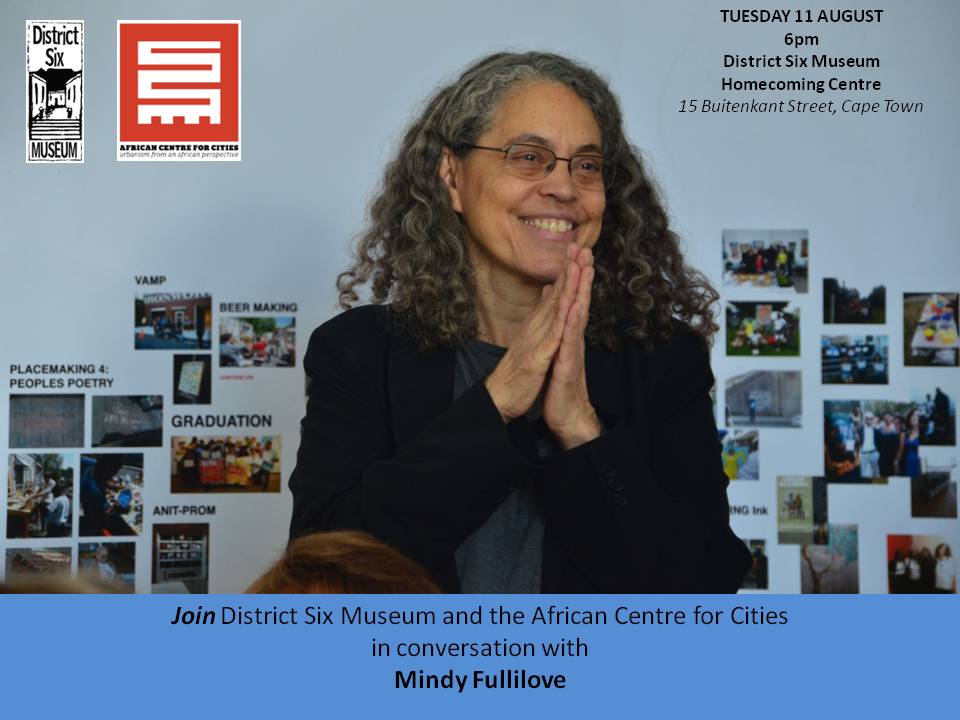
It is with great pleasure that the District Six Museum and the African Centre for Cities invite you to meet Dr Mindy Thompson Fullilove, visiting from Columbia University in New York. Dr Fullilove is a professor of Clinical Psychology and Public Health, and is interested in the links between the environment and mental health. She has researched, written and designed projects which speak to this concern, and is well-known for her critique as well as the development of various initiatives in New York and surrounding neighbourhoods. In the introduction to her book Root Shock’, she writes: "I present here the words of the people who have lived upheaval: the uprooted, the planners, the advocates, the historians. Read their words with care for them and for yourself. Read their words, not as single individuals living through a bad time, but as a multitude all sharing their morsel of the same bad time. Read in that manner and I believe that you will get the true nature of root shock. Read in that manner, and I believe you will be able to embrace the truth, not as a fearful thing, but as a call to join the struggle for a better tomorrow". Join District Six Museum and the African Centre for Cities  in a round-table discussion with Dr Fullilove during which time she will share with us some of the practical expressions of her work, as well as her impressions of the mental health of Cape Town as a ‘recovering’ city. Discussion to be led by Rike Sitas of the African Centre for Cities and Bonita Bennett of the District Six Museum. Bio Dr. Mindy Thompson Fullilove is a board-certified psychiatrist who is interested in the links between the environment and mental health. She started her research career in 1986 with a focus on the AIDS epidemic, and became aware of the close link between AIDS and place of residence. Under the rubric of the psychology of place, Dr. Fullilove began to examine the mental health effects of such environmental processes as violence, rebuilding, segregation, urban renewal, and mismanaged toxins. She has published numerous articles and six books including "Urban Alchemy: Restoring Joy in America's Sorted-Out Cities," "Root Shock: How Tearing Up City Neighborhoods Hurts America and What We Can Do About It," and "House of Joshua: Meditations on Family and Place."

Reconfiguring town and countryside for inclusive growth, combating poverty and job creation: Policy workshop on spatial inequality

Professor Edgar Pieterse and Adjunct Professor Stephen Berrisford are attending this high-level meeting organised by the Research Project on Employment, Income Distribution and  Inclusive Growth (REDI3x3) at the Centre for African Studies, University of Cape Town (UCT). Professor Pieterse is delivering a keynote address entitle 'Reimagining the City' in a Session about using urban development to promote inclusive growth. Stephen Berrisford is speaking about how land use management impacts on public finance in urban and rural areas. The meeting is being attended by representatives from the Presidency, National Treasury and National Planning Commission.

Launch and discussion: The Art of Public Space

WiSER 6th Floor, Richard Ward Building, University of Witwatersrand, Johannesburg, Gauteng, South Africa

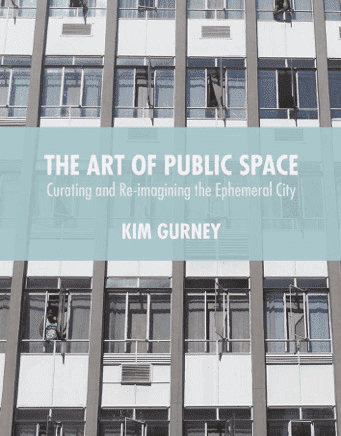
WiSER and the African Centre for Cities at the University of Cape Town invite you to a launch and discussion of The Art of Public Space: Curating and Re-imagining the Ephemeral City by Kim Gurney The Art of Public Space (Palgrave, 2015) takes as case study a trilogy of art interventions, New Imaginaries, which explored notions of public space in Johannesburg, and reflects upon its broader implications in a research partnership between African Centre for Cities and Goethe-Institut South Africa. "Kim Gurney's The Art of Public Space powerfully reiterates the ways in which urban actors do not inhabit worlds of preconceived social or subjective forms, but rather ever-shifting milieus where different ways of conceiving and enacting life intersect, and that artistic practice is a critical technology in re-imagining and reshaping these intersections. All technical practices conduct events, but artistic work is proving most salient in opening up urban contexts to events that anticipate and posit new ways of living together. Leveraging the multiplicity of performances that make up every day Johannesburg, the artistic projects offered here attempt to reconfigure what its residents already see and experience but in ways that push it somewhere else, which collate and intensify these perceptions and experiences into new common grounds." — AbdouMaliq Simone Respondents: Achille Mbembe (WiSER) with Molemo Moiloa (VANSA), Tanya Zack (urban researcher, writer & explorer) and Kim Gurney (UCT), chaired by Edgar Pieterse (UCT).

Mistra Urban Futures Knowledge Transfer Programme (KTP) Learning event

Seminar Room, UCT Research Office Allan Cormack House, 2 Rhodes Ave, Mowbray, Cape Town, Western Cape, South Africa

Join us in sharing the experiences of the Embedded Researchers at the conclusion of the first phase of the KTP partnership between the African Centre for Cities and the City of Cape Town. Bringing together academic and practitioner knowledge can co-produce defensible and legitimate responses to policy challenges. The Knowledge Transfer Programme, launched in 2012, proceeded through the placement of four embedded researchers in departments at the City, working on City projects and processes. The KTP, through both the Embedded Researcher Programme and the City Officials Exchange Programme has sought to make policy and decision-making processes more accessible and applicable through the co- production of knowledge and the dissemination of both scholarship and practice. This event focuses primarily on showcasing and learning from the work conducted by the four embedded researchers, who have experimented with new ways of engaging and working with the City. The Panel Discussion will draw on the researchers’ lengthy engagement with urban policy processes and consider ways of tracking the impacts of co-produced knowledge. Date: 20 August 2015 3-4pm: Panel discussion: Co-producing knowledge for urban change: reflections on understanding impact Panellists: Anton Cartwright, Anna Taylor, Robert McGaffin and Saul Roux, chaired by Edgar Pieterse 4-5pm: Drinks reception celebration of the partnership RSVP to Saskia Greyling (saskia.greyling@uct.ac.za) by Friday 14th August 2015  

Overcoming water scarcity for good?

Studio 3 ENGEO Building, Upper Campus. University of Cape Town,, Cape Town, Western Cape, South Africa

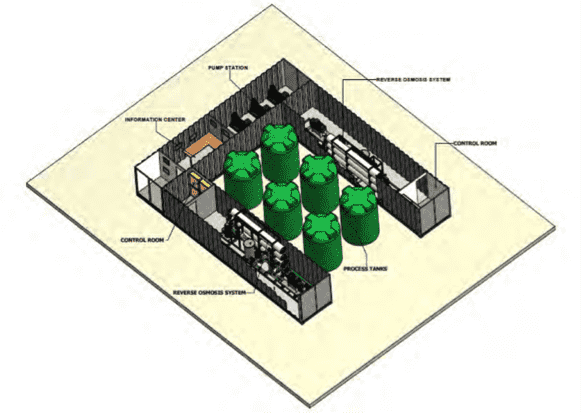
Dr Suraya Scheba is an ACC research fellow who will be sharing a paper entitled, 'Overcoming water scarcity for good: querying the adoption of desalination technology in the Knysna Local Municipality of South Africa'. Abstract In this paper I aim to query the Ecological Modernisation vision of green growth by focusing on the emblematic case of desalination technology as the solution to the threat of water scarcity. I focus the study on a drought crisis, which resulted in the adoption of desalination in the Eden District Municipality (EDM) of South Africa. Focusing on the towns of Sedgefield and Knysna, in the Knysna Local Municipality (KLM) of the EDM, I ask the questions of ‘what, how, by whom, why and to what end was desalination adopted?’. This interrogation is characterised by two movements, firstly tracing the emergence and form of the crisis - solution consensus; and secondly reading this against an examination of the historical material relations constituting both crisis and solution. The paper is informed by research that was carried out over a period of 11 months, from October 2011 to August 2012, during which I undertook 91 semi-structured interviews, extensive document analysis and participant observation. The twin analytical movement described above is undertaken in five parts. Firstly, I show that the dominant representation of 'drought crisis' insisted upon the indisputability of drought as a threat posed by an externalised nature. Next, in examining the historical materiality of drought I counter this narrative by showing the drought crisis to be a socio-natural assemblage, rather than an externalised threatening nature. This is a vital finding, showing that the support for the adoption of desalination technology as a necessary response to 'nature's crisis', pivoted on the maintenance of an ideological fiction. In the third part of the paper, moving on to an examination of the solution, it emerges that an essential element supporting desalination adoption was the employment of exceptional disaster and environmental legislation, enabling the urgent release of disaster funding to ensure water security for economic growth. This section also argues that the maintenance of the dominant crisis narrative served to produce a market opportunity for the desalination industry. In the remaining two parts of the paper I evaluate the 'promise' of the desalination techno-fix. Through focusing on the conditionality placed on disaster funding and its impact on project assembly, I argue that the mechanisms and logic through which the solution consensus emerged had a direct bearing on project assembly and consequent problems and costs emerging out of the desalination solution from the outset. In sum, the paper demonstrates that the adopted E.M. logic was a false promise that served to intensify the penetration of nature by capital, and resulted in a deeper movement into crisis by moving the problems around as opposed to resolving them. Bio Suraya completed her PhD in geography at the University of Manchester (UK). Her doctoral work examined the Ecological Modernisation vision of green growth by focusing on the emblematic case of desalination technology as the solution to the threat of water scarcity. The study was focused on a drought crisis, which resulted in the adoption of desalination in the Eden District Municipality (EDM) of South Africa, focusing specifically on the towns of Sedgefield and Knysna, in the Knysna Local Municipality (KLM) of the EDM. Since May 2015 she works as a post-doctoral research fellow at the African Centre for Cities (ACC) at the University of the Cape Town. In this capacity, she forms part of a research team concerned with exploring theories and practices of emancipatory change. At one level, her focus is on leading an in-depth study on Informality, urban poverty and inequality in the low-income community of Delft, Cape Town. This study forms part of a larger multi-sited research project, positioned within a collaborative initiative between a handful of South African Research Chairs working on strategies to overcome poverty and inequality. At another level she will participate in workshops and discussions, drawing on both grounded findings and theoretical debates, to build empirically-informed theory and policy related to questions of transformative change.


DALI project (DFID land based financing)

Seminar Room 1 Environmental & Geographical Sciences Building, UCT Upper Campus

Ian Palmer and Stephen Berrisford will share an overview of the key findings of the DFID land based financing project, focussing on land value capture and infrastructure finance in Sub-Saharan Africa. Overview: The rapid growth of African Cities brings with it a burgeoning demand for infrastructure. But the finance available to cities to build this infrastructure is constrained. Therefore opportunities offered by land-based financing are most important. A team based at the African Centre for Cities has recently completed a significant research project on this topic for the UK Department for International Development.  The findings from this research will provide the primary input for this brownbag session, which will deal with the nature of urban infrastructure, the institutions involved in providing infrastructure, an overview of capital financing options and specific opportunities for using land-based finance. It will also touch on the role of property developers in providing and/or financing infrastructure, the role of cities in raising finance associated with property developments and associated policy considerations.  Findings from case studies conducted in Ethiopia, Kenya and Zimbabwe will also be reflected in the presentation. Bios: Stephen Berrisford is an independent consultant working in the field of urban planning law and policy in Southern Africa. He holds BA LLB and MCRP degrees from UCT and an MPhil in Land Economy from the University of Cambridge. Prior to establishing Stephen Berrisford Consulting in 2000 he held the post of Director: Land Development Facilitation at the national Department of Land Affairs and before that worked in the planning departments of the Cape Town and Johannesburg municipalities. During 2010 he was a Visiting Scholar in the Department of Town and Regional Planning at the University of Sheffield. His clients include the major international development agencies as well as all three spheres of government in South Africa. Stephen’s work focuses on the identification of practical and just legal solutions to the challenges of rapid urban growth in Sub-Saharan Africa. He has regularly published academic articles and book chapters since 1996 and has presented papers at a wide range of international conferences. Ian Palmer is a founding partner of Palmer Development Group (PDG). PDG is a leading consultancy in South Africa in the field of municipal services policy, research, strategy and management. He has 37 years experience in the fields of civil engineering and development. Over the last 25 years, 19 of which he has been the managing partner and then managing director of PDG, he has been the team leader on over 100 projects in the realm of public sector service delivery including the fields of: municipal services planning, municipal finance, inter-governmental relations, water and sanitation, housing, roads and public transport. He has degrees in civil engineering, economics and environmental engineering. Ian is also an Adjunct Professor at UCT attached to the African Centre for Cities.

Contested Cartographies: Remapping Cape Town

Seminar Room 1 Environmental & Geographical Sciences Building, UCT Upper Campus

In this brown bag, Ian-Malcolm Rijsdijk will introduce a working concept for new ways of understanding Cape Town. Overview: This concept presentation considers the mapping, naming, routing, disambiguations, planning, and compartmentalising of contemporary Cape Town. Using as a basis the idea of an atlas containing multiple maps of the city, this project considers expansions, degradings, mergings and rendings that have transformed the city over time not only from a spatial perspective, but also culturally. How are people ‘emplaced’ in the city? What does the city look like to people based upon their distinct cultural belongings? What lies beneath our feet and flies above our heads? This concept is both multi- and trans-disciplinary, bringing together social scientists working in urban studies, activists, artists, and writers to re-think the way the city looks to those who live in it, to lift the map off the surface of the page and re-form it. About the speaker: Ian-Malcolm Rijsdijk is a senior lecturer in the Centre for Film and Media Studies, and director of the African Cinema Unit at the University of Cape Town. He has published widely on the filmmaker Terrence Malick (the subject of his PhD), as well as South African film, wildlife documentary and literary fiction. He is currently working on early South African cinema and film cultures in South Africa. As Director of the African Cinema Unit, he teaches in the MA in African Cinema and is also involved in developing postgraduate scholarship in African and South African screen studies. He is also a member of the Environmental Humanities South research program at the University of Cape Town. In 2013, he received a Distinguished Teacher’s Award from the University of Cape Town, and in 2014 a National Excellence in Teaching award from the Higher Education Teaching and Learning Association of South Africa. He is a fanatical birder and registered at lasser with the South African Bird Atlas project. One day he would like to see a Wandering Albatross.  

Food and transnational gastronomic culture amongst Cameroonian migrants in Cape Town and The Hague

Studio 3 ENGEO Building, Upper Campus. University of Cape Town,, Cape Town, Western Cape, South Africa

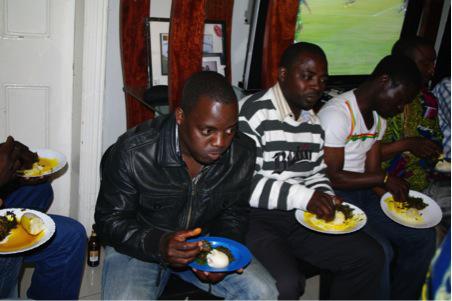
In this seminar, post-doctoral fellow at the African Centre for Cities, Dr Henrietta M Nyamnjoh will present a paper entitled, 'This Christmas I go ‘touch’ some fufu and eru”: Food and transnational gastronomic culture amongst Cameroonian migrants in Cape Town and The Hague'. Abstract Migrants’ relation to ethnic food and their experiences of migration are dynamic processes, experienced in a multiplicity of ways. This paper focuses on how mobility and migration are fast influencing the global food cultures and how increasingly foods are windows into the ways migrants live, think, and identify themselves. Foods are part of migrants’ cultural, historical and even emotional repertoires. Based on ethnographic research amongst Cameroonian migrants in Cape Town and The Netherlands, I explore how migrants travel with their gastronomic culture and/or improvise in the absence of ethnic foods. In the Netherlands, whilst migrants have found ‘home-away-from-home’ through the many shops that sell food from home they still manage to create transnational food chains/links when visiting home. While in Cape Town, despite these shops the absence of certain foods has prompted migrants to improvise and complement their foods, it has also given rise to specialised restaurants that provide Cameroonian cuisine. Through this ethnography I maintain that gastronomic culture can be thought of as a strong bond that affirms migrants’ Cameroonian-ness and keeps them attached to the home country. I question too the extent to which mobility and transnationality reconfigure food experiences amongst migrant communities and argue for multiple understandings of how migrants relate to food to the exclusion of their everyday experience. Bio Henrietta Nyamnjoh is a Post-Doctoral Research Fellow at African Centre for Cities and Environmental and Geographical Science, University of Cape Town. Her research focus is on migration, transnational studies, migrants and urban transformation and religion. She recently completed a study on the use of Information and Communication Technologies amongst Cameroonian migrants in South Africa, The Netherlands and Cameroon. The study (Bridging Mobilities: ICTs appropriation by Cameroonians in South Africa and The Netherlands) seeks to understand migrants’ appropriation of the new Information and Communication Technologies to link home and host country and the wider migrant community. She is also the author of “We Get Nothing from Fishing” Fishing for Boat Opportunities Amongst Senegalese Fisher Migrants (2010). She is currently working on transnational families and emotions amongst Cameroonians in Cape Town.