Food and transnational gastronomic culture amongst Cameroonian migrants in Cape Town and The Hague

Studio 3 ENGEO Building, Upper Campus. University of Cape Town,, Cape Town, Western Cape, South Africa

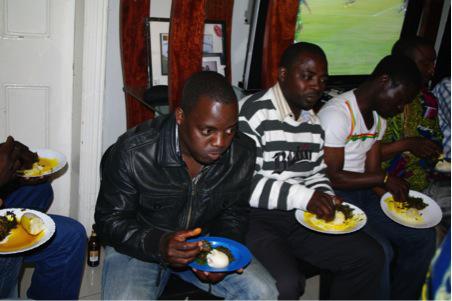
In this seminar, post-doctoral fellow at the African Centre for Cities, Dr Henrietta M Nyamnjoh will present a paper entitled, 'This Christmas I go ‘touch’ some fufu and eru”: Food and transnational gastronomic culture amongst Cameroonian migrants in Cape Town and The Hague'. Abstract Migrants’ relation to ethnic food and their experiences of migration are dynamic processes, experienced in a multiplicity of ways. This paper focuses on how mobility and migration are fast influencing the global food cultures and how increasingly foods are windows into the ways migrants live, think, and identify themselves. Foods are part of migrants’ cultural, historical and even emotional repertoires. Based on ethnographic research amongst Cameroonian migrants in Cape Town and The Netherlands, I explore how migrants travel with their gastronomic culture and/or improvise in the absence of ethnic foods. In the Netherlands, whilst migrants have found ‘home-away-from-home’ through the many shops that sell food from home they still manage to create transnational food chains/links when visiting home. While in Cape Town, despite these shops the absence of certain foods has prompted migrants to improvise and complement their foods, it has also given rise to specialised restaurants that provide Cameroonian cuisine. Through this ethnography I maintain that gastronomic culture can be thought of as a strong bond that affirms migrants’ Cameroonian-ness and keeps them attached to the home country. I question too the extent to which mobility and transnationality reconfigure food experiences amongst migrant communities and argue for multiple understandings of how migrants relate to food to the exclusion of their everyday experience. Bio Henrietta Nyamnjoh is a Post-Doctoral Research Fellow at African Centre for Cities and Environmental and Geographical Science, University of Cape Town. Her research focus is on migration, transnational studies, migrants and urban transformation and religion. She recently completed a study on the use of Information and Communication Technologies amongst Cameroonian migrants in South Africa, The Netherlands and Cameroon. The study (Bridging Mobilities: ICTs appropriation by Cameroonians in South Africa and The Netherlands) seeks to understand migrants’ appropriation of the new Information and Communication Technologies to link home and host country and the wider migrant community. She is also the author of “We Get Nothing from Fishing” Fishing for Boat Opportunities Amongst Senegalese Fisher Migrants (2010). She is currently working on transnational families and emotions amongst Cameroonians in Cape Town.
Adapting to Climate Change – Lessons From South African cities

Alliance Française 155 Loop Street, Cape Town, South Africa

South Africa will be severely hit by climate change. Projections show that temperatures will rise by 3° to 6°C in some parts of the country. Already water-scarce, South Africa will see a drastic change in its rainfall patterns, with most of the country becoming drier. The rise in sea-level will at the same time threaten the development of coastal cities.   Adapting to climate change is thus a necessity. It is also an opportunity to engage a truly sustainable development model – one robust enough to work in a changing environment and inclusive enough to accommodate the poorest and most vulnerable. It is particularly true of cities – some of whom have already developed ambitious strategies   As France is gearing up to host the 21st Conference of the Parties to the United Nations Framework Convention on Climate Change (COP21) in December 2015, AFD invites you to a conference on « Adapting to climate change – Lessons from South African cities ».   The event will be opened by Her Excellency, Mrs Elisabeth Barbier, Ambassador of France to South Africa. Mrs Kobie Brand, Regional Director for Africa at ICLEI, Mrs Helen Davies, Head of Environmental Policy and Planning at City of Cape Town, and Mrs Anna Taylor, Researcher at UCT, will take part in the debate, which will be moderated by Mrs Martha Stein-Sochas, AFD Regional Director for Southern Africa.

BROWN BAG POSTPONED: Dwelling on the edge of Ulaanbaatar, Mongolia

Seminar Room 1 Environmental & Geographical Sciences Building, UCT Upper Campus

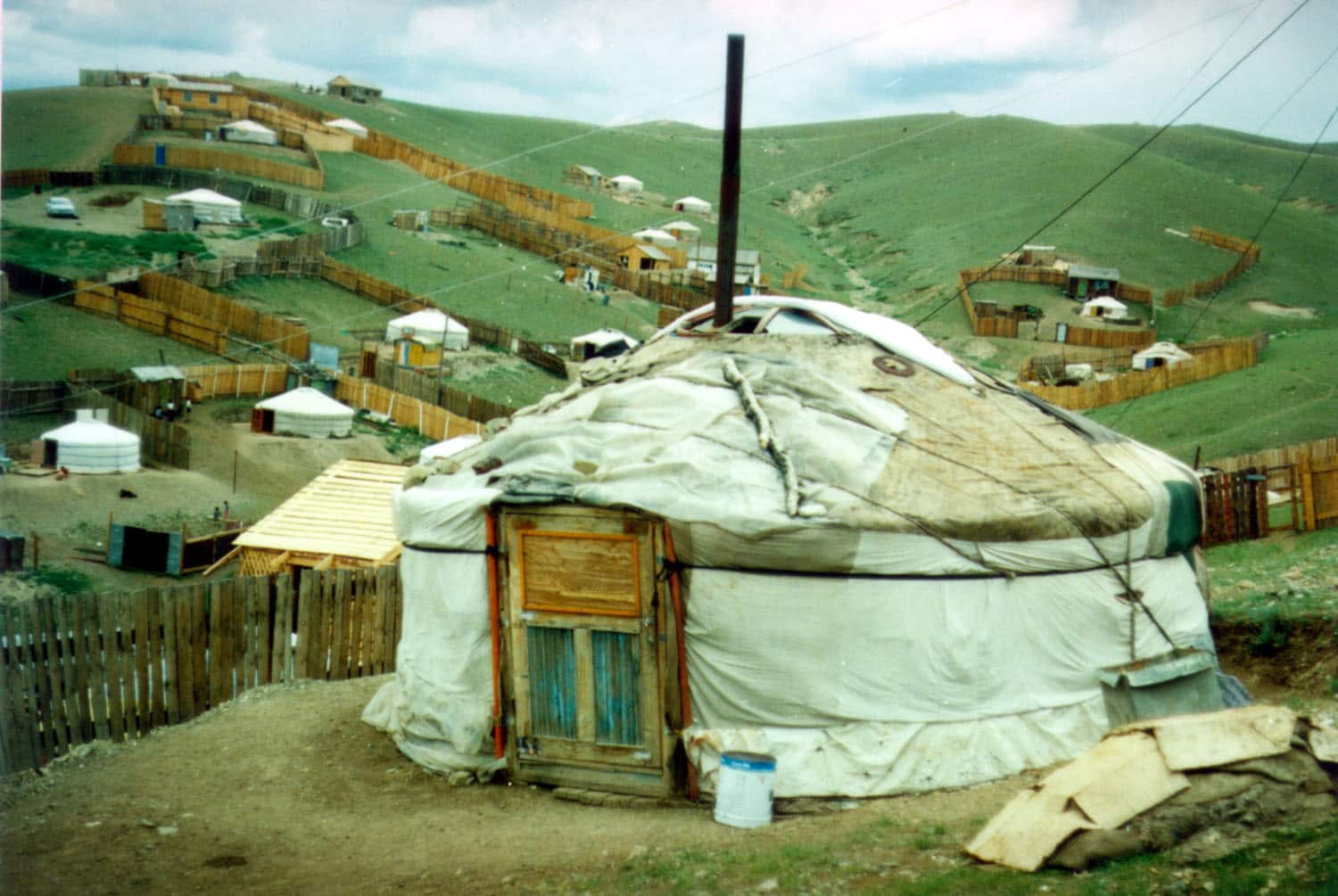
PLEASE NOTE THIS BROWN BAG HAS BEEN POSTPONED UNTIL FURTHER NOTICE AS UCT STUDENTS ARE PROTESTING FOR FAIR FEES. In this brown bag, Dr Rick Miller will be giving a talk on informal settlements in Mongolia. Overview This talk will begin by introducing informal settlement in Ulaanbaatar - the ‘ger districts’. I will start by noting how Mongolia’s forms of informality are unique, with the actual housing type of the ger being an accepted and even valorized emblem of domesticity, and the ger district settlement pattern itself  pre-dating much of the core, fixed structures of the city.  But Mongolia-specific characteristics aside, the issues of informal settlement in Ulaanbaatar may still provide a more generalizable model for extending urbanization in other cities struggling to house their citizenry, particularly for recalibrating legal regimes for making informality part of a solution to housing. Bio Rick Miller’s approach to studying informal settlements across cities of the developing world is informed by his training as both an architect and a social scientist.  Rick is a travelling faculty member of the School for International Training program on Cities in the 21st Century and a lecturer in the Department of Geography at UCLA, from which he received his PhD.

Harare Academy of Inspiration

Moholo Live House 42 Ncumo Road, Harare, Khayelitsha, Cape Town

The Harare Academy of Inspiration, one of the seven projects ACC is supporting as part of Public Art and the Power of Place, is running a daily programme of events at the Moholo Live House in Harare, Khayelitsha. Please see the programme for details or contact the curators Brenda Skelenge 073-9401556 trendingkhalture@gmail.com Valeria Geselev 071-5501427 yallashoola@gmail.com Naz Ping 084-7688199 naz.s@posteo.de

Informal Settlement as Complex Adaptive Assemblage

Seminar Room 1 Environmental & Geographical Sciences Building, UCT Upper Campus

The ACC is delighted to be hosting Prof Kim Dovey who will be presenting a paper entitled 'Informal Settlement as Complex Adaptive Assemblage'. Abstract Informal urbanism, from informal settlements to economies and street markets, is integral to cities of the global South – economically, socially, environmentally and aesthetically. This paper seeks to unfold and re-think this informal/formal conception using two interconnected theoretical frameworks. First is assemblage theory derived from the work of Deleuze and Guattari, in which a series of twofold concepts such as rhizomic/tree and smooth/striated resonate with the informal/formal construct. Second is theory on complex adaptive systems, in which dynamic and unpredictable patterns of self-organisation emerge with certain levels of resilience or vulnerability. These approaches are drawn together into the concept of a complex adaptive assemblage, illustrated with brief snapshots of urban informality drawn from Southeast Asian cities. The research challenge is to develop multi-disciplinary, multi-scalar methodologies to explore the ways in which informality is linked to squatting, corruption and poverty on the one hand, and to growth, productivity and creativity on the other. Bio Kim Dovey is Professor of Architecture and Urban Design at the University of Melbourne. He has published widely on social issues in architecture, urban design and planning.  Books include 'Framing Places' (Routledge, 2008), 'Fluid City' (UNSW Press 2005), ‘Becoming Places’ and the forthcoming ‘Urban Design Thinking’ (Bloomsbury).  He leads research projects on informal settlements, transit-oriented development and creative clusters.

MEAN STREETS book launch

Book Lounge 71 Roeland Street, Cape Town, Western Cape, South Africa

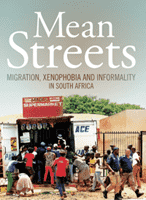
The ACC is proud to be associated with the publication of a major new title in southern African studies. Mean Streets: Migration, Xenophobia and Informality in South Africa, edited by ACC partners Jonathan Crush, Abel Chikanda and Caroline Skinner, demonstrates powerfully that some of the most resourceful entrepreneurs in the South African informal economy are migrants and refugees. Yet far from being lauded, they take their life into their hands when they trade on South Africa’s “mean streets”. Thirteen chapters draw attention to the positive economic contributions which migrants make to their adopted country. The book includes studies of: the creation of agglomeration economies in Jeppe and Ivory Park in Johannesburg; guanxi networks of Chinese entrepreneurs; competition and cooperation among Somali shop owners; cross-border informal traders; informal transport operators between South Africa and Zimbabwe. Migrant entrepreneurship is shown to involve generating employment, paying rents, providing cheaper goods to poor consumers, and supporting formal sector wholesalers and retailers. Mean Streets also highlights the xenophobic responses to migrant and refugee entrepreneurs and the challenges they face in running a successful business on the streets.

Theatre in the Backyard: “Is He Mad?”

Theatre in the Backyard is one of the seven projects being supported by the ACC as part of Public Art and the Power of Place. Theatre in the Backyard presents “Is He Mad?” written & directed by Mhlanguli George and performed by Lamla Ntsaluba. According to the project organisers, “Is He Mad?”: ‘A story of a man who doesn’t want to accept the death of his wife and has not become himself ever since, the story is developed from the monologue from the well-known play of Dario Fo called “Accidental Death of an Anarchist” and some of the ideas are coming from the newspapers such as the Daily Sun, the play deals with people who are ignorant about real issues in their lives. The production will be performed in the backyard. Theatre in the Backyard has developed as a creative response to untapped resources of backyard life. Theatre in the Backyard uses actual backyards as the site for intimate theatrical production, working closely and powerfully with available light, space and other scenographic elements The Director of Theatre in The Backyard spends a lot of time exploring different yards to eventually come up with a pure story, this takes time as he has to use every element of the yard to put together the story, one of his main objectives is to find character’s to this mysterious venture and ways of revealing the backyard secretes. This is theatre based on reality – raw and alive experience. Writer, Director Mhlanguli George is the innovator of Theatre in the Backyard and founder and the Artistic Director of New-born Theatre Productions. Working as theatre writer, director and the choreographer of the company, he produced productions like “21st of march” ”June 16-isichotho semvula” “Teenage pregnancy” “Ndidliwa-ngumvandedwa” “Driven by faith”, “Kwa-Nongqongqo” ”Fourth person in the yard” ”Letters” and “Finding the space” Mhlanguli George has come up with a new form of theatre called “theatre in the backyard” that focuses on revealing secrets of the backyards good or bad. The first piece that George has created out of theatre in the backyard is called “Fourth person in the yard” and recently produced his second installation of theatre in the backyard “Is he mad?” Mhlanguli George worked at Uct Dance School as a lecture for 4th years introducing a new course “African Dance Performance Technique” The Production manager/administrator Sisa Congress V Makaula is the Founding member of Rainbow arts Organisation, one of the master minds in converting the Delft Rent Office to what is now known as Black Box Theatre, He has written a number of theatre productions: Behind My Shadow which went to the NATIONAL FESTIVAL IN GRAHAMSTOWN in 2008 and 2009, The Prophet Must Die recently performed at the Iqonga Creative Festival in Delft, and Freedom Speech to name a few. Today, Sisa Makaula is regarded as professional actor, theatre-maker, drama facilitator, writer, arts administrator and he is the Director and Executive producer of Rainbow Arts Organisation.

Ghetto Trekk! Interview

GHETTO TREKK! is a touring platform that is designed for visual art, music, film-making, fashion, design, curatorship and theatre, while providing a podium for individuals from a wide variety of communities to engage in meaningful conversations about the challenges that face our society – and to create social change to reflect, reconstruct & address the negative connotation associated with our communities. It provides an opportunity to profile Unfunded & Self-Start Artists / Crafters / Entrepreneurs / NGOs / CBOs / Activists…and exhibit their works in different communities. In this session, project coordinator will be interviewed by Tinny Ntshili. They will be joined by Blaq Pearl. Date: Saturday 28 November 2015 Time: 10h00 - 12h00 Venue: Cape Town Central Library, Google Map: -33.925470, 18.424417

Artfricraft Studios Music Event

Delft Rent Office 583 Delft Main Road, Cape Town

Artfricraft Studios is one of the seven projects being supported by ACC as part of Public Art and the Power of Place. Artfricraft Studios will be hosting a series of events as part of their project. This music event will feature Very Lutumba, Sylvestre Kabadassi and African All Stars. The purpose of these events is to use art as a way to draw different artists and residents together to challenge xenophobia.

R30