Artfricraft Studios Music Event

Delft Rent Office 583 Delft Main Road, Cape Town

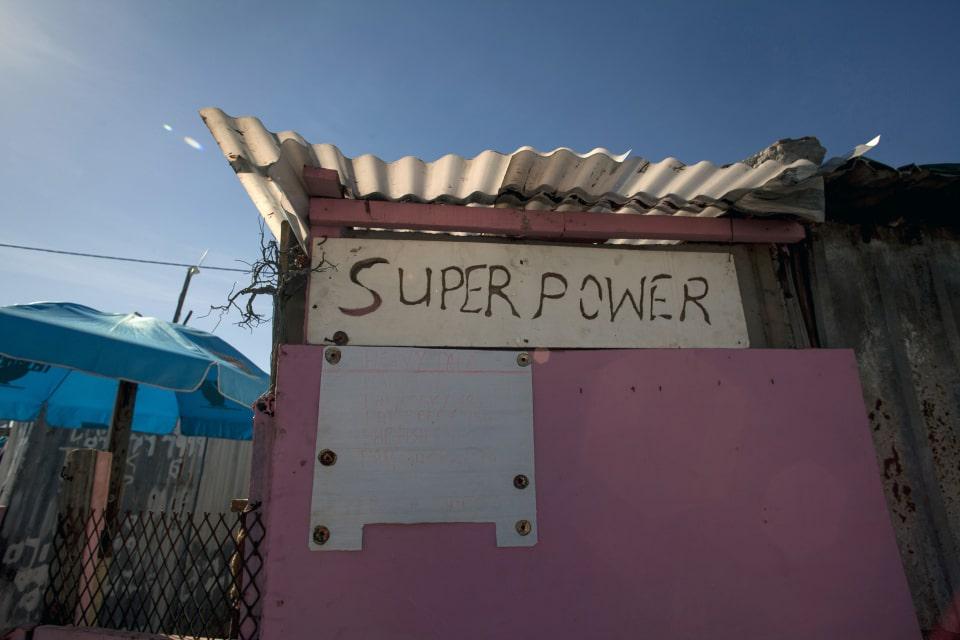
Artfricraft Studios is one of the seven projects being supported by ACC as part of Public Art and the Power of Place. Artfricraft Studios will be hosting a series of events as part of their project. This music event will feature Very Lutumba, Sylvestre Kabadassi and African All Stars. The purpose of these events is to use art as a way to draw different artists and residents together to challenge xenophobia.

R30

Africities 2015

Unnamed Venue Johannesburg, South Africa

The CoJ, South Africa’s economic hub, will be hosting the 7th Africities Summit of cities and local governments of Africa on 1–4 December 2015. The summit is held every three years and looks at issues affecting urban and economic development in African cities. The theme for 2015 is ‘2063 Vision for Africa: Which contributions from the African local governments?’ It will explore the local government vision for the next 50 years and creative ways of solving the problems facing cities on the continent. more  

Ghetto Trekk! Festival

GHETTO TREKK! is a touring platform that is designed for visual art, music, film-making, fashion, design, curatorship and theatre, while providing a podium for individuals from a wide variety of communities to engage in meaningful conversations about the challenges that face our society – and to create social change to reflect, reconstruct & address the negative connotation associated with our communities. It provides an opportunity to profile Unfunded & Self-Start Artists / Crafters / Entrepreneurs / NGOs / CBOs / Activists…and exhibit their works in different communities. Date: Saturday 05 December 2015 Time: 16h00 - 21h00 Venue: Valhalla Park, Angela Road connecting to Charles Lane, Google Map: -33.953538, 18.574632  

Ghetto Trekk! Festival

GHETTO TREKK! is a touring platform that is designed for visual art, music, film-making, fashion, design, curatorship and theatre, while providing a podium for individuals from a wide variety of communities to engage in meaningful conversations about the challenges that face our society – and to create social change to reflect, reconstruct & address the negative connotation associated with our communities. It provides an opportunity to profile Unfunded & Self-Start Artists / Crafters / Entrepreneurs / NGOs / CBOs / Activists…and exhibit their works in different communities. Date: Sunday 06 December 2015 Time: 16h00 – 21h00 Venue: Kwa-Langa, Zone 22 No. 16 at Noxolo Street Google Map: 33°56’39.2″S 18°32’19.5″E

Celebrating a bumper year of publishing

The Design Bank 75 Harrington Street, Cape Town, South Africa

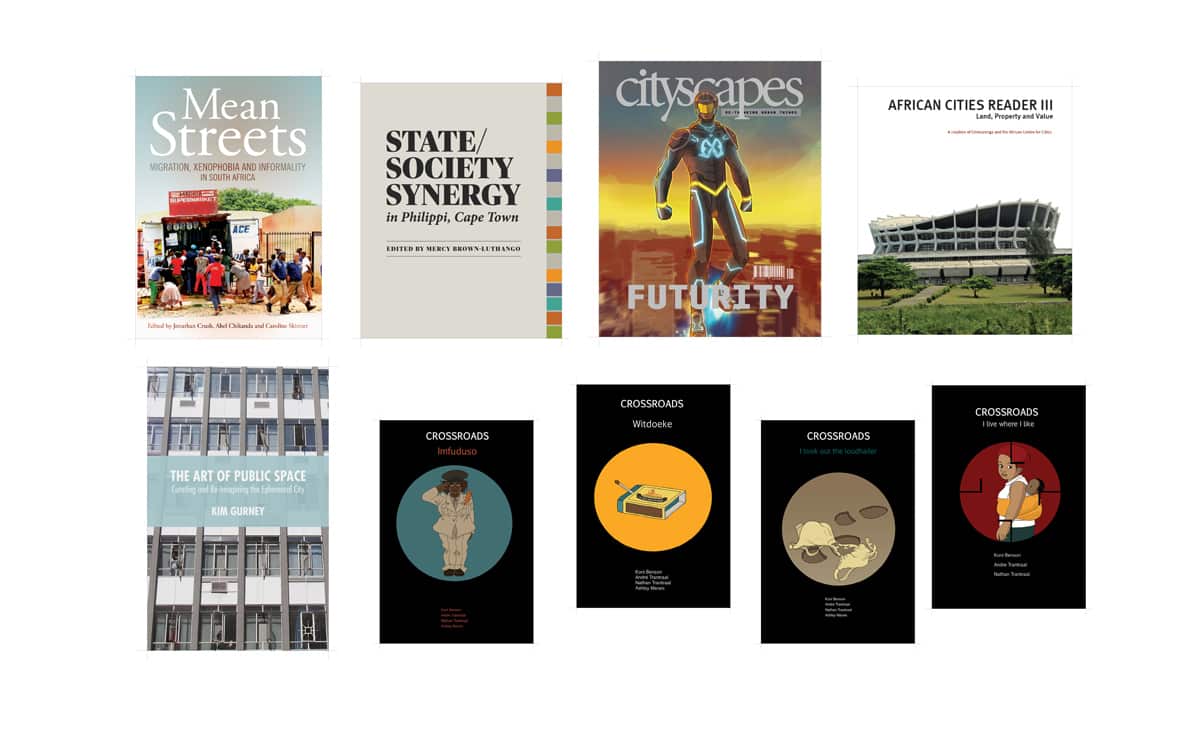
Throughout 2015, ACC researchers and associates have been involved in a wide range of activities including the release of the following publications: State/Society Synergy edited by Mercy Brown-Luthango; the African Cities Reader III, edited by Ntone Adjabe and Edgar Pieterse; Mean Streets: Migration, Xenophobia and Informality in SA by Jonathan Crush, Abel Chikanda and Caroline Skinner; The Art of Public Space: Curating and Re-imagining the Ephemeral City by Kim Gurney; The Crossroads series of comics (1-4) by Koni Benson and the Tantraal Brothers and Cityscapes #7: Futurity, edited by Tau Tavengwa and Sean O'Toole. Henrik Ernstson has been working on a documentary film project titled One Table Two Elephants which will be launching soon. We invite you to join us in celebrating these projects

Ghetto Trekk! Festival

Bonteheuwel

GHETTO TREKK! is a touring platform that is designed for visual art, music, film-making, fashion, design, curatorship and theatre, while providing a podium for individuals from a wide variety of communities to engage in meaningful conversations about the challenges that face our society – and to create social change to reflect, reconstruct & address the negative connotation associated with our communities. It provides an opportunity to profile Unfunded & Self-Start Artists / Crafters / Entrepreneurs / NGOs / CBOs / Activists…and exhibit their works in different communities. Date: Saturday 12 December 2015 Time: 09h00 – 21h00 Venue: Bontehuewel, Als Road connecting with Apricot Streets Google Map: -33.942233, 18.544701

Conference on Informality and the Urban Food System: Policy, practice and inclusive growth through a food lens

UCT Graduate School of Business, V&A Waterfront, Cape Town, Western Cape, South Africa

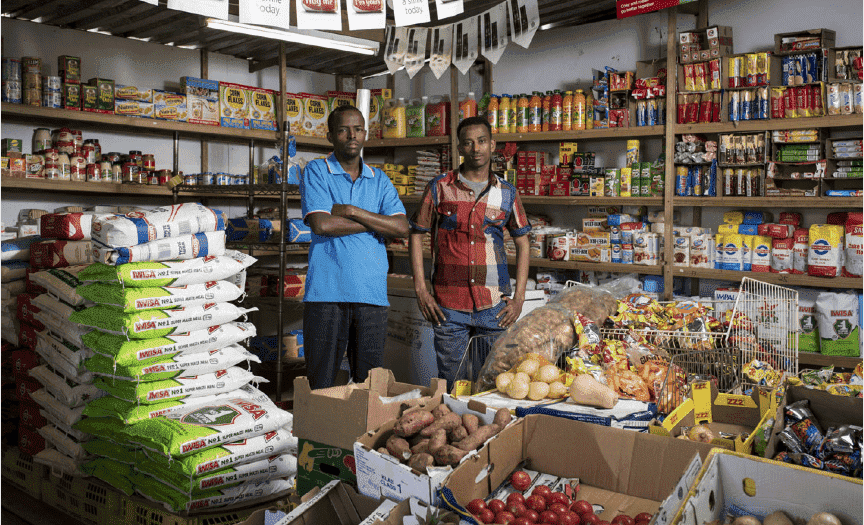
The Hungry Cities Partnership, a research programme at the African Centre for Cities, will hold a conference at the University of Cape Town’s Graduate School of Business on 15 February 2016. The Hungry Cities Partnership is a research partnership led by the African Centre for Cities at the University of Cape Town and the Balsillie School of International Affairs at Wilfrid Laurier University, Waterloo, Canada. Southern partner cities include Bangalore, Kingston, Maputo, Mexico City, Nairobi, Nanjing and Cape Town. The focus of this five-year research programme is a collaborative, inter-disciplinary research, training and knowledge mobilization programme on urbanization, food security, informality and inclusive growth. See the programme on the AFSUN website.

World-class city making in Africa – a view from Angola through the redevelopment of the Bay of Luanda

Seminar Room 1 Environmental & Geographical Sciences Building, UCT Upper Campus

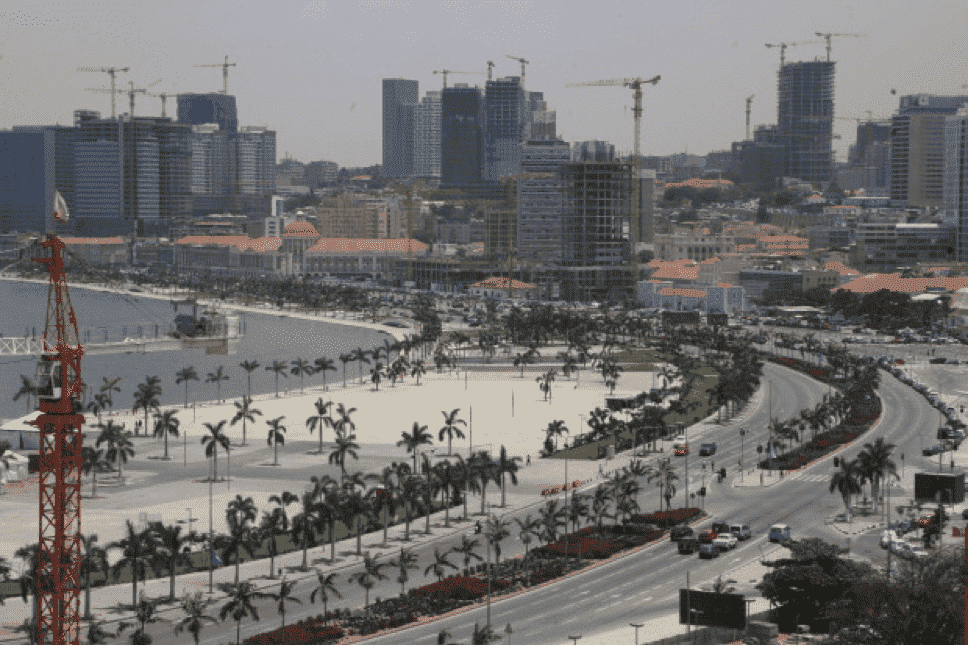
The ACC is happy to announce the first academic seminar for 2016. Dr Sylvia Croese will be presenting a paper entitled, 'World-class city making in Africa – a view from Angola through the redevelopment of the Bay of Luanda'. Abstract This paper examines the redevelopment of the Bay of Luanda as the epitome of a process of world-class city making that has unfolded in the capital of Angola since the end of the war in 2002. In an era that has been marked by ‘Africa’s rise’, concomitant efforts towards the building of world-class African cities have generated growing research interest over the past years. However, often these efforts are seen as uncritically adopted or externally imposed imitations of global/world city models. This paper aims to take world-class city making in Luanda seriously by analyzing its dynamics on its own terms, thereby moving beyond accounts that either romanticize or demonize this process. Based on an analysis of the history of the Bay of Luanda and the actors, discourse and imaginaries involved in its redevelopment, the paper makes three interrelated arguments. Firstly, it argues that while discourses underpinning world-class city making may reflect external or economic drivers, such as a desire to attract international investment, the case of Luanda shows that this practice can be equally or even more strongly driven by internal or political objectives, such as the pursuit of national legitimacy and domestic stability. From this follows that world-class city making in Africa does not necessarily have to be externally imposed, managed or financed, but that it can also be ‘home-grown’ and led by national rather than city governments, especially in resource-rich and authoritarian states like Angola. Finally, the paper argues that while the mainstream world-class city literature tends to focus on the futuristic nature of world-class city aesthetics, the redevelopment of the Bay of Luanda shows how efforts to revive modernist colonial architecture may equally underpin world-class city making. The study of world-class city making should then not only consider ‘introspective’ vs ‘extrospective’ politics but also ‘retrospective’ rationales or the ways in which utopia and nostalgia intersect across time and space. Bio Dr Sylvia Croese is a post-doctoral research fellow at the department of Sociology at the University of Cape Town. She has written and conducted extensive research in and on Angola as a researcher and consultant and has an interest in issues related to housing and urban development, local governance and electoral politics in Africa.


Rethinking Sustainable Cities: from slogan to implementation

Studio 5 Environmental and Geographical Sciences Building, Upper Campus, Cape Town, South Africa

ACC is excited to host representatives from Mistra Urban Futures who will be presenting on their forthcoming book entitled 'Rethinking Sustainable Cities: from slogan to implementation'. Overview Mistra Urban Futures’ forthcoming book provides detailed intellectual and practical histories of fair, green and accessible cities - three key urban characteristics chosen to symbolise the research centre’s approach, which utilises transdisciplinary co-production methodologies to promote sustainable urban solutions to specific local problems in each of its research platforms. These characteristics suffuse MUF’s work and Strategic Plan for 2016-19. David Simon will explain these agendas, focusing particularly on the origins and current nature of urban greening discourses and the challenges to implementation to ensure that they make a substantive as opposed to purely marginal or incremental difference. Sue Parnell will do likewise in relation to fair cities. Bios David Simon joined Mistra Urban Futures in September 2014 from Royal Holloway, University of London, where he still holds a part-time appointment as Professor of Development Geography. He was Head of theGeography Department there from 2008-11. He has vast international experience including grant-funded research on sub-Saharan Africa (especially Namibia, South Africa, Kenya and Ghana), Asia (especially Sri Lanka, Thailand and the Philippines), the UK and the USA. He has also served as specialist advisor to UN-HABITAT on cities and climate change, was one of only two academics on the UK Foreign and Commonwealth Office's specialist Africa Advisory Group prior to its disbandment, and has consulted for various NGOs and national and international development agencies. Furthermore, he is a Fellow of the UK Academy of Social Sciences. Susan Parnell’s early academic research was in the area of urban historical geography and focussed on the rise of racial residential segregation and the impact of colonialism on urbanisation and town planning in Sub-Saharan Africa. Since 1994 and democracy in South Africa her work has shifted to contemporary urban policy research (local government, poverty reduction and urban environmental justice). By its nature this research is not been purely academic, but has involved liasing with local and national government and international donors. Sue is also on the boards of several local NGOs concerned with poverty alleviation, sustainability and gender equity in post-apartheid South Africa. She serves on a number of national and international advisory research panels relating to urban reconstruction.

Visualising the Smart City

Seminar Room 1, EGS Building, Upper Campus, University of Cape Town University of Cape Town, Cape Town , Western Cape, South Africa

The ACC is happy to announce the first brown bag event for 2016: Visualising the Smart City with Professor Gillian Rose. Overview: Digital technologies of various kinds are now the means through which many cities are made visible and their spatialities negotiated. From casual snaps shared on Instagram to elaborate photo-realistic visualisations, digital technologies for making, distributing and viewing cities are more and more pervasive. This talk will explore some of the implications of that digitisation for the cultural politics of representation. What and who is being made visible in these digitally mediated cities, and how? What forms of urban materiality, spatiality and sociality are pictured and performed? And how should that picturing be theorised? The talk will suggest that cities and their inhabitants are increasingly visualised through a mobile fluid 'digital visuality', which is in fact evident across a number of visual practices. It will also propose that critical accounts of such visuality should focus less on readings of images and more on considering the (geographically-specific) flows and frictions of images. Bio: Gillian Rose is Professor of Cultural Geography at The Open University, UK, and a Fellow of the British Academy. Her current research interests focus on contemporary digital visual culture, urban spatialities and visual research methodologies. Her most recent funded research (with Monica Degen) examined how architects work with digital visualising technologies in designing urban redevelopment projects, and she is extending this work into the digital mediation of urban spaces more broadly, particularly in the context of 'smart cities'. As well as a number of papers on images and ways of seeing in urban and domestic spaces, the fourth edition of her bestselling Visual Methodologies (Sage) will be published in March 2016. Gillian blogs at visual/method/culture and tweets @ProfGillian.