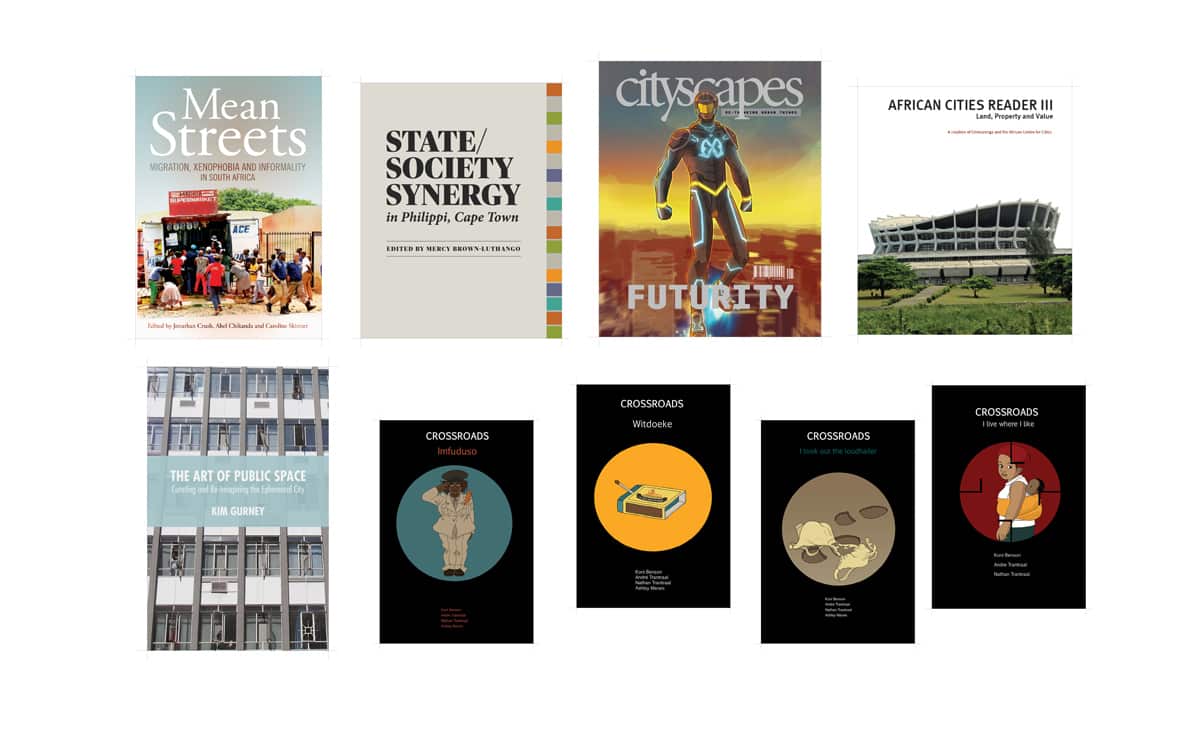
Celebrating a bumper year of publishing

The Design Bank 75 Harrington Street, Cape Town, South Africa

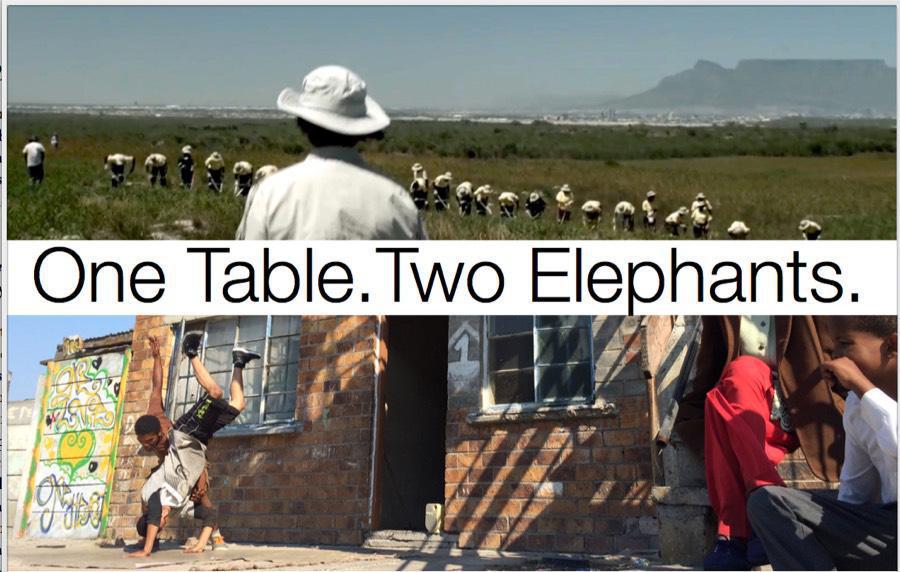
Throughout 2015, ACC researchers and associates have been involved in a wide range of activities including the release of the following publications: State/Society Synergy edited by Mercy Brown-Luthango; the African Cities Reader III, edited by Ntone Adjabe and Edgar Pieterse; Mean Streets: Migration, Xenophobia and Informality in SA by Jonathan Crush, Abel Chikanda and Caroline Skinner; The Art of Public Space: Curating and Re-imagining the Ephemeral City by Kim Gurney; The Crossroads series of comics (1-4) by Koni Benson and the Tantraal Brothers and Cityscapes #7: Futurity, edited by Tau Tavengwa and Sean O'Toole. Henrik Ernstson has been working on a documentary film project titled One Table Two Elephants which will be launching soon. We invite you to join us in celebrating these projects

Ghetto Trekk! Festival

Bonteheuwel

GHETTO TREKK! is a touring platform that is designed for visual art, music, film-making, fashion, design, curatorship and theatre, while providing a podium for individuals from a wide variety of communities to engage in meaningful conversations about the challenges that face our society – and to create social change to reflect, reconstruct & address the negative connotation associated with our communities. It provides an opportunity to profile Unfunded & Self-Start Artists / Crafters / Entrepreneurs / NGOs / CBOs / Activists…and exhibit their works in different communities. Date: Saturday 12 December 2015 Time: 09h00 – 21h00 Venue: Bontehuewel, Als Road connecting with Apricot Streets Google Map: -33.942233, 18.544701

Conference on Informality and the Urban Food System: Policy, practice and inclusive growth through a food lens

UCT Graduate School of Business, V&A Waterfront, Cape Town, Western Cape, South Africa

The Hungry Cities Partnership, a research programme at the African Centre for Cities, will hold a conference at the University of Cape Town’s Graduate School of Business on 15 February 2016. The Hungry Cities Partnership is a research partnership led by the African Centre for Cities at the University of Cape Town and the Balsillie School of International Affairs at Wilfrid Laurier University, Waterloo, Canada. Southern partner cities include Bangalore, Kingston, Maputo, Mexico City, Nairobi, Nanjing and Cape Town. The focus of this five-year research programme is a collaborative, inter-disciplinary research, training and knowledge mobilization programme on urbanization, food security, informality and inclusive growth. See the programme on the AFSUN website.

World-class city making in Africa – a view from Angola through the redevelopment of the Bay of Luanda

Seminar Room 1 Environmental & Geographical Sciences Building, UCT Upper Campus

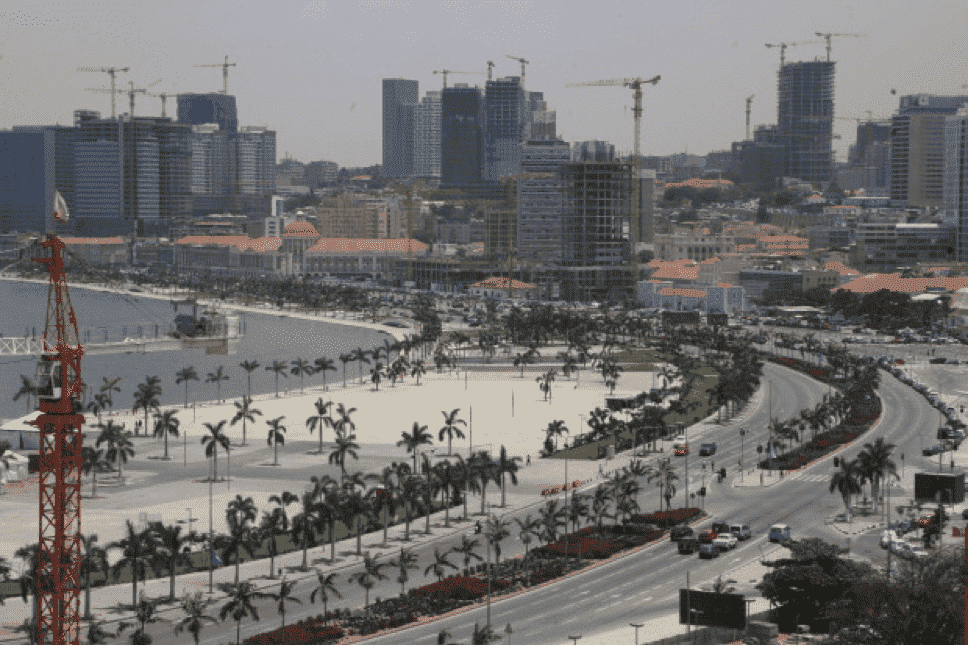
The ACC is happy to announce the first academic seminar for 2016. Dr Sylvia Croese will be presenting a paper entitled, 'World-class city making in Africa – a view from Angola through the redevelopment of the Bay of Luanda'. Abstract This paper examines the redevelopment of the Bay of Luanda as the epitome of a process of world-class city making that has unfolded in the capital of Angola since the end of the war in 2002. In an era that has been marked by ‘Africa’s rise’, concomitant efforts towards the building of world-class African cities have generated growing research interest over the past years. However, often these efforts are seen as uncritically adopted or externally imposed imitations of global/world city models. This paper aims to take world-class city making in Luanda seriously by analyzing its dynamics on its own terms, thereby moving beyond accounts that either romanticize or demonize this process. Based on an analysis of the history of the Bay of Luanda and the actors, discourse and imaginaries involved in its redevelopment, the paper makes three interrelated arguments. Firstly, it argues that while discourses underpinning world-class city making may reflect external or economic drivers, such as a desire to attract international investment, the case of Luanda shows that this practice can be equally or even more strongly driven by internal or political objectives, such as the pursuit of national legitimacy and domestic stability. From this follows that world-class city making in Africa does not necessarily have to be externally imposed, managed or financed, but that it can also be ‘home-grown’ and led by national rather than city governments, especially in resource-rich and authoritarian states like Angola. Finally, the paper argues that while the mainstream world-class city literature tends to focus on the futuristic nature of world-class city aesthetics, the redevelopment of the Bay of Luanda shows how efforts to revive modernist colonial architecture may equally underpin world-class city making. The study of world-class city making should then not only consider ‘introspective’ vs ‘extrospective’ politics but also ‘retrospective’ rationales or the ways in which utopia and nostalgia intersect across time and space. Bio Dr Sylvia Croese is a post-doctoral research fellow at the department of Sociology at the University of Cape Town. She has written and conducted extensive research in and on Angola as a researcher and consultant and has an interest in issues related to housing and urban development, local governance and electoral politics in Africa.

Rethinking Sustainable Cities: from slogan to implementation

Studio 5 Environmental and Geographical Sciences Building, Upper Campus, Cape Town, South Africa

ACC is excited to host representatives from Mistra Urban Futures who will be presenting on their forthcoming book entitled 'Rethinking Sustainable Cities: from slogan to implementation'. Overview Mistra Urban Futures’ forthcoming book provides detailed intellectual and practical histories of fair, green and accessible cities - three key urban characteristics chosen to symbolise the research centre’s approach, which utilises transdisciplinary co-production methodologies to promote sustainable urban solutions to specific local problems in each of its research platforms. These characteristics suffuse MUF’s work and Strategic Plan for 2016-19. David Simon will explain these agendas, focusing particularly on the origins and current nature of urban greening discourses and the challenges to implementation to ensure that they make a substantive as opposed to purely marginal or incremental difference. Sue Parnell will do likewise in relation to fair cities. Bios David Simon joined Mistra Urban Futures in September 2014 from Royal Holloway, University of London, where he still holds a part-time appointment as Professor of Development Geography. He was Head of theGeography Department there from 2008-11. He has vast international experience including grant-funded research on sub-Saharan Africa (especially Namibia, South Africa, Kenya and Ghana), Asia (especially Sri Lanka, Thailand and the Philippines), the UK and the USA. He has also served as specialist advisor to UN-HABITAT on cities and climate change, was one of only two academics on the UK Foreign and Commonwealth Office's specialist Africa Advisory Group prior to its disbandment, and has consulted for various NGOs and national and international development agencies. Furthermore, he is a Fellow of the UK Academy of Social Sciences. Susan Parnell’s early academic research was in the area of urban historical geography and focussed on the rise of racial residential segregation and the impact of colonialism on urbanisation and town planning in Sub-Saharan Africa. Since 1994 and democracy in South Africa her work has shifted to contemporary urban policy research (local government, poverty reduction and urban environmental justice). By its nature this research is not been purely academic, but has involved liasing with local and national government and international donors. Sue is also on the boards of several local NGOs concerned with poverty alleviation, sustainability and gender equity in post-apartheid South Africa. She serves on a number of national and international advisory research panels relating to urban reconstruction.

Visualising the Smart City

Seminar Room 1, EGS Building, Upper Campus, University of Cape Town University of Cape Town, Cape Town , Western Cape, South Africa

The ACC is happy to announce the first brown bag event for 2016: Visualising the Smart City with Professor Gillian Rose. Overview: Digital technologies of various kinds are now the means through which many cities are made visible and their spatialities negotiated. From casual snaps shared on Instagram to elaborate photo-realistic visualisations, digital technologies for making, distributing and viewing cities are more and more pervasive. This talk will explore some of the implications of that digitisation for the cultural politics of representation. What and who is being made visible in these digitally mediated cities, and how? What forms of urban materiality, spatiality and sociality are pictured and performed? And how should that picturing be theorised? The talk will suggest that cities and their inhabitants are increasingly visualised through a mobile fluid 'digital visuality', which is in fact evident across a number of visual practices. It will also propose that critical accounts of such visuality should focus less on readings of images and more on considering the (geographically-specific) flows and frictions of images. Bio: Gillian Rose is Professor of Cultural Geography at The Open University, UK, and a Fellow of the British Academy. Her current research interests focus on contemporary digital visual culture, urban spatialities and visual research methodologies. Her most recent funded research (with Monica Degen) examined how architects work with digital visualising technologies in designing urban redevelopment projects, and she is extending this work into the digital mediation of urban spaces more broadly, particularly in the context of 'smart cities'. As well as a number of papers on images and ways of seeing in urban and domestic spaces, the fourth edition of her bestselling Visual Methodologies (Sage) will be published in March 2016. Gillian blogs at visual/method/culture and tweets @ProfGillian.

Public talk and film screening in Namibia, and workshop on Global South Urbanism.

Namibia University of Science and Technology (NUST) , Namibia

Our film "One Table Two Elephants" (work in progress version) will be screened and I will hold a discussion afterwards on 22 March 2016 here at NUST - Namibia University of Science and Technology. Tomorrow we are organising a workshop on Global South Urbanism and I am giving a lunch lecture. My great hosts are Guillermo Delgado and Phillip Luhl at NUST who I met at Antipode workshop in Durban some cheap back. See programme below. Dr. Henrik Ernstson will be visiting the Namibia University of Science and Technology (NUST) as part of the Integrated Land Management Institute (ILMI) “Land, livelihoods and housing” programme. He will be engaging with staff, faculty and students of the university, as well as invited guests, on issues relating to urbanisation, environmental humanities, political ecology, and global south urbanism.   DRAFT PROGRAMME Tuesday March 22 9h00-15h00 CITY WALK With students from the Department of Architecture and Spatial Planning (DASP). Led by Guillermo Delgado and Phillip Lühl, with comments from Henrik Ernstson. The day will start at the foyer of the Department of Architecture and Spatial Planning with a brief introduction by Guillermo Delgado and Phillip Lühl. We will then leave with a mini-bus to different places in the city where we will walk through some of the key localities that define the socio-spatial condition of contemporary Windhoek. 18h00 FILM SCREENING: “One Table, Two Elephants” Venue: School of Mining auditorium, NUST Comments by Jacques Mushaandja (JMAC) and Phillip Lühl (DASP). Wednesday 23 March 8h30-12h30 Workshop of Global South Urbanisms: PART 1 Workshop with students and faculty from the various courses at DASP and DLPS: The workshop will be an opportunity to think together how research and teaching can be done in such a way that it "re-encounters" the African/Global South city. 12h30 LUNCH LECTURE: Global South Urbanisms and Situated Ecologies Venue: Foyer, Department of Architecture and Spatial Planning (DASP) In this talk Dr Henrik Ernstson will situate his work on urban ecology within the wider literature on Global South/postcolonial urbanism. This will include his studies in Cape Town on ways of knowing urban nature that deals with deep-seated knowledge politics that postapartheid and postcolonial cities requires us to face and which can be used as possible entry points to politicise urban environments. He will also describe a newly funded project on urban infrastructure and the politics around waste and sanitation management in Kampala, Uganda. As a theoretical underpinning, he will elaborate on a wider collaborative effort to build a Situated Urban Political Ecologies approach which also entails to support the building of critical urban scholarship among especially younger scholars of Africa with PhD courses and workshops. 14h30-17h00 Workshop of Global South Urbanisms: PART 2 Workshop with students and faculty from the various courses at DASP and DLPS: The workshop will be an opportunity to think together how research and teaching can be done in such a way that it "re-encounters" the African/Global South city.

Migration and African Cities

African Centre for Cities UCT Upper Campus, Cape Town, South Africa

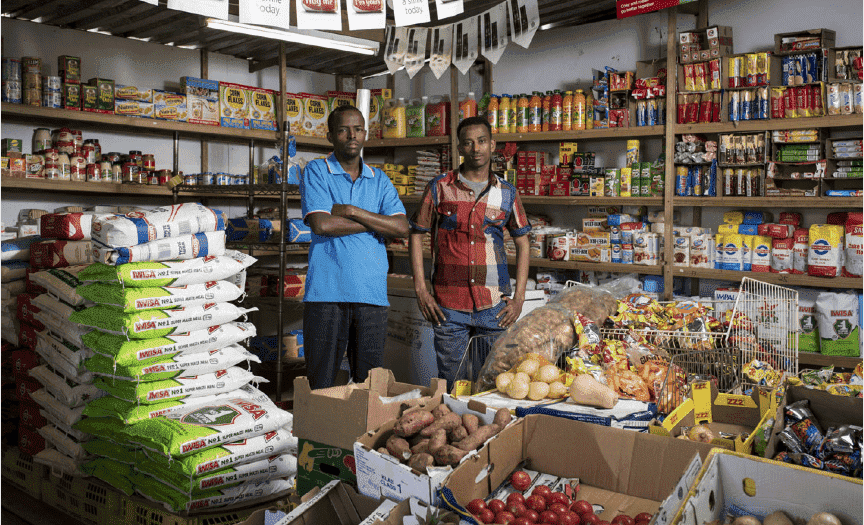
Oliver Bakewell, from the International Migration Institute, at the University of Oxford, will be on the changing relationship between migration, diasporas and global development in a fascinating Brown Bag titled, Migration and African Cities. Overview: This presentation will look at different aspects of the complex relationship migration and African cities, highlighting points of comparison and contrast with other regions of the world. Over the last century, rural-urban migration has played a major part in the growth of African cities, stimulating many debates about people’s cultural values and social practices changes as they move to urban areas. More recently, there has been much concern about the role of some African cities as a transit point prior to international migration - the city as a stepping stone. Two other aspects have been less explored. First, there is the role of cities as gateways into global markets, which rely on the mobility of African traders across the globe –most notably to China in recent years. Second, there is the movement across Africa that is creating distinctive ‘foreign’ populations to be found in cities in every part of the continent. Despite (or perhaps because of) having no policy, ‘integration’ is taking place and people are becoming part of new societies, contributing to the diversity and dynamism of many African cities.   About the Speaker: Oliver Bakewell’s research is centred on a broad interest in the changing relationship between migration, diasporas and global development. This encompasses a number of strands which he is following through various research activities: social theory and migration; examining the boundaries between ‘forced’ and ‘voluntary’ migration; mobility within sub-Saharan Africa; and African borderlands. He is the principal investigator for the project Theorising the Evolution of European Migration Systems (THEMIS) funded by NORFACE, which examines the conditions that encourage initial moves by pioneer migrants to become established migration system. He is also leading research into the formation of African diasporas within the African continent as part of the Oxford Diasporas Programme. In addition, he is undertaking ongoing research into the changing patterns of cross-border movements between Angola and western Zambia from the mid 1990s to today. Oliver is Co-Director and Senior Research Officer, and an Associate Professor at the International Migration Institute, University of Oxford holds a PhD and MSc in Development Studies from the University of Bath and a BA in Mathematics from the University of Cambridge. He has spent many years working with migrants and refugees as both a researcher and practitioner with a range of development and humanitarian NGOs. Immediately prior to joining ODID, he was Senior Researcher at the International NGO Training and Researcher Centre (INTRAC) in Oxford.


Conference: Giving Voice to Women Traders in the Informal Economy

Unnamed Venue Durban, South Africa

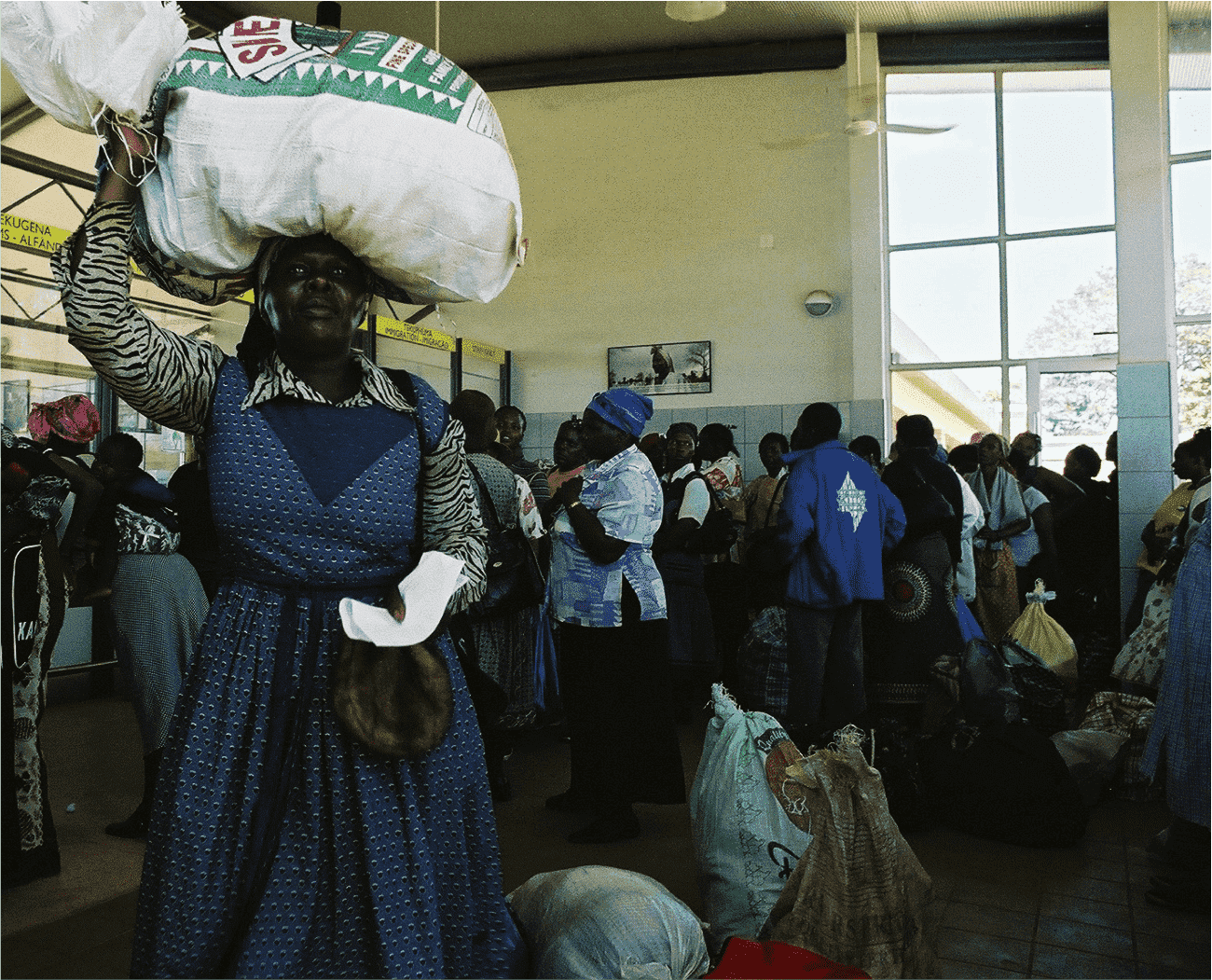
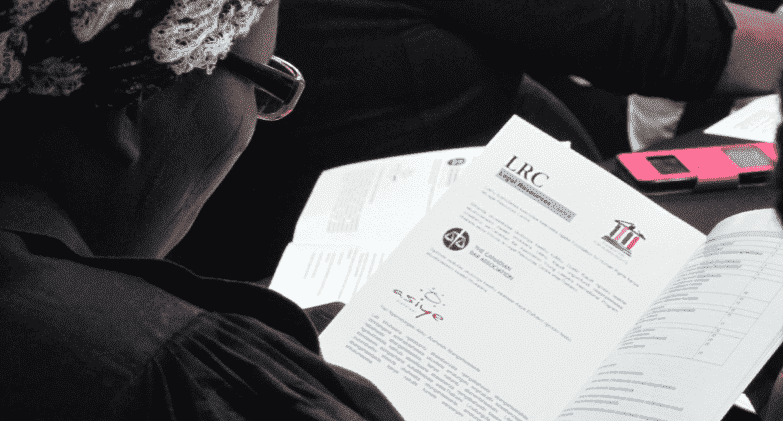
On 13 and 14 April 2016, a conference exclusively for women traders – believed to be the first of its kind in Durban – was held with the support of the Foundation for Human Rights and implemented by Legal Resources Centre (LRC) and Asiye eTafuleni (AeT).

The urban network strategy – the panacea for urban and developmental ills?

Seminar Room 1 Environmental & Geographical Sciences Building, UCT Upper Campus

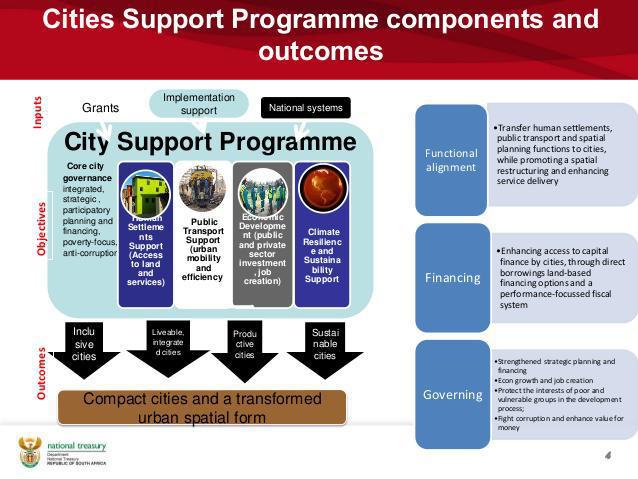
The ACC looks forward to generating a stimulating debate about the Cities Support Programme by hosting Dr Paul Hendler from iNSITE who will be presenting a paper co-authored by himself and Dr Arumugam Pillay (who will be present via Skype) entitled, 'The urban network strategy - the panacea for urban and developmental ills'. Abstract The National Treasury, through its Cities Support Programme (CSP), intends to get the eight metropolitan municipalities to run more efficiently, become financially and ecologically sustainable and give the majority of their citizens access to employment and public and social amenities. The weakness of the strategy is its assumption of the inevitable upswing in the global business cycle, the ability of cities to afford the infrastructure required for ongoing in-migration and the fact that it omits describing how broad-based, inclusive and eco-sensitive economic development with significant employment opportunities should happen. The missing factor in the programme is state intervention aimed at economic restructuring: it simply assumes that both job creation and green manufacturing will happen without explaining how. Instead, the paper argues that the challenge is to address the broader political economy context of sluggish growth, low wages and high unemployment, in order to support key CSP objectives. In this regard, the paper identifies specifically the need for municipalities as public sector developers to directly support2 improved quality of life and work opportunities for both the urban and rural working classes, and for the state to stem the outflow of funds from the country, re-direct investment funds away from finance, insurance and real estate (the jobless growth sectors) and into manufacturing and implement a coherent rural development based on technical and financial support for feasible ‘accumulation from below’ by current smallholder farmers and households in traditional areas. Bio Dr Paul Hendler is an extraordinary senior lecturer at the University of Stellenbosch's School of Public Management, and a founder of iNSITE that is working (through the Sustainability Institute, Stellenbosch University) on the formulation of a financial mechanism for the investment of a civil society green savings fund in South Africa. Hendler has been researching the intersection of housing and the political economy for over 30 years in South Africa, with an emphasis on critiquing neoliberal development. Dr Arumugam (Morgan) Pillay is CEO of The Ekurhuleni Development Company. He is responsible for delivery of finance to and Social Housing. Pillay has almost 25 years of experience in Infrastructure Development and Finance within the government sector. Having worked at the National Housing Finance Corporation, Standard Corporate and Merchant Bank, and advising national and provincial government departments, he is one of South Africa’s housing finance experts that has both theoretical and practical experience in the sector.