Visualising the Smart City

Seminar Room 1, EGS Building, Upper Campus, University of Cape Town University of Cape Town, Cape Town , Western Cape, South Africa

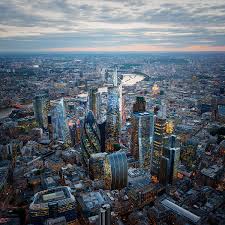
The ACC is happy to announce the first brown bag event for 2016: Visualising the Smart City with Professor Gillian Rose. Overview: Digital technologies of various kinds are now the means through which many cities are made visible and their spatialities negotiated. From casual snaps shared on Instagram to elaborate photo-realistic visualisations, digital technologies for making, distributing and viewing cities are more and more pervasive. This talk will explore some of the implications of that digitisation for the cultural politics of representation. What and who is being made visible in these digitally mediated cities, and how? What forms of urban materiality, spatiality and sociality are pictured and performed? And how should that picturing be theorised? The talk will suggest that cities and their inhabitants are increasingly visualised through a mobile fluid 'digital visuality', which is in fact evident across a number of visual practices. It will also propose that critical accounts of such visuality should focus less on readings of images and more on considering the (geographically-specific) flows and frictions of images. Bio: Gillian Rose is Professor of Cultural Geography at The Open University, UK, and a Fellow of the British Academy. Her current research interests focus on contemporary digital visual culture, urban spatialities and visual research methodologies. Her most recent funded research (with Monica Degen) examined how architects work with digital visualising technologies in designing urban redevelopment projects, and she is extending this work into the digital mediation of urban spaces more broadly, particularly in the context of 'smart cities'. As well as a number of papers on images and ways of seeing in urban and domestic spaces, the fourth edition of her bestselling Visual Methodologies (Sage) will be published in March 2016. Gillian blogs at visual/method/culture and tweets @ProfGillian.

Public talk and film screening in Namibia, and workshop on Global South Urbanism.

Namibia University of Science and Technology (NUST) , Namibia

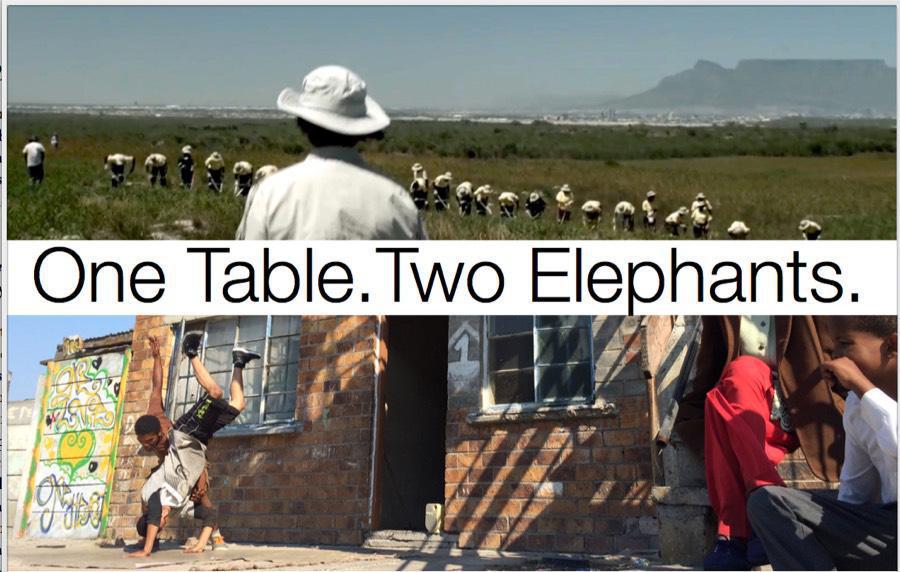
Our film "One Table Two Elephants" (work in progress version) will be screened and I will hold a discussion afterwards on 22 March 2016 here at NUST - Namibia University of Science and Technology. Tomorrow we are organising a workshop on Global South Urbanism and I am giving a lunch lecture. My great hosts are Guillermo Delgado and Phillip Luhl at NUST who I met at Antipode workshop in Durban some cheap back. See programme below. Dr. Henrik Ernstson will be visiting the Namibia University of Science and Technology (NUST) as part of the Integrated Land Management Institute (ILMI) “Land, livelihoods and housing” programme. He will be engaging with staff, faculty and students of the university, as well as invited guests, on issues relating to urbanisation, environmental humanities, political ecology, and global south urbanism.   DRAFT PROGRAMME Tuesday March 22 9h00-15h00 CITY WALK With students from the Department of Architecture and Spatial Planning (DASP). Led by Guillermo Delgado and Phillip Lühl, with comments from Henrik Ernstson. The day will start at the foyer of the Department of Architecture and Spatial Planning with a brief introduction by Guillermo Delgado and Phillip Lühl. We will then leave with a mini-bus to different places in the city where we will walk through some of the key localities that define the socio-spatial condition of contemporary Windhoek. 18h00 FILM SCREENING: “One Table, Two Elephants” Venue: School of Mining auditorium, NUST Comments by Jacques Mushaandja (JMAC) and Phillip Lühl (DASP). Wednesday 23 March 8h30-12h30 Workshop of Global South Urbanisms: PART 1 Workshop with students and faculty from the various courses at DASP and DLPS: The workshop will be an opportunity to think together how research and teaching can be done in such a way that it "re-encounters" the African/Global South city. 12h30 LUNCH LECTURE: Global South Urbanisms and Situated Ecologies Venue: Foyer, Department of Architecture and Spatial Planning (DASP) In this talk Dr Henrik Ernstson will situate his work on urban ecology within the wider literature on Global South/postcolonial urbanism. This will include his studies in Cape Town on ways of knowing urban nature that deals with deep-seated knowledge politics that postapartheid and postcolonial cities requires us to face and which can be used as possible entry points to politicise urban environments. He will also describe a newly funded project on urban infrastructure and the politics around waste and sanitation management in Kampala, Uganda. As a theoretical underpinning, he will elaborate on a wider collaborative effort to build a Situated Urban Political Ecologies approach which also entails to support the building of critical urban scholarship among especially younger scholars of Africa with PhD courses and workshops. 14h30-17h00 Workshop of Global South Urbanisms: PART 2 Workshop with students and faculty from the various courses at DASP and DLPS: The workshop will be an opportunity to think together how research and teaching can be done in such a way that it "re-encounters" the African/Global South city.

Migration and African Cities

African Centre for Cities UCT Upper Campus, Cape Town, South Africa

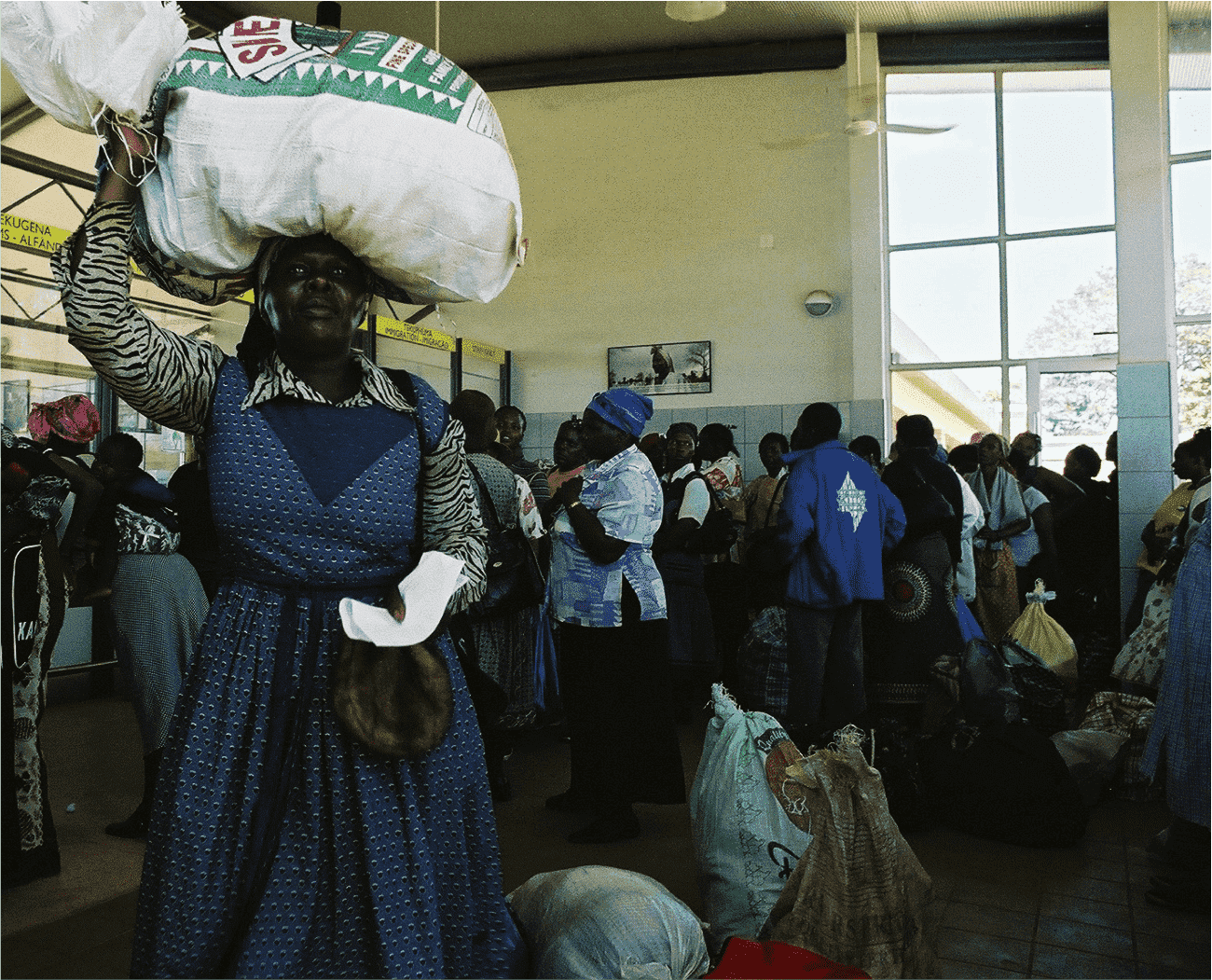
Oliver Bakewell, from the International Migration Institute, at the University of Oxford, will be on the changing relationship between migration, diasporas and global development in a fascinating Brown Bag titled, Migration and African Cities. Overview: This presentation will look at different aspects of the complex relationship migration and African cities, highlighting points of comparison and contrast with other regions of the world. Over the last century, rural-urban migration has played a major part in the growth of African cities, stimulating many debates about people’s cultural values and social practices changes as they move to urban areas. More recently, there has been much concern about the role of some African cities as a transit point prior to international migration - the city as a stepping stone. Two other aspects have been less explored. First, there is the role of cities as gateways into global markets, which rely on the mobility of African traders across the globe –most notably to China in recent years. Second, there is the movement across Africa that is creating distinctive ‘foreign’ populations to be found in cities in every part of the continent. Despite (or perhaps because of) having no policy, ‘integration’ is taking place and people are becoming part of new societies, contributing to the diversity and dynamism of many African cities.   About the Speaker: Oliver Bakewell’s research is centred on a broad interest in the changing relationship between migration, diasporas and global development. This encompasses a number of strands which he is following through various research activities: social theory and migration; examining the boundaries between ‘forced’ and ‘voluntary’ migration; mobility within sub-Saharan Africa; and African borderlands. He is the principal investigator for the project Theorising the Evolution of European Migration Systems (THEMIS) funded by NORFACE, which examines the conditions that encourage initial moves by pioneer migrants to become established migration system. He is also leading research into the formation of African diasporas within the African continent as part of the Oxford Diasporas Programme. In addition, he is undertaking ongoing research into the changing patterns of cross-border movements between Angola and western Zambia from the mid 1990s to today. Oliver is Co-Director and Senior Research Officer, and an Associate Professor at the International Migration Institute, University of Oxford holds a PhD and MSc in Development Studies from the University of Bath and a BA in Mathematics from the University of Cambridge. He has spent many years working with migrants and refugees as both a researcher and practitioner with a range of development and humanitarian NGOs. Immediately prior to joining ODID, he was Senior Researcher at the International NGO Training and Researcher Centre (INTRAC) in Oxford.

Conference: Giving Voice to Women Traders in the Informal Economy

Unnamed Venue Durban, South Africa

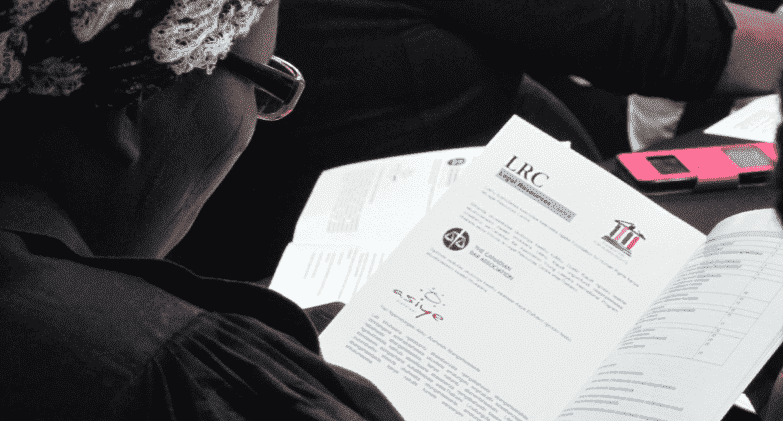
On 13 and 14 April 2016, a conference exclusively for women traders – believed to be the first of its kind in Durban – was held with the support of the Foundation for Human Rights and implemented by Legal Resources Centre (LRC) and Asiye eTafuleni (AeT).

The urban network strategy – the panacea for urban and developmental ills?

Seminar Room 1 Environmental & Geographical Sciences Building, UCT Upper Campus

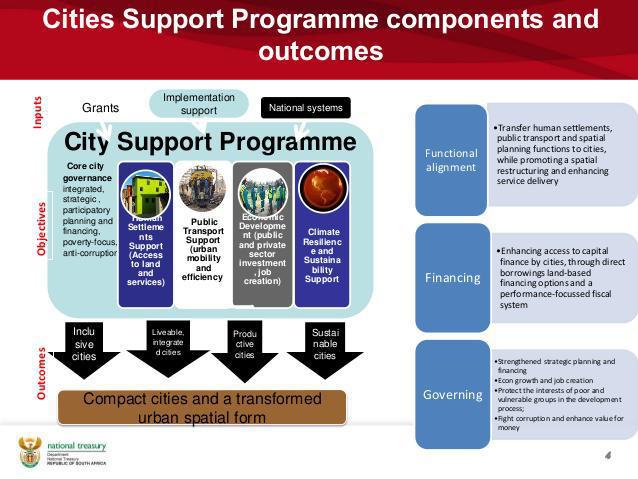
The ACC looks forward to generating a stimulating debate about the Cities Support Programme by hosting Dr Paul Hendler from iNSITE who will be presenting a paper co-authored by himself and Dr Arumugam Pillay (who will be present via Skype) entitled, 'The urban network strategy - the panacea for urban and developmental ills'. Abstract The National Treasury, through its Cities Support Programme (CSP), intends to get the eight metropolitan municipalities to run more efficiently, become financially and ecologically sustainable and give the majority of their citizens access to employment and public and social amenities. The weakness of the strategy is its assumption of the inevitable upswing in the global business cycle, the ability of cities to afford the infrastructure required for ongoing in-migration and the fact that it omits describing how broad-based, inclusive and eco-sensitive economic development with significant employment opportunities should happen. The missing factor in the programme is state intervention aimed at economic restructuring: it simply assumes that both job creation and green manufacturing will happen without explaining how. Instead, the paper argues that the challenge is to address the broader political economy context of sluggish growth, low wages and high unemployment, in order to support key CSP objectives. In this regard, the paper identifies specifically the need for municipalities as public sector developers to directly support2 improved quality of life and work opportunities for both the urban and rural working classes, and for the state to stem the outflow of funds from the country, re-direct investment funds away from finance, insurance and real estate (the jobless growth sectors) and into manufacturing and implement a coherent rural development based on technical and financial support for feasible ‘accumulation from below’ by current smallholder farmers and households in traditional areas. Bio Dr Paul Hendler is an extraordinary senior lecturer at the University of Stellenbosch's School of Public Management, and a founder of iNSITE that is working (through the Sustainability Institute, Stellenbosch University) on the formulation of a financial mechanism for the investment of a civil society green savings fund in South Africa. Hendler has been researching the intersection of housing and the political economy for over 30 years in South Africa, with an emphasis on critiquing neoliberal development. Dr Arumugam (Morgan) Pillay is CEO of The Ekurhuleni Development Company. He is responsible for delivery of finance to and Social Housing. Pillay has almost 25 years of experience in Infrastructure Development and Finance within the government sector. Having worked at the National Housing Finance Corporation, Standard Corporate and Merchant Bank, and advising national and provincial government departments, he is one of South Africa’s housing finance experts that has both theoretical and practical experience in the sector.

Understanding Urban Governance: Entry Points for Climate Science

You are invited to attend an FCFA online seminar on Understanding Urban Governance: Entry Points for Climate Science  Friday, April 15, 2016 from 2:00 PM - 4:00 PM (SAST) Online live web cast and in-person at Park Inn Radison, Newlands, Cape Town.  Registration instructions To attend online or in-person, please follow this link to register. For online attendees: A URL for the webcast will be emailed to you an hour before the event starts. For in-person attendees: Online registration does not guarantee a seat. Once registered, the FCFA team will be in touch to confirm availability of seating. Description: This seminar presents a critical discussion on approaches for understanding the governance structures that shape medium-term development decisions taken in various African contexts and at various scales (e.g. city region, catchment, and national). More specifically, the session aims to stimulate engagement and debate around these approaches to understanding urban governance and decision-making pathways, and finding entry points for climate information to inform development decisions at the city-region scale. The aim is to sharpen the theoretical underpinnings and the practical application of these approaches within the Future Climate for Africa programme. Chair: Stef Raubenheimer – SouthSouthNorth Speakers: Dr Hannah Baleta – Pegasys Consulting Prof Dianne Scott – University of Cape Town, African Centre for Cities Dr Glibert Siame – University of Zambia Dr Tasila Banda – Zambia EC-LEDS Programme Discussant: Prof Sue Parnell – University of Cape Town, African Centre for Cities The seminar is structured around a panel discussion that will: Present two approaches to understanding urban governance and decision-making; Apply these to the case study of the Lusaka city-region; Field critical feedback from practitioners working on climate resilience in Lusaka; and Close with reflections from the discussant and open Q&A session with in-person and online attendees. Share this event on Facebook and Twitter. We hope you can make it! Best wishes Future Climate for Africa and FRACTAL

Realising the Just City

Studio 1 Environmental and Geographical Sciences Building, Upper Campus, UCT, Cape Town, South Africa

The African Centre for Cities in collaboration with Mistra Urban Futures is hosting a workshop on Realising the Just City. The signing of the Sustainable Development Goals in 2015 demonstrated that there is an increasing global pledge to foster just cities that are ‘inclusive, safe, resilient and sustainable’. Although there is a shared commitment to socio-spatial justice, how this can be realised is more complicated. This workshop aims to draw representatives from academic institutions, civil society and the public sector together to discuss how just cities are understood, and how to achieve them. Mistra Urban Futures is made up of five local interaction platforms in four cities around the world: Cape Town (based at ACC), Gothenburg, Greater Manchester, Kisumu and Malmö. The purpose is to develop coproduced, collaborative and comparative research across the cities. This workshop forms part of this research process. For more information, contact Rike Sitas on rike.sitas@uct.ac.za.

‘A House for Dead People’: Memory and spatial transformation in Red Location, Port Elizabeth

Studio 3 ENGEO Building, Upper Campus. University of Cape Town,, Cape Town, Western Cape, South Africa

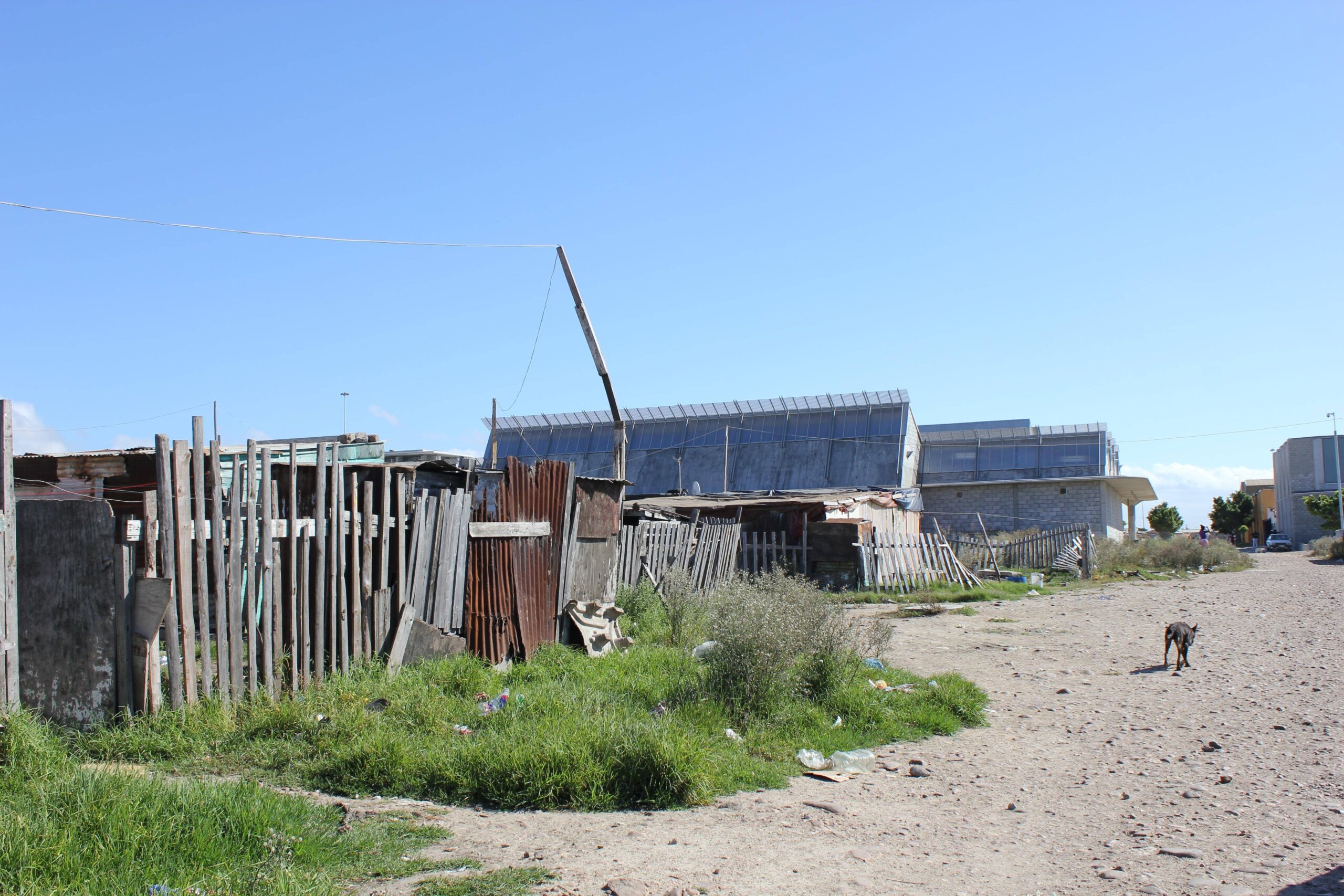
ACC is pleased to be hosting the 2016 Ray Pahl Fellow in Urban Studies, Dr Naomi Roux, who will be presenting a paper entitled, 'A House for Dead People: Memory and spatial transformation in Red Location, Port Elizabeth'. Abstract Following the end of apartheid in 1994, several new projects of public memory and urban development were established in many South African cities. In Port Elizabeth, the Red Location Museum was opened in 2006, in a century-old informal settlement with strong histories of resistance activity. The museum was intended to acknowledge the area’s contribution to the liberation struggle, and contribute to dismantling apartheid urban geographies by producing a tourist and cultural economy. However, the project was highly contested from its inception by residents who felt that the priority for the neighbourhood should be housing and service delivery. Major housing-related protests erupted on the museums doorstep between 2003 and 2005, and in late 2013 the new cultural precinct was closed down indefinitely. This paper examines the politics and controversies surrounding the Red Location developments between 1997-2013, using this case study to consider the ways in which the protests around the museum are deeply rooted in historical and political histories which are made visible through residents’ radical claiming of ownership of the museum building. Bio Naomi Roux is an urbanist and visual historian, with a particular interest in the relationships between collective memory, the politics of public space and urban transformation. She holds the Ray Pahl Fellowship in Urban Studies at the University of Cape Town’s African Centre for Cities for 2016. Prior to this she was the 2014-2015 Mellon Fellow in Cities and Humanities at LSE Cities. Her recent PhD (Birkbeck, 2015) focused on the politics of collective memory in the context of the changing post-apartheid city, using Nelson Mandela Bay in South Africa’s Eastern Cape as a case study. Previous work includes published research and exhibition projects focusing on heritage, memory and place-making in sites including Kliptown, Soweto; Yeoville, Johannesburg; and ‘Little Addis’ in central Johannesburg.

Revaluing the City

UCT Graduate School of Business, V&A Waterfront, Cape Town, Western Cape, South Africa

The ACC is hosting Study Space IX on behalf of the Center for the Comparative Study of Metropolitan Growth in the College of Law at Georgia State University, Atlanta, USA.

Democratic Practices of Unequal Geographies

Seminar Room 1, EGS Building, Upper Campus, University of Cape Town University of Cape Town, Cape Town , Western Cape, South Africa

  The 2016 Annual ACC Seminar/PhD Course on Democratic Practices in Cape Town: The Aesthetical and the Political of Unequal Geographies:  Reading across Political Philosophy and Global South Urbanism July 4-8, 2016, Seminar Room 1, EGS Building, Upper Campus, University of Cape Town. Organised by Henrik Ernstson and Andrés Henao Castro. The seminar is given by the African Centre for Cities (ACC) at the University of Cape Town. To apply, please send  your letter of interest no later than 6 May 2016 to Henrik Ernstson (henrikDOTernstsonATuctDOTacDOTza). We hope the seminar with its readings and discussions can contribute new angles and perspectives to your research. More information on the 2016 theme, reading and seminar methodology is given below. Rationale for 2016: Aesthetics and politics! The task is urgent and profound: How to make sense of rapid urbanization across Africa and the global South, while (re)turning to explicitly think about emancipatory politics? What does the political mean in these contexts? What constitutes properly democratic practices of equality and freedom? What can we learn by rubbing political theory against urban studies of ‘the South’? This annual seminar series emerges out of an interest to put into conversation political philosophy and global south urbanism. Importantly, our objective is not that of supplementing a theoretical abstraction (e.g. ‘the political’) with some kind of concrete spatiality. Rather, we are interested in the global south as an epistemological position and a field of experience that has specific contemporary sociomaterial realities that we hope can trouble and re-new both radical urban theory and political theory. Following last year’s seminar, in which we related our readings of Plato to Rancière with critical urban studies of the South, this year we gather a seminar that problematizes the relationship between the political and the aesthetic. This puts more focus on artists and activists that intervene materially and socially in the fabric of urban spaces, and it brings us towards the political in a quite specific way. More concretely we aim to relate questions around what Jacques Rancière calls the distribution of the sensible with interventions in urban spaces. We aim to push the seminar to think about the representation and troubling of an aesthetic regime from the perspective of how it has become embedded in urban and non-urban settings. We will exploit texts that have linked theoretically the political with aesthetic regimes and how this translates troubles and can be re-thought in the context of the global south. We want to ask, for example: How does the symbolic remaking of a space through an artistic intervention trouble the otherwise naturalization of that space as reducible to its presumable functions (i.e., market values)? What is the relationship between this interruption of the function of a space and that of politics? How can artistic interventions force the community to confront that which it disavows? What kind of conflict do such forms of expressing the senses create within urban spaces? How are those urban spaces transgressed, circumvented, rearranged, reimagined, etc., so as to trouble the very limits of what can be perceived and sensed in the city? How do these spatial contestations take place today, under what kind of aesthetic practices? And how could this possibly lead to processes of political subjectivization, a politicization of collectivities, bodies, and spaces in the name of equality? In light of 2015 and the student movement of South Africa, questions of democracy, decolonization and profound emancipatory change have brought these questions into even sharper focus. And this does not mean to forget other recent women, workers and community rebellions, nor the slow-grinding and incremental institutional changes of empowerment that is also ongoing. Indeed, we hope this seminar/course will provide a chance for all participants to think about these recent events and processes. We hope it will contribute material and discussions through which you can re-think and sharpen your own research projects. Seminar Methodology Our seminar focuses on readings of political theory that interrogate the relationship between the aesthetical and the political, across a variety of philosophical approaches. Yet it explores such relationship with a particular and rather unusual emphasis on urban and non-urban geographies of the global south. We want to discuss questions about representation, intervention, performativity, sensuousness, visibility, audibility, occupation, inscription, by placing these theories within uneven geographies that should trouble existing theoretical findings and help us to reformulate our research questions, methodologies approaches and theoretical assumptions. In the readings we have chosen to place more emphasis on political philosophy as these are less known to most of us, and since this makes best use of Dr. Andrés Heano Castro’s visit here at ACC in Cape Town. The texts on global south urbanism will bring in contextual and theoretical aspects into the seminar, but we also rely on participants’ wider readings and their own research on urbanization, global south and decolonization. Below you will find the current list of readings, which will be updated. Schedule and Readings We will meet for 3 hours every day. Andrés will talk for the first 30 minutes, in order to provide context for the theoretical discussion: what is at stake in the texts, where does the text stand in relation to intellectual debates, and summarize main points, etc. Then we open the floor for discussion in which the global south urbanism literature will enter as ways to unpack and think about the seminar questions, how our empirical work are helped by these texts, while challenging them and ‘speaking back’. Through this we will have a chance to re-think our own research and case studies. For each day we will provide questions to orient your reading, and serve as starting point for our discussions. Based on this you can write down and raise your own questions to further give direction to the seminar. We will have a short 10 minute break two hours into the seminar and then we will return for another 45 minutes of discussion. Coffee and tea will be served during the seminar. (NB: Global south urbanism reading and questions will be complemented later alongside points 1-3 in the...


Free