Realising the Just City

Studio 1 Environmental and Geographical Sciences Building, Upper Campus, UCT, Cape Town, South Africa

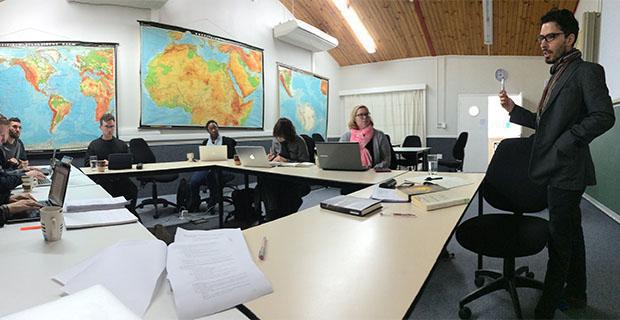
The African Centre for Cities in collaboration with Mistra Urban Futures is hosting a workshop on Realising the Just City. The signing of the Sustainable Development Goals in 2015 demonstrated that there is an increasing global pledge to foster just cities that are ‘inclusive, safe, resilient and sustainable’. Although there is a shared commitment to socio-spatial justice, how this can be realised is more complicated. This workshop aims to draw representatives from academic institutions, civil society and the public sector together to discuss how just cities are understood, and how to achieve them. Mistra Urban Futures is made up of five local interaction platforms in four cities around the world: Cape Town (based at ACC), Gothenburg, Greater Manchester, Kisumu and Malmö. The purpose is to develop coproduced, collaborative and comparative research across the cities. This workshop forms part of this research process. For more information, contact Rike Sitas on rike.sitas@uct.ac.za.

‘A House for Dead People’: Memory and spatial transformation in Red Location, Port Elizabeth

Studio 3 ENGEO Building, Upper Campus. University of Cape Town,, Cape Town, Western Cape, South Africa

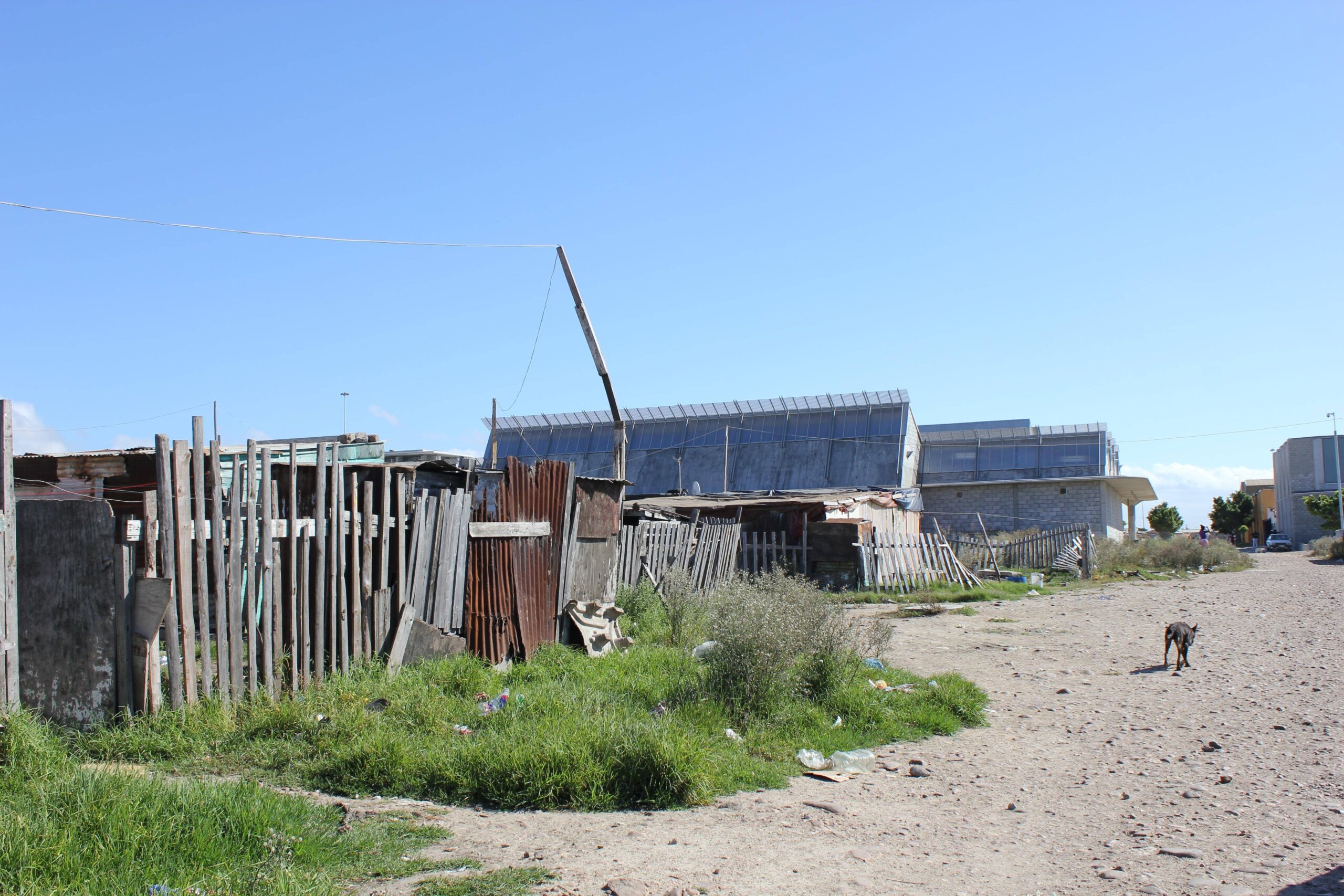
ACC is pleased to be hosting the 2016 Ray Pahl Fellow in Urban Studies, Dr Naomi Roux, who will be presenting a paper entitled, 'A House for Dead People: Memory and spatial transformation in Red Location, Port Elizabeth'. Abstract Following the end of apartheid in 1994, several new projects of public memory and urban development were established in many South African cities. In Port Elizabeth, the Red Location Museum was opened in 2006, in a century-old informal settlement with strong histories of resistance activity. The museum was intended to acknowledge the area’s contribution to the liberation struggle, and contribute to dismantling apartheid urban geographies by producing a tourist and cultural economy. However, the project was highly contested from its inception by residents who felt that the priority for the neighbourhood should be housing and service delivery. Major housing-related protests erupted on the museums doorstep between 2003 and 2005, and in late 2013 the new cultural precinct was closed down indefinitely. This paper examines the politics and controversies surrounding the Red Location developments between 1997-2013, using this case study to consider the ways in which the protests around the museum are deeply rooted in historical and political histories which are made visible through residents’ radical claiming of ownership of the museum building. Bio Naomi Roux is an urbanist and visual historian, with a particular interest in the relationships between collective memory, the politics of public space and urban transformation. She holds the Ray Pahl Fellowship in Urban Studies at the University of Cape Town’s African Centre for Cities for 2016. Prior to this she was the 2014-2015 Mellon Fellow in Cities and Humanities at LSE Cities. Her recent PhD (Birkbeck, 2015) focused on the politics of collective memory in the context of the changing post-apartheid city, using Nelson Mandela Bay in South Africa’s Eastern Cape as a case study. Previous work includes published research and exhibition projects focusing on heritage, memory and place-making in sites including Kliptown, Soweto; Yeoville, Johannesburg; and ‘Little Addis’ in central Johannesburg.

Revaluing the City

UCT Graduate School of Business, V&A Waterfront, Cape Town, Western Cape, South Africa

The ACC is hosting Study Space IX on behalf of the Center for the Comparative Study of Metropolitan Growth in the College of Law at Georgia State University, Atlanta, USA.

Democratic Practices of Unequal Geographies

Seminar Room 1, EGS Building, Upper Campus, University of Cape Town University of Cape Town, Cape Town , Western Cape, South Africa

  The 2016 Annual ACC Seminar/PhD Course on Democratic Practices in Cape Town: The Aesthetical and the Political of Unequal Geographies:  Reading across Political Philosophy and Global South Urbanism July 4-8, 2016, Seminar Room 1, EGS Building, Upper Campus, University of Cape Town. Organised by Henrik Ernstson and Andrés Henao Castro. The seminar is given by the African Centre for Cities (ACC) at the University of Cape Town. To apply, please send  your letter of interest no later than 6 May 2016 to Henrik Ernstson (henrikDOTernstsonATuctDOTacDOTza). We hope the seminar with its readings and discussions can contribute new angles and perspectives to your research. More information on the 2016 theme, reading and seminar methodology is given below. Rationale for 2016: Aesthetics and politics! The task is urgent and profound: How to make sense of rapid urbanization across Africa and the global South, while (re)turning to explicitly think about emancipatory politics? What does the political mean in these contexts? What constitutes properly democratic practices of equality and freedom? What can we learn by rubbing political theory against urban studies of ‘the South’? This annual seminar series emerges out of an interest to put into conversation political philosophy and global south urbanism. Importantly, our objective is not that of supplementing a theoretical abstraction (e.g. ‘the political’) with some kind of concrete spatiality. Rather, we are interested in the global south as an epistemological position and a field of experience that has specific contemporary sociomaterial realities that we hope can trouble and re-new both radical urban theory and political theory. Following last year’s seminar, in which we related our readings of Plato to Rancière with critical urban studies of the South, this year we gather a seminar that problematizes the relationship between the political and the aesthetic. This puts more focus on artists and activists that intervene materially and socially in the fabric of urban spaces, and it brings us towards the political in a quite specific way. More concretely we aim to relate questions around what Jacques Rancière calls the distribution of the sensible with interventions in urban spaces. We aim to push the seminar to think about the representation and troubling of an aesthetic regime from the perspective of how it has become embedded in urban and non-urban settings. We will exploit texts that have linked theoretically the political with aesthetic regimes and how this translates troubles and can be re-thought in the context of the global south. We want to ask, for example: How does the symbolic remaking of a space through an artistic intervention trouble the otherwise naturalization of that space as reducible to its presumable functions (i.e., market values)? What is the relationship between this interruption of the function of a space and that of politics? How can artistic interventions force the community to confront that which it disavows? What kind of conflict do such forms of expressing the senses create within urban spaces? How are those urban spaces transgressed, circumvented, rearranged, reimagined, etc., so as to trouble the very limits of what can be perceived and sensed in the city? How do these spatial contestations take place today, under what kind of aesthetic practices? And how could this possibly lead to processes of political subjectivization, a politicization of collectivities, bodies, and spaces in the name of equality? In light of 2015 and the student movement of South Africa, questions of democracy, decolonization and profound emancipatory change have brought these questions into even sharper focus. And this does not mean to forget other recent women, workers and community rebellions, nor the slow-grinding and incremental institutional changes of empowerment that is also ongoing. Indeed, we hope this seminar/course will provide a chance for all participants to think about these recent events and processes. We hope it will contribute material and discussions through which you can re-think and sharpen your own research projects. Seminar Methodology Our seminar focuses on readings of political theory that interrogate the relationship between the aesthetical and the political, across a variety of philosophical approaches. Yet it explores such relationship with a particular and rather unusual emphasis on urban and non-urban geographies of the global south. We want to discuss questions about representation, intervention, performativity, sensuousness, visibility, audibility, occupation, inscription, by placing these theories within uneven geographies that should trouble existing theoretical findings and help us to reformulate our research questions, methodologies approaches and theoretical assumptions. In the readings we have chosen to place more emphasis on political philosophy as these are less known to most of us, and since this makes best use of Dr. Andrés Heano Castro’s visit here at ACC in Cape Town. The texts on global south urbanism will bring in contextual and theoretical aspects into the seminar, but we also rely on participants’ wider readings and their own research on urbanization, global south and decolonization. Below you will find the current list of readings, which will be updated. Schedule and Readings We will meet for 3 hours every day. Andrés will talk for the first 30 minutes, in order to provide context for the theoretical discussion: what is at stake in the texts, where does the text stand in relation to intellectual debates, and summarize main points, etc. Then we open the floor for discussion in which the global south urbanism literature will enter as ways to unpack and think about the seminar questions, how our empirical work are helped by these texts, while challenging them and ‘speaking back’. Through this we will have a chance to re-think our own research and case studies. For each day we will provide questions to orient your reading, and serve as starting point for our discussions. Based on this you can write down and raise your own questions to further give direction to the seminar. We will have a short 10 minute break two hours into the seminar and then we will return for another 45 minutes of discussion. Coffee and tea will be served during the seminar. (NB: Global south urbanism reading and questions will be complemented later alongside points 1-3 in the...


Free

Public Art and the Power of Place

Cape Town Library Cnr Parade and Darling Streets, Cape Town

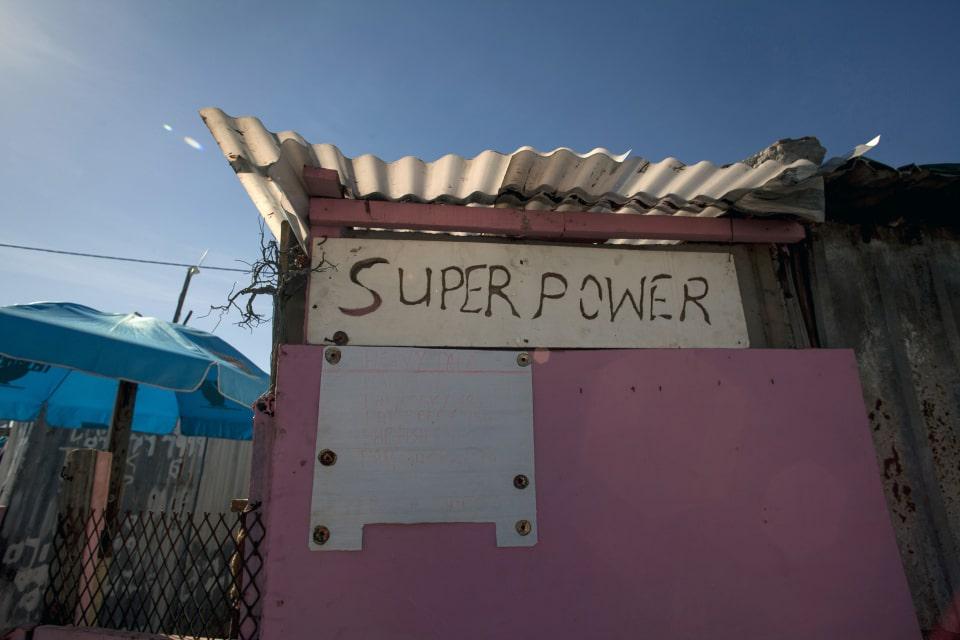
start again the new road at dawn. yesterday’s road has led to yesterday’s destination. today is a new chaos. a new journey. a new city. needing new paths. and new standards. Ben Okri - The Ruin and The Forest Cape Town remains stubbornly segregated, with a large portion of the population living in undesirable conditions. Access to resources is still skewed towards the formal art market based in the City Bowl. Despite this, there are numerous people engaging in critical and creative ways of re-articulating the potential of the city through art. Increasingly, public-facing art is playing a central role in imagining a free, inspired and inclusive reality. Public Art and the Power of Place, initiated by the African Centre for Cities at UCT, with support from the National Lotteries Commission, emerged as an experiment in finding new ways of representing and interconnecting with socio-political urban issues in Cape Town. It involved supporting seven public art projects in Cape Town’s townships in 2015. From Khayelitsha to Bonteheuwel, optimistic and determined individuals explored the significance and impossibilities of place outside the City Bowl. The ACC is excited to invite you to the closing event of the project at the Cape Town Library (Corner Darling and Parade Streets), where the stories and reflections of these projects will be used to ignite an open and constructive conversation about the present and the future of public art within the context of Cape Town. Through dialogue, workshops and an archival exhibition the two-day intervention builds a platform for a collective exploration of publicness. An African Centre for Cities project with guest curators Valeria Geselev and Naz Saldulker. See the attached programme, check out the Facebook event or contact powerofplace@uct.ac.za for more details. PoP_Programme_18July   FUNDED BY: The NLC relies on funds from the proceeds of the National Lottery. The Lotteries Act guides the way in which NLC funding may be allocated. The intention of NLC funding is to make a difference to the lives of all South Africans, especially those more vulnerable and to improve the sustainability of the beneficiary organisations. Available funds are distributed to registered and qualifying non-profit organisations in the fields of charities; arts, culture and national heritage; and sport and recreation. By placing its emphasis on areas of greatest need and potential, the NLC contributes to South Africa’s development.

Kigali and Rwanda: reflections on a capital city and its territory

African Centre for Cities UCT Upper Campus, Cape Town, South Africa

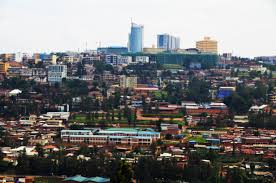
The ACC is honoured to welcome Professor Tomà Berlanda, an architect with extensive international academic and professional experience, to the Brown Bag Series. Unlike other African capitals, Kigali has not been established as a city by a colonial power. Even though it was founded under German rule, it became capital only after Rwanda’s independence from Belgium in 1962, and until 1994 remained relatively small. The Belgian occupiers always remained hostile to the development of urban centres, because they attributed to Rwanda the main function of providing work force, to be employed in their other neighbouring colony to the west. During the first and second Rwandese republic, the growing concentration of bureaucratic and administrative functions did increase the number of inhabitants, without though giving rise to an uncontrolled expansion. During that time the government further attempted to consolidate the secondary urban centres, and moreover maintain an economic and social structure based on agriculture. From the end of the 80’s onwards, though, following the introduction of the structural adjustment plans and the dismantling or privatisation of state owned industrial plants, that approach has been left. Today, urbanisation has become an intentional strategic goal of government policies, and, together with land tenure regularisation and the growth of private led industrialisation, this has a huge impact in the re-design of the entire territory. In official documents this transformation is considered a goal to be pursued and encouraged through the reorganization of agricultural activities, the concentration of investments in urban centres, the adoption of measures aimed at moving and grouping population. This direction is apparent in policies and programmatic indications at national level and is further confirmed in documents at the local level, from district plans to master plans. The territorial imbalance in growth between the capital city and the rest of the country is a reason for concern, and is at the same time the result, and an indication, of global phenomena and local circumstances. Furthermore, it highlights the need to consider Kigali's evolution in close connection to all that of the Rwandese countryside. Not only because of the migration of population, but also because the establishment of a "competitive city in the global market" such as is conceived and pursued today requires massive investments and a gigantic drainage of resources. At the risk of resulting in a macro-cephalous capital detached from the rest of the country.   About the speaker: Born in Venice, Tomà Berlanda is an architect with extensive international academic and professional experience. As of April 2015 he serves as Director and Professor at the School of Architecture, Planning and Geomatics at the University of Cape Town, where he pursues his research interests focusing on the implications that can be drawn from a non stereotypical reading of the African city and the practice of architecture in non- Western urban settings and landscapes. This follows upon his position as co-founder of asa studio in Kigali (2012-14), where he led an extensive design and build campaign to provide community based early childhood and health facilities across Rwanda. The award winning work has been published widely, and included in the Afritecture: Building Social Change (2013) and the Africa: Architecture, Culture and identity (2015) exhibitions. He has held teaching positions at various institutions, and has been Assistant Professor at Syracuse University (2009-10), Visiting Critic at Cornell University (2012) and Senior Lecturer at the Kigali Institute of Science and Technology (2011-3). He has been member of the editorial board of rivista tecnica, Lugano, and a regular contributor for de Architect, den Haag. He holds a Diploma in architecture from the Accademia di architettura in Mendrisio, Swtizerland (2002) and a Ph.D in Architecture and Building design from the Politecnico di Torino, Italy (2009). He is the author of "Architectural Topograhies" (Routledge, 2014), as well as number of articles and chapters in international publications.

Workshop: Thinking infrastructure with the South

HICCUP — Heterogeneous Infrastructure Configuration of Cities in Uganda Project: Thinking Infrastructure with the South Introduction The scale, magnitude and intensity of urbanisation in Africa has attracted increasing attention given the nature of environmental, social, economic and more importantly, political challenges it presents. The diverse ecology of Africa’s urban landscape raises serious questions that have provoked debate not only within academia, but among public administrators, civil society and the private sector as well. The HICCUP research initiative was conceived to provide a platform where critical questions especially about waste resource flows and the emerging multi-actor hegemonies, the resulting networks, how these multi-actor interactions are mediated within formal and informal institutional structures and processes. In addition, the initiative will also explore other equally critical questions relating to sustainability and equality. Two subprojects will be undertaken to generate the kind of information that will shape our learning about the dynamics of urbanisation in Africa. The project will work in Kampala and Mbale, two cities in Uganda where the focus will be on waste and sanitation.   Research Team The workshop will be conducted by Drs. Henrik Ernstson, Shauib Lwasa, and Jonathan Silver, who are part of a highly experienced team from various international institutions involved in the initiative. The workshop is intend to engage four students (3 MSc and 1 PhD), who have been selected to be part of the initiative to promote critical and radical thinking about Global-South Urbanism. The event will also be attended by several civil society organisations that could potentially be partners under the HICCUP initiative. Aims of Workshop a.    To finalise planning on practicalities of the research program (i.e. roles/responsibilities, research timelines, key outputs etc.) b.    To undertake some teaching and shared learning with the four the students c.    To visit some potential fieldwork sites d.    To meet some potential partners (ACTogether/NSDFU, KALOCODE, SSA/UHSNET, LOGEL etc…)

CityLab Symposium

Studio 3 ENGEO Building, Upper Campus. University of Cape Town,, Cape Town, Western Cape, South Africa

The African Centre for Cities’ CityLab programme facilitates the co-production of policy-relevant knowledge to reduce urban poverty through the engagement of researchers, government officials and civil society. Started in 2008, the CityLab programme created a platform for interaction between practitioners and researchers and has generated a wide range of different kinds of knowledge on Cape Town. The CityLab programme also became a core component of Mistra Urban Futures, a network of institutions involved in the co-production of urban knowledge in five cities around the world. Please join us in reflecting on the Sustainable Human Settlements CityLab, the Urban Violence, Safety and Inclusion CityLab, the Healthy Cities CityLab and the Public Culture CityLab. The co-ordinators of the CityLabs, Dr Warren Smit, Dr Mercy Brown-Luthango, Dr Rike Sitas and Liza Cirolia, will present key findings from the CityLab process, followed by a discussion and a light lunch. The symposium will be hosted on 18 August in Studio 3 in the Environmental and Geographical Sciences building on Upper Campus at UCT, from 10h00 to 13h00, followed by lunch. Please RSVP to Rike Sitas on rike.sitas@uct.ac.za by 12 August 2016 CityLab_Symposium_Invite

The Informal Economy’s Role in Feeding Cities – a Missing Link in Policy Debates?

Studio 3 ENGEO Building, Upper Campus. University of Cape Town,, Cape Town, Western Cape, South Africa

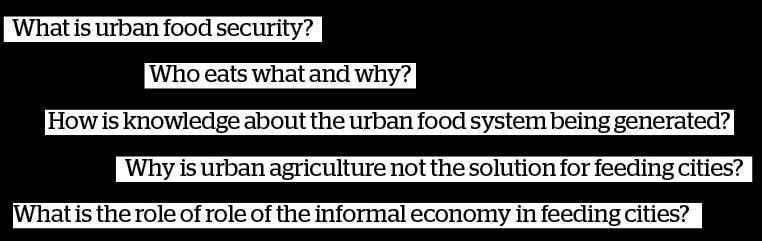
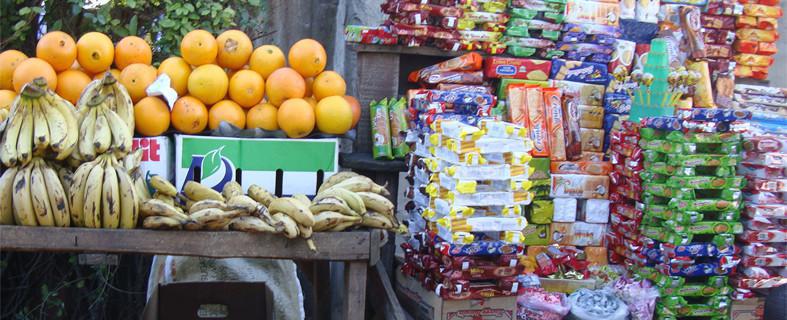
Food is fundamental not only to well-being, but to our social and economic lives. Despite this, one of the biggest challenges facing many people in cities all over the world today is hunger. As cities rapidly urbanise, different pressures are placed on the food system which has resulted in the least nutritious food being the most affordable. This seminar series will explore the informal economy, food systems, food security and urbanisation. The first seminar is entitled 'The Informal Economy’s Role in Feeding Cities - A Missing Link in Policy Debates?' and will be presented by Caroline Skinner and Gareth Haysom. Abstract The paper starts by considering the genealogy of the term ‘informal sector’ and then reviews the international context – urbanisation trends and the latest estimates on the size and contribution of the informal economy. The former confirm Crush and Frayne’s contention of the likelihood of an urban future for the majority of Africans and latter suggest that informal work is a predominant source of non-agricultural employment on the most regions of the Global South. Attention is then turned to the South African informal economy, which although smaller than our developing country counterparts, is still a significant source of employment. The informal economy is thus playing a key role in household income – a key aspect of accessibility, particularly in urban areas. The paper then outlines the evidence on the informal economies role in food sourcing of poorer households. The paper critically assesses the current food security policy position in South Africa and the post-Apartheid policy response to the informal economy in general both nationally and in key urban centres. We trace a productionist and rural bias in the food security agenda and argue that the policy environment for informal operators is at best benign neglect and at worse actively destructive. Speaker bios Caroline Skinner is a Senior Researcher at the African Centre for Cities at the University of Cape Town and Urban Policies Research Director for the global action-research-policy network Women in Informal Employment: Globalizing and Organizing (WIEGO). For over 15 years, Skinner’s work has interrogated the nature of the informal economy with a focus on informing advocacy processes and livelihood-centred policy and planning responses. She has published widely on the topic. Dr Gareth Haysom holds a Ph.D in Environmental and Geographic Sciences from UCT. The focus of his Ph.D was on urban food system governance. Gareth is the southern cities project coordinator for the Hungry Cities Partnership project at the ACC. He also works on the Consuming Urban Poverty research project. Venue: Studio 3, EGS Building, Upper Campus, UCT

A systematic review of the literature that focuses on both the ‘informal economy’ and ‘food security’ in South Africa

Studio 3 ENGEO Building, Upper Campus. University of Cape Town,, Cape Town, Western Cape, South Africa

Food is fundamental not only to well-being, but to our social and economic lives. Despite this, one of the biggest challenges facing many people in cities all over the world today is hunger. As cities rapidly urbanise, different pressures are placed on the food system which has resulted in the least nutritious food being the most affordable. This seminar series will explore the informal economy, food systems, food security and urbanisation. The second seminar is entitled 'A systematic review of the literature that focuses on both the ‘informal economy’ and ‘food security’ in South Africa' presented by Candice Kelly and Etai Even-Zahav (Research Fellows at the Sustainability Institute). Abstract Despite the importance of the informal food economy in fulfilling the daily and weekly food needs of a large proportion of South Africa’s low-income population, it appears little research exists on the exact nature of the relationship between the informal food economy and food security. This paper performed the first qualitative systematic review of research from South Africa that addresses both these aspects. The methods used in the review are described in detail, to increase the readers’ ability to assess the reliability of subsequent findings and analysis. Findings confirmed the low level of research focus on the informal food economy (and food security), in particular the stages of the value chain beyond the farm gate and before the consumer. Food safety research is common, although applied narrowly and with mixed findings. The conceptualisation of nutrition research is encouragingly wide, encompassing both over- and under-nutrition, but does not seem to consider the broader urban informal context in which consumers are embedded. Lastly, the research approaches used are predominately quantitative, and the voices of those who survive within the informal food economy are largely absent. Bios Candice Kelly's doctoral research focuses on people leading food system transitions in South Africa. She teaches into the MPhil at the Sustainability Institute, focusing on sustainable food systems. Etai Even-Zahav is also part of the Food Systems team at the Sustainability Institute. He is particularly interested in the informal food economy.