UCT SDG Summit | Circular Economy Pre-Summit Workshops

The Vice Chancellor of the University of Cape Town is convening an international summit on how the SDGs can best be realised in the African context with an eye on the role of science and mission-driven partnerships. In the build-up to the Summit, a series of workshops are being organised around seven themes, of which the Circular Economy is one. READ THE CONCEPT NOTE HERE WORKSHOP 1 | 17 August, 14:00 to 16:15 The first workshop will explore the definitional debates around the circular economy with an emphasis on the state of macro scholarship and policy positions adopted by select African governments and civil society actors. Speakers Prof Ester van der Voet – Leiden University & UN International Resource Panel Dr Willi Haas – BOKU, Vienna Bezawit Eshetu – African Circular Economy Network Reniera O’Donnell – Higher Education Lead at Ellen MacArthur Foundation Register Closed: WORKSHOP 2 | 31 August, 14:00 to 16:15 The second workshop will be an exploration of circular economy applications through case studies with an eye on research questions and issues. Speakers Prof Christina Trois – University of KwaZulu-Natal Kirsten Barnes – GreenCape Paul Currie – ICLEI Africa Sudhir Pillay – Water Research Commission Prof Harro von Blottnitz – University of Cape Town Register Closed: These workshops are open to all who are involved in Circular Economy related work and research.

UCT SDG Summit | An Urban Lens on the Achievement of the SDGs

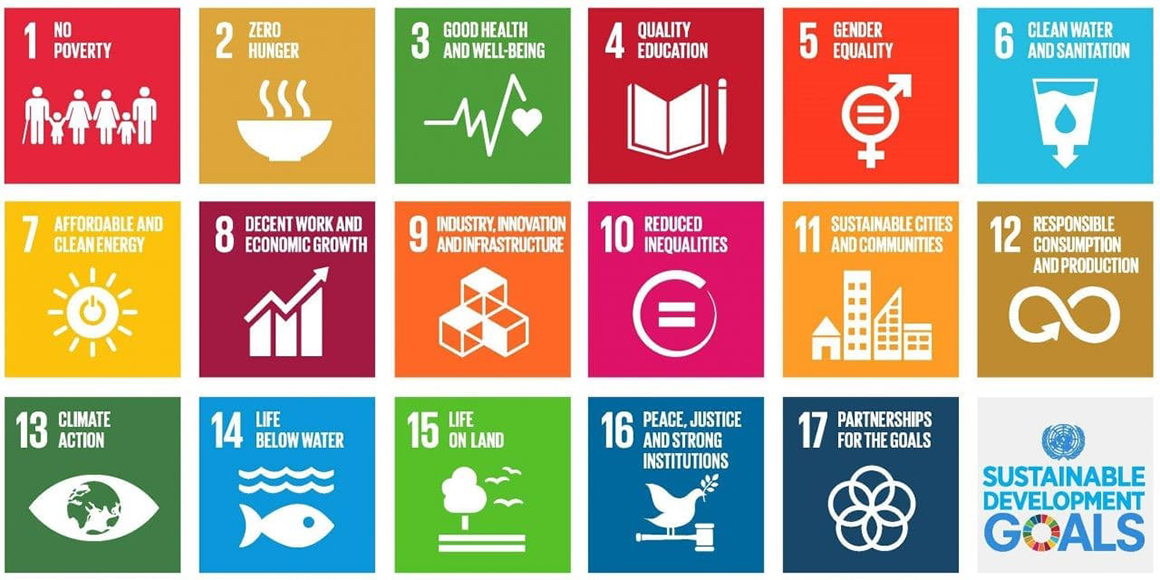
A Masterclass alongside the UCT SDG Africa Summit 2021The ACC Masterclass will be structured in three parts, comprised of 75min each. The first session will unpack the political and institutional backstory in ensuring that there was an SDG to address the imperatives of urbanisation, and connections were drawn with other SDGs. The second session will focus on the complexities and contradictions of implementing the SDGs when it is a nexus issue such as urban food security. The analytical focus will fall on the challenge of effective inter-governmental coordination and alignment across scales and sectors. The third session will focus on the practical policy tools that are being deployed at city-level to track the implementation of the SDGs at the local level, considered against the national reporting system of the South African government. This raises institutional questions about fostering a shared perspective when municipal officials remain deeply commitment to sectoral specialisms, as well as issues about alignment and meaningful societal engagement in tracking government performance in delivering on stated commitments. Across the three sessions participants will be exposed to the cutting edges of the interface between applied research and policy implementation. Session 1 | The genesis of SDG 11: Getting the urban onto the agenda10:00 to 11:15Edgar Pieterse (ACC) in conversation with Aromar Revi (Indian Institute for Human Settlements) and Monika Glinzler (International relations, Department of Human Settlements) By some estimates, getting the urban question right is a precondition to achieve up to 70% of the overall SDG agenda. However, until the last hour before the finalisation of the seventeen SDGs, there was great doubt that an explicit urban goal would be included. This session will pull the curtain on the backstage advocacy arguments, evidence and diplomatic work that was conducted to secure an urban perspective across the SDGs. It is a given that the multilateral system is not perfect, but for those on the frontlines of policy mainstreaming, it is indispensable and a permanent site of struggle.  Session 2 | Teasing out the tensions: SDGs as a national imperative, and SDG 11 as a city-level goal11:30 to 12:45Gareth Haysom (ACC) in conversation with Jane Battersby (University of Cape Town) and Julian May (University of the Western Cape)  The urban food lens offers a unique scalar perspective bringing the tensions and opportunities presented at the intersection between zero hunger (SDG 2), and sustainable cities (SDG 11), as well as health and well-being (3), education (4) and gender equality (5). The session will engage in both the challenges presented at these intersections between nexus and scalar issues, while attempting to engage the complexities and contradictions of implementing and measuring the SDGs when it is a nexus issue such as urban food and nutrition security, and what this might mean in context, but equally, effective inter-governmental coordination and alignment across scales and sectors.  Session 3 | Lessons towards SDG localisation and indicators14:00 to 15:15Andrew Tucker (ACC) in conversation with Alexis Schäffler-Thomson (Pegasys) and Natasha Primo (City of Cape Town)   It is a given that the SDGs will only find full expression if they become the focus of local action, established within enabling national parameters. There is great potential in using indicator frameworks and monitoring systems to establish productive alignment between national and local governments. This session will share research findings and potential of using local level indicator frameworks to track and reflect on policy efforts to implement the SDGs, whilst being mindful of the statistical challenges of generating local level data. The empirical reference point will be South Africa and Cape Town. 

MPhil Southern Urbanism Info Session

Join MPhil Southern Urbanism programme convenor Dr Anna Selmeczi for an overview of the pedagogical approach, programme structure and entry requirements.

Pairing academia and policy for transdisciplinary research in Africa

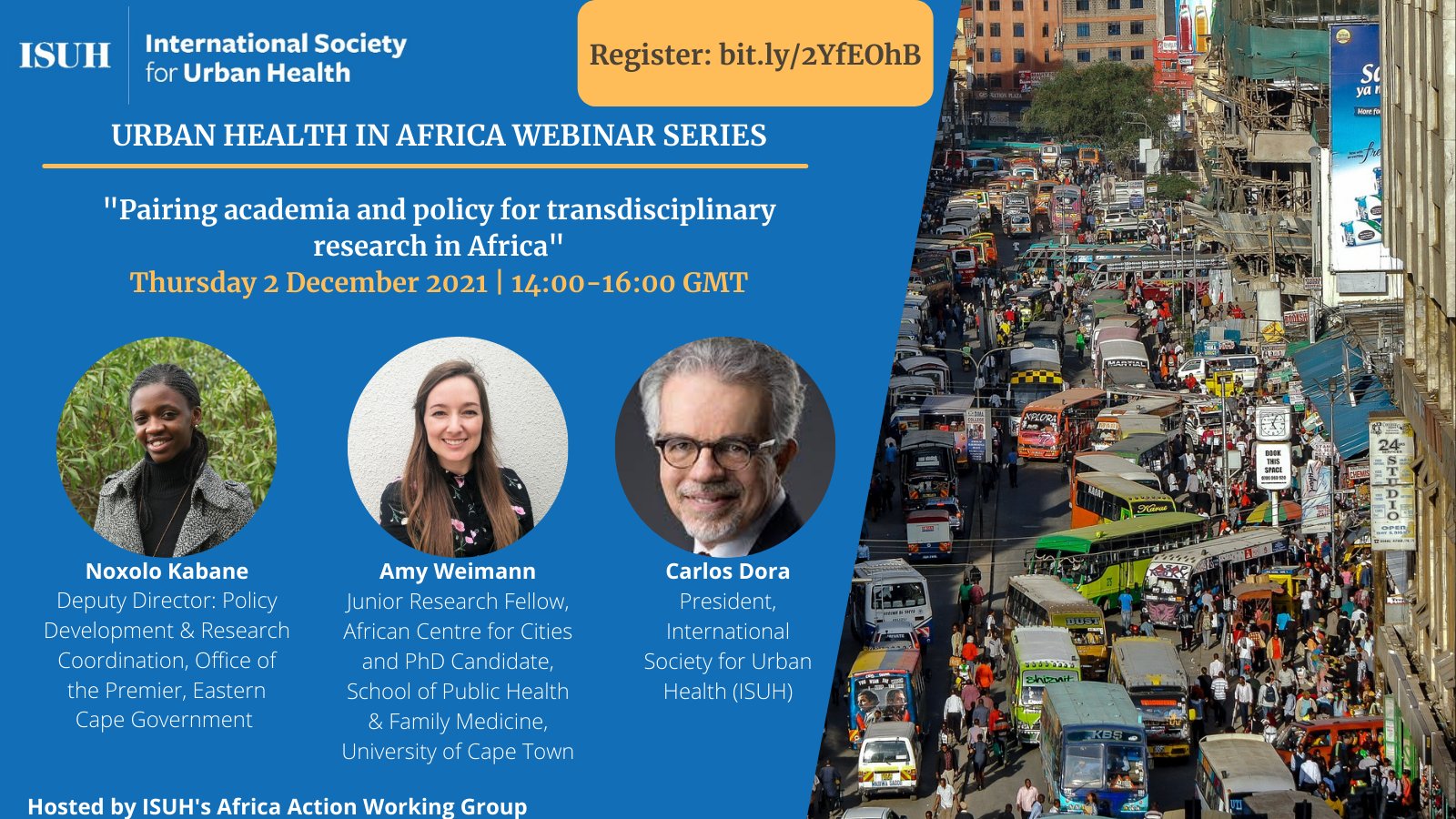
Join the International Society for Urban Health Africa Working Group for the first discussion in the Urban Health in Africa Webinar Series entitled Pairing academia and policy for transdisciplinary research in Africa.  SPEAKERS Noxolo Kabane - Deputy Director: Policy Development and Research Coordination, Office of the Premier, Eastern Cape Government Amy Weimann - Junior Research Fellow, African Centre for Cities and PhD Candidate, School of Public Health and Family Medicine, University of Cape Town Carlos Dora - President, International Society for Urban Health WHEN | Thursday, 2 December 2021 TIME | 14:00-16:00 GMT REGISTER HERE

Film Screening and Discussion | Never Surrender

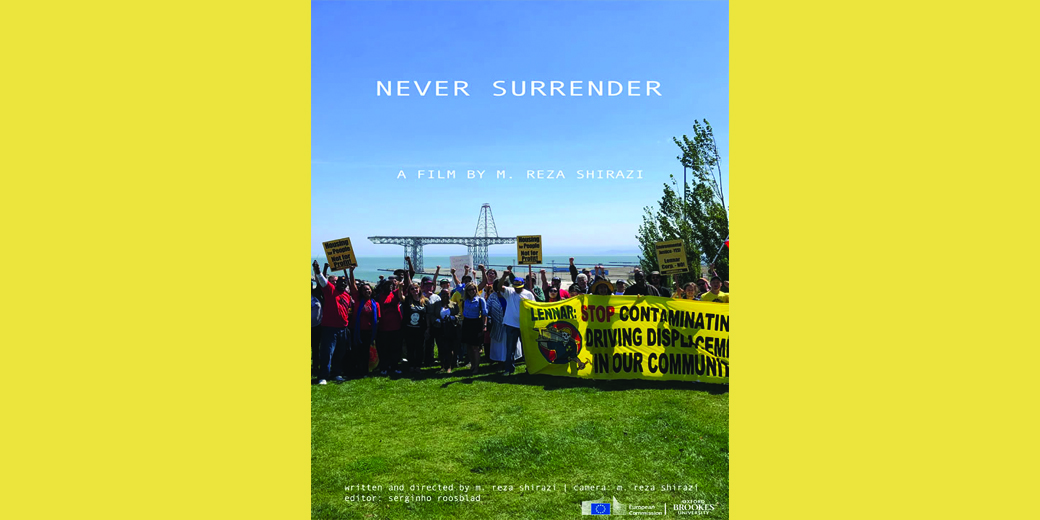
Join the African Centre for Cities as we host director M. Reza Shirazi for a screening of his documentary Never Surrender, followed by a discussion on Thursday, 12 May 2022, at 15:00-17:00. This documentary film is the result of more than two years of research and fieldwork in Bayview-Hunters Point neighbourhood, San Francisco. It narrates the community fight for environmental justice, and documents the conflict between people and government over the safety of the shipyard. Decades of remediation work at Hunters Point Shipyard, a former military base contaminated during the Second World War and beyond, were revealed to be fraudulent and data was falsified. This turned the biggest redevelopment project in San Francisco into the biggest eco-fraud case in US history.   WHEN | Thursday, 12 May 2022 TIME | 15:00-17:00 VENUE | Pink Room, Lvl 2, Centlivres Building, Upper Campus, UCT

Shifting systems: infrastructure innovation for sustainable African cities

Africa’s cities are amongst the fastest growing in the world and present an unprecedented opportunity to leapfrog unsustainable urban development patterns observed elsewhere. This requires an ability to imagine the innovative possibilities for African cities, and ongoing learning by decision makers to break inertia. This is the first in a series of sessions at Rise Africa aimed at helping city decision makers to reimagine the future infrastructures of Africa’s cities, to bring more innovative and sustainable cities to life. Hosted by the African Centre for Cities and the Urban Futures Studio, this session will generate insights and spark discussion that will inform a new two-year project aimed at fostering learning around infrastructure innovation for sustainable African cities. WHEN | 23 MAY 2022 TIME | 13:00-14:45 (GMT+2) REGISTER HERE  

INFO SESSION | Systems Integrators for Sustainable African Cities

From siloed practitioner to systems integrator for sustainable African city futures – the new Masters programme, convened by the African Centre for Cities, at the University of Cape Town cultivates a new generation of urban practitioner. The complex, multi-dimensional demands of our rapidly urbanising world require holistic, inter-disciplinary thinking and practice. However traditional professional paradigms and often-siloed institutions seem doomed to replicate the entrenched patterns and practices of path-dependent urban infrastructure provision and management. To overcome the often-fragmented ways in which urban questions are framed, institutionalised, and engaged by varied levels of government, citizens, civil society organisations, and private sector actors, we need a new kind of urban practitioner, who can work across practices, professional norms, hierarchies, sectors and urban problems. To meet this need, the African Centre for Cities (ACC), UCT, launched a new Masters in Sustainable Urban Practice, which seeks to cultivates urban integrators who are able to discern opportunities for integration, and can build the necessary coalitions for change; who are confident in varied cultures of communication and can build bridges between sectors, fields, and scales of urban practice. Join this information session with Prof Edgar Pieterse, director of the African Centre for Cities, and South African Research Chair in Urban Policy, and programme convenor Dr Mercy Brown-Luthango. WHEN | Monday, 6 June 2022 TIME | 13:30-14:30 SAST REGISTER HERE  MORE ABOUT THE PROGRAMME

Next Practice Urbanisation – an International Building Exhibition in Africa!

ACC together with GIZ is hosting a session entitled Next Practice Urbanisation – an International Building Exhibition in Africa!, as part of the Urban Library at the World Urban Forum, which takes place from 26-30 June 2022 in Katowice, Poland.  The GIZ together with the African Centre for Cities, and the London School of Economics in Addis Ababa, explored the possibility of applying the principles of an IBA (Internationale BauAusstellung) in the African context. For over 100 years, innovative solutions to urgent local development challenges have been implemented by IBAs in Germany, and lately also in Europe. Is the IBA transferable for African government leaders and urban experts who need access to integrative, participatory models that can demonstrate how the complex challenges of urban transformation in Africa can be addressed? At this event the booklet "Building Cities for the Future - An exploration of possibilities for an Internationale Bauausstellung (IBA) in Africa" will be launched by ACC and the GIZ. We are living at a decisive turning point. Urbanisationis developing at a historically unprecedented speed and scale, especially in Africa and Asia. The growing need for affordable housing will be a huge challenge for the decision-makers at various levels of government. The current decade will decide whether we will manage to set global and local development on a just and sustainable track or whether we will continue to follow fossil development paths that will make social, economic and ecological life unviable. The need for investments and infrastructure to meet the rising demands of rapid urban growth in Africa and other parts of the world, alongside the imperative to retrofit existing cities, is pressing and considerable. Whether these will be integrated into effective and future-oriented urban planning and provide new perspectives for the largely poor and informal urban population is, however, uncertain. The continent’s challenge and opportunity lie in building future cities that minimize both ecological and social risks. The approach of “Internationale Bauausstellungen” (IBA - German for International Building Exhibition) holds the potential of stimulating cross-sectoral and anticipatory planning approaches linked to the implementation of innovative urban regeneration on the ground. IBAs have been among the most influential instruments of innovative urban development in and outside Germany for over 100 years. In situations that demand urgent socio-economic change, IBAs develop model-built solutions for future-oriented cities. The IBA guide, which will be launched at the event, offers insights on how IBAs function as an interesting urban governance instrument. It is based on the results of the GIZ project International Building Exhibition (IBA) Africa - Building Cities for the Future. The aim of this project is to develop possibilities, explore preconditions and topics for an IBA-inspired innovation approach in urban development in Africa, together with executives and stakeholders from Cape Town and Addis Ababa, and in exchange with German IBA experts and practitioners. The IBA guide is intended to serve as an inspiration for how the IBA approach could be applicable for African cities. At this event the experiences gained of these explorative processes will be presented and discussed in the context of future inclusive and climate-friendly urbanization in Africa. The IBA concept and existing examples are briefly presented at the beginning. The presentation of the guide and explanatory film (Building Cities for the Future – What Is an IBA?) will be followed by an open dialogue between the project partner Prof. Edgar Pieterse, Director of the ACC, representatives of African cities and members of the IBA Expert Council to discuss the contribution IBAs can make to the implementation of the SDGs and the NUA in cities. SPEAKERS Edgar Pieterse, Moderator, African Centre for Cities (ACC) Timnit Eshetu, Panelist, Urban Age Task Force Addis Ababa Jan Schultheiß, Panelist, Federal Ministry for Housing, Urban Development and Building Andrew Boraine, Panelist, Western Cape Economic Development Partnership Flavia Gwiza, Panelist, Rwandan Architect WHEN | 29 June 2022 TIME | 14:15-15:15 MORE ON THE WORLD URBAN FORUM HERE


Food Dialogues

How are digital technologies disrupting our food system? What will be the impact of cultured meat? How has food shaped the spaces and places that define our city? These and other questions will be explored in Cape Town during the two-week 2022 Food Dialogues programme through a range of experiences: from expert panel discussions to hands-on cooking classes for grown-ups and kids, walking tours, communal meals and art installations, from Monday, 18 July until Monday, 1 August 2022. Returning to physical spaces this year, Food Dialogues offers the chance to connect with our future food shapers in person and while there is much to feed all senses, the essence of Food Dialogues is to engage in a critical conversation about how food shapes and enables our lives, explore the unjustness of our food system and how we can move towards one that helps us to flourish as people, families and society. The programme will consider our present day societal relationship with food by looking at key aspects of our food system – where we buy our food from and how nourished we are from the food we eat – as well as how we can better partner to govern our food system, and how the medium of food itself can bring us insight, connection and joy. Some events are free to attend while others are paid but all participants must register at fooddialogues.info  Food Dialogues is hosted by the SA Urban Food & Farming Trust with co-host and sponsor SOLVE@Waterfront. Co-sponsored by the DSI-NRF Centre of Excellence in Food Security, event partners include the Western Cape Economic Development Partnership, African Centre for Cities, the Southern Africa Food Lab, The Oranjezicht City Farm Market, Bertha House, Philippi Village, City of Cape Town, Western Cape Government, and Derrick Integrated Communications.

MPhil Southern Urbanism Info Session

The MPhil Southern Urbanism is designed to cultivate the next generation of urban thinkers from the South, who are rooted in the realities, theories and practise of cities of the Global South. Drawing together a diverse cohort of scholar and practitioners, the programme utilises a combination of guided learning in small-group seminars, experimentation in various spaces of urban practice and independent thesis research to ground students in Urban Studies theory, and new research methodologies. APPLICATIONS DEADLINE INTERNATIONAL STUDENTS: 31 October 2022 APPLICATIONS DEADLINE SA STUDENTS: 30 November 2022 If you are interested in applying for the MPhil Southern Urbanism programme but still have some questions? This info session, hosted by programme convenor, Dr Anna Selmeczi will provide a brief overview of the pedagogical approach, programme structure and entry requirements, as well as discussion time to answer all your questions. REGISTER HERE