EXHIBITION: It all starts with me

The New Lecture Theatre Upper Campus, University of Cape Town, Cape Town, South Africa

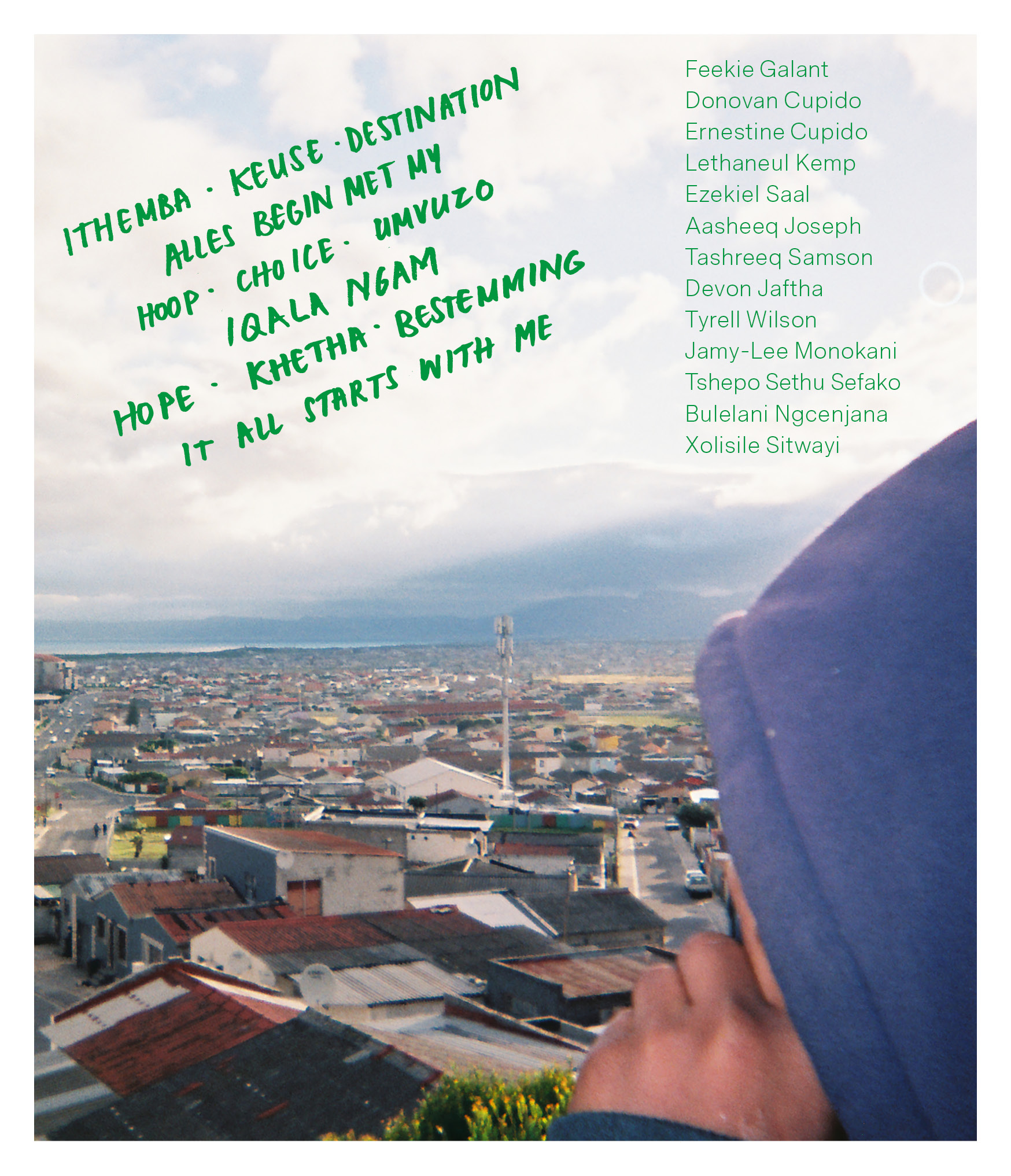
You are invited to a pop-up exhibition and book launch of the Youth, Identity and the City project together with Rosca Warries, Kirstin Warries, Dane Van Rooyen and TPA Youth for Change, on Thursday 5 December from 16:00. It all starts with me is a one-day exhibition based on the African Centre for Cities research project Youth, Identity and the City led by researcher Mercy Brown-Luthango, which engaged 13 out-of-school and unemployed young people from Mitchell’s Plain, Philippi and Gugulethu in a process of self-reflection using photography as a tool. The focus was on the role of young people in cities; how they understand their position, community, identity and location (spatially, emotionally and socially) in relation to the city as a whole, in this case Cape Town. As part of this process, led by noDREAD Productions and their photography workshop design Image vs Truth, each participant was furnished with two disposable cameras to capture photographs of the communities where they live as well as historical places visited in the city. As one of the final outputs of the project, with guidance from Rosca Warries, Kirstin Warries and Dane Van Rooyen, the young people undertook a process of curating an exhibition of these photographs. All the photographs are part of a moving exhibition from the University of Cape Town, for the launch, to Phillipi Village and Tafelsig Library where the participants’ peers and community can engage and encounter their messages and photographs of hope. WHEN: Thursday, 5th December 2019 TIME:  16:00 to 18:00 VENUE:  The New Lecture Theatre, Upper Campus, UCT RSVP: shakira.jeppie@uct.ac.za
Contested Knowledges for Just Urban Futures

Channing Hall 45 Surrey Street, Sheffield, United Kingdom

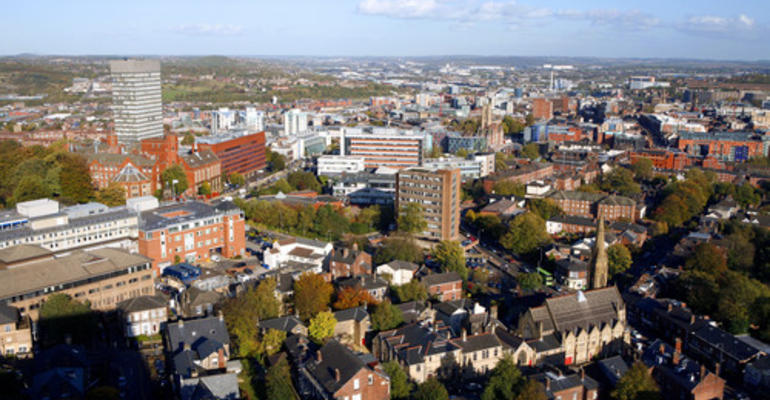
For urban scholars to be committed to more just urban futures is not new; yet the conditions and contexts from and in which academics engage are constantly changing. From means concerning ourselves with the context of the university itself, the distancing and / or proximity afforded by the university, the dynamics of the spaces from which we engage and the implications for our understanding of and relationships between knowledge and action. In means recognising that a  commitment and/or engagement to realising just urban futures is often practiced in the interstices, boundaries or margins of intersecting domains, in liminal spaces between the university and the urban context. Working from and in these different spaces requires reflexive engagement (May and Perry 2017) and adaptiveness and creativity in academic practice, as knowledge claims are challenged and contested in intentional and unanticipated ways. A range of issues are brought into focus: how we think about time, space, positionality and power; how competing or contesting knowledge claims affect our sense of belonging and our commitment; if (and how) these are mediated through inter-referential reflexivity. We need to pay attention to the peculiarities of these spaces and how these are navigated, negotiated and with what effects. This seminar asks: How does our commitment to just urban futures specifically manifest in practice, in the context of the wider co-productive turn and interest in different ideas about what it means to be an ‘engaged’ academic? Event details Tuesday, December 10, 2019 - 10:00 to 17:00 Channing Hall, 45 Surrey Street, Sheffield S1 2LG This seminar is explicitly aimed at established academic researchers working in universities, with a commitment to socially just and sustainable futures, to share and learn from practice. It will take place over one day with propositions, presentations and discussions and include an early evening dinner (1730-1900). The seminar is organised by Professors Tim May and Beth Perry with funding from the Economic and Social Research Council and the Realising Just Cities Programme (https://realisingjustcities-rjc.org/). It is also part of the Urban Institute's Co-producing Urbanisms theme. Provocations will be made by Professor Beth Perry, Urban Institute, University of Sheffield Dr Zarina Patel, University of Cape Town Dr Michele Lancione, Urban Institute, University of Sheffield Professor Felicity Callard, Birkbeck Institute for Social Research, University of London Dr Sally Lloyd Evans, University of Reading Professor Rowland Atkinson, Urban Studies and Planning, University of Sheffield Dr Lee Crookes, Urban Studies and Planning, University of Sheffield Dr Hayley Bennett, University of Edinburgh and Dr Richard Brunner, University of Glasgow Professor Doina Petrescu, University of Sheffield Click here for a detailed seminar programme and abstracts.   Places will be limited and booking is essential. If you would like to attend, please RSVP to v.l.simpson@sheffield.ac.uk with name, university and a couple of lines on your urban research and engagement activity.

Cities of integrity – innovative approaches to tackling corruption and cultivating a culture of integrity, trust and openness in urban development

Hall 2, Room 1 Abu Dhabi , United Arab Emirates

Cities of Integrity project hosts a panel discussion at the World Urban Forum in Abu Dhabi, on Sunday, 9 February 2020 from 14:00 to 16:00. Urban innovation flows from multiple actors securely, independently seeking opportunities for improvement of their livelihoods, their homes and their social fabric. Urban development that is underpinned by a culture of integrity, transparency and accountability is an essential condition minimising the risks that would otherwise block this innovation and investment. You may plan and wish for a prosperous, inclusive, equitable, resilient or sustainable city but if norms of integrity and openness are corroded by corruption none of these aspirations can be achieved. Our event will provide a platform to raise our shared understanding of the urban corruption risks at hand. We will discuss the latest facts and figures related to the major integrity challenges in urban development, their scale, scope and development over time in the cities of both the global north and south. At least equally important we will take this empirical overview as a point of departure to embark on a joint exploration of the innovative tools and approaches available to build and nurture strong cultures of integrity at the city scale. By weaving together insights and perspectives from urban planners, architects and urban policy-makers on the one side and experts and practitioners on transparency, integrity and governance we will launch an inspirational, interactive conversation around the many practical tools and innovative levers that can be activated to architect and nurture such cultures of urban integrity. Questions to explore with the audience include: what are the major ”integrity vulnerabilities” in urban development? What strategies to promote urban cultures of integrity have been found to be effective so far? What roles can the professional community of urban planners and architects play in addressing these integrity risks? What is a realistic contribution that new technologies can make beyond the hype that surrounds them? What responsibility falls to the private sector and what practical action is already coming from the business side? How can the creativity of urban place-making be harnessed? We will seek to explore these questions not just through a set of inspirational panel presentations but also by tapping into the expertise and creativity of the audience through interactive conversation formats. The aim is to provoke new thinking around these issues and plant the seeds for much needed new partnerships around urban integrity issues that harness the expertise and commitment of a diverse set of urban stakeholders. MODERATOR Adi Kumar – Development Action Group, South Africa PANELISTS Gilbert Siame – Centre for Urban Research and Planning, University of Zambia Jennifer Bretana – Hivos, Philippines Dieter Zinnbauer – African Center for Cities, South Africa and Copenhagen Business School, Denmark Alex Warnock-Smith – Central Saint Martins, United Kingdom WHEN: Sunday, 9 February 2020 TIME: 14:00 to 16:00 VENUE: Hall 2, Room 1, Abu Dhabi, UAE  

Academic Seminar: The edge economies of migration

Davies Reading Room Room 2.27, Environmental and Geographical Science, UCT, Cape Town, Western Cape, South Africa

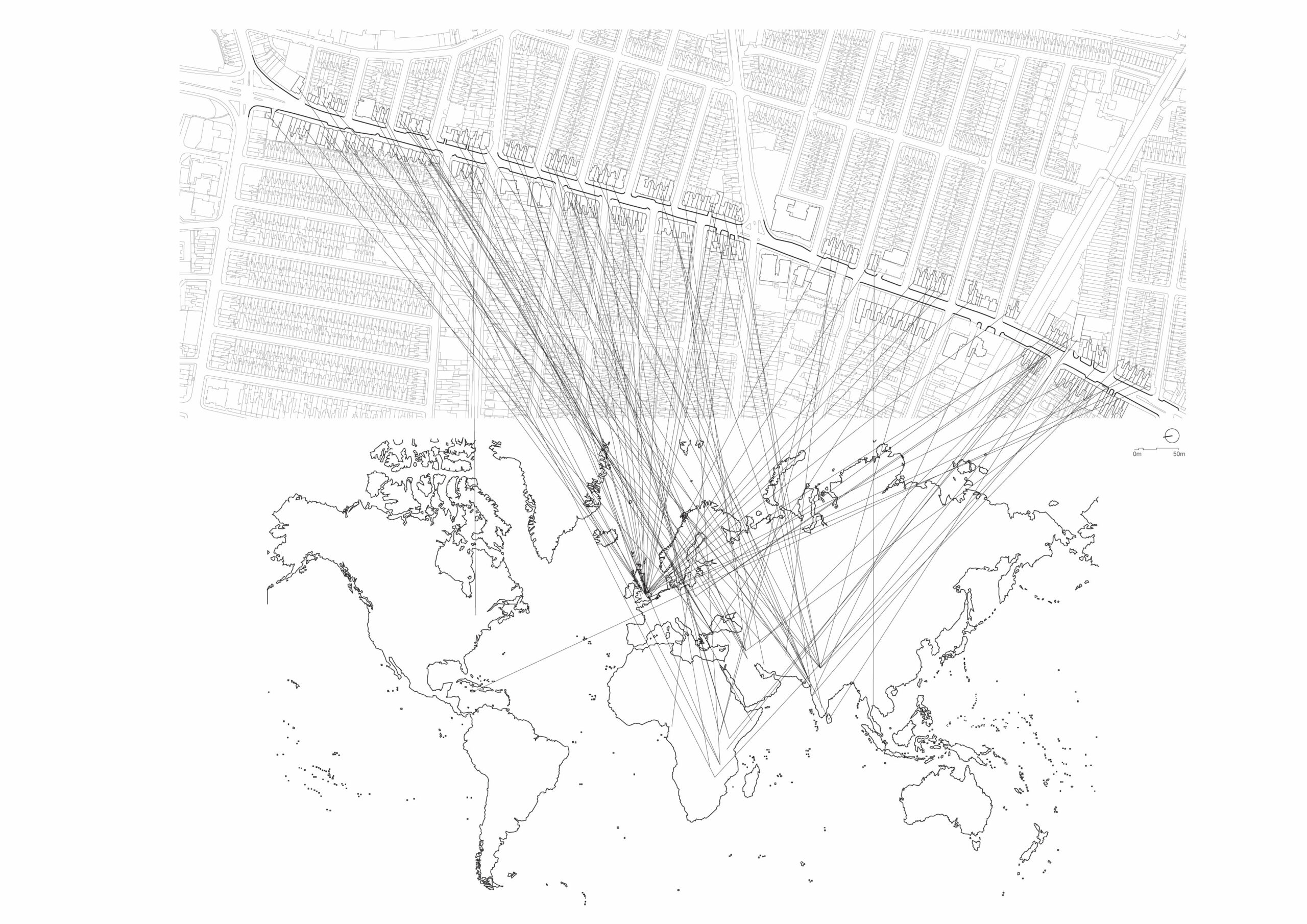
Join ACC as we host Suzanne Hall for a special academic seminar entitled The edge economies of migration on Tuesday, 25 February 2020 from 12:30 to 14:00 in the Davies Reading Room, Environmental and Geographical Sciences Building, Upper Campus, UCT. Camalita Naicker, of the Department of Historical Studies, University of Cape Town will act as a respondent. ABSTRACT ‘Edge Economies’ emerge in the asymmetries of global migration and the ongoing ferocities of urban marginalisation. From the grounded perspective of street economies formed in the peripheries of post-industrial UK cities, I explore the racialised frameworks of citizenship and economic inequality and their everyday contestations. I locate the global and urban formations of the edge in the European ideologies of displacement and immobility, incorporating the extended coloniality of political interventionism and human subordination. By moving between spaces of globe, state and street, I further explore the edge as a capricious space in which social sorting, cultural intermixtures and claims to difference are forged. Such combinations encourage connections between the histories and geographies of how people and places become bordered, together with practices of edge economies that are both marginal and transgressive. BIOGRAPHY Suzanne Hall is a Co-director of the Cities Programme and Associate Professor in Sociology at the LSE. Suzi’s research interests engage with the street life of brutal borders, migrant economies and urban multi-culture. WHEN: Tuesday, 25 February 2020 TIME: 12:30 - 14:00 VENUE: Davies Reading Room, Environmental and Geographical Sciences Building, Upper Campus, UCT  

Non-Motorised Transport Capabilities and Needs in Sub-Saharan African Cities

4th Floor Boardroom New Engineering Building, Cape Town , South Africa

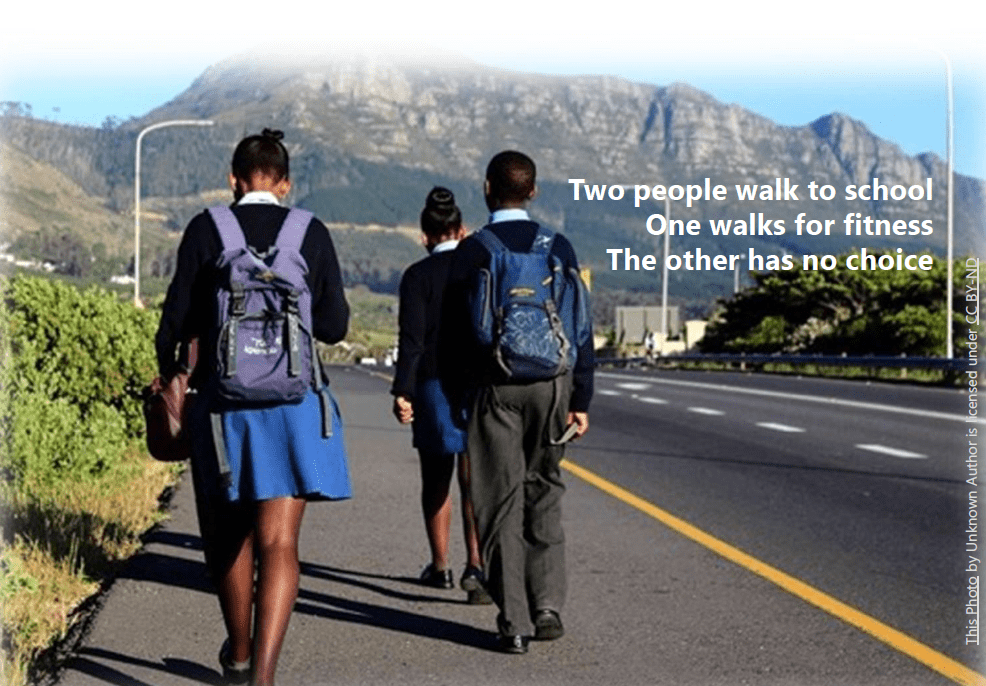
Join ACC's researcher Sean Cooke for an open discussion on non-motorised transport capabilities and needs in Sub-saharan African cities. The two-hour session will start with a presentation by Bianca Ryseck on the capabilities approach and its applications to mobility followed by an open discussion to further understanding NMT needs of vulnerable groups through their capabilities. WHEN: Thursday, 27 February 2020 TIME: 14:00 to 16:00 VENUE: 4th Floor Boardroom, New Engineering Building, Upper Campus, UCT RSVP: sean.cooke@uct.ac.za Refreshments will be served.  

Book launch: Participatory Theatre and the Urban Everyday in South Africa

Breezeblock Cafe 29 Chiswick Street, Johannesburg, South Africa

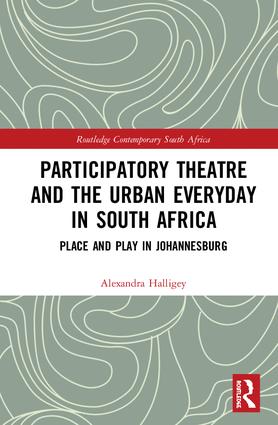
The South African Research Chair in Spatial Analysis and City Planning within the Wits School of Architecture and Planning, the Chair in Local Histories and Present Realities at the History Workshop, also at Wits, and the African Centre for Cities at UCT would like to invite you to the joint launch of Njogu Morgan and Alexandra Halligey’s new books, with guest speakers, Ruth Oldenziel and Terry Kurgan. Cycling Cities: The Johannesburg Experience by Njogu Morgan and Participatory Theatre and the Urban Everyday in South Africa: Place and Play in Johannesburg by Alexandra Halligey will be jointly launched on 27 February at the Breezeblock Cafe, Johannesburg. Ruth Oldenziel, Professor in The History of Technology at Eindhoven University of Technology and programme leader of Cycling Cities: The Global Experience will speak to Morgan's book while Terry Kurgan, artist and writer based in Johannesburg, editor and partner of Fourthwall Books and Research Associate of the Wits Institute for Social and Economic Research, will focus on Halligey's title.   DATE: Thursday, 27th February TIME: 17:00 for 17:30 VENUE: Breezeblock Café, 29 Chiswick Street, Brixton Please RSVP to alexandra.halligey@wits.ac.za by 24 February for catering and parking purposes.