SDG SEMINAR: Citizen-centric approaches to achieving the SDGs in Africa: reflections from practice

John Martin Boardroom New Engineering Building, Cape Town

Namhla Mniki will present Citizen-centric approaches to achieving the SDGs in Africa: reflections from practice on 23 October, from 12:30 to 14:00 as part of ACC's on-going SDG Seminar series. Namhla Mniki is a global development strategist leading African Monitor, an entity working to eradicate poverty, to create economic opportunities, and to empower African citizens to drive the achievement of sustainable development goals in Africa. She specialises in citizen-centric sustainable approaches to development that promote accountable leadership and good governance in Africa and beyond.  Namhla is a global activist and speaker, having addressed high-level audiences from the United Nations to Heads of State in Africa and Europe.  She has worked extensively with various arms of the United Nations, including her current role as Cepei’s Expert Panel on United Nations Regional Review.  She is a patron for the Africa Youth SDGs Summit, a Global Peer Review Expert for the German government, and a member of the expert team for the Africa Progress Group and the World Economic Forum Africa. Her latest work focusses on increasing knowledge of and building capacity for co-creation and collaboration across government, business and civil society to implement sustainable development strategies. She has a strong belief that a new paradigm of development delivery can benefit the world, focusing on innovation, collaboration, multi-sectoralism, co-creation, and broad participation. WHEN: 23 October 2019 TIME: 12:30 to 14:00 VENUE: John Martin Boardroom, Level 5, New Engineering Building, Upper Campus, UCT  

Travels between the digital and material: Curating the gendered city from the margins

Room 3.33, Centlivres Building, Upper Campus, UCT Berlin , Germany

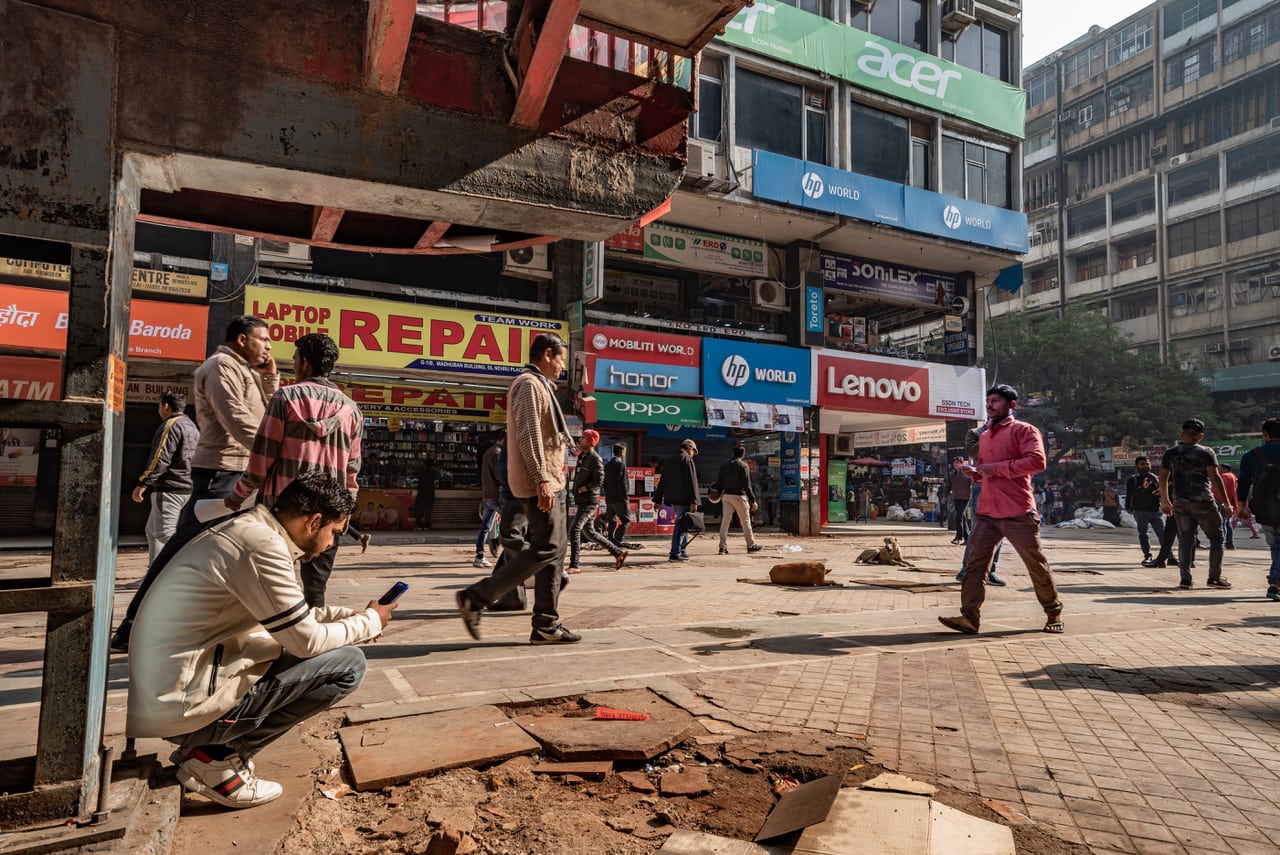
The School of Architecture, Planning and Geomatics is hosting Ayona Datta, who will present Travels between the digital and material: Curating the gendered city from the margins on Friday, 1 November at 13:00 in Room 3.33, Level 3, Centlivres Building, Upper Campus, UCT. This talk presents a gendered perspective of Delhi’s urban future produced and curated by young women living in slum resettlement colonies in the peripheries. Using the metaphor of #aanajaana as a paradigm for postcolonial urbanism, this paper argues that their everyday mobility across the home and the city reflect the paradox of belonging and exclusion in a digital urban age. The paper captures the ambiguities and paradoxes of their lives – on the one hand living as second generation rural migrants forcefully evicted from the city slums in the 2000s and resettled in the peripheries. On the other hand, as millennials with increased access to mobile and communication technologies, these women are also riding the digital urban age with promises of their inclusion in the future city. Using WhatsApp diaries entries of multimedia content (audio recordings, photographs, videos and text messages by women), conversations between the women and researchers as well as observations of the dynamics within the WhatsApp group over a period of 6 months, I suggest that #AanaJaana highlights the inherent slow violence of living between material and digital exclusions from the city. BIOGRAPHY Ayona Datta is a Professor in the Department of Geography at University College London. Her broad research interests are in postcolonial urbanism, smart cities, gender citizenship and urban futures. In particular, she is interested in how cities seek to transform themselves through utopian urban visions of the future and their impacts on everyday social, material and gendered geographies. She uses interdisciplinary approaches from architecture, planning, feminist and urban geography, combining qualitative, digital/mapping and visual research methods to examine urbanisation and urban development as experiments in urban ‘futuring’. For her contributions to an understanding of smart cities through fieldwork she received the Busk Medal from the Royal Geographical Society (with IBG) in 2019.

MPhil Southern Urbanism – a celebration of the first cohort

Davies Reading Room Room 2.27, Environmental and Geographical Science, UCT, Cape Town, Western Cape, South Africa

Join us to celebrate and share the work of the first cohort of MPhil Southern Urbanism graduates, along with their first year colleagues. WHEN: Thursday, 7 November TIME: 14:00 to 17:00 with drinks and snacks afterwards VENUE: Davies Reading Room, EGS Building, UCT RSVP by Monday 4 November, to khaya.salman@uct.ac.za PROGRAMME Reflections on Thesis Work: 2nd Year Graduating MPhil Students Thesis research artefacts Fieldwork stories Arguments and contributions Finding a voice in urban studies Discussion Forthcoming Thesis Research: 1st Year Students Discussants: Anna Selmeczi – Mphil Southern Urbanisms Convenor Sophie Oldfield – Professor of Urban Studies Edgar Pieterse – Director ACC, Professor of Urban Policy

Global Agendas and Urban Equality: Exploring synthesis, connections and contestations

Studio 3 Environmental and Geographical Sciences Building, Upper Campus, UCT, Cape Town, South Africa

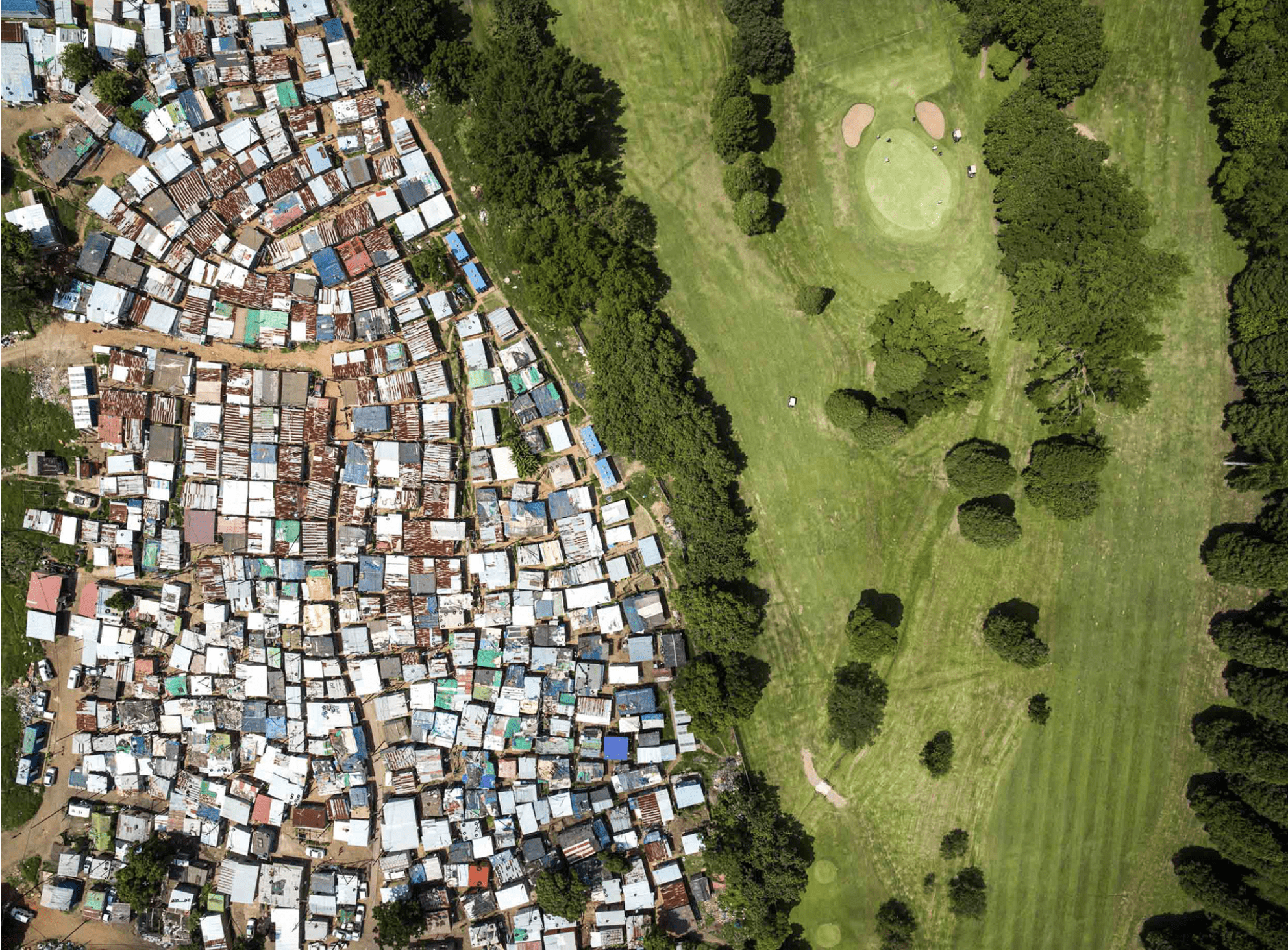
Join ACC on Friday, 8 November at 12:30 for a special seminar session entitled Global Agendas and Urban Equality: Exploring synthesis, connections and contestations. ACC Director Edgar Pieterse will be in conversation with Michele Acuto, Director of the Connected Cities Lab, The University of Melbourne, and Winnie Mitullah Director of Institute for Development Studies, University of Nairobi. The discussion will be chaired by Stephanie Butcher, a Postdoctoral Researcher with the Connected Cities Lab. While great strides have been made in recent years to help place the urban more firmly on international development agendas, questions remain as to how, and in what ways, global policy can be operationalised at an urban scale. Bringing together leading thinkers on urbanisation this moderated discussion will explore the scalar connections between global processes and policy agendas and their material, political and social impacts across urban environments in the global South. WHEN: Friday, 8 November TIME: 12:30 to 13:30 VENUE: Studio 3, Environmental and Geographical Science Building, Upper Campus, UCT   BIOGRAPHIES Professor Michele Acuto is an expert on urban politics and international urban planning. Michele is also a non-resident Senior Fellow of the Chicago Council on Global Affairs and a Senior Fellow of the Bosch Foundation Global Governance Futures Program. Before joining the Faculty, Michele was Director of the City Leadership Lab and Professor of Diplomacy and Urban Theory at University College London, having previously worked as Stephen Barter Fellow of the Oxford Programme for the Future of Cities at the University of Oxford. He also taught at the University of Canberra, University of Southern California, Australian National University and National University of Singapore. Outside academia, Michele worked for the Institute of European Affairs in Dublin, the International Campaign to Ban Landmines (ICBL), the Kimberley Process for conflict diamonds, the European Commission's response to pandemic threats. He also has worked for several years on city leadership and city networks with, amongst others, Arup, World Health Organization, World Bank Group, the C40 Climate Leadership Group, and UN-Habitat. Professor Winnie V. Mitullah is the current Director and Associate Research Professor of Development Studies at the Institute for Development Studies (IDS), and the Director Gender Affairs, University of Nairobi. She holds a PhD in Political Science and Public Administration from the University of York, UK. Her PhD thesis was on Urban Housing, with a major focus on policies relating to low income housing. Over the years, she has researched and consulted in the areas of governance, in particular in the area of provision and management of urban services and the role of stakeholders in development. Her focus in these areas has included an examination of policies, and institutional dynamics in relation to local level development, including that of devolved governments, Micro and Small Enterprises , public and Non Motorised Transport (NMT), gender, youth and media. Dr. Stephanie Butcher is a Postdoctoral Researcher with the Connected Cities lab. She is a part of the 'Knowledge in Action for Urban Equality' (KNOW) project, a global consortium which seeks to deliver transformative research and capacity in policy and planning that will promote and strengthen pathways to urban equality. Previous to this post, she worked with the Development Planning Unit (DPU) at the University College London as a Teaching Fellow, convening courses focused on the themes of participatory planning, urban inequality, and gender and diversity in the Global South. Her doctoral thesis was shaped by principles of action-research, and focused on the 'everyday politics' of water infrastructure for informal settlement residents in Kathmandu, Nepal.  It examined the micro-politics of how gender, tenure relations, and ethnicity shaped how diverse residents interacted with the socio-technical aspects of infrastructure, impacting a sense of citizenship.           IMAGE CREDIT: Unequal Scenes by Johnny Miller

Knowledge in Action for Urban Equality (KNOW): The challenges of translocal knowledge co-production

Davies Reading Room Room 2.27, Environmental and Geographical Science, UCT, Cape Town, Western Cape, South Africa

Join ACC as we host Caren Levy, Camila Cocina and Alex Frediani from KNOW on Friday, 15 November, 12:30 to 14:00, in the Davies Reading Room, Environmental and Geographical Sciences Building, Upper Campus, UCT. This talk, chaired by Vanessa Watson will introduce the KNOW programme, a 4-year research and capacity building programme funded by GCRF which works with 13 organisation across 12 cities in Africa, Asia and Latin America.  The talk will reflect on its partnerships, operational principles and the interface between research and practice.  It will draw on the KNOW work done so far as it approaches the end of its second year.  We hope that this session will open up an opportunity to exchange experiences of collaborative initiatives addressing urban equality. WHEN: Friday, 15 November 2019 TIME: 12:30 to 14:00 VENUE: Davies Reading Room, Environmental and Geographical Science Building, Upper Campus, UCT   BIOGRAPHIES Caren Levy is the Principal Investigator (PI) on the GCRF funded project, Knowledge in Action for Urban Equality (KNOW), and Professor of Transformative Urban Planning at The Bartlett Development Planning Unit, UCL. Her research focuses on community-led approaches to planning and governance of transport and infrastructure, housing and land in cities in the global South. Levy has a special interest in the institutionalisation of social justice in policy and planning, particularly related to the cross-cutting issues of gender, diversity, and environment. She has 35 years’ experience of teaching, research, training and consultancy, developing innovatory approaches to planning methodology, planning education and capacity-building. Her works engages with communities, governments and international organisations both in London and abroad in a range of countries in Africa, Asia, Latin America, and the Middle East. Camila Cocina is a Research Fellow in the working package 'Translating Research into Practice' for KNOW. We focus on investigating the challenges of knowledge translation processes at the global and local levels, and support city research partners to influence policy and planning practices. Cocina is an urbanist and architect with a PhD in Development Planning and MSc Building & Urban Design in Development, from The Bartlett Development Planning Unit, University College London. She's worked as a practitioner, researcher, and teacher in Chile and the UK, with experience of fieldwork and teaching in Latin America, Asia, Europe, and Africa. Her practice has focused primarily on urban development, housing policies, participatory urban design, urban informality, and housing reconstruction; and she's worked both in academic institutions as well as in independent NGOs. She has a special interest in linking research, advocacy, planning practices, and policies. Cocina's PhD research focused on the challenges faced by housing policies in reducing urban inequalities, in the Chilean context. Alex Frediani is a Senior Lecturer at The Bartlett Development Planning Unit. He also co-direct the MSc in Social Development Practice and direct the DPUs communications. In KNOW, he leadsWork Package 4, which focuses on translating research into practice to advance urban equality. His research interests include the application of Amartya Sen’s Capability Approach in development practice; participatory planning and design; as well as housing and informal settlement upgrading. Frediani has collaborated with academics and grassroots collectives in Brazil, Ecuador, Ghana, Nigeria, Sierra Leone, Kenya, and South Africa. Apart from research and action learning initiatives, he has provided consultancy for international development donors and agencies such as Oxfam, Comic Relief, Practical Action and UNDP. He is a founding and board member of the Sierra Leone Urban Research Centre (SLURC). He is also on the board of Habitat International Coalition and an associate of Architecture Sans Frontières–UK.  

Relaunch: Cityscapes Magazine

The Book Lounge 71 Roeland Street, Cape Town, South Africa

African Centre for Cities invites you to the relaunch of Cityscapes Magazine on 19 November 2019, 17:30 at The Book Lounge. The new issue is themed 'Passages' is a collection of stories that explore the nature(s) of movement, the impact it has on how we live and who we are, as well as the lives that are made - mobile and immobile - after the passage. People move. That is what we do. We move our bodies, move house, neighbourhood; we move across and through borders. We move because we want to and sometimes because we need to. To be with or away from family, to adventure and experience new things, on pilgrimage, to escape, learn, and sometimes to return home when it calls us. We move through space, we move up(becoming wealthier, more affluent),down (becoming materially more impoverished), we also move ideas and resources. We move to work, to search, to find, and sometimes to lose. We move... It’s in our nature and has been since time immemorial. Yet, as the world becomes better connected, moving has become a challenging and divisive experience at every scale you can imagine. We are building and strengthening physical borders to keep those we feel are “not worthy” from occupying the same spaces we do, while inviting the “desirable” – the educated, “clever”, connected, wealthy and talented – in. Our interest is in where people move to, and why. Also, how ideas and capital circulate, traverse borders, and what the impacts are once “there”. This is the reason we have produced this issue. The ninth issue of Cityscapes and our new tagline—Urbanism Beyond Geography—marks a re-launch, after a hiatus (of sorts). As the abundance of figures being released on the topic attests, we have been moving to cities – everywhere. The magnetism of places larger than where we are from has attracted legions – for centuries – and is now just part of the human story. Cities are not a new construct, and moving to them is really not that new a phenomenon. What’s different is the scale. In many economies, cities are the places where opportunities lie, where dreams can be fulfilled—or dashed, but still given a chance—if you're one of the lucky ones. We will always move to such places. Some inner instinct demands that we do. What we have to figure out is how we live together once we get there. How the resources we have can be more equitably shared, and what we do when they are not. What do we do when the assets we have fuel distributional conflicts, understandably, with those who have been dealt a bad hand and have little to lose? We have dug up stories that explore the nature(s) of movement, the impact it has on how we live and who we are, as well as the lives that are made – be they mobile or immobile – after the passage. It seems we move so that we are able to move some more. We move so we can “do better”, jump from one station in life to another. We become mobile hoping that it will expand our choices and send us ever onward. Between these covers, we have tried to explore the question of what happens when we move to where we desire, or leave where we cannot be any more. In a “new” place, whether it’s for the short or long haul, how do we keep the ideas we hold dear? How do we, as “newcomers”, maintain the cultures that define us? How can we embrace our new situation in a manner that changes both us and our new settings? Often, the “new” is old too. It seeks to hold on to its idea of self and wants to be loved and embraced on its own terms. It does not want to lose itself to the influence of newcomers – reinforcements of sorts – that, willingly or not, are its lifeblood.  

Governance and politics of harnessing urbanisation for Sub-Saharan Africa’s urban development

Studio 3 Environmental and Geographical Sciences Building, Upper Campus, UCT, Cape Town, South Africa

Visiting scholar Prof Winnie Mitullah, of the Institute for Development Studies (IDS), University of Nairobi will present a seminar entitled Governance and politics of harnessing urbanisation for Sub-Saharan Africa’s urban development, on Tuesday, 3 December at 12:30 to 14:00 in Studio 3, EGS Building, Upper Campus, UCT. The session will be chaired by senior researcher Dr Liza Rose Cirolia. Urbanisation in Africa has attracted attention of scholars, policy makers and practitioners, but problems of urbanisation are seemingly insurmountable and are not being adequately  addressed. African cities are rapidly growing but contrary to conventional patterns, the population growth is not matched by economic growth and development. This inconsistency has resulted in the persistence of spatial, demographic, social, cultural, economic and environmental problems, which have diverted attention of the continent to studying and highlighting the problems of urbanisation, and theories which explain problems. This has left a gap in analysis in respect to harnessing opportunities for consolidating urbanisation and urban development. The seminar is part of a larger paper focusing on harnessing Africa’s urbanisation for sustainable urban development, concentrating on understanding how the unique aspects of Sub-Saharan Africa’s urbanisation, existing opportunities and related disruptions are being governed for Africa’s urban development. The seminar will provide context and review some of the explanations and related theories used to explain Sub-Saharan Africa’s urbanisation. This is aimed at setting the ground for exploring governance attributes and related politics which advance or undermine Africa’s urban development. A key question for exploration is how governance and politics enable or undermine tapping urbanisation opportunities for sustainable urban development. Transport infrastructure in the city of Cape Town and the city of Nairobi is used to dig out inherent governance and related politics which shroud the development of urban areas in Africa. The seminar will concentrate on the first part of this research which include review of context, urban growth, theoretical lenses and overview of mediation of transport infrastructure for sustainable urban development. WHEN: 3 December 2019 TIME: 12:30 to 14:00 VENUE: Studio 3, EGS Building, Upper Campus, UCT BIOGRAPHY Professor Winnie V. Mitullah is the current Director and Associate Research Professor of Development Studies at the Institute for Development Studies (IDS), and the Director Gender Affairs, University of Nairobi. She holds a PhD in Political Science and Public Administration from the University of York, UK. Her PhD thesis was on Urban Housing, with a major focus on policies relating to low income housing. Over the years, she has researched and consulted in the areas of governance, in particular in the area of provision and management of urban services and the role of stakeholders in development. Her focus in these areas has included an examination of policies, and institutional dynamics in relation to local level development, including that of devolved governments, Micro and Small Enterprises , public and Non Motorised Transport (NMT), gender, youth and media.

EXHIBITION: It all starts with me

The New Lecture Theatre Upper Campus, University of Cape Town, Cape Town, South Africa

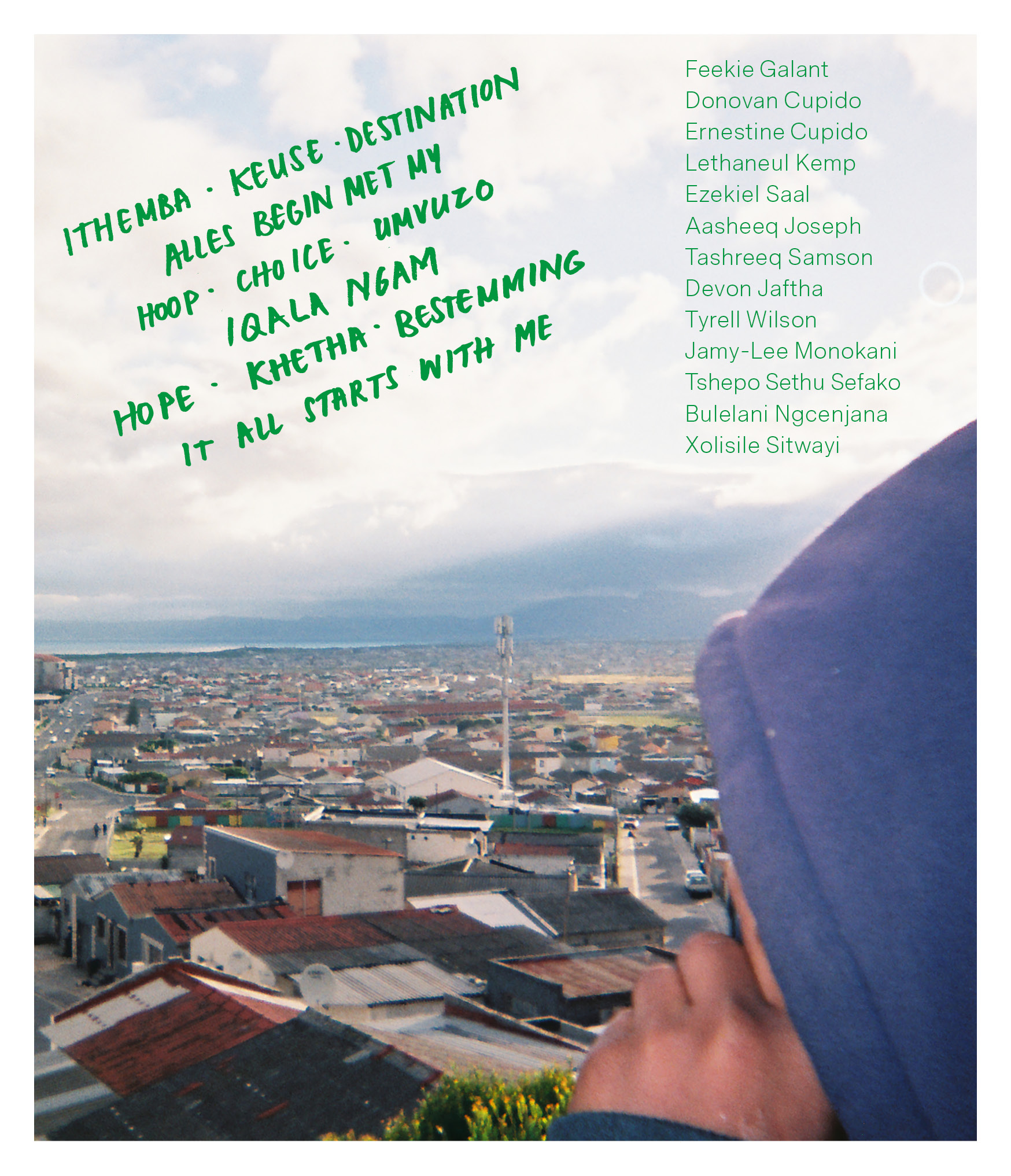
You are invited to a pop-up exhibition and book launch of the Youth, Identity and the City project together with Rosca Warries, Kirstin Warries, Dane Van Rooyen and TPA Youth for Change, on Thursday 5 December from 16:00. It all starts with me is a one-day exhibition based on the African Centre for Cities research project Youth, Identity and the City led by researcher Mercy Brown-Luthango, which engaged 13 out-of-school and unemployed young people from Mitchell’s Plain, Philippi and Gugulethu in a process of self-reflection using photography as a tool. The focus was on the role of young people in cities; how they understand their position, community, identity and location (spatially, emotionally and socially) in relation to the city as a whole, in this case Cape Town. As part of this process, led by noDREAD Productions and their photography workshop design Image vs Truth, each participant was furnished with two disposable cameras to capture photographs of the communities where they live as well as historical places visited in the city. As one of the final outputs of the project, with guidance from Rosca Warries, Kirstin Warries and Dane Van Rooyen, the young people undertook a process of curating an exhibition of these photographs. All the photographs are part of a moving exhibition from the University of Cape Town, for the launch, to Phillipi Village and Tafelsig Library where the participants’ peers and community can engage and encounter their messages and photographs of hope. WHEN: Thursday, 5th December 2019 TIME:  16:00 to 18:00 VENUE:  The New Lecture Theatre, Upper Campus, UCT RSVP: shakira.jeppie@uct.ac.za

Contested Knowledges for Just Urban Futures

Channing Hall 45 Surrey Street, Sheffield, United Kingdom

For urban scholars to be committed to more just urban futures is not new; yet the conditions and contexts from and in which academics engage are constantly changing. From means concerning ourselves with the context of the university itself, the distancing and / or proximity afforded by the university, the dynamics of the spaces from which we engage and the implications for our understanding of and relationships between knowledge and action. In means recognising that a  commitment and/or engagement to realising just urban futures is often practiced in the interstices, boundaries or margins of intersecting domains, in liminal spaces between the university and the urban context. Working from and in these different spaces requires reflexive engagement (May and Perry 2017) and adaptiveness and creativity in academic practice, as knowledge claims are challenged and contested in intentional and unanticipated ways. A range of issues are brought into focus: how we think about time, space, positionality and power; how competing or contesting knowledge claims affect our sense of belonging and our commitment; if (and how) these are mediated through inter-referential reflexivity. We need to pay attention to the peculiarities of these spaces and how these are navigated, negotiated and with what effects. This seminar asks: How does our commitment to just urban futures specifically manifest in practice, in the context of the wider co-productive turn and interest in different ideas about what it means to be an ‘engaged’ academic? Event details Tuesday, December 10, 2019 - 10:00 to 17:00 Channing Hall, 45 Surrey Street, Sheffield S1 2LG This seminar is explicitly aimed at established academic researchers working in universities, with a commitment to socially just and sustainable futures, to share and learn from practice. It will take place over one day with propositions, presentations and discussions and include an early evening dinner (1730-1900). The seminar is organised by Professors Tim May and Beth Perry with funding from the Economic and Social Research Council and the Realising Just Cities Programme (https://realisingjustcities-rjc.org/). It is also part of the Urban Institute's Co-producing Urbanisms theme. Provocations will be made by Professor Beth Perry, Urban Institute, University of Sheffield Dr Zarina Patel, University of Cape Town Dr Michele Lancione, Urban Institute, University of Sheffield Professor Felicity Callard, Birkbeck Institute for Social Research, University of London Dr Sally Lloyd Evans, University of Reading Professor Rowland Atkinson, Urban Studies and Planning, University of Sheffield Dr Lee Crookes, Urban Studies and Planning, University of Sheffield Dr Hayley Bennett, University of Edinburgh and Dr Richard Brunner, University of Glasgow Professor Doina Petrescu, University of Sheffield Click here for a detailed seminar programme and abstracts.   Places will be limited and booking is essential. If you would like to attend, please RSVP to v.l.simpson@sheffield.ac.uk with name, university and a couple of lines on your urban research and engagement activity.

Cities of integrity – innovative approaches to tackling corruption and cultivating a culture of integrity, trust and openness in urban development

Hall 2, Room 1 Abu Dhabi , United Arab Emirates

Cities of Integrity project hosts a panel discussion at the World Urban Forum in Abu Dhabi, on Sunday, 9 February 2020 from 14:00 to 16:00. Urban innovation flows from multiple actors securely, independently seeking opportunities for improvement of their livelihoods, their homes and their social fabric. Urban development that is underpinned by a culture of integrity, transparency and accountability is an essential condition minimising the risks that would otherwise block this innovation and investment. You may plan and wish for a prosperous, inclusive, equitable, resilient or sustainable city but if norms of integrity and openness are corroded by corruption none of these aspirations can be achieved. Our event will provide a platform to raise our shared understanding of the urban corruption risks at hand. We will discuss the latest facts and figures related to the major integrity challenges in urban development, their scale, scope and development over time in the cities of both the global north and south. At least equally important we will take this empirical overview as a point of departure to embark on a joint exploration of the innovative tools and approaches available to build and nurture strong cultures of integrity at the city scale. By weaving together insights and perspectives from urban planners, architects and urban policy-makers on the one side and experts and practitioners on transparency, integrity and governance we will launch an inspirational, interactive conversation around the many practical tools and innovative levers that can be activated to architect and nurture such cultures of urban integrity. Questions to explore with the audience include: what are the major ”integrity vulnerabilities” in urban development? What strategies to promote urban cultures of integrity have been found to be effective so far? What roles can the professional community of urban planners and architects play in addressing these integrity risks? What is a realistic contribution that new technologies can make beyond the hype that surrounds them? What responsibility falls to the private sector and what practical action is already coming from the business side? How can the creativity of urban place-making be harnessed? We will seek to explore these questions not just through a set of inspirational panel presentations but also by tapping into the expertise and creativity of the audience through interactive conversation formats. The aim is to provoke new thinking around these issues and plant the seeds for much needed new partnerships around urban integrity issues that harness the expertise and commitment of a diverse set of urban stakeholders. MODERATOR Adi Kumar – Development Action Group, South Africa PANELISTS Gilbert Siame – Centre for Urban Research and Planning, University of Zambia Jennifer Bretana – Hivos, Philippines Dieter Zinnbauer – African Center for Cities, South Africa and Copenhagen Business School, Denmark Alex Warnock-Smith – Central Saint Martins, United Kingdom WHEN: Sunday, 9 February 2020 TIME: 14:00 to 16:00 VENUE: Hall 2, Room 1, Abu Dhabi, UAE