BROWNBAG SEMINAR: How Cities Respond to Climate Change: Ambition and Reality of European and African Cities

Studio 5 Environmental and Geographical Sciences Building, Upper Campus, Cape Town, South Africa

Join ACC and ACDI for a lunchtime brownbag seminar by Diana Reckien, Associate Professor, University of Twente, Netherlands entitled How Cities Respond to Climate Change: Ambition and Reality of European and African Cities. WHERE: Studio 5, Level 5, Environmental & Geographical Sciences Building (EGS) UCT Upper Campus, Rondebosch WHEN: 12.30 – 1.30pm, Monday 28 January 2019 Diana Reckien will present some of her latest research on local climate planning in European cities, that builds on a network of 30 collaborators across the EU-28. Building up a database of the climate change response of 885 cities in the EU-28 (representative of the urban profile in their country), Diana and colleagues were able to yield insights into which cities in Europe prepare climate (adaptation or mitigation) plans and what these plans entail. This provides information about, e.g., the mitigation targets/ambitions and whether these would be sufficient to reach 1.5/2C, prominent mitigation and adaptation sectors, and modes of implementation (mainstreaming or not). Diana will then move to some of her work in African cities, presenting recent research on mainstreaming in Kigali City (Rwanda) and on environmental urban migration in northern Kenya. She will close with ideas and plans for future research, e.g. potentially open up topics for collaboration, such as perception based climate change impact analyses in African cities using FCM, cascading impacts, socially sensible adaptation options, and/or the effectiveness of adaptation plans. BIOGRAPHY Diana Reckien is Associate Professor "Climate Change and Urban Inequality" at the University of Twente, the Netherlands. She specializes at the interface of climate change and urban research, with the aim to contribute to justice efforts. One of her current research question is how climate change mitigation and adaptation policies affect and interact with social vulnerability, equity and justice, and how to set up adaptation and mitigation policies in order to avoid respective negative side-effects. Other research interests include method development for impact and adaptation assessments, and modelling approaches, social vulnerability, and climate change migration. She mainly investigates urban areas in Europe, Asia (mainly India), and Africa. To do so, she employs large comparative studies using social science methods, such as questionnaires, case study analyses and multi-variate statistics, as well as Geographic Information Systems (GIS) and Fuzzy Cognitive Mapping (FCM). Diana is Coordinating Lead Author for “Chapter 17: Decision-making options for managing risk” of the Working Group II Contribution to the IPCC Sixth Assessment Report. She led parts of the Second Assessment Report for Climate Change in Cities (ARC3.2; Eds: Rosenzweig, Solecki et al.; Cambridge University Press) - those that relate to equity and environmental justice. She serves on the Editorial Board of “Renewable and Sustainable Energy Reviews”(IF 8.050). Her publication record comprises roughly 70 publications, including 25 peer-reviewed journal papers, a number of book chapters, and two special issues.

SDGs Seminar Series: Localizing the SDGs in South Africa

Environmental and Geographical Science Building South Lane, Upper Campus, UCT, Cape Town, Western Cape, South Africa

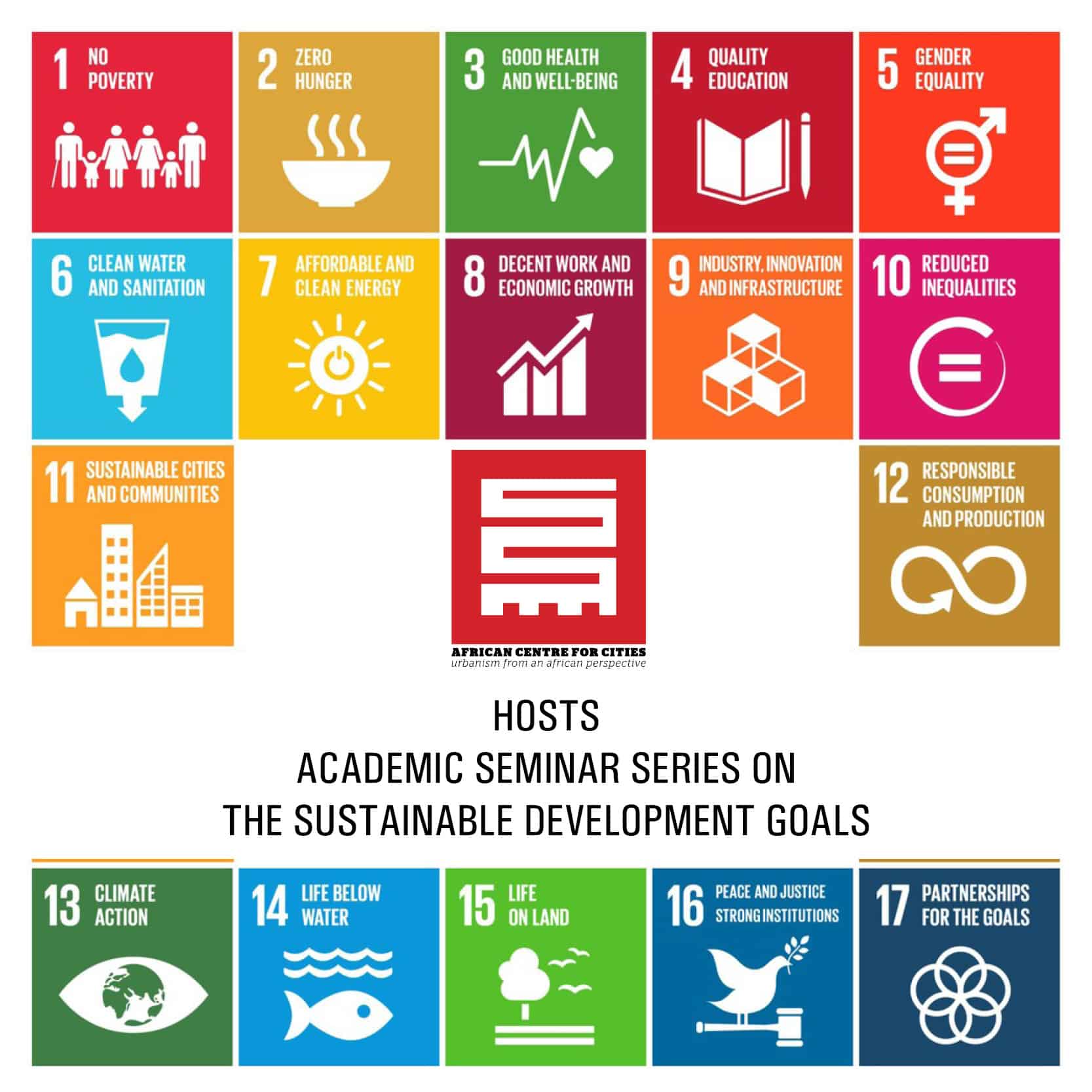
Over the course of the next semester African Centre for Cities will be curating and hosting a series of seminars and discussions on the Sustainable Development Goals. The series kicks-off with Dr Sylvia Croese with a seminar on Localizing the SDGs in South Africa on Wednesday, 13 February 2019, at 12:30 to 14:00 in the Environmental and Geographical Sciences Building, Upper Campus, University of Cape Town. The inclusion of a standalone urban goal as part of the 17 SDGs adopted in 2015 represents the culmination of the growing recognition and acknowledgement of the importance of cities as both drivers and actors in achieving sustainable development. However, nearly four years down the line very little is known about the ways in which local governments are going about the implementation and monitoring of the SDGs. This presentation draws on on-going research in and with the City of Cape Town to shed some light on some of the factors and conditions that may limit or enable SDG localization. It kicks off a series of seminars that will be held on a monthly basis throughout 2019 on the challenges and opportunities for SDG implementation in (South) Africa. WHEN: Wednesday, 13 February 2019 TIME: 12:30 to 14:00 VENUE: Environmental and Geographical Sciences Building, Upper Campus, UCT

Bad Health in a Good Retreat: Life and Death in the ‘Worst’ Neighborhood of São Paulo, Brazil

Studio 1 Environmental and Geographical Sciences Building, Upper Campus, UCT, Cape Town, South Africa

Prof Jeffrey Lesser will be presenting a seminar entitled Bad Health in a Good Retreat: Life and Death in the 'Worst' Neighborhood of São Paulo, Brazil, on Monday, 25 February 2019, 12:30 to 14:00, in the Studio 1, Environmental and Geographical Science Building, Upper Campus, UCT. ABSTRACT Bom Retiro was (and is) a small neighborhood in the huge megalopolis of São Paulo, Brazil.  The mainly working class neighborhood has been populated since the end of the 19th century by immigrants, migrants from the impoverished Brazilian northeast, and Afro-Brazilian descendants of slaves. While the cultural backgrounds of the immigrants have shifted (from Italians, Spaniards and Portuguese Catholics in the early 20th century to East European Jews in the mid-20th century to Chinese, Korean, Paraguayan, and Bolivian immigrants today), the neighborhood has been viewed internally and externally as one where health (in the broadest sense of the word) is precarious. “Bad Health in a Good Retreat” analyzes the relationship between “Public Health” (as a state driven set of policies and linked enforcement) and “The Public’s Health” (how real people understand their own experiences).   By focusing on one square block of Bom Retiro from about 1900 to the present I use archival and ethnographic methods to analyze the daily practices of residents and health officials, and the stories they tell about life, death, and the spaces in between. BIOGRAPHY Jeffrey Lesser is Samuel Candler Dobbs Professor of Brazilian Studies and Director of Emory University’s Halle Institute for Global Research.  His research focus is on the construction of national identity in Brazil, focusing on how immigrant and ethnic groups understand their own and national space.   Lesser is the author of numerous prize winning books including, Immigration, Ethnicity and National Identity in Brazil (Cambridge University Press) A Discontented Diaspora: Japanese-Brazilians and the Meanings of Ethnic Militancy (Duke University Press); Negotiating National Identity: Immigrants, Minorities and the Struggle for Ethnicity in Brazil (Duke University Press);  and Welcoming the Undesirables: Brazil and the Jewish Question (University of California Press). 

Launch of ‘The Walk’

Studio 5 Environmental and Geographical Sciences Building, Upper Campus, Cape Town, South Africa

African Centre for Cities invites  you to the launch of a new publication entitled The Walk. This publication, which is based on a research study entitled The Prospects for Socio-Spatial Transformation in the Voortrekker Road Corridor by Mercy Brown-Luthango, was supported by the French Development Agency (AFD) and focuses on Maitland, Kensington and Factreton. The main concern of this study was to understand the vision of city officials and politicians, as outlined in major policy documents, and how this compares to the daily lived experiences of those who reside and conduct business in the three study areas. Please join us for a series of panel presentations followed by a facilitated discussion on the prospects and challenges for socio-spatial transformation in the Voortrekker Road Corridor Integration Zone (VRCIZ). DATE: 18 March 2019 TIME: 11:30 to 13:00 (followed by lunch) VENUE: Studio 5, Environmental and Geographical Science Building, Upper Campus, University of Cape Town PLEASE RSVP to africancentreforcities.rsvp@gmail.com by 16 March 2019 for catering purposes.

Whose Heritage Matters? Mapping, Making and Mobilising Heritage Values for Sustainable Livelihoods in Cape Town and Kisumu

Studio 1 Environmental and Geographical Sciences Building, Upper Campus, UCT, Cape Town, South Africa

Cape Town and Kisumu are two secondary African cities with high levels of poverty, unemployment and inequality. There is much interest in developing sustainable approaches to harnessing tangible and intangible heritage to address these challenges. However, cultural heritage is a value-laden concept, particularly in the context of colonial histories and urban futures. Whose heritage matters? How can we negotiate competing and plural values? How can cultural heritage be mobilised to support sustainable livelihoods? Funded by the British Academy, this co-produced action research project will bring different stakeholders and communities together to map heritage values and develop creative interventions to harness tangible and intangible heritage for sustainable development’. This Brown Bag Seminar will introduce the project, and open up a conversation about the role and value of heritage in sustainable and just urban development. When: 10 April 2019 Time: 12:00 – 13:o0 Venue: Studio 1, Environmental and Geographical Science Building, Upper Campus, UCT

SDG Seminar: Unpacking SDG implementation in eThekwini

Studio 3 Environmental and Geographical Sciences Building, Upper Campus, UCT, Cape Town, South Africa

Puvendra Akkiah, IDP Manager of eThekwini Municipality and Technical Chair of the United Cities and Local Governments Committee on Urban Strategic Planning, will present a talk entitled Unpacking SDG implementation in eThekwini on Wednesday, 17 April, at 14:00 to 15:30 in Studio 3, Environmental and Geographical Science Building, Upper Campus, UCT. Akkiah will be talking about the City of eThekwini's bottom-up approach to aligning its Integrated Development Plan to the SDGs as part of its strategic approach to sustainability and the advocacy and training activities that the City has undertaken to raise awareness and support for SDG localization. WHEN: 17 April 2019 TIME: 14:00 to 15:30 VENUE: Studio 3, Environmental and Geographical Science Building, Upper Campus, UCT.

BOXES

Studio 5 Environmental and Geographical Sciences Building, Upper Campus, Cape Town, South Africa

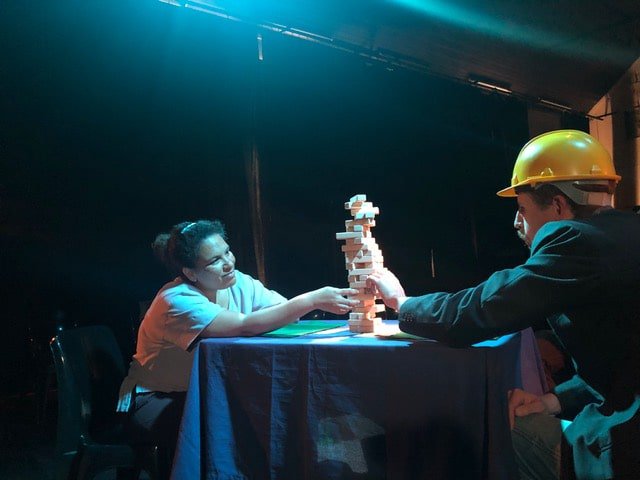
BOXES is a social-justice theatre project devised by award-winning theatre makers Neil Coppen and Ameera Conrad, Journalist Daneel Knoetze and performers Quanita Adams and Mark Elderkin. The project draws from a range of research-based, verbatim and documentary theatre methodologies to explore a myriad of perspectives and insights into urban land justice issues occurring across city of Cape Town. The plays central narrative focuses around a young Cape Town couple: Kaye (Quanita Adams) and Lawrence (Mark Elderkin) who have recently moved into the inner-city and find their preparations for a house-warming dinner, derailed when Lawrence announces that he has accepted a job offer to design a state-of-the art residential development in lower Woodstock. When it is discovered that local residents will be evicted from their neighbourhood to make room for the development, Kaye begins to probe the repercussions of her partner’s latest venture. As Kaye and Lawrence battle it out, we learn of Kaye’s interactions with her Aunt Sumaya in the Bo Kaap, who due to rising rates is having to sell up her family home and has been inspired to return to her activist roots. As Kaye and Lawrence attempt to arrive at some sort of a resolve before the arrival of their dinner guests, audiences encounter a myriad of characters including property developers, politicians, residents and whistleblowers whose lives are impacted, for better or worse, by the gentrification trends sweeping across the city and suburbs. Over the course of four short scenes, BOXES probes the legacy of apartheid spatial planning and forced removals, examining notions of ‘development’ and ‘progress’, by interrogating the question: Who is really benefitting from all this so-called progress? BOXES forms part of a wider Open Society Foundation project which connects South African investigative journalists with theatre makers and artists. The Open Society foundation funded the project which sees creatives interpret the work of investigative journalists with the hope that alternative dissemination strategies would enable these narratives to reach wider audiences in the lead up to the 2019 South African elections. The play is produced by Empatheatre, a company founded by Neil Coppen, Mpume Mthombeni and Dylan McGarry. Empatheatre has been responsible for launching several social-justice theatrical projects over the last decade including Soil & Ash (focusing on rural communities facing pressure from coal-mining companies), Ulwembu (street-level Drug addiction and harm reduction advocacy), The Last Country (female migration stories) and Lalela ulwandle (an international theatre project supporting sustainable transformative governance of the oceans). More recently the Empatheatre team has been invited to work internationally in New York, St Louis, Toronto, Fiji, Ghana and Namibia. DATE: 26 April 2019 TIME: 14:00 to 15:00 VENUE: Studio 5, Environmental and Geographical Science Building, Upper Campus, UCT Space is limited. Please RSVP to africancentreforcities.rsvp@gmail.com

POWER TALKS

Ramolao Makhene Theatre at The Market Theatre Laboratory 138 Lilian Ngoyi Street Newtown, Johannesburg, South Africa

The POWER TALKS discussion series, curated and co-hosted by African Centre for Cities and the Goethe-Institut, considers the various practices of European cultural institutions that are active on the African continent. Working in post-apartheid or post-colonial contexts means, for these institutions, a need to situate themselves carefully as well as to be mindful of, and willing to review their working methods. For the first iteration of POWER TALKS, happening at the Ramolao Makhene Theatre at The Market Theatre Laboratory, we have invited Laila Soliman, Khwezi Gule, Leigh-Ann Naidoo and Molemo Moiloa. The discussion will be facilitated by Jeff Tshabalala. WHEN: Tuesday, 7 May 2019 TIME: 18:30 VENUE: Ramolao Makhene Theatre at The Market Theatre Laboratory, 138 Lilian Ngoyi Street Newtown, Johannesburg POWER TALKS is part of a series of events in 2019 and 2020 to consider dynamics on the African continent and working methodologies of the Goethe-Institut in the region.

GDI Lecture Series: Ambitious and ambiguous public investments in African cities with Edgar Pieterse

The Global Development Institute is pleased to host Edgar Pieterse as part of the GDI Lecture Series, talking about: Ambitious and ambiguous public investments in African cities Urban governance in most African cities is marked by weak regulatory enablement by national governments, limited autonomous fiscal resources, limited managerial capacity, overlaid by distortionary politics—read a combination of clientelism, patronage, corruption, etcetera. At least, this is the conclusion one arrives at by reading most of the academic literature on the topic. However, in contradistinction, over the last decade or so, there has been a proliferation of ambitious planning and delivery, of especially, mega infrastructural projects. These developments coincide with the proliferation of mainstream incantations of “Africa rising” and other boosterism discourses. It raises important questions about how this level of institutional efficacy could be possible if the literature is accurate. In this talk I aim to report on the findings of a research project on so-called turn-around African cities. We set out to document how noteworthy urban mega projects came onto the agenda, were implemented, often effectively, and what the possible effects might be. The idea is to offer a set of empirical reflections, drawing on six African cities, to get a more refined understanding of contemporary urban planning and governance dynamics in rapidly changing and conflictual contexts. The Global Development Lecture Series brings experts involved in global development to The University of Manchester. It aims to facilitate dialogue and discussion, providing a space for leading development thinkers to share their latest research and ideas. Lectures are followed by an audience Q&A. This event is open to members of the public and information on the accessibility of the venue is detailed at this link: https://www.accessable.co.uk/venues/roscoe_th-b

How data-ready are African governments to monitor SDG progress?

Davies Reading Room Room 2.27, Environmental and Geographical Science, UCT, Cape Town, Western Cape, South Africa

UCT Datafirst Manager Lynn Woolfrey presents How data-ready are African governments to monitor SDG progress? Zambia and Zimbabwe reviews on Wednesday, 15 May at 12:30 to 14:00 in Davies Library, Environmental and Geographical Science Building, Upper Campus, UCT. ABSTRACT It is clear from the development literature that Sustainable Development Goal (SDG) plans must include the building of efficient development data ecosystems (OECD, 2015, p. 16). Such systems can provide governments with country-level indicators for SDG planning and monitoring. For example, the UN Economic Commission for Africa’s Africa Data Consensus suggests that official and other data producers partner to create an international data ecosystem for development planning (UNECA, 2015, p. 2).  In 2017 the UN Development Programme (UNDP) adopted such an ecosystems approach to conduct data audits with African governments. The audits assess a government’s “SDG indicator readiness”- whether accurate and current data is available to compile their SDG indicators – and investigate causes and solutions. The UNDP has found ecosystems mapping useful to expose the causes of poor quality national statistics, such as inadequate funding and bureaucratic resistance to change (Menon, 2017, pp. 12-13, 20). This seminar presents the findings of two SDG indicator readiness audits, in Zambia and Zimbabwe, and comment on the outcomes, and the value and shortcomings of these audits for development data capacity-building in African countries. WHEN: Wednesday, 15 May 2019 TIME: 12:30 to 14:00 VENUE: Davies Library, Level 2, Environmental and Geographical Science Building, Upper Campus, UCT.