
Revaluing the City
The ACC is hosting Study Space IX on behalf of the Center for the Comparative Study of Metropolitan Growth in the College of Law at Georgia State University, Atlanta, USA.



The ACC is hosting Study Space IX on behalf of the Center for the Comparative Study of Metropolitan Growth in the College of Law at Georgia State University, Atlanta, USA.
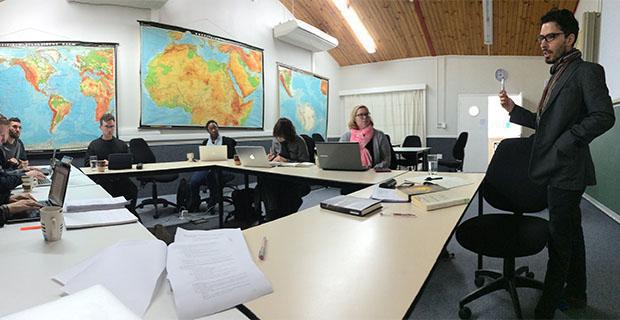
The 2016 Annual ACC Seminar/PhD Course on Democratic Practices in Cape Town: The Aesthetical and the Political of Unequal Geographies: Reading across Political Philosophy and Global South Urbanism July 4-8, 2016, Seminar Room 1, EGS Building, Upper Campus, University of Cape Town. Organised by Henrik Ernstson and Andrés Henao Castro. The seminar is given by the African Centre for Cities (ACC) at the University of Cape Town. To apply, please send your letter of interest no later than 6 May 2016 to Henrik Ernstson (henrikDOTernstsonATuctDOTacDOTza). We hope the seminar with its readings and discussions can contribute new angles and perspectives to your research. More information on the 2016 theme, reading and seminar methodology is given below. Rationale for 2016: Aesthetics and politics! The task is urgent and profound: How to make sense of rapid urbanization across Africa and the global South, while (re)turning to explicitly think about emancipatory politics? What does the political mean in these contexts? What constitutes properly democratic practices of equality and freedom? What can we learn by rubbing political theory against urban studies of ‘the South’? This annual seminar series emerges out of an interest to put into conversation political philosophy and global south urbanism. Importantly, our objective is not that of supplementing a theoretical abstraction (e.g. ‘the political’) with some kind of concrete spatiality. Rather, we are interested in the global south as an epistemological position and a field of experience that has specific contemporary sociomaterial realities that we hope can trouble and re-new both radical urban theory and political theory. Following last year’s seminar, in which we related our readings of Plato to Rancière with critical urban studies of the South, this year we gather a seminar that problematizes the relationship between the political and the aesthetic. This puts more focus on artists and activists that intervene materially and socially in the fabric of urban spaces, and it brings us towards the political in a quite specific way. More concretely we aim to relate questions around what Jacques Rancière calls the distribution of the sensible with interventions in urban spaces. We aim to push the seminar to think about the representation and troubling of an aesthetic regime from the perspective of how it has become embedded in urban and non-urban settings. We will exploit texts that have linked theoretically the political with aesthetic regimes and how this translates troubles and can be re-thought in the context of the global south. We want to ask, for example: How does the symbolic remaking of a space through an artistic intervention trouble the otherwise naturalization of that space as reducible to its presumable functions (i.e., market values)? What is the relationship between this interruption of the function of a space and that of politics? How can artistic interventions force the community to confront that which it disavows? What kind of conflict do such forms of expressing the senses create within urban spaces? How are those urban spaces transgressed, circumvented, rearranged, reimagined, etc., so as to trouble the very limits of what can be perceived and sensed in the city? How do these spatial contestations take place today, under what kind of aesthetic practices? And how could this possibly lead to processes of political subjectivization, a politicization of collectivities, bodies, and spaces in the name of equality? In light of 2015 and the student movement of South Africa, questions of democracy, decolonization and profound emancipatory change have brought these questions into even sharper focus. And this does not mean to forget other recent women, workers and community rebellions, nor the slow-grinding and incremental institutional changes of empowerment that is also ongoing. Indeed, we hope this seminar/course will provide a chance for all participants to think about these recent events and processes. We hope it will contribute material and discussions through which you can re-think and sharpen your own research projects. Seminar Methodology Our seminar focuses on readings of political theory that interrogate the relationship between the aesthetical and the political, across a variety of philosophical approaches. Yet it explores such relationship with a particular and rather unusual emphasis on urban and non-urban geographies of the global south. We want to discuss questions about representation, intervention, performativity, sensuousness, visibility, audibility, occupation, inscription, by placing these theories within uneven geographies that should trouble existing theoretical findings and help us to reformulate our research questions, methodologies approaches and theoretical assumptions. In the readings we have chosen to place more emphasis on political philosophy as these are less known to most of us, and since this makes best use of Dr. Andrés Heano Castro’s visit here at ACC in Cape Town. The texts on global south urbanism will bring in contextual and theoretical aspects into the seminar, but we also rely on participants’ wider readings and their own research on urbanization, global south and decolonization. Below you will find the current list of readings, which will be updated. Schedule and Readings We will meet for 3 hours every day. Andrés will talk for the first 30 minutes, in order to provide context for the theoretical discussion: what is at stake in the texts, where does the text stand in relation to intellectual debates, and summarize main points, etc. Then we open the floor for discussion in which the global south urbanism literature will enter as ways to unpack and think about the seminar questions, how our empirical work are helped by these texts, while challenging them and ‘speaking back’. Through this we will have a chance to re-think our own research and case studies. For each day we will provide questions to orient your reading, and serve as starting point for our discussions. Based on this you can write down and raise your own questions to further give direction to the seminar. We will have a short 10 minute break two hours into the seminar and then we will return for another 45 minutes of discussion. Coffee and tea will be served during the seminar. (NB: Global south urbanism reading and questions will be complemented later alongside points 1-3 in the...
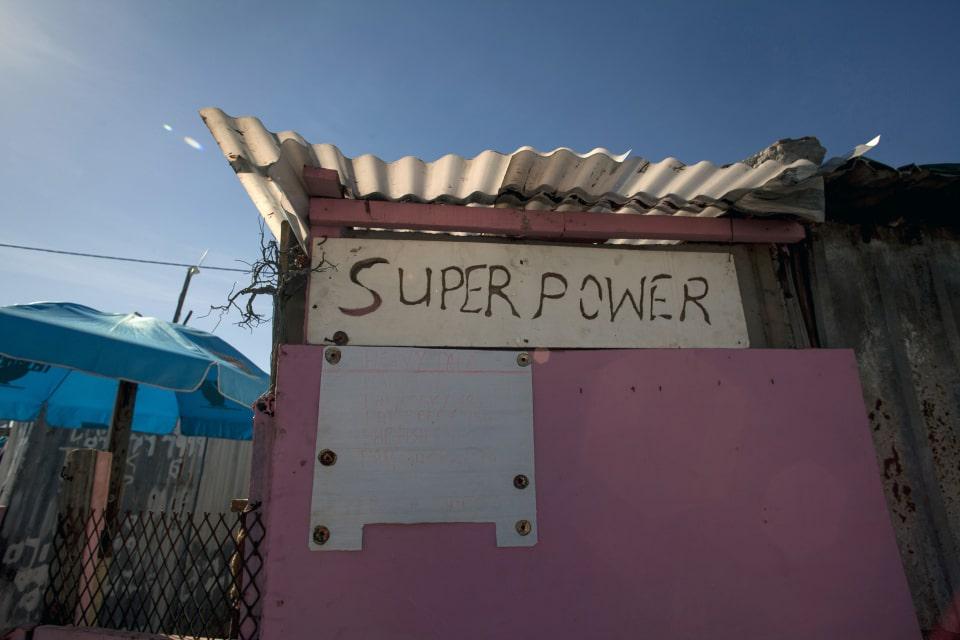
start again the new road at dawn. yesterday’s road has led to yesterday’s destination. today is a new chaos. a new journey. a new city. needing new paths. and new standards. Ben Okri - The Ruin and The Forest Cape Town remains stubbornly segregated, with a large portion of the population living in undesirable conditions. Access to resources is still skewed towards the formal art market based in the City Bowl. Despite this, there are numerous people engaging in critical and creative ways of re-articulating the potential of the city through art. Increasingly, public-facing art is playing a central role in imagining a free, inspired and inclusive reality. Public Art and the Power of Place, initiated by the African Centre for Cities at UCT, with support from the National Lotteries Commission, emerged as an experiment in finding new ways of representing and interconnecting with socio-political urban issues in Cape Town. It involved supporting seven public art projects in Cape Town’s townships in 2015. From Khayelitsha to Bonteheuwel, optimistic and determined individuals explored the significance and impossibilities of place outside the City Bowl. The ACC is excited to invite you to the closing event of the project at the Cape Town Library (Corner Darling and Parade Streets), where the stories and reflections of these projects will be used to ignite an open and constructive conversation about the present and the future of public art within the context of Cape Town. Through dialogue, workshops and an archival exhibition the two-day intervention builds a platform for a collective exploration of publicness. An African Centre for Cities project with guest curators Valeria Geselev and Naz Saldulker. See the attached programme, check out the Facebook event or contact powerofplace@uct.ac.za for more details. PoP_Programme_18July FUNDED BY: The NLC relies on funds from the proceeds of the National Lottery. The Lotteries Act guides the way in which NLC funding may be allocated. The intention of NLC funding is to make a difference to the lives of all South Africans, especially those more vulnerable and to improve the sustainability of the beneficiary organisations. Available funds are distributed to registered and qualifying non-profit organisations in the fields of charities; arts, culture and national heritage; and sport and recreation. By placing its emphasis on areas of greatest need and potential, the NLC contributes to South Africa’s development.