Sub-Saharan Africa’s New Suburbs

Studio 5 Environmental and Geographical Science, Upper Campus, UCT,, Cape Town, South Africa

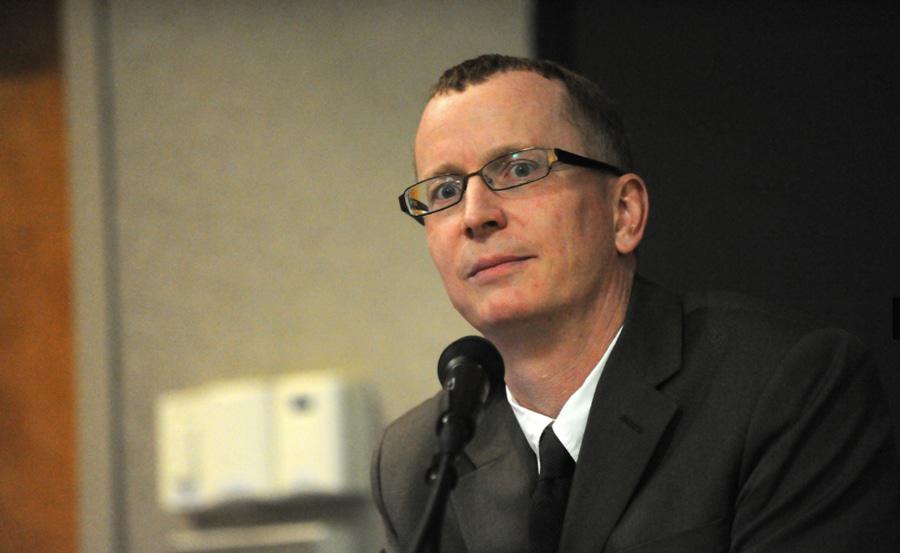
Remaking the Edges: Sub-Saharan Africa's New Suburbs — This paper examines the edge areas of Lusaka, based on fieldwork from 2013, as a broad example of the trajectory of urban expansion at the new urban frontiers in Sub-Saharan Africa. I emphasize four themes: (1) the significance of new foreign investment in urban frontier zones (particularly from China); (2) the bifurcated character of the expansion; (3) the rise of surveillance technologies; and (4) the endurance of continuities with European colonialism. About the Speaker: Garth Myers is the Paul E. Raether Distinguished Professor of Urban International Studies at Trinity College. He is Director of the Urban Studies Program. A geographer with thirty years of research experience on and in African cities, Myers teaches courses in both urban studies and international studies at Trinity. Myers has contributed to the growth of urban studies and geography research on the continent, through 5 books and more than 60 articles and book chapters. His most recent book is African Cities: Alternative Visions of Urban Theory and Practice (London: Zed Books, 2011).

Complicit masculinity on the African urban periphery

Davies Reading Room Room 2.27, Environmental and Geographical Science, UCT, Cape Town, Western Cape, South Africa

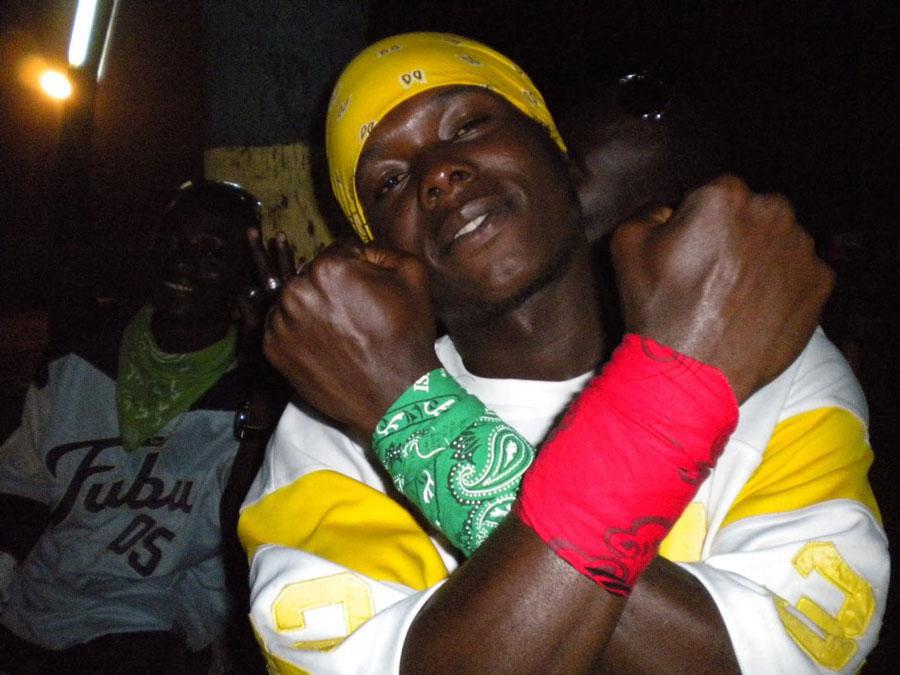
In her talk titled "Entrepreneurs and consumers: complicit masculinity on the African urban periphery", Dr Jordanna Matlon will explore the relationship between masculinity and work in the double context of protracted economic and political crisis in Abidjan, Côte d'Ivoire. She draws on participant observation fieldwork and interviews with men in Abidjan’s informal sector from 2008 to 2009, and is supplemented by visual data. Ivoirian men who engage in informal activities overwhelmingly claim that they cannot be viable marriage partners, and are thus incapable of achieving adult masculinity. "I examine two groups of men: political propagandists (orators) and mobile street vendors, to understand how men affirm themselves in the absence of steady and dignifying work", she says. Both groups rejected the wage-earning working ideal as “Francophone” and asserted alternative modalities of economic participation as “Anglophone” men: entrepreneurs or consumers. Orators used ties to President Laurent Gbagbo’s political regime to secure livelihoods and pursue entrepreneurial identities. Vendors bypassed the state and asserted consumerist models of black masculinity from across the African diaspora. I employ “complicit masculinity” to examine how a relationship to capital mediates masculine identity. In doing so I demonstrate how men’s desires to counter gendered socioeconomic exclusion generate consent toneoliberal capitalism. About the speaker Jordanna Matlon is a postdoctoral fellow at the Institute for Advanced Study in Toulouse and received her doctorate in Sociology from UC Berkeley in 2012. She uses participant observation, interviews and visual analysis to study the livelihoods and lifestyles of men in Abidjan, Côte d’Ivoire’s informal economy.  More generally, she is interested in questions of race and belonging in Africa and the African diaspora, and the ways “blackness” as a signifier – and in its intersection with gender, class, and national identity – illuminates understandings of popular culture, postcoloniality and neoliberalism in the contemporary city. Jordanna's work has appeared in Antipode, Contexts, Ethnography and Poetics, among other places, and she is currently preparing her book manuscript, tentatively titled “I will be VIP!”: Masculinity, Modernity and Crisis on the Neoliberal Periphery.   Video abstract: http://antipodefoundation.org/2014/02/17/narratives-of-modernity-masculinity-and-citizenship/

Radical Incrementalism & Theories/Practices of Emancipatory Change

Studio 3 ENGEO Building, Upper Campus. University of Cape Town,, Cape Town, Western Cape, South Africa

This workshop examines ideas of radical incrementalism across our towns and cities. It seeks to explore theories and practices that can support emancipatory change across urban regions through the power of urban dwellers to challenge poverty, oppression and unjust environments.

World-class city making in Africa – a view from Angola through the redevelopment of the Bay of Luanda

Seminar Room 1 Environmental & Geographical Sciences Building, UCT Upper Campus

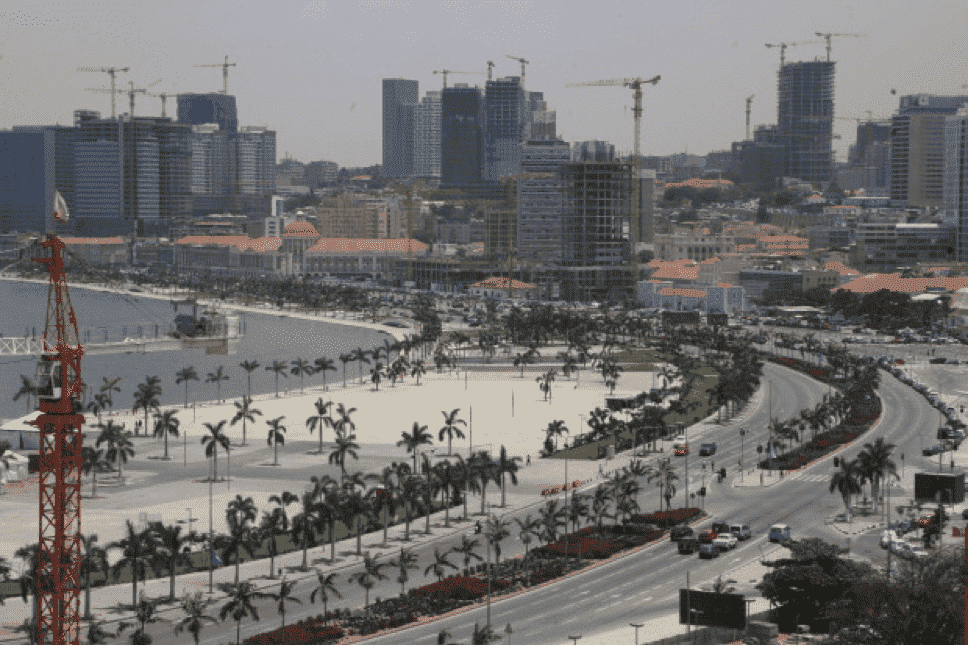
The ACC is happy to announce the first academic seminar for 2016. Dr Sylvia Croese will be presenting a paper entitled, 'World-class city making in Africa – a view from Angola through the redevelopment of the Bay of Luanda'. Abstract This paper examines the redevelopment of the Bay of Luanda as the epitome of a process of world-class city making that has unfolded in the capital of Angola since the end of the war in 2002. In an era that has been marked by ‘Africa’s rise’, concomitant efforts towards the building of world-class African cities have generated growing research interest over the past years. However, often these efforts are seen as uncritically adopted or externally imposed imitations of global/world city models. This paper aims to take world-class city making in Luanda seriously by analyzing its dynamics on its own terms, thereby moving beyond accounts that either romanticize or demonize this process. Based on an analysis of the history of the Bay of Luanda and the actors, discourse and imaginaries involved in its redevelopment, the paper makes three interrelated arguments. Firstly, it argues that while discourses underpinning world-class city making may reflect external or economic drivers, such as a desire to attract international investment, the case of Luanda shows that this practice can be equally or even more strongly driven by internal or political objectives, such as the pursuit of national legitimacy and domestic stability. From this follows that world-class city making in Africa does not necessarily have to be externally imposed, managed or financed, but that it can also be ‘home-grown’ and led by national rather than city governments, especially in resource-rich and authoritarian states like Angola. Finally, the paper argues that while the mainstream world-class city literature tends to focus on the futuristic nature of world-class city aesthetics, the redevelopment of the Bay of Luanda shows how efforts to revive modernist colonial architecture may equally underpin world-class city making. The study of world-class city making should then not only consider ‘introspective’ vs ‘extrospective’ politics but also ‘retrospective’ rationales or the ways in which utopia and nostalgia intersect across time and space. Bio Dr Sylvia Croese is a post-doctoral research fellow at the department of Sociology at the University of Cape Town. She has written and conducted extensive research in and on Angola as a researcher and consultant and has an interest in issues related to housing and urban development, local governance and electoral politics in Africa.

LAUNCHING THE URBAN ACADEMY: Smart cities, clever urbanism: digitally enabled practices in urban Africa

Workshop 17 32 Kloof Street, Cape Town

In 2021 the African Centre for Cities (ACC), an action-oriented research hub based at the University of Cape Town and UNITAC, the result of a partnership between the United Nations Human Settlements Programme (UN-Habitat), the United Nations Office for Information and Communication Technology (UN OICT), and the City Science Lab @HafenCity University in Hamburg (CSL), initiated a collaborative platform for shared research interests under the banner of the Urban Academy. The collaboration is based on a shared interest in unpacking the intersection of technology, society, and cities to examine democratic decision-making, new models of service delivery, and the future of work. Supported by the BMW Foundation Herbert Quandt, we are delighted to invite you to the official launch of the Urban Academy on the 6 December 2022 that will be facilitated by Nokukhanya Mncwabe, a human rights consultant who enjoys forming, implementing and pulling apart policies and projects, forging friendships across geographies and disciplines, and being a tourist at home (Africa). WHEN | Tuesday, 6 December 2022 TIME | 15:00-18:00 SAST WHERE | Workshop 17, 32 Kloof Street, Gardens, Cape Town RSVP | Please send an email to africancentreforcities@gmail.com Panel one: Introducing the Urban Academy: Smart Cities, Clever Urbanism In the first panel, partnering directors Edgar Pieterse (ACC) and Gesa Ziemer (UNITAC and City Science Lab) will introduce why thinking about people-centred smartness is important for urban sustainability and justice from their different perspectives. Panel two: RISE Cities: Different approaches to make our cities more resilient, intelligent, sustainable, and equitable This interactive panel hosted by RISE Cities explores innovative urban practices in achieving resilient, intelligent, sustainable and equitable solutions and the role of responsible leadership. We are happy to invite the following to share their perspectives and facilitate their reflections: Resilience – Dr Rudi Kimmie, TSIBA Intelligence – Saidah Nash Carter, Bright Insights Global Sustainability – Murendi Mafumo, Kusini Water Equity – Brian Green, Group 44 Panel three: Young and Online in African Cities: people-centred smartness and urban wellbeing  In the third panel we explore tech-enabled ways of making lives in African cities. The following panellists will bring brief reflections into a wider conversation about what it takes to shape research agendas about the role of technology in urban justice. It is also an opportunity to introduce a new collaboration under the Urban Academy, supported by the Robert Bosch Stiftung entitled Young and Online in African Cities. Rike Sitas - Introduction: Youth in digital city-making Daanyaal Loofer - From undersea cables to street corners: smart African cities Alicia Fortuin - Platformization and the future of work Neil Hassan - Safe queer digital spaces Liza Cirolia - Techno-ambivalence and socio-technical infrastructure Hilke Berger - A research agenda for the Urban Academy?   Space is limited so please RSVP to africancentreforcities@gmail.com with the subject line: Urban Academy RSVP. If you require any further information, please contact rike.sitas@uct.ac.za.