

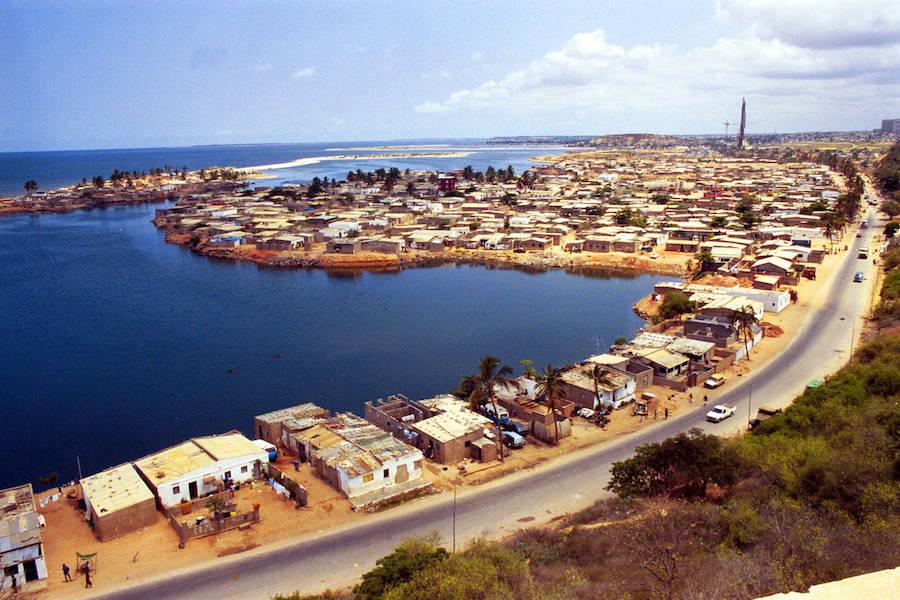
City governance in new authoritarian states

Davies Reading Room Room 2.27, Environmental and Geographical Science, UCT, Cape Town, Western Cape, South Africa

The Case for Luanda Many states in Africa have been formally democratic since the 1990s and in terms of their institutional landscape, look like electoral democracies, with constitutions, elections, parliaments, courts, local governments, private media and civic associations. Yet, in practice these institutions may not operate under the kind of political freedom and legal security that can be found in liberal electoral democracies. In spite of a growing literature on the workings of this type of ‘new authoritarianism’, there is little work on how the nature of such regimes in Africa translates to city governance. On the other hand, few studies of African cities incorporate political regime theory in their analyses. As a result, they are often either overly pessimistic or too optimistic with regard to the role of local governments and civil society in city governance. Based on a discussion of the role of the Angolan government and ruling party in the planning and governance of the capital city of Luanda, this presentation argues in favour of a more grounded understanding of the African city. About the Speaker
 Sylvia Croese is a post-doctoral fellow at the Department of Sociology and Social Anthropology at Stellenbosch University. Her PhD thesis, entitled Post-war state-led development at work in Angola. The Zango housing project in Luanda as a case study, looked into the ways in which distributive policies such as housing are used to contribute to regime legitimacy and survival in the city of Luanda, thereby bringing together two theoretical bodies of work: one on political regimes and one centred around urban studies in Africa. Her current research further examines how governments that are formally democratic, but authoritarian in practice manage their rapidly growing cities and how this in turn affects city dwellers’ perceptions of and engagements with the state.

Towards Accessible Urban Areas

Davies Reading Room Room 2.27, Environmental and Geographical Science, UCT, Cape Town, Western Cape, South Africa

Towards Accessible Urban Areas for Persons with Disabilities: Over 600 million people, approximately 10% of the world’s population, have some type of a disability. In developing countries, due to the two fold correlation between disability and poverty, up to 20% of the population has a disability. Due to structural, environmental and attitudinal barriers they continue to face, persons with disabilities are often prevented from fully participating in the economic and social life, leading to their further impoverishment. Amidst a wide array of tools used to enable the full participation in the society of persons with disabilities, accessibility and universal design are of significant importance when it comes to urban planning. This presentation focuses on transport and infrastructure within the urban setting, and aims to further the understanding of the mobility and access issues experienced by persons with disabilities in developing countries, and to identify specific steps that can be taken to start addressing problems. About the speaker Maša Anišić is a doctoral candidate at the Scuola Superiore Sant’Anna in Italy. Her doctoral thesis examines the UN Convention on the Rights of Persons with Disabilities and the impact of its innovative architecture on the stronger social, economic and cultural rights fulfillment for persons with disabilities.

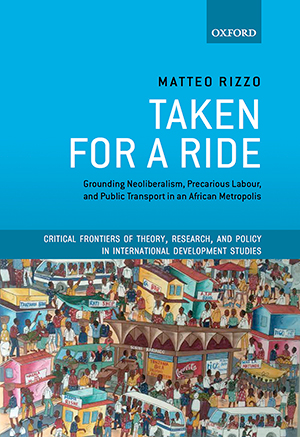
ACC Brown Bag: Taken for a Ride by Matteo Rizzo

Studio 3 Environmental and Geographical Science, Upper Campus, UCT,, Cape Town, South Africa

Join ACC on Tuesday, 17 April at 13:00 in Studio 3 in the Environmental and Geographical Sciences Building on Upper Campus for the second talk in a series of Brown-bag seminars. Matteo Rizzo will be discussing themes emerging from his latest book Taken for a Ride: Grounding Neoliberalism, Precarious Labour, and Public Transport in an African Metropolis.  How does public transport work in an African city under neoliberalism? Who has the power to influence its changing shape over time? What does it mean to be a precarious and informal worker in the private minibuses that provide such transport in Dar es Salaam? These are some of the main questions that inform Rizzo's in-depth case study of Dar es Salaam’s public transport system over more than forty years. According to the author Taken for a Ride "is an interdisciplinary political economy of public transport, exposing the limitations of market fundamentalist and postcolonial approaches to the study of economic informality, the urban experience in developing countries, and their failure to locate the agency of the urban poor within their economic and political structures. It is both a contribution to and a call for the contextualized study of neoliberalism." Matteo Rizzo is a Senior Lecturer in Development Studies at SOAS, University of London. Matteo has degrees in Political Sciences from "Orientale"(Naples, Italy)  and Development Studies and History from SOAS (MSc and PhD), where he also completed an ESRC postdoctoral fellowship. Matteo has taught at the LSE, at the African Studies Centre in Oxford and in Cambridge, where he was a Smuts Research Fellow in African Studies at the Centre of African Studies. Matteo is a member of the Editorial Working Group of the Review of African Political Economy and works on public transport for the International Transport Workers Federation. Taken for a Ride will be available for purchase at the Brown-bag session for a special price at only R250. Please bring along cash if you wish to purchase the book.