Cities and Climate Change: Seminar 1

Studio 1 Environmental and Geographical Sciences Building, Upper Campus, UCT, Cape Town, South Africa

The first seminar in the academic seminar series on Cities and Climate Change reflects on the recent international conference on cities and climate change, the first of its kind convened by the Intergovernmental Panel on Climate Change. Through a panel discussion between representatives from the City of Cape Town, the African Centre for Cities, UCT’s Climate System Analysis Group and the African Climate and Development Initiative, who all participated in the conference, we will draw out key themes and debates surfacing within the climate change and cities field internationally, as well as reflect on any notable silences or gaps. We will also share a snapshot of what inputs we offered to the international science and policy community concerned with cities and climate change. This will establish the main contours of the climate change and cities research space, framing the three subsequent seminars in the series.   SPEAKERS Victor Indasi, climate science post doc, Climate System Analysis Group (CSAG) Amy Davison, Head of Environmental Strategy Implementation, City of Cape Town Alice McClure, FRACTAL coordinator, Climate System Analysis Group Lorena Pasquini, risk governance research fellow, African Climate and Development Institute DISCUSSANT Anna Taylor, urban geography post doc, ACC & CSAG

Academic Seminar Series: Cities and Climate Change

Studio 3 Environmental and Geographical Sciences Building, Upper Campus, UCT, Cape Town , South Africa

Join ACC for 'Cities and Climate Change' a four-part academic seminar series.

Cities and Climate Change: Seminar 2

Studio 3 Environmental and Geographical Sciences Building, Upper Campus, UCT, Cape Town, South Africa

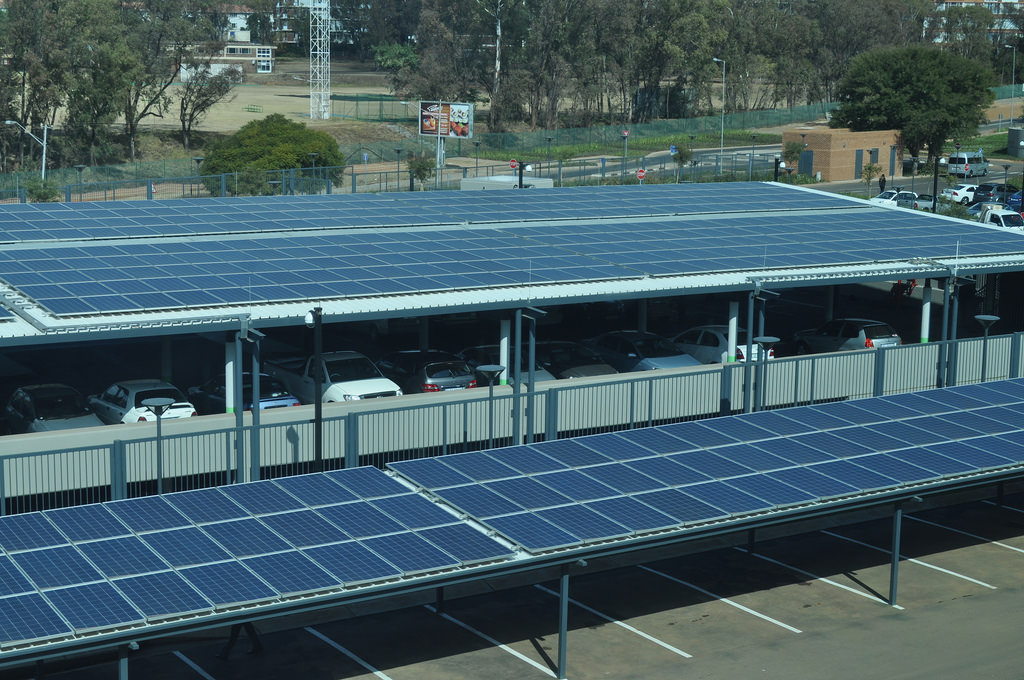
The second seminar in the Cities and Climate Change series will explore low carbon urban energy transitions in (mostly South) African cities, paying particular attention to the institutional dimensions of transforming energy systems to increase energy access and increase sustainability by reducing GHG emissions in growing cities.   In the 20th century, grid electric power radically changed the face of household and community services, industry and commerce. Influence over the electricity grid by powerful human actors also enabled establishment and maintenance of fundamental social and economic structures. However, such influence has not remained uni-directional. The grid, too, has come to influence powerful human actors in ways probably not intended. Hilton Trollip will discuss Hodder’s (2014) use of the ‘entanglement’ concept with reference to analysis of historic and recent developments in South Africa’s energy system.   Saul Roux will discuss research conducted within the Mistra Urban Futures - Knowledge Transfer Programme (MUF-KTP), which involved spending three years in the City of Cape Town, embedded in its Energy and Climate Change Unit, focussing on the conditions under which energy systems transition to more sustainable configurations, through an exploration of the City’s electricity distribution system. Theoretically, the study is situated within debates on socio-technical transitions and the multi-level perspective (MLP) of socio-technical change. Overall, the study explored the implications of applying the multi-level perspective to cities (scale) in the Global South (geographical context) and examines and the role of regulatory and organisational conditions in shaping sustainable transitions.   Anton Cartwright will bring these inputs into conversation with seminar participants around questions of governing low carbon, sustainable and inclusive transitions in African cities.   Hodder, I., 2014. The Entanglements of Humans and Things: A Long-Term View. New Literary History, 45(1), pp.19–36. Available at:http://muse.jhu.edu/content/crossref/journals/new_literary_history/v045/45.1.hodder.html.   Speakers Hilton Trollip, senior researcher in energy policy, Energy Research Centre Saul Roux, legal campaigner, Centre for Environmental Rights (previously ACC Mistra Urban Futures embedded researcher with City of Cape Town)   Chair & discussant Anton Cartwright, institutional economics research fellow, African Centre for Cities WHEN: 15 May 2018 TIME: 15:00 - 16:30 WHERE: Studio 3, Environmental and Geographical Science Building, Upper Campus, UCT

Cities and Climate Change: Seminar 3

Studio 3, Environmental and Geographical Science Building, Upper Campus, UCT, Cape Town, South Africa

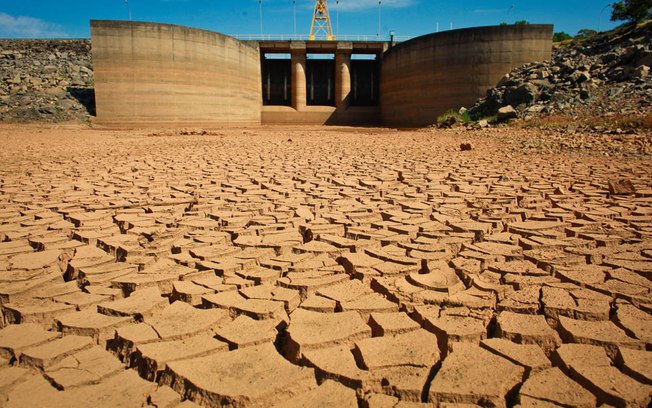
Nate Millington will present a talk entitled Making sense of our water crisis: what can we learn from São Paulo? as part of our on-going series on Cities and Climate Change on 28 May 2018, at 15:00 to 16:30 in Studio 3, Environmental and Geographical Science Building, Upper Campus, UCT. Both Cape Town and São Paulo have recently been marked by drought-induced water crises, as pre-existing infrastructures were forced to confront changing climates, continued growth, and infrastructural breakdown. These dynamics coexist in intimate ways with long histories of auto-construction, heterogeneous infrastructural development, and uneven water security. While water insecurity has long marked cities in the global south, multi-year droughts have resulted in water crises in southern cities with previously robust water management systems. Experiences of citywide scarcity in these two cities point to the increasing regularity and visibility of persistent water crisis at the global level, which is drawing new actors into new coalitions and reconfiguring existing governance patterns. The intensity of the droughts that affected São Paulo in 2013-2015 and Cape Town in 2015-17 are undoubtedly outliers, but when situated in multi-year frameworks the trends seem to suggest that water patterns in both cities are shifting in line with expanded water use and increased urbanization. This has implications not just for São Paulo and Cape Town, but also for southern cities where water insecurity is more chronic. In this seminar, we think comparatively about São Paulo’s experience of crisis and its implication both for Cape Town as well for cities more generally. We ask how São Paulo’s experience with scarcity helps us to think through and make sense of Cape Town’s ongoing crisis. At the same time, we are interested in thinking comparatively about the differences in how the two cities responded. Ultimately, our intention is to think both globally and locally: to put two these two cities in conversation while being clear that global climate change is a planetary phenomenon.   Speaker: Nate Millington Discussant: Anna Taylor Chair: Gina Ziervogel   WHEN: 28 May 2018 TIME: 15:00 to 16:30 VENUE: Studio 3, Environmental and Geographical Science Building, Upper Campus, Cape Town

Cities and Climate Change Seminar 4

Studio 3 Environmental and Geographical Science Building, Upper Campus, UCT, Cape Town, South Africa

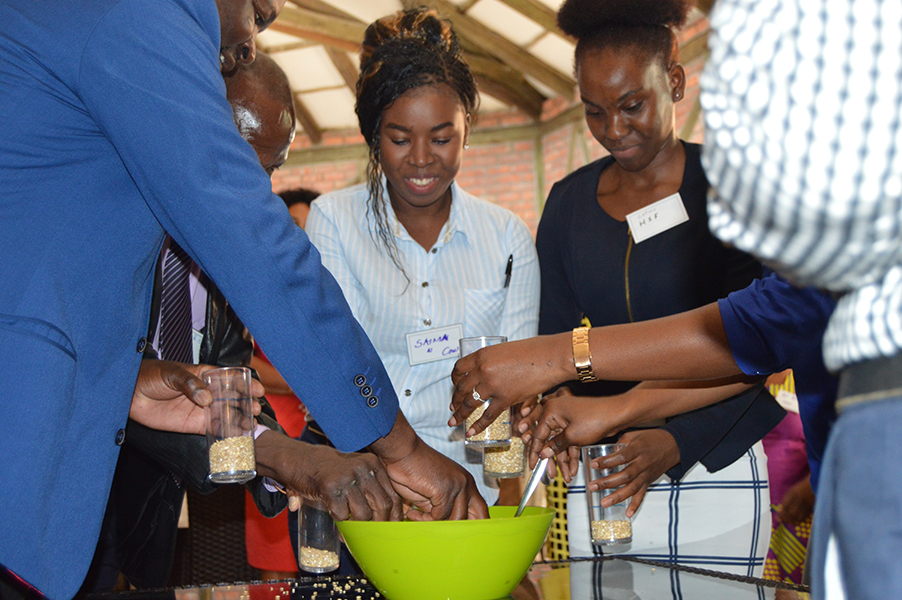
Working at the interface of climate science, urban policy and practice: developing ideas of distillation and receptivity WHEN: 12 June 2018 TIME: 3:00 to 4:30 WHERE: Studio 3, Environmental and Geographical Science Building, Upper Campus, University of Cape Town The last seminar in the 4 part series on cities and climate change will focus on how the worlds of climate science and urban policy making and implementation are being brought closer together in ways that might support more evidence-based decision making on urban matters that are climate sensitive. Drawing primarily on the efforts of, and experiences from, the Future Resilience of African Cities and Lands (FRACTAL) project, the speakers will present ideas and practices of distilling relevant, actionable climate information and fostering greater receptivity to engaging, co-producing and acting on climate information. Central to this is the creation of city learning labs as a space for bringing together a diversity of people and knowledge to generate new thinking and possibly nudge processes of decision making in new directions. Experiences of designing and implementing such labs in Maputo, Lusaka and Windhoek will be discussed in relation to emerging concepts of distillation and receptivity. The seminar will provide an opportunity to share insights about working at science-policy-practice interfaces between those working in the climate space and those working in other urban science-policy domains, like health, water management, housing and biodiversity. CHAIR: Prof Sue Parnell SPEAKERS: Dr Chris Jack, Principal Scientific Officer, Climate System Analysis Group (CSAG), and ACDI Senior Fellow Dr Di Scott, African Centre for Cities Dr Izidine Pinto, Climate System Analysis Group

BROWNBAG SEMINAR: How Cities Respond to Climate Change: Ambition and Reality of European and African Cities

Studio 5 Environmental and Geographical Sciences Building, Upper Campus, Cape Town, South Africa

Join ACC and ACDI for a lunchtime brownbag seminar by Diana Reckien, Associate Professor, University of Twente, Netherlands entitled How Cities Respond to Climate Change: Ambition and Reality of European and African Cities. WHERE: Studio 5, Level 5, Environmental & Geographical Sciences Building (EGS) UCT Upper Campus, Rondebosch WHEN: 12.30 – 1.30pm, Monday 28 January 2019 Diana Reckien will present some of her latest research on local climate planning in European cities, that builds on a network of 30 collaborators across the EU-28. Building up a database of the climate change response of 885 cities in the EU-28 (representative of the urban profile in their country), Diana and colleagues were able to yield insights into which cities in Europe prepare climate (adaptation or mitigation) plans and what these plans entail. This provides information about, e.g., the mitigation targets/ambitions and whether these would be sufficient to reach 1.5/2C, prominent mitigation and adaptation sectors, and modes of implementation (mainstreaming or not). Diana will then move to some of her work in African cities, presenting recent research on mainstreaming in Kigali City (Rwanda) and on environmental urban migration in northern Kenya. She will close with ideas and plans for future research, e.g. potentially open up topics for collaboration, such as perception based climate change impact analyses in African cities using FCM, cascading impacts, socially sensible adaptation options, and/or the effectiveness of adaptation plans. BIOGRAPHY Diana Reckien is Associate Professor "Climate Change and Urban Inequality" at the University of Twente, the Netherlands. She specializes at the interface of climate change and urban research, with the aim to contribute to justice efforts. One of her current research question is how climate change mitigation and adaptation policies affect and interact with social vulnerability, equity and justice, and how to set up adaptation and mitigation policies in order to avoid respective negative side-effects. Other research interests include method development for impact and adaptation assessments, and modelling approaches, social vulnerability, and climate change migration. She mainly investigates urban areas in Europe, Asia (mainly India), and Africa. To do so, she employs large comparative studies using social science methods, such as questionnaires, case study analyses and multi-variate statistics, as well as Geographic Information Systems (GIS) and Fuzzy Cognitive Mapping (FCM). Diana is Coordinating Lead Author for “Chapter 17: Decision-making options for managing risk” of the Working Group II Contribution to the IPCC Sixth Assessment Report. She led parts of the Second Assessment Report for Climate Change in Cities (ARC3.2; Eds: Rosenzweig, Solecki et al.; Cambridge University Press) - those that relate to equity and environmental justice. She serves on the Editorial Board of “Renewable and Sustainable Energy Reviews”(IF 8.050). Her publication record comprises roughly 70 publications, including 25 peer-reviewed journal papers, a number of book chapters, and two special issues.