Critical gaming practices: Alex Apsan Frediani in conversation with Liza Cirolia

PROVENANCE AUCTION HOUSE 6 - 8 VREDE STREET, GARDENS, CAPE TOWN, Western Cape, South Africa

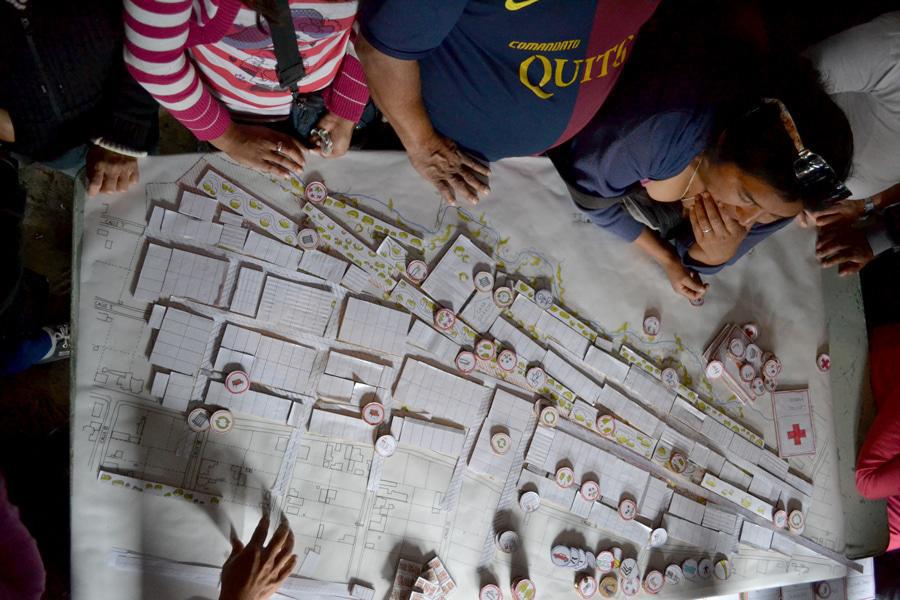
Alexandre Apsan Frediani is co-director of the masters programme in Social Development Practice at the Bartlett Development Planning Unit, University College London (UCL). He has worked extensively in various parts of the world exploring the potential of urban games to address injustices in the city — especially when applied in contexts of informal settlement upgrading. In a wide ranging conversation with Liza Cirolia, a housing policy specialist who co-convenes the Human Settlements CityLab at African Centre for Cities, Frediani will discuss the capacity of urban games to creatively engage with social diversity and power relations and foster cross-scalar thinking and share some of his experiences working with Architecture Sans Frontières and in Salvador (Brazil), Nairobi (Kenya) and Quito (Ecuador) with local collectives who embedded participatory design initiatives within their wider agenda of deepening democratic practices in the city.

Conference on Informality and the Urban Food System: Policy, practice and inclusive growth through a food lens

UCT Graduate School of Business, V&A Waterfront, Cape Town, Western Cape, South Africa

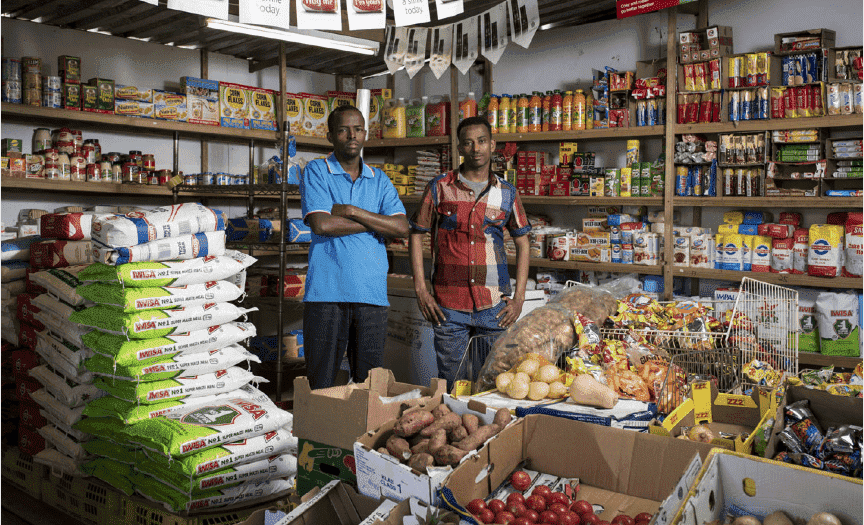
The Hungry Cities Partnership, a research programme at the African Centre for Cities, will hold a conference at the University of Cape Town’s Graduate School of Business on 15 February 2016. The Hungry Cities Partnership is a research partnership led by the African Centre for Cities at the University of Cape Town and the Balsillie School of International Affairs at Wilfrid Laurier University, Waterloo, Canada. Southern partner cities include Bangalore, Kingston, Maputo, Mexico City, Nairobi, Nanjing and Cape Town. The focus of this five-year research programme is a collaborative, inter-disciplinary research, training and knowledge mobilization programme on urbanization, food security, informality and inclusive growth. See the programme on the AFSUN website.

African Centre for Cities International Urban Conference 2018

University of Cape Town Upper Campus, Cape Town , Western Cape, South Africa

To celebrate the ten-year anniversary of the establishment of the African Centre for Cities, we are hosting the ACC International Urban Conference from 1 to 3 February 2018, at the University of Cape Town.

The city/psychosis nexus beyond epidemiology and social constructivism

Davies Reading Room Room 2.27, Environmental and Geographical Science, UCT, Cape Town, Western Cape, South Africa

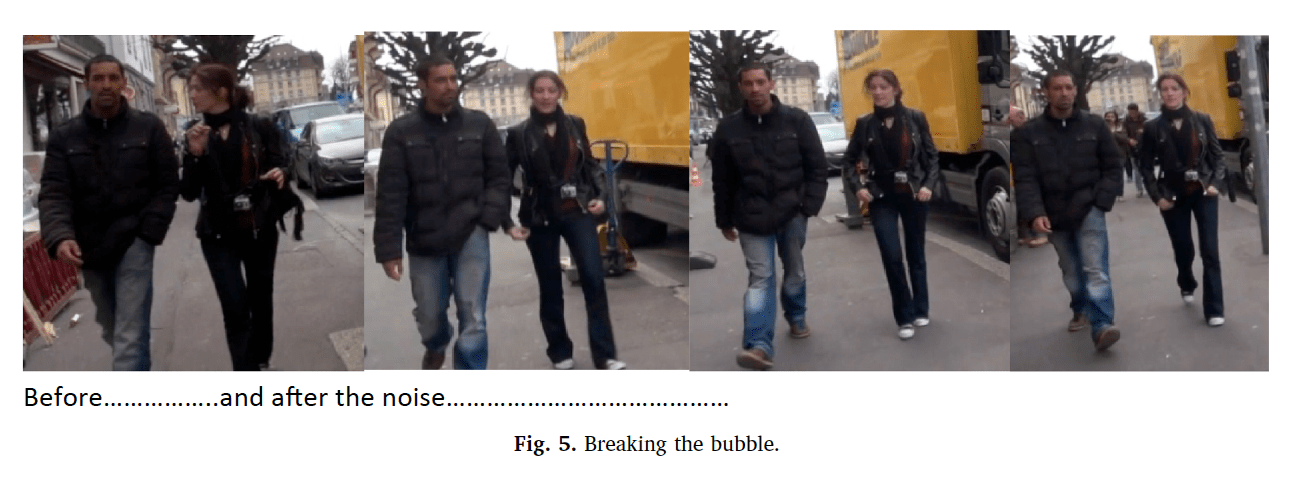
Visiting scholar Ola Söderström from University of Neuchâtel, Switzerland presents a lecture entitled: The city/psychosis nexus beyond epidemiology and social constructivism on Tuesday, 15 October from 12:30 to 14:00. ABSTRACT My talk draws on a recently completed interdisciplinary research project involving geographers, psychiatrists and linguists in the study of the relations between urban living and psychosis. Our research originates in the now long-standing observation that there is a higher prevalence of cases of psychosis in dense urban areas. Particularly interesting in the context of this talk and discussion at the ACC is that recent epidemiological studies point to the fact that this phenomenon is generally not observed in cities of the Global South. What was for long described as a universal relation between mental health and urbanism has now been provincialized. My aim will be first to explain why the question of the city/psychosis nexus has recently come to the fore not only in epidemiological research in psychiatry but also in the more-than-constructivist approaches of scholars trying to identify and practice new alliances between the life and the social sciences. Second, I will walk you through two moments – an epistemic and an ontological one – in our research process to describe how we explored such new alliances by co-designing and co-experimenting across disciplines. Thirdly, I will discuss our research findings and how they emerged from methodological triangulations. I will conclude by evoking present developments of this interdisciplinary process and how they relate to contemporary discussions on the study of bio-social entanglements. ABOUT Ola Söderström is professor of social and cultural geography at the University of Neuchâtel, Switzerland. His work draws on science and technology studies, postcolonial urban studies and visual studies. His research has notably analysed the role of visual representations in urban planning, urban policy mobilities in cities of the Global South, smart urbanism, and the relations between urban living and psychosis. His books and edited collections include: Des images pour agir. Le visuel en urbanisme, Payot, 2000; Cities in Relations. Trajectories of Urban Development in Hanoi and Ouagadougou, Wiley-Blackwell, 2014; Reshaping Cities. How Global Mobility Transforms Architecture and Urban Forms, Routledge, 2009 (co-edited with Michael Guggenheim); Critical Mobilities, Routledge, 2013 (co-edited with Shalini Randeria, Didier Ruedin, Gianni D’Amato and Francesco Panese). WHEN: Tuesday, 15 October 2019 TIME: 12:30 to 14:00 VENUE: Davies Reading Room, Environmental and Geographical Science Building, Upper Campus, UCT

Global Agendas and Urban Equality: Exploring synthesis, connections and contestations

Studio 3 Environmental and Geographical Sciences Building, Upper Campus, UCT, Cape Town, South Africa

Join ACC on Friday, 8 November at 12:30 for a special seminar session entitled Global Agendas and Urban Equality: Exploring synthesis, connections and contestations. ACC Director Edgar Pieterse will be in conversation with Michele Acuto, Director of the Connected Cities Lab, The University of Melbourne, and Winnie Mitullah Director of Institute for Development Studies, University of Nairobi. The discussion will be chaired by Stephanie Butcher, a Postdoctoral Researcher with the Connected Cities Lab. While great strides have been made in recent years to help place the urban more firmly on international development agendas, questions remain as to how, and in what ways, global policy can be operationalised at an urban scale. Bringing together leading thinkers on urbanisation this moderated discussion will explore the scalar connections between global processes and policy agendas and their material, political and social impacts across urban environments in the global South. WHEN: Friday, 8 November TIME: 12:30 to 13:30 VENUE: Studio 3, Environmental and Geographical Science Building, Upper Campus, UCT   BIOGRAPHIES Professor Michele Acuto is an expert on urban politics and international urban planning. Michele is also a non-resident Senior Fellow of the Chicago Council on Global Affairs and a Senior Fellow of the Bosch Foundation Global Governance Futures Program. Before joining the Faculty, Michele was Director of the City Leadership Lab and Professor of Diplomacy and Urban Theory at University College London, having previously worked as Stephen Barter Fellow of the Oxford Programme for the Future of Cities at the University of Oxford. He also taught at the University of Canberra, University of Southern California, Australian National University and National University of Singapore. Outside academia, Michele worked for the Institute of European Affairs in Dublin, the International Campaign to Ban Landmines (ICBL), the Kimberley Process for conflict diamonds, the European Commission's response to pandemic threats. He also has worked for several years on city leadership and city networks with, amongst others, Arup, World Health Organization, World Bank Group, the C40 Climate Leadership Group, and UN-Habitat. Professor Winnie V. Mitullah is the current Director and Associate Research Professor of Development Studies at the Institute for Development Studies (IDS), and the Director Gender Affairs, University of Nairobi. She holds a PhD in Political Science and Public Administration from the University of York, UK. Her PhD thesis was on Urban Housing, with a major focus on policies relating to low income housing. Over the years, she has researched and consulted in the areas of governance, in particular in the area of provision and management of urban services and the role of stakeholders in development. Her focus in these areas has included an examination of policies, and institutional dynamics in relation to local level development, including that of devolved governments, Micro and Small Enterprises , public and Non Motorised Transport (NMT), gender, youth and media. Dr. Stephanie Butcher is a Postdoctoral Researcher with the Connected Cities lab. She is a part of the 'Knowledge in Action for Urban Equality' (KNOW) project, a global consortium which seeks to deliver transformative research and capacity in policy and planning that will promote and strengthen pathways to urban equality. Previous to this post, she worked with the Development Planning Unit (DPU) at the University College London as a Teaching Fellow, convening courses focused on the themes of participatory planning, urban inequality, and gender and diversity in the Global South. Her doctoral thesis was shaped by principles of action-research, and focused on the 'everyday politics' of water infrastructure for informal settlement residents in Kathmandu, Nepal.  It examined the micro-politics of how gender, tenure relations, and ethnicity shaped how diverse residents interacted with the socio-technical aspects of infrastructure, impacting a sense of citizenship.           IMAGE CREDIT: Unequal Scenes by Johnny Miller

INFO SESSION | DAAD MPhil Southern Urbanism Scholarships

The African Centre for Cities, through Deutscher Akademischer Austauschdienst (DAAD), are calling for scholarship applications for 2024. DAAD are offering five In-Region Scholarships* for students from Sub-Saharan Africa who enrol for the MPhil Southern Urbanism (Masters in Urban Studies) programme at the University of Cape Town. If you are interested in applying for the scholarship but have questions, join MPhil Southern Urbanism convenor Anna Selmeczi for this information session. WHEN | Tuesday, 4 April 2023 TIME | 12:00-13:00 SAST REGISTER HERE