Radical Incrementalism & Theories/Practices of Emancipatory Change

Studio 3 ENGEO Building, Upper Campus. University of Cape Town,, Cape Town, Western Cape, South Africa

This workshop examines ideas of radical incrementalism across our towns and cities. It seeks to explore theories and practices that can support emancipatory change across urban regions through the power of urban dwellers to challenge poverty, oppression and unjust environments.

POSTPONED!! Speculative Design Ecologies: exploring relations between humans, non-humans, and artificial systems

Davies Reading Room Room 2.27, Environmental and Geographical Science, UCT, Cape Town, Western Cape, South Africa

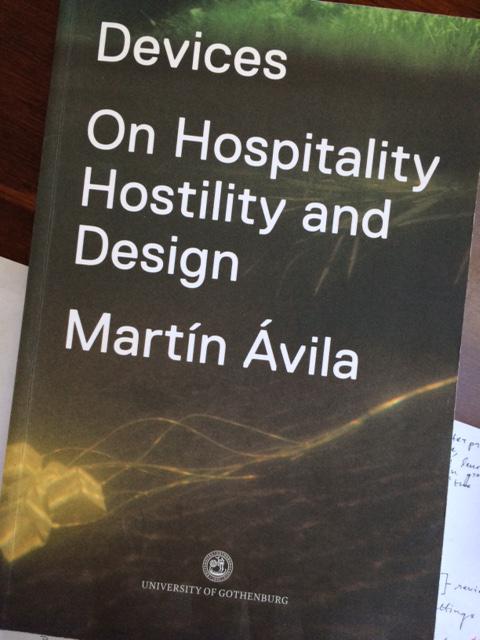
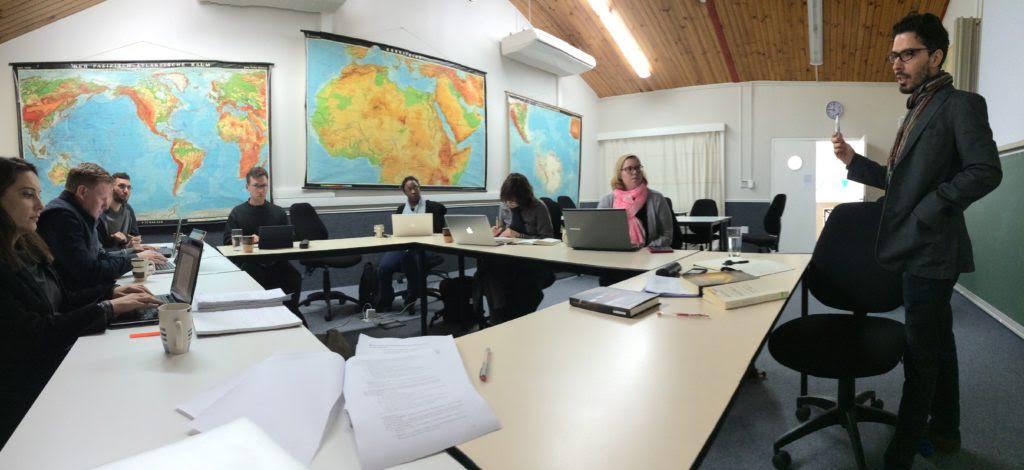
THIS EVENT IS POSTPONED UNTIL FURTHER NOTICE Speakers: Dr. Martín Ávila (Design for Sustainable Development at Konstfack Art and Design Institute in Stockholm) and Dr. Henrik Ernstson (African Centre for Cities, University of Cape Town & KTH Environmental Humanities, Division of History of Science, Technology and Environment, KTH Royal Institute of Technology, Stockholm).    Based in the emergent practices around speculative design, the seminar will depart from Dr. Martín Ávila’s thesis “Devices” that explored the notion of hospitality and hostility in design ecologies, i.e. the assemblages between human and non-human agents that have emergent properties which we cannot fully control. This will lead into a discussion of the present project “Tactical Symbiotics”  to which Dr. Henrik Ernstson is also contributing. The  project Tactical Symbiotics searches for tactics that can reinforce the interdependence between cultural and biological variation and diversity through cooperation and/or togetherness between humans and non-humans. Move beyond the comfort zone: three speculative designs During 2014, Dr. Ávila has worked in Argentina and developed three sub-projects called Doomestics, Dispersal Machines, and Spices/Species. These projects  are organized around questions such as: What if individual households would become parts of a decentred industry that capitalises on humans’ negative emotions to certain animals? What if agricultural machines would maintain the diversity of local ecosystems, helping birds and insects pollinate and fertilize, while producing food for humans? What if we could develop affection for insects and parasitoids that participate in the lifecycles of domestic plants? The projects are design-driven and uses speculative philosophy to make explicit alternative versions of the present or near future. By focusing on relations between humans and natural-artificial systems, the projects strives to de-centre anthropocentric viewpoints to become a platform from which to provoke a possibility to reimagine everyday life. Doomestics work with the tension established by the ecological need (if we are to maintain biological diversity) to cohabit with beings that are perceived as dangerous, undesirable or disgusting. Among them, spiders, scorpions and bats, to name a few. The project stages a series of products that make these beings visible and integrate them in different ways to everyday urban life. Dispersal Machines proposes interventions in agricultural systems that most humans have no direct relationship to. This project conceives machines that complement, supplement and/or maintain the activities of beings that participate in different natural processes such as the dispersion of seeds or pollen, or the secretion of nutrients to the soil. Spices/Species addresses an intimate level of human relationship with nonhuman beings. This concerns plants eaten as food or used for medicinal purposes and the ecosystem functions they perform through forms of symbioses with, for example, insects and parasitoids. The projects sketch and engage a diversity of responses that range from the intimate, to completely detached human-nonhuman relations. They still have in common that they affect the diversity of, and our relationship to, urban and agro-ecosystems. By confronting us with alternative realities—and alternative emotions, feelings and shivers—the project aims to open up new, and perhaps surprising ethical and moral dimensions to revalue and re-evaluate our present relations with non-humans.   The project strives to formulate a different response to our planetary ecological crisis than those strategies that often sort under terms like “ecosystem services” or “natural resources”. One inspiration for the project can be found in how Michel De Certeau spoke of tactics as practices that evade strategies of power. The seminar will present underlying theory and practical design projects. ---- Martín Avila is a Researcher, and Senior Lecturer in Design for Sustainable Development at Konstfack in Stockholm, Sweden. Martin obtained a PhD in design from HDK (School of Design and Crafts) in Gothenburg, Sweden, and has published his thesis entitled Devices. On Hospitality, Hostility and Design (2012). The PhD work was awarded the 2012 prize for design research by the The Swedish Faculty for Design Research and Research Education. Currently working (2013-2016) on a postdoctoral project financed by the Swedish Research Council: Symbiotic tactics. Design interventions for understanding and sensitizing to ecological complexity.    

Annual PhD Seminar Series: Understanding Capitalism in Unequal Geographies

Seminar Room 1, EGS Building, Upper Campus, University of Cape Town University of Cape Town, Cape Town , Western Cape, South Africa

The third iteration of the annual PhD seminar series presented by ACC's Notations on Theories of Radical Urban Change project (NOTRUC), lead by Henrik Ernstson and Edgar Pieterse, on Democratic Practices focuses on "Understanding Capitalis in Unequal Geographies". The seminar series is based on reading political philosophy with and against southern urbanism. It seeks to make an intervention in how we think about the emergent city and urbanization of the global south; to seek out and make explicit its emancipatory potential, which often gets hidden or silenced, either by overly dogmatic “Northern” frameworks, “developmentalist” techno-managerial approaches; or a sense of defeat that an emancipatory horizon is not any longer possible.In 2017 the series focuses on capitalism and its wider structuration of cities, bodies and subjectivities. It seeks to understand how classic Marxist critique and its extension into intersectional analysis can be thought with and against southern/postcolonial urban geographies to make visible contemporary struggles against exploitation.Key questions:  How does capitalism function in and through its differences across time, space, and social location? How does capitalism interact with and structure gender, race, and sexuality? How does this play out, manifest and structure urban spaces and extended geographies of the south? What spaces, discourses and collectivities can a critique of capitalism help to make visible as locations to struggle against interconnected assemblages and dispositifs of oppression? Lecturers:Dr. Andrés Henao Castro, University of Massachusetts, Boston Dr. Ashley Bohrer, Hamilton College, New York City Dr. Henrik Ernstson, KTH and University of Cape Town Read more here 

Free

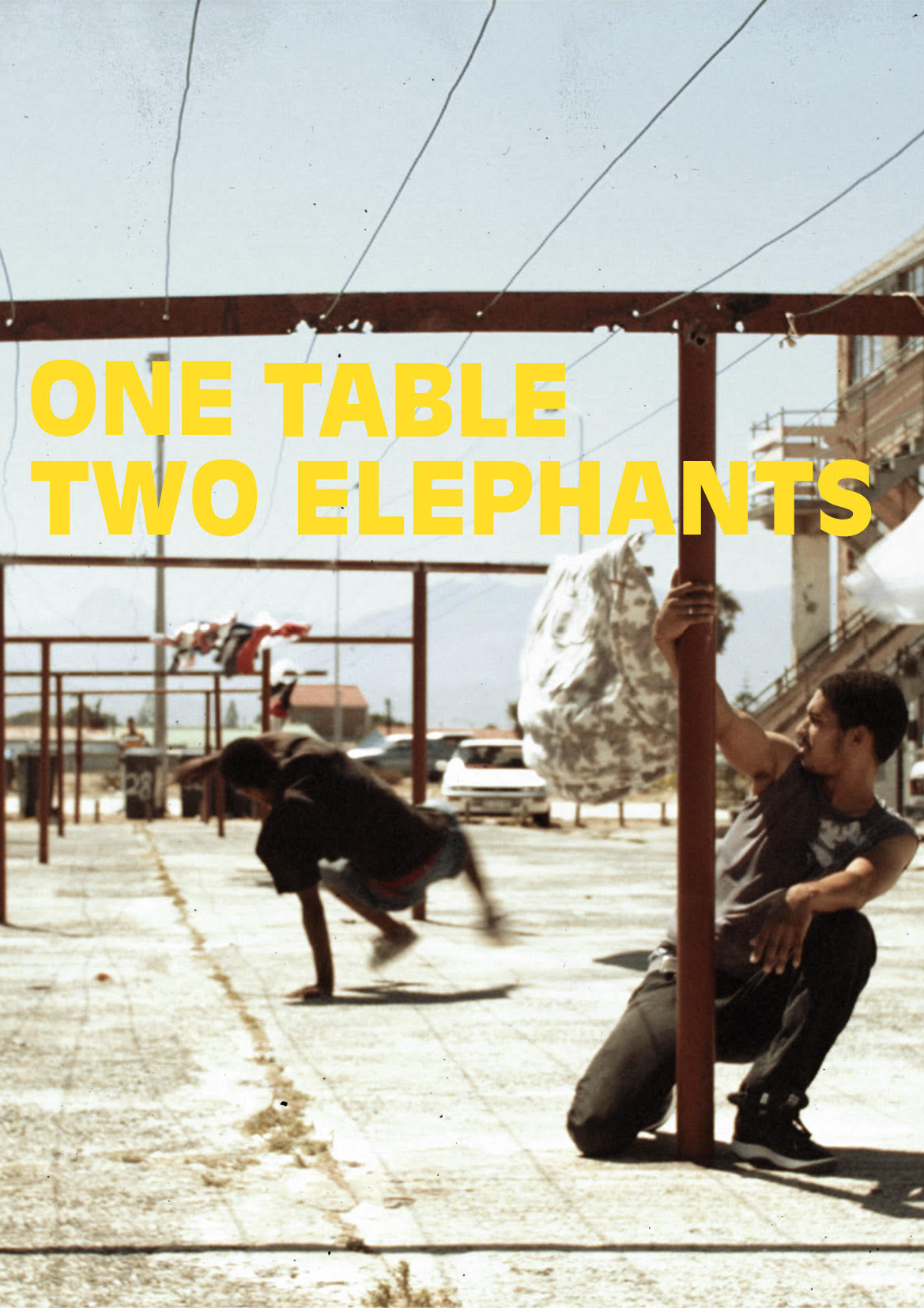
One Table Two Elephants

Neville Alexander Lecture Theatre 1A Upper Campus, University of Cape Town, Rondebosch, Western Cape, South Africa

Please join us for the screening of the film ONE TABLE TWO ELEPHANTS (84 minutes, work in progress) at the ACC International Urban Conference 2018 in Cape Town. WHEN: Friday 2 Feb 2018, 13:00-15:00, and Saturday 3 Feb 2018, 13:00-15:00 WHERE: Neville Alexander Lecture Theatre 1A, Upper Campus, UCT (venue lies between the New Lecture Theatre and Leslie Social Science building) The film is based on work in Cape Town by Jacob von Heland and ACC-based researcher Henrik Ernstson. These two screenings have been especially organised for the ACC IUC 2018 delegates and UCT film students. Each screening will be followed by a Q&A with Henrik Ernstson. RSVP not needed. Synopsis ONE TABLE TWO ELEPHANTS is a film about bushmen bboys, a flower kingdom and the ghost of a princess. Entering the city through it's plants and wetlands, the many-layered, painful and liberating history of the city emerges as we see how biologists, hip hoppers, and wetland activists each searches for ways to craft symbols of unity and cohesion. But this is a fraught and difficult task. Perhaps not even desirable. Plants, aliens, memories and ghosts keep troubling efforts of weaving stories about this place called Cape Town. Situated and grounded in lived experiences across a range of groups, this film follows different ways of knowing and tries to be a vehicle toward difficult yet urgently needed conversations about how race, nature and the city are intertwined in our postcolonial world where history is ever present in subtle and direct ways. Based on years of research in Cape Town, this ‘cinematic ethnography’ is directed towards a wider audience, from the general public to students and scholars as it brings texture to understand a city like Cape Town, while providing ample possibilities to translate what is happening “there” to conversations about your own city and surroundings. Created by: Jacob von Heland and Henrik Ernstson. Photography (DOP): Johan von Reybekiel. Sound: Jonathan Chiles. Production coordination: Jessica Rattle and Nceba Mangesi.