A Brief Symposium on Accessing Land in African Cities

Studio 3 ENGEO Building, Upper Campus. University of Cape Town,, Cape Town, Western Cape, South Africa

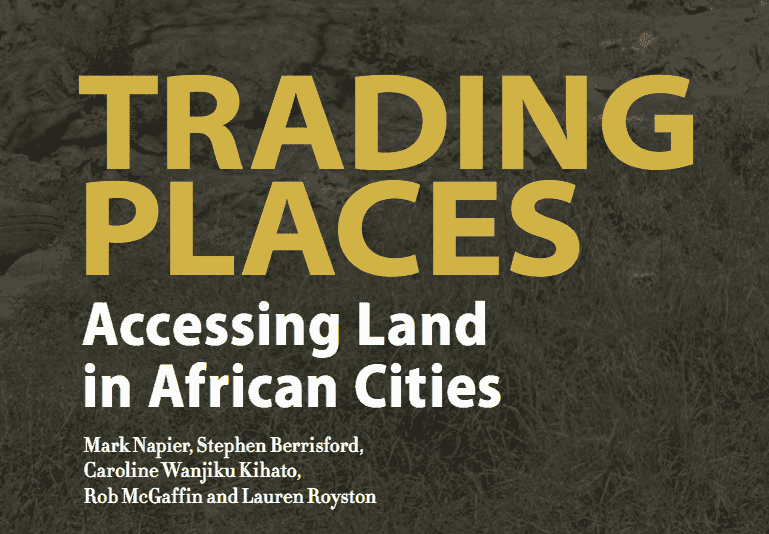
A recently released book called "Trading Places" is about how urban land markets work in African cities. The book explores how local practice, land governance and markets interact to shape the ways that people at society's margins access land to build their livelihoods.

Policy & Governance Contexts for Scalable Community-Led Slum Upgrading

Davies Reading Room Room 2.27, Environmental and Geographical Science, UCT, Cape Town, Western Cape, South Africa

The presentation first addresses the policy and governance contexts for the scalability of community-led slum upgrading based on the Shack/Slum Dweller International methodology. The methodology is based on that of the Indian Alliance (NSDF, Mahila Milan, SPARC), which comprises community-based organizations and NGOs, in partnership with government, delivering municipal services, securing tenure and promoting slum upgrading. The presentation continues with the role of the Pune and Mumbai community-led toilet block precedents in South-South knowledge exchange. About the speaker Richard Tomlinson is Chair in Urban Planning in the Faculty of Architecture Building and Planning at the University of Melbourne. Before going to Australia he served as an urban policy consultant in Southern Africa and as an academic in South Africa and the USA. His clients included the post-apartheid South African government, and provincial and local governments, The World Bank, USAID, UN Habitat international and local NGOs, and also the private sector. As an academic he has served as a Visiting Professor at the University of the Witwatersrand and Columbia University, as a Visiting Scholar and SPURS Fellow at MIT, and a Guest Scholar at the Brookings Institution. His most recent publications, research and teaching concern the effects of Google and social media on urban policy knowledge products; urban policy processes and ‘international best practice’; slum upgrading; the BRICS and the urban legacy of sports mega events; and housing and the Australian city. His most recent book is an edited publication on Australia’s Unintended Cities: The Impact of Housing on Urban Development.

Politics, informality and clientelism

Studio 5 Environmental and Geographical Science, Upper Campus, UCT,, Cape Town, South Africa

In her paper “Politics, informality and clientelism - exploring a pro-poor urban politics” Diana Mitlin explores what we have learnt about how to instigate, negotiate or otherwise secure pro-poor government in towns and cities of the global South. With competition for scarce resources, the processes of urban development and specifically the acquisition of land and basic services are intensely political. While the nature of urban poverty differs, there is a consistent set of needs related to residency in informal settlements; tenure is insecure and there is a lack of access to basic services, infrastructure, and sometimes other entitlements. Households and communities have to negotiate these collective consumption goods in a context in which political relations are primarily informal with negotiations that take place away from the transparent and accountable systems of ‘modern’ government. Clientelist bargaining prevails. Much of the existing literature is polarised either critiquing clientelism for its consequences, or arguing that it has been dismissed without any grounded assessment of what might take its place and any considered analysis of what it has managed to deliver. About the Speaker: Diana Mitlin is principle researcher in the Human Settlements Group of the International Institute for Environment and Development. Her areas of research interest and expertise include urban poverty, poverty reduction, community development and civil society. Her current work focuses on collaboration with grassroots organization and support agencies to improve urban neighbourhoods (land tenure, basic services and housing). Before starting with IIED she worked as an economist for the UK Government and has also taught at the Institute for Development Policy and Management at the University of Manchester. Advance Reading: ESID working paper_Mitlin

‘A House for Dead People’: Memory and spatial transformation in Red Location, Port Elizabeth

Studio 3 ENGEO Building, Upper Campus. University of Cape Town,, Cape Town, Western Cape, South Africa

ACC is pleased to be hosting the 2016 Ray Pahl Fellow in Urban Studies, Dr Naomi Roux, who will be presenting a paper entitled, 'A House for Dead People: Memory and spatial transformation in Red Location, Port Elizabeth'. Abstract Following the end of apartheid in 1994, several new projects of public memory and urban development were established in many South African cities. In Port Elizabeth, the Red Location Museum was opened in 2006, in a century-old informal settlement with strong histories of resistance activity. The museum was intended to acknowledge the area’s contribution to the liberation struggle, and contribute to dismantling apartheid urban geographies by producing a tourist and cultural economy. However, the project was highly contested from its inception by residents who felt that the priority for the neighbourhood should be housing and service delivery. Major housing-related protests erupted on the museums doorstep between 2003 and 2005, and in late 2013 the new cultural precinct was closed down indefinitely. This paper examines the politics and controversies surrounding the Red Location developments between 1997-2013, using this case study to consider the ways in which the protests around the museum are deeply rooted in historical and political histories which are made visible through residents’ radical claiming of ownership of the museum building. Bio Naomi Roux is an urbanist and visual historian, with a particular interest in the relationships between collective memory, the politics of public space and urban transformation. She holds the Ray Pahl Fellowship in Urban Studies at the University of Cape Town’s African Centre for Cities for 2016. Prior to this she was the 2014-2015 Mellon Fellow in Cities and Humanities at LSE Cities. Her recent PhD (Birkbeck, 2015) focused on the politics of collective memory in the context of the changing post-apartheid city, using Nelson Mandela Bay in South Africa’s Eastern Cape as a case study. Previous work includes published research and exhibition projects focusing on heritage, memory and place-making in sites including Kliptown, Soweto; Yeoville, Johannesburg; and ‘Little Addis’ in central Johannesburg.

Urban Humanities Seminar Series: The Invention of the ‘Sink Estate’: Consequential Categorization and the UK Housing Crisis

Studio 3 Environmental and Geographical Sciences Building, Upper Campus, UCT, Cape Town, South Africa

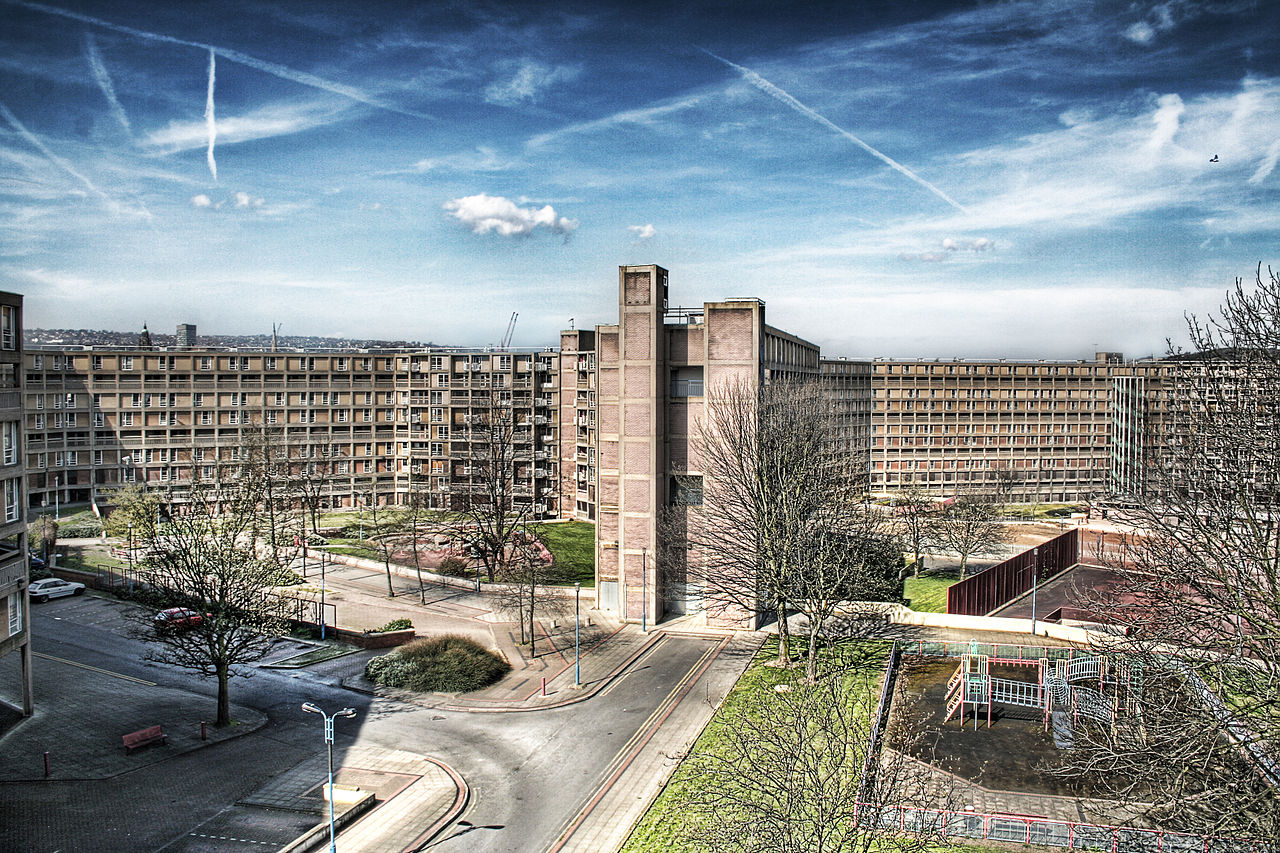
The Invention of the ‘Sink Estate’: Consequential Categorization and the UK Housing Crisis presented by Tom Slater explores the history and traces the realisation of a category that was invented by journalists, amplified by free market think tanks and converted into policy doxa (common sense) by politicians in the United Kingdom: the ‘sink estate’. This derogatory designator, signifying social housing estates that supposedly create poverty, family breakdown, worklessness, welfare dependency, antisocial behaviour and personal irresponsibility, has become the symbolic frame justifying current policies towards social housing that have resulted in considerable social suffering and intensified dislocation. The article deploys a conceptual articulation of agnotology (the intentional production of ignorance) with Bourdieu’s theory of symbolic power to understand the institutional arrangements and cognitive systems structuring deeply unequal social relations. Specifically, the highly influential publications on housing by a free market think tank, Policy Exchange, are dissected in order to demonstrate how the activation of territorial stigma has become an instrument of urban politics. The ‘sink estate’, it is argued, is the semantic battering ram in the ideological assault on social housing, deflecting attention away from social housing not only as urgent necessity during a serious crisis of affordability, but as incubator of community, solidarity, shelter and home. WHEN: Thursday 20 September 2018 TIME: 15:00 to 16:30 VENUE: Studio 3, Environmental and Geographical Science Building, Upper Campus, UCT  

BOXES

Studio 5 Environmental and Geographical Sciences Building, Upper Campus, Cape Town, South Africa

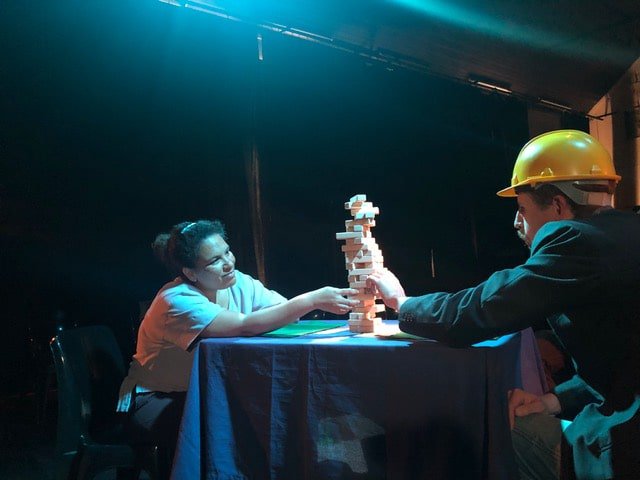
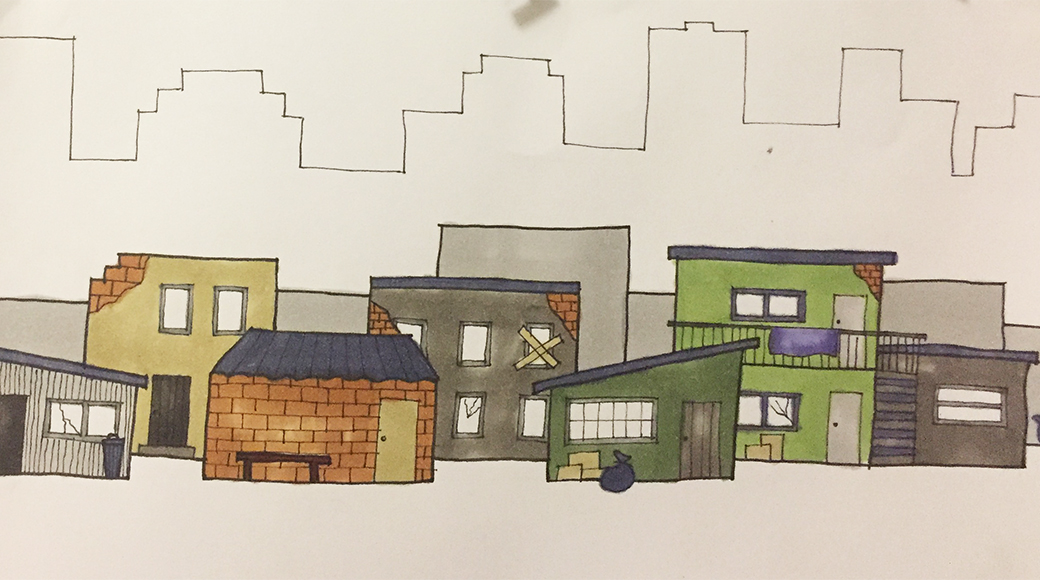
BOXES is a social-justice theatre project devised by award-winning theatre makers Neil Coppen and Ameera Conrad, Journalist Daneel Knoetze and performers Quanita Adams and Mark Elderkin. The project draws from a range of research-based, verbatim and documentary theatre methodologies to explore a myriad of perspectives and insights into urban land justice issues occurring across city of Cape Town. The plays central narrative focuses around a young Cape Town couple: Kaye (Quanita Adams) and Lawrence (Mark Elderkin) who have recently moved into the inner-city and find their preparations for a house-warming dinner, derailed when Lawrence announces that he has accepted a job offer to design a state-of-the art residential development in lower Woodstock. When it is discovered that local residents will be evicted from their neighbourhood to make room for the development, Kaye begins to probe the repercussions of her partner’s latest venture. As Kaye and Lawrence battle it out, we learn of Kaye’s interactions with her Aunt Sumaya in the Bo Kaap, who due to rising rates is having to sell up her family home and has been inspired to return to her activist roots. As Kaye and Lawrence attempt to arrive at some sort of a resolve before the arrival of their dinner guests, audiences encounter a myriad of characters including property developers, politicians, residents and whistleblowers whose lives are impacted, for better or worse, by the gentrification trends sweeping across the city and suburbs. Over the course of four short scenes, BOXES probes the legacy of apartheid spatial planning and forced removals, examining notions of ‘development’ and ‘progress’, by interrogating the question: Who is really benefitting from all this so-called progress? BOXES forms part of a wider Open Society Foundation project which connects South African investigative journalists with theatre makers and artists. The Open Society foundation funded the project which sees creatives interpret the work of investigative journalists with the hope that alternative dissemination strategies would enable these narratives to reach wider audiences in the lead up to the 2019 South African elections. The play is produced by Empatheatre, a company founded by Neil Coppen, Mpume Mthombeni and Dylan McGarry. Empatheatre has been responsible for launching several social-justice theatrical projects over the last decade including Soil & Ash (focusing on rural communities facing pressure from coal-mining companies), Ulwembu (street-level Drug addiction and harm reduction advocacy), The Last Country (female migration stories) and Lalela ulwandle (an international theatre project supporting sustainable transformative governance of the oceans). More recently the Empatheatre team has been invited to work internationally in New York, St Louis, Toronto, Fiji, Ghana and Namibia. DATE: 26 April 2019 TIME: 14:00 to 15:00 VENUE: Studio 5, Environmental and Geographical Science Building, Upper Campus, UCT Space is limited. Please RSVP to africancentreforcities.rsvp@gmail.com


SEMINAR | Housing Opportunities for All

ACC together with the Development Action Group (DAG), will be hosting a seminar entitled Housing Opportunities for All, presented by Dr Krista Paulsen and Dr Vanessa Fry, both fellows of the Mandela Washington Fellowship Programme.