Epistemological Practices of Southern Urbanism

Davies Reading Room Room 2.27, Environmental and Geographical Science, UCT, Cape Town, Western Cape, South Africa

Professor Edgar Pieterse will offer a reflection upon the epistemological project that lives at the heart of the African Centre for Cities This reflection is centrally concerned with some fundamental questions: How best can meaningful knowledge about the urban be produced? What should we produce knowledge for? And what do these questions mean for the politics of knowledge production in the global South?  Prof Ari Sitas, (Sociology, UCT) will act as discussant

Analysing regional development and policy: A structural-realist approach

Studio 5 Environmental and Geographical Science, Upper Campus, UCT,, Cape Town, South Africa

Professor Frank Moulaert will discuss his paper titled Analysing regional development and policy: A structural-realist approach, which he co-authored with Abid Mehmood. The paper gives an overview of theories and models which can be used to analyse regional development as well as to design policies and strategies for the future of regions and localities. It evaluates the analytical and policy relevance of these models, and as it moves towards analytical synthesis, makes some recommendations for a structural realist approach to spatial development analysis. About the speaker Professor Frank Moulaert (frankmoulaert.net) is Professor of Spatial Planning, Head of the Planning and Development Unit and Chairman of the Leuven Research Centre on Space and Society at the Faculty of Engineering, KU Leuven, Belgium. He was the Academic Coordinator of the Policy Research Centre ‘Spatial Planning and Housing’ of the Flemish Region (2007-2011). His research covers urban and regional development, social science theories and methods, but especially social innovation. He has coordinated six Framework projects (SOCIAL POLIS, KATARSIS, DEMOLOGOS, SINGOCOM, VALICORES, URSPIC) and has worked on a number of regional, national and international research platforms in the course of his academic career. Ongoing research includes: governance of socio-ecological systems (role of social innovation); and, operationalizing sustainable lifestyles through social innovation; transdisciplinary research on spatial quality, governance systems and food webs.  Before coming to Leuven he was a Professor at USTL (Lille, France) and Newcastle University (UK). Download the paper here  

Paula Meth — Producing ‘decent’ cities: gender and urban upgrading

Studio 5 Environmental and Geographical Science, Upper Campus, UCT,, Cape Town, South Africa

Dr Paula Meth is a lecturer in Town and Regional Planning at the University of Sheffield. Her research interests cover the areas of gender and violence, informal housing, crime management, inequality and injustice, governance, local politics and everyday power relations, all focusing on the global South, particularly South Africa,. Her current research focusses on the contributions made by citizens both in challenging and managing social problems but is also in the broader impact of national and global trends towards neo-liberalism and their effect on local participation. Her work is informed by ongoing debates within Feminism and Development Studies, as well as moves within Planning to broaden and re-examine the terms of reference of planners and their relationship with broader society. Also related to this work is an ongoing interest in developing qualitative methodology, in particular making use of diaries to inform the research process. This seminar is presented jointly by the UCT EGS Department and ACC

In the skin of the city: the street and its doubles

Davies Reading Room Room 2.27, Environmental and Geographical Science, UCT, Cape Town, Western Cape, South Africa

In this presentation, Anthropologist António Tomás (ACC's the 2014 Ray Pahl Fellow) will undertake to provide a layered description of the city of Luanda by engaging with a number of ethnographic vignettes based on his wanderings through the city. "Such a methodology has two sources" says Tomás. "First, I draw on the modernist figure of the flâneur as it was proposed by Charles Baudelaire and theorized by Walter Benjamin. Second, I also draw on the methods for wandering in the city (later on theorized by de Certeau) that was called psycho-geography by the situationists. I use this methodology in reference to the situationists who developed it as a way to ‘deconstruct' Le Corbusian’s modernist ambitions in transforming Paris." This exercise allows Tomás to provide a description not only of the surface of the city (or the city from the surface), but to also find a vantage point to “deconstruct” Luanda's colonial and postcolonial imaginaries. By annalyzing the prevailing practices of anonymous Luandans who give names to streets that disavowal their official designations, he gains a further understanding of the surface of the city that goes beyond its own (modernist) visibility. About the author António Tomás received his doctoral degree in Anthropology from Columbia University, New York. He is the author of a study on the African nationalist Amílcar Cabral titled O Fazedor de Utopias: Uma Biografia de Amílcar (The Maker of Utopias: A Biography of Amilcar Cabral (Lisbon ; Praia , Tinta da China; Spleen, 2007; 2008).  Tomás is the 2014 Ray Pahl Fellow at the African Centre for Cities, working on a book called In the skin of the city: Luanda, or the dialectics of spatial transformation.

Comparing urban civic networks: Insights from Britain

Studio 1 Environmental and Geographical Sciences Building, Upper Campus, UCT, Cape Town, South Africa

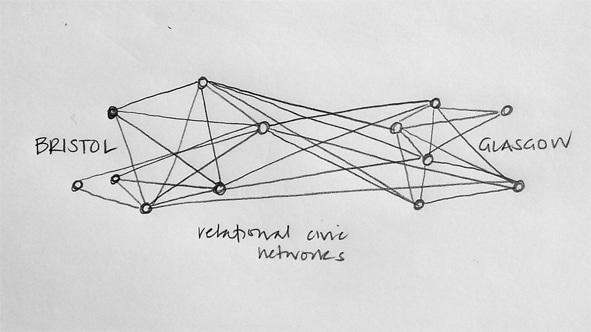
In this seminar Prof Mario Diani from the University of Trento and ICREA at the Universitat Pompeu Fabra, Barcelona will be presenting a paper entitled 'Comparing urban civic networks: Insights from Britain'. Abstract Comparative analyses of urban political civic networks are still relatively rare, and those available are mostly conducted by an “aggregative” rather than a “relational” logic. They focus, in other words, on the distribution of the characteristics of individual and organizational actors rather than on the patterns of relation and interdependence between them. Drawing upon my just published book The Cement of Civil Society (Cambridge UP, 2015), and focusing on civic networks in two British cities, Bristol and Glasgow, my talk illustrates how network analysis can contribute to a more nuanced understanding of local political networks. It shows in particular how the concept of “mode of coordination” may enable us to capture the differences between different styles of collective action. Bio Mario Diani is professor of sociology at the University of Trento, and ICREA research professor at the Universitat Pompeu Fabra, Barcelona. His research focuses primarily on social movements, collective action, and political networks. Publications include The Cement of Civil Society: Studying Networks in Localities (Cambridge University Press, 2015), Social Movements (with Donatella della Porta, Blackwell, 20062),  and Social Movements and Networks (co-edited with Doug McAdam, Oxford University Press, 2003), as well as articles in leading journals such as American Sociological Review, American Journal of Sociology, Social Networks, and Mobilization.


World-class city making in Africa – a view from Angola through the redevelopment of the Bay of Luanda

Seminar Room 1 Environmental & Geographical Sciences Building, UCT Upper Campus

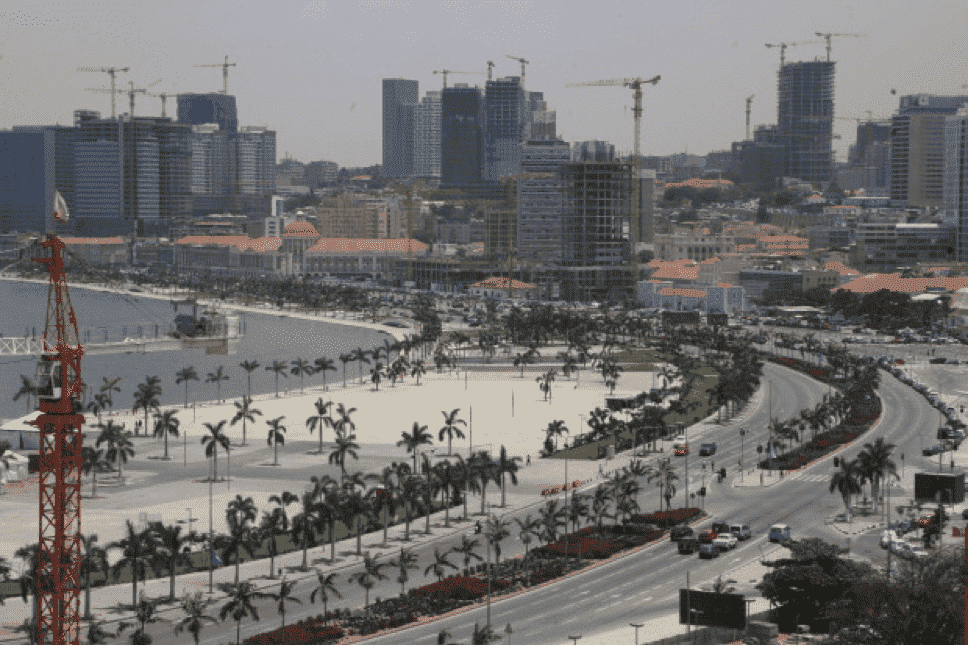
The ACC is happy to announce the first academic seminar for 2016. Dr Sylvia Croese will be presenting a paper entitled, 'World-class city making in Africa – a view from Angola through the redevelopment of the Bay of Luanda'. Abstract This paper examines the redevelopment of the Bay of Luanda as the epitome of a process of world-class city making that has unfolded in the capital of Angola since the end of the war in 2002. In an era that has been marked by ‘Africa’s rise’, concomitant efforts towards the building of world-class African cities have generated growing research interest over the past years. However, often these efforts are seen as uncritically adopted or externally imposed imitations of global/world city models. This paper aims to take world-class city making in Luanda seriously by analyzing its dynamics on its own terms, thereby moving beyond accounts that either romanticize or demonize this process. Based on an analysis of the history of the Bay of Luanda and the actors, discourse and imaginaries involved in its redevelopment, the paper makes three interrelated arguments. Firstly, it argues that while discourses underpinning world-class city making may reflect external or economic drivers, such as a desire to attract international investment, the case of Luanda shows that this practice can be equally or even more strongly driven by internal or political objectives, such as the pursuit of national legitimacy and domestic stability. From this follows that world-class city making in Africa does not necessarily have to be externally imposed, managed or financed, but that it can also be ‘home-grown’ and led by national rather than city governments, especially in resource-rich and authoritarian states like Angola. Finally, the paper argues that while the mainstream world-class city literature tends to focus on the futuristic nature of world-class city aesthetics, the redevelopment of the Bay of Luanda shows how efforts to revive modernist colonial architecture may equally underpin world-class city making. The study of world-class city making should then not only consider ‘introspective’ vs ‘extrospective’ politics but also ‘retrospective’ rationales or the ways in which utopia and nostalgia intersect across time and space. Bio Dr Sylvia Croese is a post-doctoral research fellow at the department of Sociology at the University of Cape Town. She has written and conducted extensive research in and on Angola as a researcher and consultant and has an interest in issues related to housing and urban development, local governance and electoral politics in Africa.