Realising the Just City

Studio 1 Environmental and Geographical Sciences Building, Upper Campus, UCT, Cape Town, South Africa

The African Centre for Cities in collaboration with Mistra Urban Futures is hosting a workshop on Realising the Just City. The signing of the Sustainable Development Goals in 2015 demonstrated that there is an increasing global pledge to foster just cities that are ‘inclusive, safe, resilient and sustainable’. Although there is a shared commitment to socio-spatial justice, how this can be realised is more complicated. This workshop aims to draw representatives from academic institutions, civil society and the public sector together to discuss how just cities are understood, and how to achieve them. Mistra Urban Futures is made up of five local interaction platforms in four cities around the world: Cape Town (based at ACC), Gothenburg, Greater Manchester, Kisumu and Malmö. The purpose is to develop coproduced, collaborative and comparative research across the cities. This workshop forms part of this research process. For more information, contact Rike Sitas on rike.sitas@uct.ac.za.

BOXES

Studio 5 Environmental and Geographical Sciences Building, Upper Campus, Cape Town, South Africa

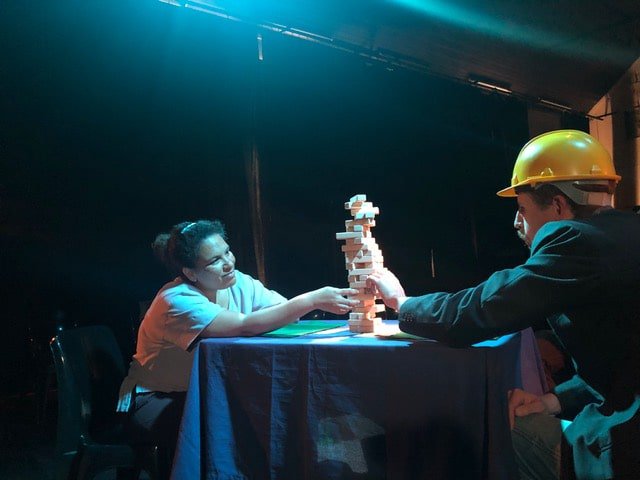
BOXES is a social-justice theatre project devised by award-winning theatre makers Neil Coppen and Ameera Conrad, Journalist Daneel Knoetze and performers Quanita Adams and Mark Elderkin. The project draws from a range of research-based, verbatim and documentary theatre methodologies to explore a myriad of perspectives and insights into urban land justice issues occurring across city of Cape Town. The plays central narrative focuses around a young Cape Town couple: Kaye (Quanita Adams) and Lawrence (Mark Elderkin) who have recently moved into the inner-city and find their preparations for a house-warming dinner, derailed when Lawrence announces that he has accepted a job offer to design a state-of-the art residential development in lower Woodstock. When it is discovered that local residents will be evicted from their neighbourhood to make room for the development, Kaye begins to probe the repercussions of her partner’s latest venture. As Kaye and Lawrence battle it out, we learn of Kaye’s interactions with her Aunt Sumaya in the Bo Kaap, who due to rising rates is having to sell up her family home and has been inspired to return to her activist roots. As Kaye and Lawrence attempt to arrive at some sort of a resolve before the arrival of their dinner guests, audiences encounter a myriad of characters including property developers, politicians, residents and whistleblowers whose lives are impacted, for better or worse, by the gentrification trends sweeping across the city and suburbs. Over the course of four short scenes, BOXES probes the legacy of apartheid spatial planning and forced removals, examining notions of ‘development’ and ‘progress’, by interrogating the question: Who is really benefitting from all this so-called progress? BOXES forms part of a wider Open Society Foundation project which connects South African investigative journalists with theatre makers and artists. The Open Society foundation funded the project which sees creatives interpret the work of investigative journalists with the hope that alternative dissemination strategies would enable these narratives to reach wider audiences in the lead up to the 2019 South African elections. The play is produced by Empatheatre, a company founded by Neil Coppen, Mpume Mthombeni and Dylan McGarry. Empatheatre has been responsible for launching several social-justice theatrical projects over the last decade including Soil & Ash (focusing on rural communities facing pressure from coal-mining companies), Ulwembu (street-level Drug addiction and harm reduction advocacy), The Last Country (female migration stories) and Lalela ulwandle (an international theatre project supporting sustainable transformative governance of the oceans). More recently the Empatheatre team has been invited to work internationally in New York, St Louis, Toronto, Fiji, Ghana and Namibia. DATE: 26 April 2019 TIME: 14:00 to 15:00 VENUE: Studio 5, Environmental and Geographical Science Building, Upper Campus, UCT Space is limited. Please RSVP to africancentreforcities.rsvp@gmail.com

ACC Brown Bag – Living Off-Grid: Reflections from Ghana and Zimbabwe

Studio 1, Environmental and Geographical Science Building, Upper Campus, UCT

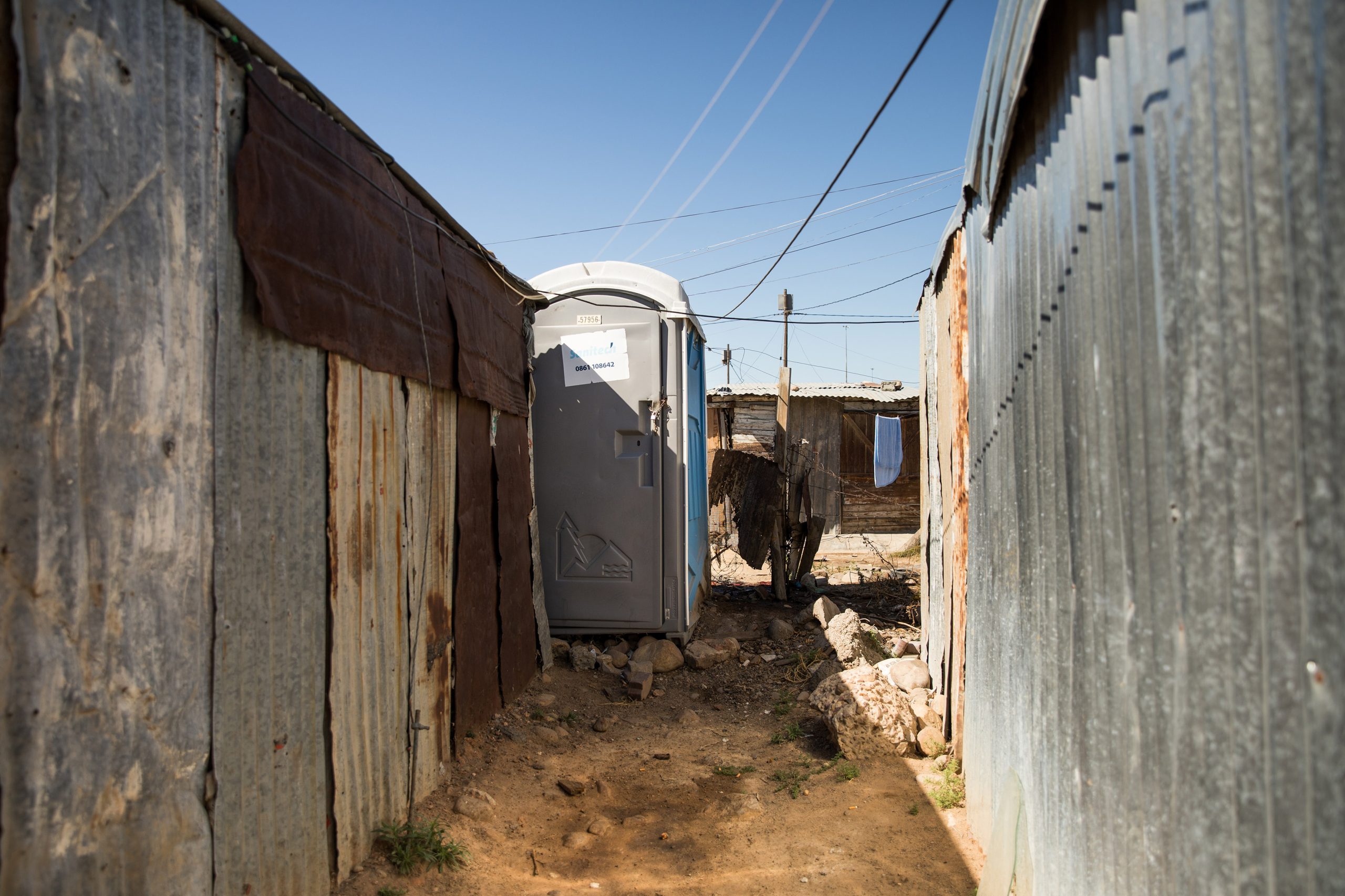
Speakers: Percy Toriro – University of Zimbabwe and Issahaka Fuseini – University of Ghana Join this discussion between Percy Toriro and Issahaka Fuseini, who will share findings from their work as city partners in the LOGIC (off-grid) project. Percy will engage the theme of ‘Electricity visits us’: the challenges of living with poor infrastructure and services in an off-grid settlement, with a focus on Dzivarasekwa, Zimbabwe. Issahaka will speak to the realities of off-griddedness and various assemblages to adapt to water scarcity and sanitation challenges in Tamale, Ghana. These inputs will be followed by reflections by Hayley MacGregor (IDS) locating these discussions within the overlooked intersections between urban studies, the “infrastructure turn” and emerging urban food, nutrition and wider wellbeing debates. This brownbag will build on the earlier conversations by Mercy Brown Luthango and Iromi Perera and the LOGIC (off grid) project, speaking to research in two additional project cities. WHEN: Thursday, 11 April 2024 TIME: 15h30 - 16h30 VENUE: Studio 1, Environmental and Geographical Sciences Building, Upper Campus, University of Cape Town ABOUT THE SPEAKERS Percy Toriro has over 20 years’ experience as a city planner, having been the Chief Planner for the City of Harare for 10 years. Dr Toriro also leads the Urban Planning Program at the Municipal Development Partnership (MDP) a network spanning 15 Southern African countries, engaging in urban development challenges. Percy holds a PhD from the University of Cape Town. His research has covered urban infrastructure, urban housing, urban informality, housing, governance, food systems and environment. Percy’s work sees him interacting with national, regional and local governments in different countries and cities. Percy served four terms as President of the Zimbabwe Institute of Regional and Urban Planners (ZIRUP). Percy holds an adjunct lectureship position at the University of Zimbabwe. Issahaka Fuseini is a senior lecturer at the University of Ghana, Ghana. Issahaka holds a PhD from Stellenbosch University. Issahaka’s research interest spans food systems governance, collaborative local-level governance, and inclusive urban development. Issahaka previously worked at the African Centre for Cities, University of Cape Town, during which time he was involved in multi-country, interdisciplinary projects aimed at improving urban food systems governance and nutrition security in nine cities in Kenya, Zambia, Zimbabwe, Namibia, and South Africa. Presently, Issahaka is a co-investigator responsible for the Ghanaian component of a UKRI-sponsored multi-country research project (under the Global Challenges Research Fund’s Off-Grid Cities call) that is being implemented in five cities in Ghana, South Africa, Zimbabwe, India, and Sri Lanka. This project seeks to understand how access to or the lack of infrastructure, broadly defined, impacts the food and nutrition security of marginalised populations in cities in the Global South. Issahaka is also a lead partner in a city dialogue, facilitated by RUAF/FAO, that is aimed at developing a city-level food systems governance agenda for his home city of Tamale, Ghana.