


Academic Seminars (15:00 - 16:30) 7 August High Stakes, High Hopes: Creating Collaborative Urban Theory - Prof Sophie Oldfield 16 August Inclusive Cultural Governance: Integrating artistic and cultural practices into national urban frameworks - Avril Joffe with respondent Zayd Minty 30 August in search of thick mapping: listening to Cape Town's cities - Dr Sabina Favaro 18 September Vital Geopolitics - Gerry Kearns 20 September The invention of the 'Sink Estate': Consequential Categorization and the UK Housing Crisis - Dr Tom Slater 18 October Storytelling as method: migration, gender and inclusion in Durban - Dr Kira Erwin 1 November: Contextualising strategies to enable LGBT rights in Africa: legitimacies, spatial inequalities and socio-spatial relationships - Dr Andy Tucker 15 November Representing urban life in Africa and its diasporas - Dr Shari Daya and Dr Rike Sitas Brown Bags (13:00-14:00) 23 August 'Auditing' vernacular Cape Town as a sonic city - Valmont Layne 6 September pumflet: art, architecture and stuff - Ilze Wolff 27 September Speculative Indigeneity - A (K)new Now - heeten bhagat 11 October Conversations on cultural mapping and planning - Alicia Fortuin, Vaughn Sadie and Shamila Rahim 25 October False Bay - Dr Hedley Twidle
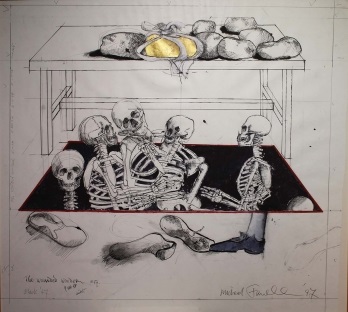
Vital Geopolitics is the study of international relations from the perspective of life itself. Colonialism and neoliberalism are not only economic forces, they shape social reproduction and the geography of labour power. Viewed in this way, demography and gender, famine and migration, intellectual property and extortion, suicide and capital punishment share a profound set of mutual determinants. Tracing marginality as a set of biological relations reveals some of the links between, for example, primitive accumulation and the Anthropocene. Gerry Kearns is Professor of Human Geography at Maynooth University, Ireland, and a Member of the Royal Irish Academy. His is the author of Geopolitics and Empire (Oxford University Press 2009) and co-editor of Spatial Justice and the Irish Crisis (Royal Irish Academy 2014). WHEN: Tuesday, 18 September 2018 TIME: 15:00 to 16:30 VENUE: Studio 3, Environmental and Geographical Science Building, Upper Campus, UCT IMAGE CREDIT: Michael Farrell, Wounded Wonder, Mixed media on paper, 96.5 x 105 cm.
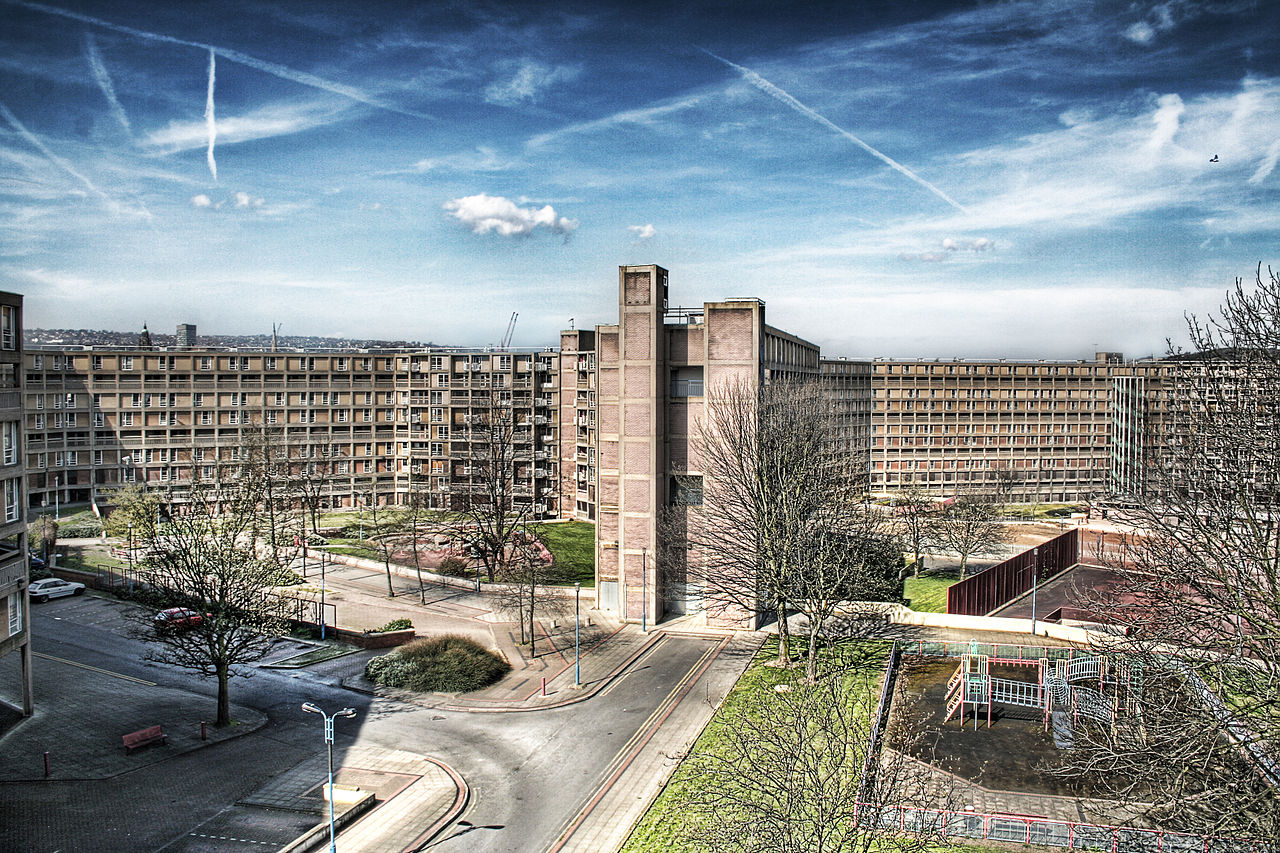
The Invention of the ‘Sink Estate’: Consequential Categorization and the UK Housing Crisis presented by Tom Slater explores the history and traces the realisation of a category that was invented by journalists, amplified by free market think tanks and converted into policy doxa (common sense) by politicians in the United Kingdom: the ‘sink estate’. This derogatory designator, signifying social housing estates that supposedly create poverty, family breakdown, worklessness, welfare dependency, antisocial behaviour and personal irresponsibility, has become the symbolic frame justifying current policies towards social housing that have resulted in considerable social suffering and intensified dislocation. The article deploys a conceptual articulation of agnotology (the intentional production of ignorance) with Bourdieu’s theory of symbolic power to understand the institutional arrangements and cognitive systems structuring deeply unequal social relations. Specifically, the highly influential publications on housing by a free market think tank, Policy Exchange, are dissected in order to demonstrate how the activation of territorial stigma has become an instrument of urban politics. The ‘sink estate’, it is argued, is the semantic battering ram in the ideological assault on social housing, deflecting attention away from social housing not only as urgent necessity during a serious crisis of affordability, but as incubator of community, solidarity, shelter and home. WHEN: Thursday 20 September 2018 TIME: 15:00 to 16:30 VENUE: Studio 3, Environmental and Geographical Science Building, Upper Campus, UCT