



The 4th Annual Realising Just Cities Conference takes place in Sheffield, UK from 13-18 October 2019. The conference focuses on lessons, impacts and outcomes since the start of Mistra Urban Futures (MUF) in 2010 but with particular emphasis on the current 2016-19 phase of closer international collaborative and comparative research now ending. MUF has sought to co-produce knowledge and action to support sustainable urban development across cities in the Global North and South, working through Local Interaction Platforms and other forms of partnership that bring together researchers from different stakeholders in transdisciplinary teams. The conference is hosted by the Sheffield-Manchester Local Interaction Platform and will include representatives from partner cities in Buenos Aires, Cape Town, Gothenburg, Kisumu, Malmö, Shimla, and Stockholm. The Week at a Glance Sunday 13th October, 1830-2030, Welcome Drinks and Reception, Sheffield Winter Gardens. Detailed Programme. Monday 14th October, 0900-1700, Comparative Project Work, Lunch and Sheffield Walking Tours. Detailed Programme. Tuesday 15th October, 0815-1800, Open Conference with parallel sessions, Lunch and Conference Dinner. Detailed Programme. Wednesday 16th October, 0730-2100, Coaches to Manchester field trips and workshops with Lunch and Networking Dinner in Manchester and coaches back to Sheffield. Detailed Programme. Thursday 17th October, 0900-1700, Board meeting, Some comparative project workshops, Keynote lecture and Lunch. Detailed Programme. Friday 18th October, 0900-1200, LIP-directors meeting, Some comparative project workshops. Detailed Programme. This page is only intended for Mistra Urban Futures delegates already associated with our city teams and who have been invited. Not a Mistra Urban Futures delegate? Head over to our Open Conference page, where you can find more information about how you can participate.
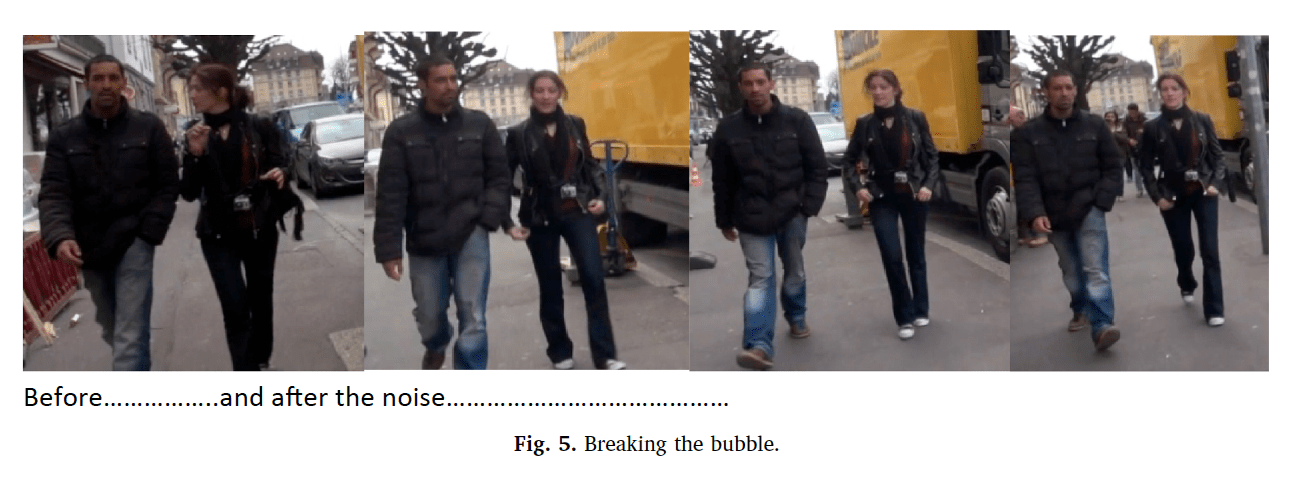
Visiting scholar Ola Söderström from University of Neuchâtel, Switzerland presents a lecture entitled: The city/psychosis nexus beyond epidemiology and social constructivism on Tuesday, 15 October from 12:30 to 14:00. ABSTRACT My talk draws on a recently completed interdisciplinary research project involving geographers, psychiatrists and linguists in the study of the relations between urban living and psychosis. Our research originates in the now long-standing observation that there is a higher prevalence of cases of psychosis in dense urban areas. Particularly interesting in the context of this talk and discussion at the ACC is that recent epidemiological studies point to the fact that this phenomenon is generally not observed in cities of the Global South. What was for long described as a universal relation between mental health and urbanism has now been provincialized. My aim will be first to explain why the question of the city/psychosis nexus has recently come to the fore not only in epidemiological research in psychiatry but also in the more-than-constructivist approaches of scholars trying to identify and practice new alliances between the life and the social sciences. Second, I will walk you through two moments – an epistemic and an ontological one – in our research process to describe how we explored such new alliances by co-designing and co-experimenting across disciplines. Thirdly, I will discuss our research findings and how they emerged from methodological triangulations. I will conclude by evoking present developments of this interdisciplinary process and how they relate to contemporary discussions on the study of bio-social entanglements. ABOUT Ola Söderström is professor of social and cultural geography at the University of Neuchâtel, Switzerland. His work draws on science and technology studies, postcolonial urban studies and visual studies. His research has notably analysed the role of visual representations in urban planning, urban policy mobilities in cities of the Global South, smart urbanism, and the relations between urban living and psychosis. His books and edited collections include: Des images pour agir. Le visuel en urbanisme, Payot, 2000; Cities in Relations. Trajectories of Urban Development in Hanoi and Ouagadougou, Wiley-Blackwell, 2014; Reshaping Cities. How Global Mobility Transforms Architecture and Urban Forms, Routledge, 2009 (co-edited with Michael Guggenheim); Critical Mobilities, Routledge, 2013 (co-edited with Shalini Randeria, Didier Ruedin, Gianni D’Amato and Francesco Panese). WHEN: Tuesday, 15 October 2019 TIME: 12:30 to 14:00 VENUE: Davies Reading Room, Environmental and Geographical Science Building, Upper Campus, UCT
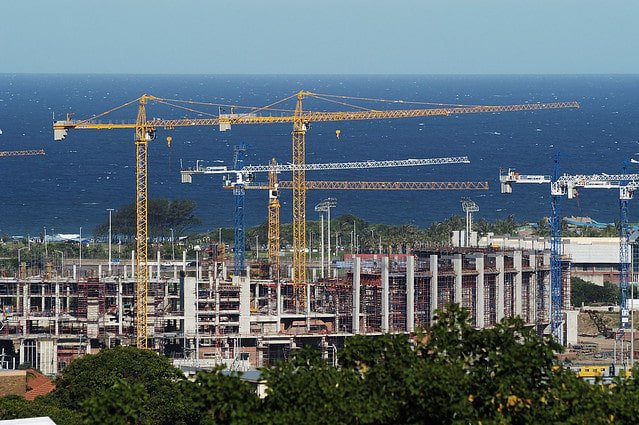
Liza Rose Cirolia, Tom Goodfellow and Jonathan Silver present Financing infrastructure in cities of the global South, a full-day workshop on 17 October 2019 at the Urban Institute (The University of Sheffield, UK). The ‘infrastructure turn’ within Urban Studies has resulted in growing scholarly attention on the importance of infrastructure (such as water, energy, transport and the like) in the everyday life and governing of cities. Such work has been used to think through the broader social and political dimensions of urbanisation and the challenges of urban service provision across rapidly urbanizing regions. Fiscal and financial issues feature in some of this research on infrastructure (for example in the recent work on financialization, of the investments required for delivering Sustainable Development Goals). However, detailed attention to the complexities of finance are often overlooked or simplified. In more conventional structural accounts, finance is given an overpowering and almost mythical position. In contrast, in much of the more relational work on urban infrastructure, finance is only briefly touched on, ignoring the range of new mechanisms being mobilised by city governments. From carbon finance to municipal bonds to public-private partnerships, new tax regimes and cost-recovery schemes, alongside the growth of private capital flows and new forms of financialized infrastructure, the financial geographies of rapidly urbanizing cities remain a complex patchwork. Moreover, the financial stories and narratives which are produced on cities often focus on Western/Northern contexts (for example, by centring the 2008 financial crisis as a crucial, global historical moment and ignoring decades of structural adjustment). While certainty important, this framing creates huge gaps, particularly in the experiences of regions, countries, and cities which are only partially (if at all) connected to the global financial system. In these same contexts, infrastructure systems are more heterogeneous and less networked and financial transactions relating to infrastructure often play out at the scale of the community. These fiscal challenges and circulations of investment create particular relations with urban governance regimes and shape the possibilities of urban regions in delivering safe, fully-functioning and universal infrastructure services. To explore these issues this workshop seeks to focus attention on: The specificities and complexities of the relations between infrastructure and finance. Critical research on new investments into infrastructure across urban regions. Fiscal challenges of mega cities or small cities/towns for infrastructure investment. The growth of new municipal financial mechanisms incorporating bonds, various forms of loans, cost-recovery programs, investments, tax regimes. A new wave of neoliberal, financialized mechanisms and public-private partnerships transforming urban governance. Innovative and progressive new financial tools such as P2P, basic income grants through to demands for paying carbon debt. Financial investments into ‘hybrid’ infrastructures especially across informal urban space. Methodologies and tools for tracing infrastructure-finance configurations. How these dynamics play out in Southern cities and urban areas and with what implications. We aim to bring together scholars who are interested in creative approaches to studying finance and infrastructure, drawing insights from their own projects and research in global South urban regions, and sharing work-in-progress to get feedback and comment. The workshop will provide an informal space to share work, ideas, research projects and discuss pathways for strengthening research in this area. WHEN: 17 October 2019 TIME: 09:30 for 10:00 to 17:00 WHERE: Urban Institute, The University of Sheffield, UK If you are interested in attending, please contact workshop organisers Liza Rose Cirolia (liza.cirolia@uct.ac.za) or Tom Goodfellow (t.goodfellow@sheffield.ac.uk) or (Jonathan Silver (j.silver@sheffield.ac.uk)