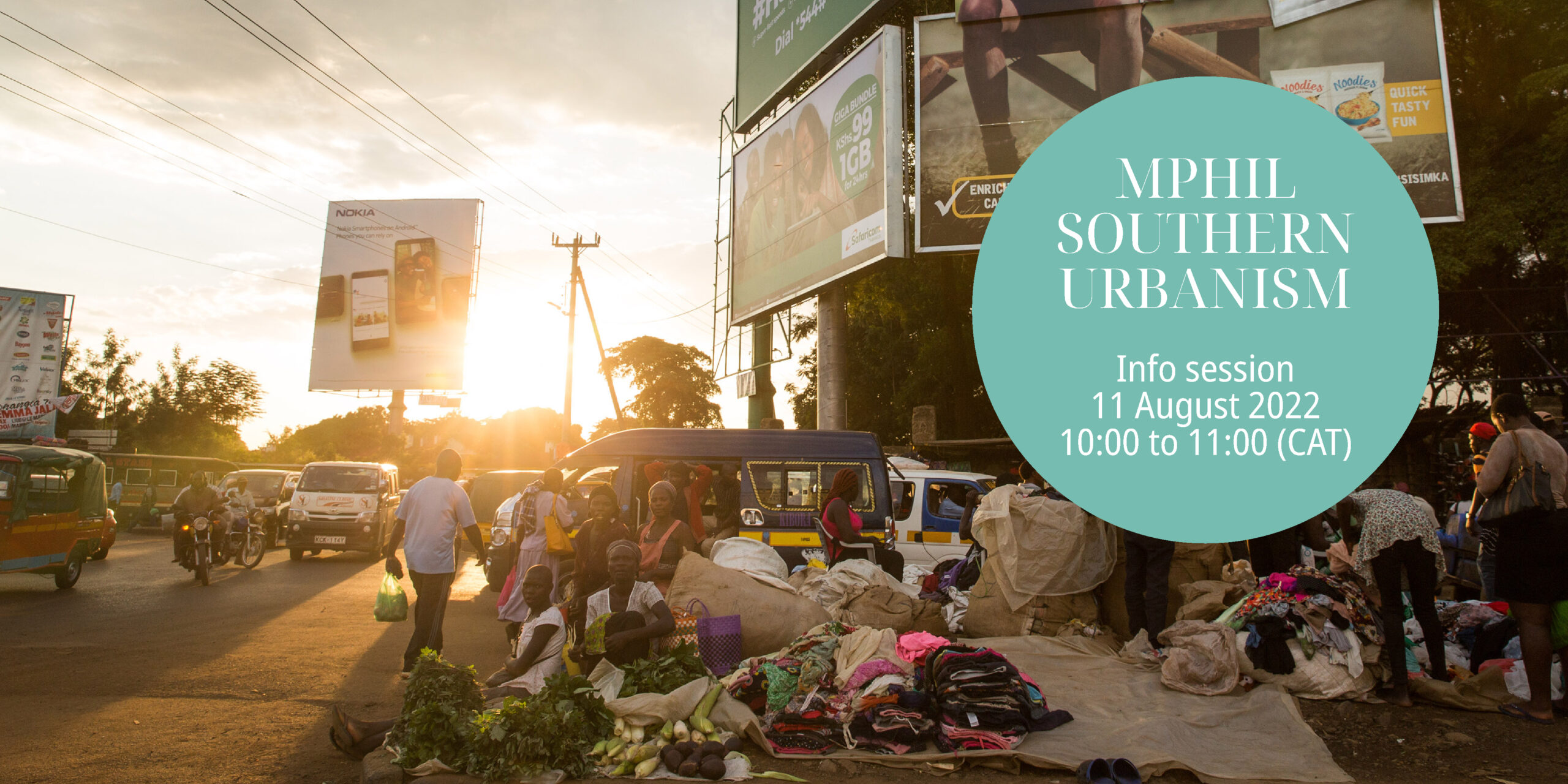



The MPhil Southern Urbanism is designed to cultivate the next generation of urban thinkers from the South, who are rooted in the realities, theories and practise of cities of the Global South. Drawing together a diverse cohort of scholar and practitioners, the programme utilises a combination of guided learning in small-group seminars, experimentation in various spaces of urban practice and independent thesis research to ground students in Urban Studies theory, and new research methodologies. APPLICATIONS DEADLINE INTERNATIONAL STUDENTS: 31 October 2022 APPLICATIONS DEADLINE SA STUDENTS: 30 November 2022 If you are interested in applying for the MPhil Southern Urbanism programme but still have some questions? This info session, hosted by programme convenor, Dr Anna Selmeczi will provide a brief overview of the pedagogical approach, programme structure and entry requirements, as well as discussion time to answer all your questions. REGISTER HERE
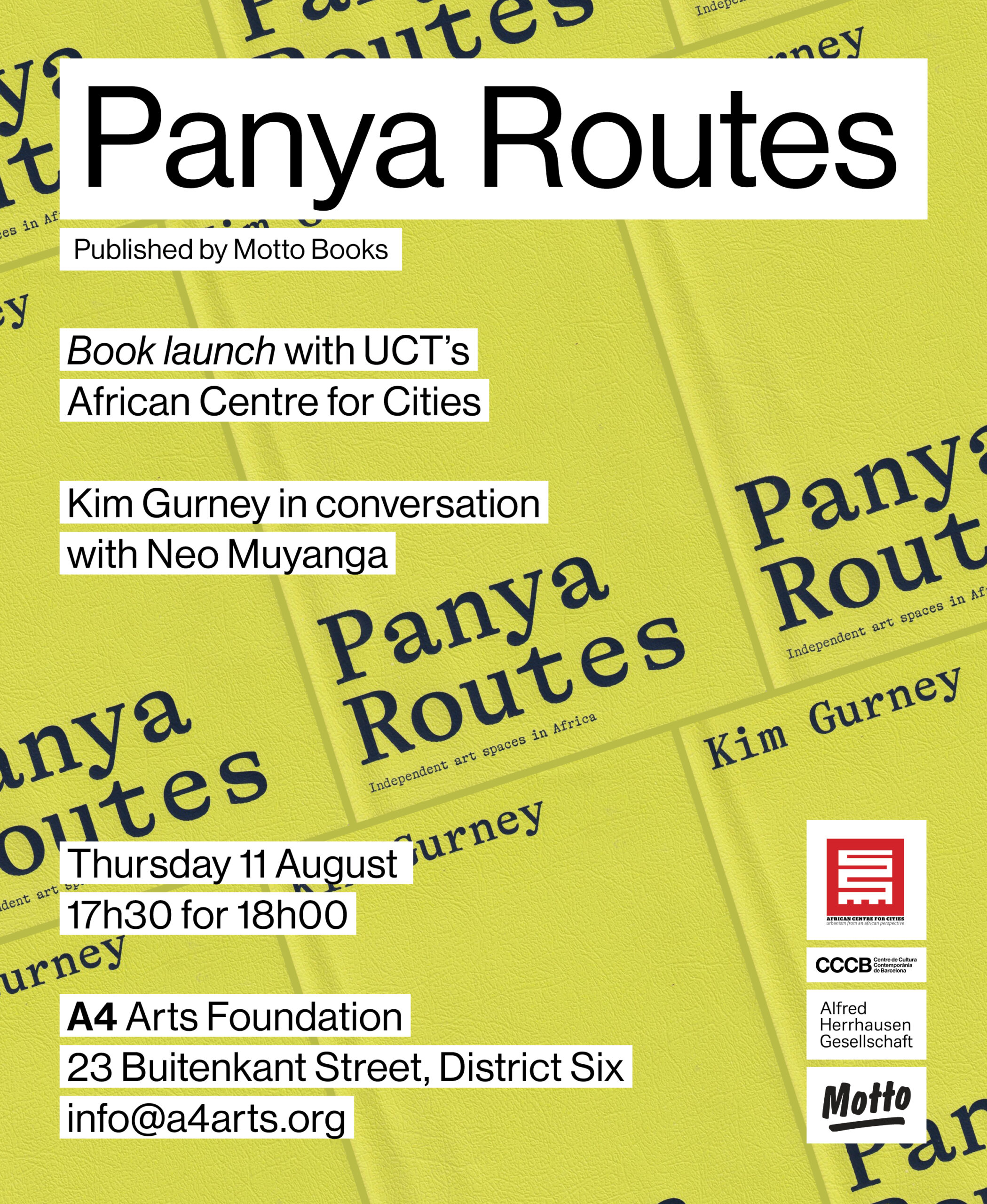
Join ACC for the launch of 'Panya Routes', published by Motto Books, which investigates the do-it-yourself, do-it-together working principles of independent art spaces on the continent.
African Centre for Cities (ACC) invites you to join us for an in-person seminar with Dr James Duminy, ACC Honorary Research Associate, and Lecturer at the School of Geographical Sciences, and Bristol Poverty Institute, at the University of Bristol. The seminar entitled Thinking problematically about the city: Planning as a site of innovation, takes place on Friday, 12 August at 12:00-13:15. ABSTRACT Urban innovation cannot be limited to the harnessing of technologies sourced from the private sector, civil society engagements, and the entrepreneurial spirit of informality within models of governance that position the city as a laboratorial site of experimentation. What government does, and what built environment professions do, in and through governance-related activities, including the establishment of durable procedures of government, must be incorporated into the purview of urban innovation. Yet, typically the place and role of the state within urban governance remains caught within a limiting critique of neoliberalism or a depiction of the state as incorrigible, at best, and oppressive, at worst. Planning, for its part, is presented in some critical accounts as a monolithic domain of state stasis; a procedural system for the reproduction of pre-existing and future inequalities. However, an alternative view of city transformation would place urban planning as a potential driver of governance innovation. Here we draw upon recent experiences of planning reform in South Africa, focusing on the development and application of a process known as the Built Environment Performance Plan (BEPP), to consider the implications of seeing the state as a site of problematization, and planning as a site of innovation in urban governance. Such a perspective draws attention to the temporalities of response, rupture, uneven institutionalization, and setback that attend acts and processes of innovation unfolding within the state. It highlights the demand for successful innovations to navigate cross-sectoral and multi-scalar imperatives, and draws attention to the enduring need to establish meaningful links between the fiscus and other modes and instruments of governance that can sustain or transform urban regimes. WHEN | Friday, 12 August 2022 TIME | 12:00-13:15pm VENUE | Studio 3, Environmental and Geographical Sciences Building, Upper Campus, UCT