Density Syndicate: Studio 01

Guga S’Thebe Arts and Culture Centre Washington Street, Langa (right turn off Bunga Ave at Fisher's Corner Cafe) , Cape Town, South Africa

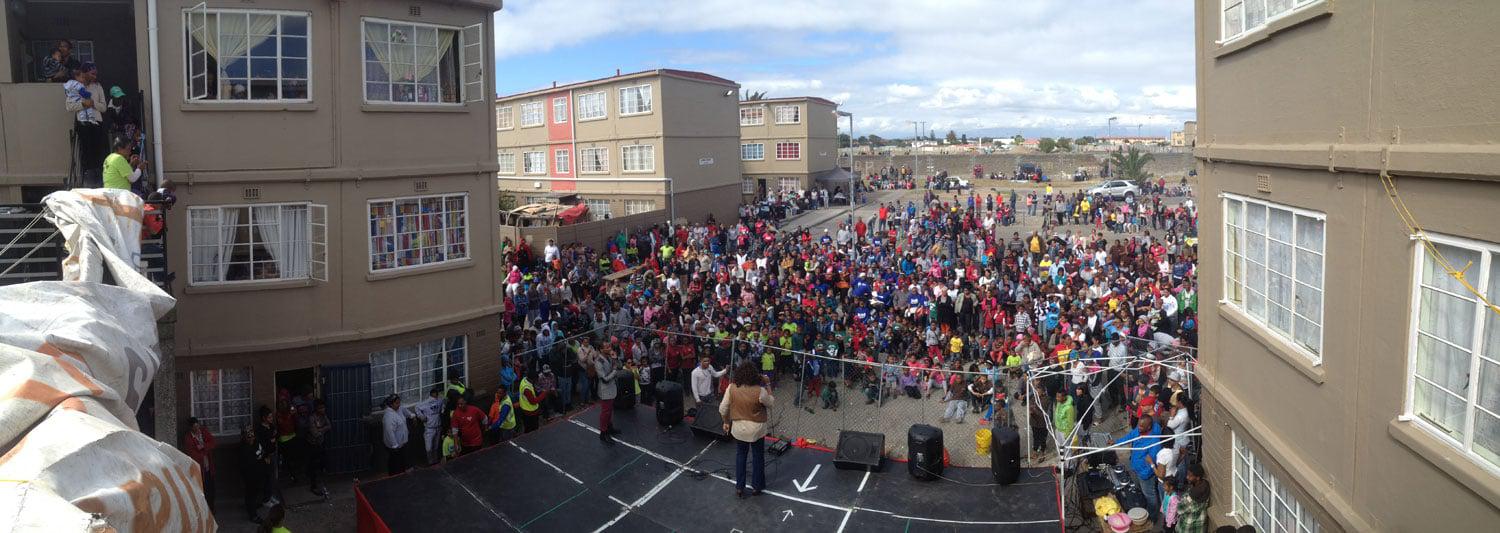
The Density Syndicate officially kicks off with its first studio on 12 May 2014 at Guga S’Thebe Arts and Culture Centre in Langa. Multi-disciplinary teams, consisting of Dutch and South African urbanists, researchers, and activists will collaborate to develop speculative designs that improve density, and accommodate social mix in a sustainable way. Participants include representatives from: African Centre for Cities (SA); Arup (SA); Cape Town Partnership (SA); City of Cape Town Spatial Planning & Urban Design (SA); Community Organisation Resource Centre (SA); dhk urban (SA); Doepel Strijkers (NL); Dutch Consulate (NL-SA); H+N+S Landscape Architects (NL); International New Town Institute (NL); Jakupa (SA); Land+Civilsation Compositions (NL); Provincial Department of Human Settlements (SA); Sustainability Institute (SA); Urban Water Management Research Unit (SA); Violence Prevention through Urban Upgrading (SA); Witteveen+Bos (NL). Follow us on the ACC website; Facebook and Twitter @ through #DensitySyndicate or #WDC234

Transnational Labor and Place Making in the Rustbelt US: Implications for Theorizing Place and Politics of Place in the Global Era

Studio 5 Environmental and Geographical Sciences Building, Upper Campus, Cape Town, South Africa

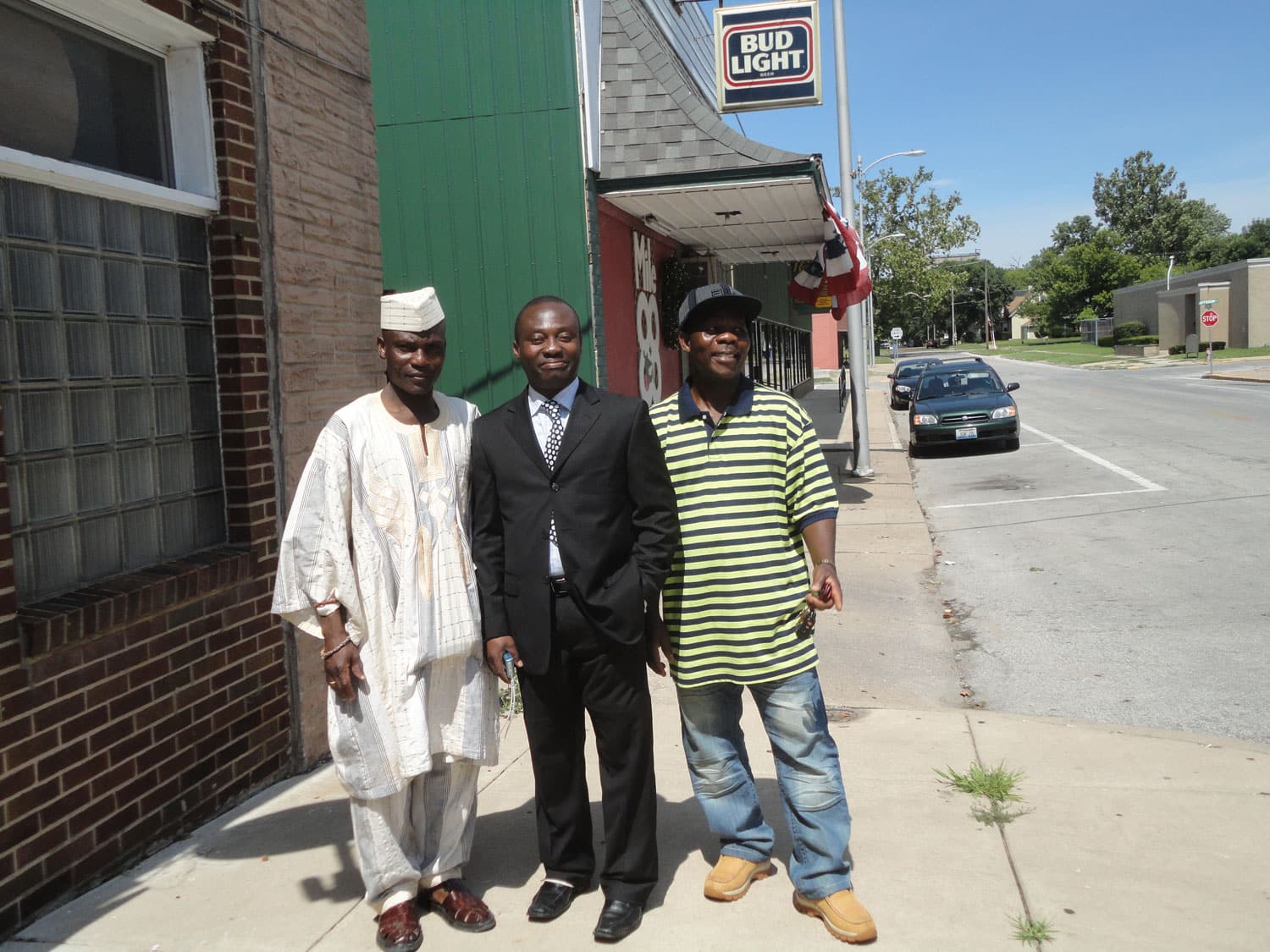
ACC is excited to host Prof Faranak Miraftab in the first of our academic Seminar Series for 2015. In this seminar 'Transnational Labor and Place Making in the Rustbelt US: Implications for Theorizing Place  and Politics of Place in the Global Era', Prof Miraftab will be presenting from her forthcoming book (2016) entitled Making a Home in the Heartland: Immigration and Global Labor Mobility. Abstract As a point observation I take an industrial town in rural rustbelt of the United States, and study the rapid social transformation of this space due to transnational labor recruitment by the meat processing industry. Drawing on ethnographic research conducted in Illinois, Mexico and Togo, I unfold the global production and social reproduction of migrant workers; how they make place globally and locally; and how they renegotiate inter-racial relations to make a former sundown town their new home in Illinois. Focusing on an often overlooked space in urban scholarship of globalization and taken-for-granted processes of global labor mobility, this study recovers voices and stories often hidden, made invisible or left out of the picture, to theorize place and place making relationally and stress the difference that place makes. Spanning urban studies, human geography, immigration and transitional studies, Making a Home in the Heartland makes important intervention in the theorization of urban, production and social reproduction of transnational migrants, politics of place and place making. Biography Faranak Miraftab is Professor of Urban and Regional Planning at the University of Illinois, Urbana-Champaign. A native of Iran, she did her undergraduate studies at the Tehran University; while in political asylum she earned her Master's degree in Norway and later moved to the US and completed her doctorate at the University of California, Berkeley. Her interdisciplinary ethnographic work crosses planning, geography and transnational studies and is empirically based in cities of Latin America, Africa and North America. As an urban scholar of globalization she is interested in the global and local development processes and contingencies involved in the formation of the city and citizens' struggles to access dignified livelihood. She was named as a 2014-15 University Scholar, a prestigious award bestowed on faculty at the University of Illinois campuses. Her most recent and forthcoming publications include Cities of the Global South Reader (Miraftab and Kudva, Routledge 2014); Cities and Inequalities in a Global and Neoliberal World (eds. Miraftab, Wilson and Salo, Routledge April 2015), and Making a Home in the Heartland: Immigration and Global Labor Mobility (Miraftab, Indiana University Press, January 2016). Her presentation will draw on the latter, a multi-sited ethnography concerning global production and social reproduction of migrant labor and how this makes for local development in the heartland US.  

Performing a New Model of Active and Activist Citizenship in South Africa

Studio 5 Environmental and Geographical Sciences Building, Upper Campus, Cape Town, South Africa

In this seminar, Dr Chloé Buire will be presenting a paper entitled 'Performing a New Model of Active and Activist Citizenship in South Africa'. Abstract In 2014, South Africa celebrated its “Twenty Years of Democracy”. Official commemorations emphasized the pride in belonging to the Rainbow Nation, but commentators recalled the fragility of the national myth.  Many of these commentators feared that young people who have not lived under apartheid could endanger democracy because of their unstable and conflicting political identities.  In this context, this paper explores the kind of citizenship promoted in youth policies and curricula, and traces how citizenship has been reframed since the heyday of the democratic transition in the 1990s.  Emerging from this analysis is an “active citizen” whose commitment to social justice is measured against her or his contribution to the national economy.  Nevertheless, interviews with key actors from government and civil society conducted in Cape Town reveal that the definition of a self-sufficient, responsible, and caring citizen is contested, as projects developed to produce young citizens engage with critical thinking as well as with personal economic advancement. While academic education remains seen as the primary tool for building citizenship, many are exploring alternative pedagogies and experimental training to challenge the status-quo of a profoundly unequal society.  The learning process of various actors involved in youth development suggests that South African citizenship is performed through this complex relationship between a model of economically active citizens and a model of politically conscious citizens. Biography Chloé completed her PhD in geography at the University of Paris Ouest (France). Her doctoral work examined the practices of urban citizenship in Gugulethu and Heideveld (Cape Town). She worked as a postdoctoral fellow at the University of the Witwatersrand (Johannesburg) in 2012 and 2013, where she explored the construction of political identities in Luanda, Angola. Since January 2014, Chloé is a post-doctoral research associate at Durham University (UK). She is currently doing fieldwork in Cape Town for YouCitizen, a research project examining the meaning and experience of citizenship for young people in societies with histories of conflict and division (www.youcitizen.org).

Briefing and Q&A: Public Art and the Power of Place

Guga S’Thebe Arts and Culture Centre Washington Street, Langa (right turn off Bunga Ave at Fisher's Corner Cafe) , Cape Town, South Africa

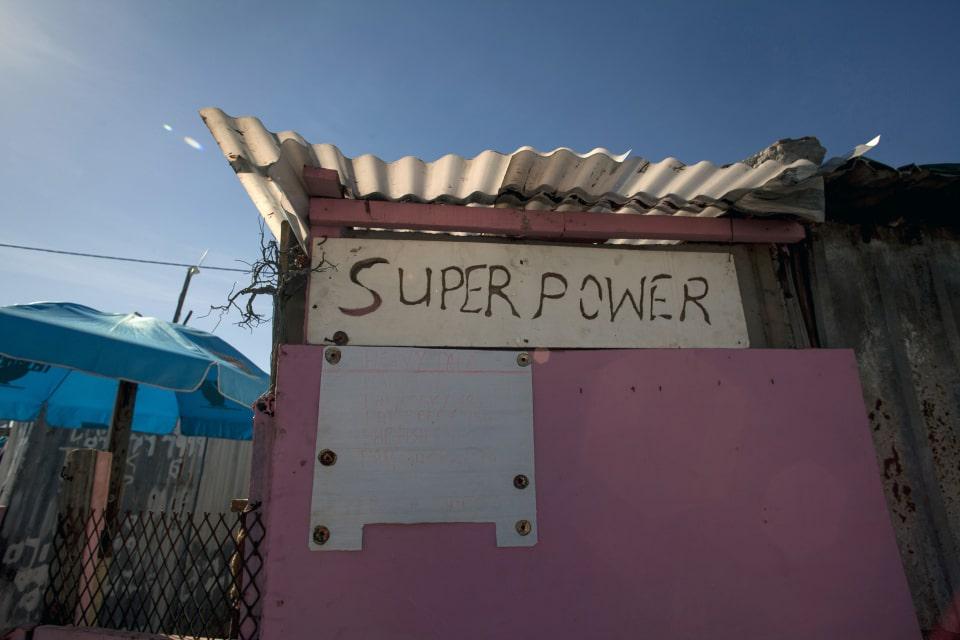
Public Art and the Power of Place, initiated by the African Centre for Cities at UCT, with support from the National Lottery Distribution Trust Fund seeks to support six public art engagements to be manifested in Cape Town’s townships in 2015 that explore the significance of place outside of the City Bowl. The African Centre for Cities is looking for proposals for public art projects that: Have been developed by township-based artists (can be original work or developments of existing projects) // Offer new understandings or perspectives of urban realities of Cape Town’s townships through creative means // Have a public dimension: engage public spaces; include people; concern public interest; or face the public in a meaningful way. On Saturday 20 June 10:00-12:00 we will be hosting a briefing and Q&A session for potential artists at Guga S'Thebe in Langa. Please join us to find out more about the project.