Public talk and film screening in Namibia, and workshop on Global South Urbanism.

Namibia University of Science and Technology (NUST) , Namibia

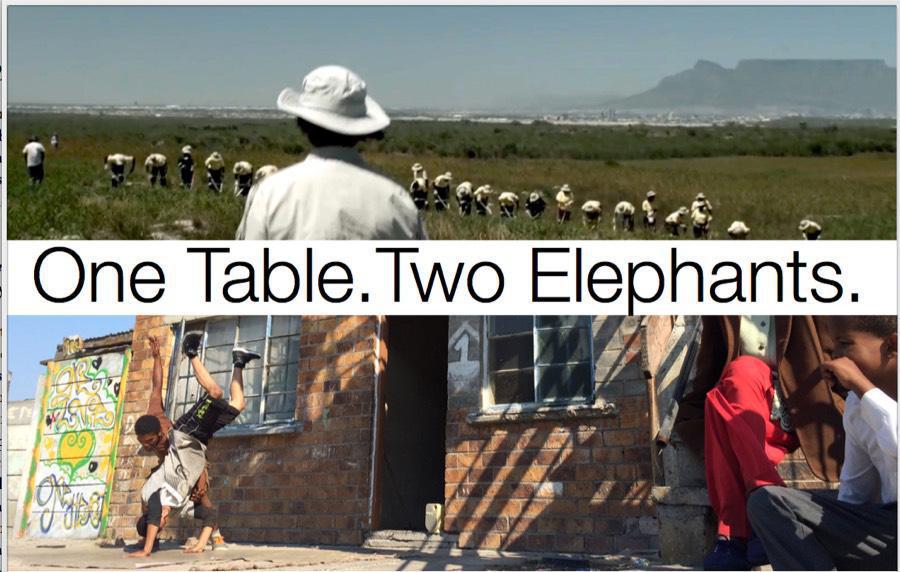
Our film "One Table Two Elephants" (work in progress version) will be screened and I will hold a discussion afterwards on 22 March 2016 here at NUST - Namibia University of Science and Technology. Tomorrow we are organising a workshop on Global South Urbanism and I am giving a lunch lecture. My great hosts are Guillermo Delgado and Phillip Luhl at NUST who I met at Antipode workshop in Durban some cheap back. See programme below. Dr. Henrik Ernstson will be visiting the Namibia University of Science and Technology (NUST) as part of the Integrated Land Management Institute (ILMI) “Land, livelihoods and housing” programme. He will be engaging with staff, faculty and students of the university, as well as invited guests, on issues relating to urbanisation, environmental humanities, political ecology, and global south urbanism.   DRAFT PROGRAMME Tuesday March 22 9h00-15h00 CITY WALK With students from the Department of Architecture and Spatial Planning (DASP). Led by Guillermo Delgado and Phillip Lühl, with comments from Henrik Ernstson. The day will start at the foyer of the Department of Architecture and Spatial Planning with a brief introduction by Guillermo Delgado and Phillip Lühl. We will then leave with a mini-bus to different places in the city where we will walk through some of the key localities that define the socio-spatial condition of contemporary Windhoek. 18h00 FILM SCREENING: “One Table, Two Elephants” Venue: School of Mining auditorium, NUST Comments by Jacques Mushaandja (JMAC) and Phillip Lühl (DASP). Wednesday 23 March 8h30-12h30 Workshop of Global South Urbanisms: PART 1 Workshop with students and faculty from the various courses at DASP and DLPS: The workshop will be an opportunity to think together how research and teaching can be done in such a way that it "re-encounters" the African/Global South city. 12h30 LUNCH LECTURE: Global South Urbanisms and Situated Ecologies Venue: Foyer, Department of Architecture and Spatial Planning (DASP) In this talk Dr Henrik Ernstson will situate his work on urban ecology within the wider literature on Global South/postcolonial urbanism. This will include his studies in Cape Town on ways of knowing urban nature that deals with deep-seated knowledge politics that postapartheid and postcolonial cities requires us to face and which can be used as possible entry points to politicise urban environments. He will also describe a newly funded project on urban infrastructure and the politics around waste and sanitation management in Kampala, Uganda. As a theoretical underpinning, he will elaborate on a wider collaborative effort to build a Situated Urban Political Ecologies approach which also entails to support the building of critical urban scholarship among especially younger scholars of Africa with PhD courses and workshops. 14h30-17h00 Workshop of Global South Urbanisms: PART 2 Workshop with students and faculty from the various courses at DASP and DLPS: The workshop will be an opportunity to think together how research and teaching can be done in such a way that it "re-encounters" the African/Global South city.
Democratic Practices of Unequal Geographies

Seminar Room 1, EGS Building, Upper Campus, University of Cape Town University of Cape Town, Cape Town , Western Cape, South Africa

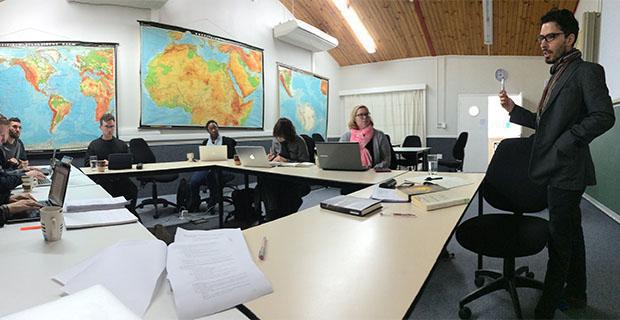
  The 2016 Annual ACC Seminar/PhD Course on Democratic Practices in Cape Town: The Aesthetical and the Political of Unequal Geographies:  Reading across Political Philosophy and Global South Urbanism July 4-8, 2016, Seminar Room 1, EGS Building, Upper Campus, University of Cape Town. Organised by Henrik Ernstson and Andrés Henao Castro. The seminar is given by the African Centre for Cities (ACC) at the University of Cape Town. To apply, please send  your letter of interest no later than 6 May 2016 to Henrik Ernstson (henrikDOTernstsonATuctDOTacDOTza). We hope the seminar with its readings and discussions can contribute new angles and perspectives to your research. More information on the 2016 theme, reading and seminar methodology is given below. Rationale for 2016: Aesthetics and politics! The task is urgent and profound: How to make sense of rapid urbanization across Africa and the global South, while (re)turning to explicitly think about emancipatory politics? What does the political mean in these contexts? What constitutes properly democratic practices of equality and freedom? What can we learn by rubbing political theory against urban studies of ‘the South’? This annual seminar series emerges out of an interest to put into conversation political philosophy and global south urbanism. Importantly, our objective is not that of supplementing a theoretical abstraction (e.g. ‘the political’) with some kind of concrete spatiality. Rather, we are interested in the global south as an epistemological position and a field of experience that has specific contemporary sociomaterial realities that we hope can trouble and re-new both radical urban theory and political theory. Following last year’s seminar, in which we related our readings of Plato to Rancière with critical urban studies of the South, this year we gather a seminar that problematizes the relationship between the political and the aesthetic. This puts more focus on artists and activists that intervene materially and socially in the fabric of urban spaces, and it brings us towards the political in a quite specific way. More concretely we aim to relate questions around what Jacques Rancière calls the distribution of the sensible with interventions in urban spaces. We aim to push the seminar to think about the representation and troubling of an aesthetic regime from the perspective of how it has become embedded in urban and non-urban settings. We will exploit texts that have linked theoretically the political with aesthetic regimes and how this translates troubles and can be re-thought in the context of the global south. We want to ask, for example: How does the symbolic remaking of a space through an artistic intervention trouble the otherwise naturalization of that space as reducible to its presumable functions (i.e., market values)? What is the relationship between this interruption of the function of a space and that of politics? How can artistic interventions force the community to confront that which it disavows? What kind of conflict do such forms of expressing the senses create within urban spaces? How are those urban spaces transgressed, circumvented, rearranged, reimagined, etc., so as to trouble the very limits of what can be perceived and sensed in the city? How do these spatial contestations take place today, under what kind of aesthetic practices? And how could this possibly lead to processes of political subjectivization, a politicization of collectivities, bodies, and spaces in the name of equality? In light of 2015 and the student movement of South Africa, questions of democracy, decolonization and profound emancipatory change have brought these questions into even sharper focus. And this does not mean to forget other recent women, workers and community rebellions, nor the slow-grinding and incremental institutional changes of empowerment that is also ongoing. Indeed, we hope this seminar/course will provide a chance for all participants to think about these recent events and processes. We hope it will contribute material and discussions through which you can re-think and sharpen your own research projects. Seminar Methodology Our seminar focuses on readings of political theory that interrogate the relationship between the aesthetical and the political, across a variety of philosophical approaches. Yet it explores such relationship with a particular and rather unusual emphasis on urban and non-urban geographies of the global south. We want to discuss questions about representation, intervention, performativity, sensuousness, visibility, audibility, occupation, inscription, by placing these theories within uneven geographies that should trouble existing theoretical findings and help us to reformulate our research questions, methodologies approaches and theoretical assumptions. In the readings we have chosen to place more emphasis on political philosophy as these are less known to most of us, and since this makes best use of Dr. Andrés Heano Castro’s visit here at ACC in Cape Town. The texts on global south urbanism will bring in contextual and theoretical aspects into the seminar, but we also rely on participants’ wider readings and their own research on urbanization, global south and decolonization. Below you will find the current list of readings, which will be updated. Schedule and Readings We will meet for 3 hours every day. Andrés will talk for the first 30 minutes, in order to provide context for the theoretical discussion: what is at stake in the texts, where does the text stand in relation to intellectual debates, and summarize main points, etc. Then we open the floor for discussion in which the global south urbanism literature will enter as ways to unpack and think about the seminar questions, how our empirical work are helped by these texts, while challenging them and ‘speaking back’. Through this we will have a chance to re-think our own research and case studies. For each day we will provide questions to orient your reading, and serve as starting point for our discussions. Based on this you can write down and raise your own questions to further give direction to the seminar. We will have a short 10 minute break two hours into the seminar and then we will return for another 45 minutes of discussion. Coffee and tea will be served during the seminar. (NB: Global south urbanism reading and questions will be complemented later alongside points 1-3 in the...

Free

Workshop: Thinking infrastructure with the South

HICCUP — Heterogeneous Infrastructure Configuration of Cities in Uganda Project: Thinking Infrastructure with the South Introduction The scale, magnitude and intensity of urbanisation in Africa has attracted increasing attention given the nature of environmental, social, economic and more importantly, political challenges it presents. The diverse ecology of Africa’s urban landscape raises serious questions that have provoked debate not only within academia, but among public administrators, civil society and the private sector as well. The HICCUP research initiative was conceived to provide a platform where critical questions especially about waste resource flows and the emerging multi-actor hegemonies, the resulting networks, how these multi-actor interactions are mediated within formal and informal institutional structures and processes. In addition, the initiative will also explore other equally critical questions relating to sustainability and equality. Two subprojects will be undertaken to generate the kind of information that will shape our learning about the dynamics of urbanisation in Africa. The project will work in Kampala and Mbale, two cities in Uganda where the focus will be on waste and sanitation.   Research Team The workshop will be conducted by Drs. Henrik Ernstson, Shauib Lwasa, and Jonathan Silver, who are part of a highly experienced team from various international institutions involved in the initiative. The workshop is intend to engage four students (3 MSc and 1 PhD), who have been selected to be part of the initiative to promote critical and radical thinking about Global-South Urbanism. The event will also be attended by several civil society organisations that could potentially be partners under the HICCUP initiative. Aims of Workshop a.    To finalise planning on practicalities of the research program (i.e. roles/responsibilities, research timelines, key outputs etc.) b.    To undertake some teaching and shared learning with the four the students c.    To visit some potential fieldwork sites d.    To meet some potential partners (ACTogether/NSDFU, KALOCODE, SSA/UHSNET, LOGEL etc…)

‘The Return of the Political: Insurgent Architects and The City’ an ACC talk by Professor Erik Swyngedouw

The Cape Institute of Architecture (CIFA) building 71 Hout Street, Cape Town , South Africa

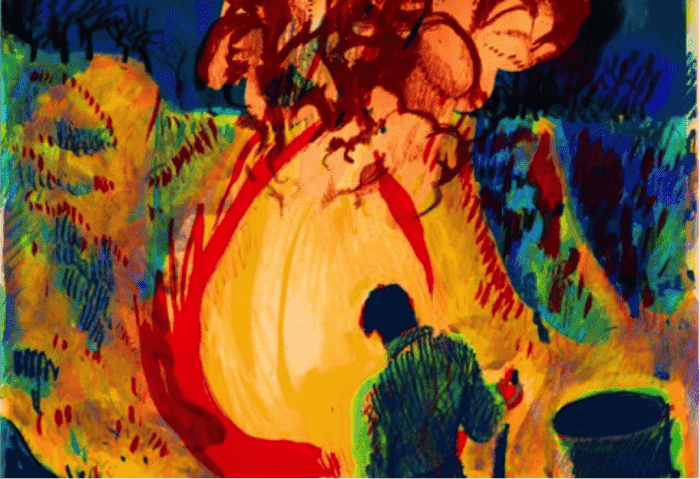
Professor Erik Swyngedouw will give an ACC Special Lecture at the Cape Institute for Architecture (CIFA) on the 8 March 2017. Departing from the aftermaths of the magical year of 2011’s urban insurrections across many different cities, he will aim to understand our present historical moment under capitalism through re-configuring how we think about urban struggles, politics and the political. This will be followed by a discussion moderated by Dr. Henrik Ernstson centering on what it means to politicize and radically democratize the city, making connections to ongoing urban struggles in Cape Town and South Africa. The event is co-hosted by the African Centre for Cities (ACC) and the Cape Institute for Architecture (CIFA). We welcome you at 18:00 for drinks and snacks with the talk starting at 18:30 sharp, followed by a discussion. Please join us at CIFA in Cape Town CBD, 71 Hout Street, 18:00-20:00. Free entry with drinks and snacks. RSVP by 3 March to Dr. Nate Millington at ACC (nate.millington@uct.ac.za) Featured Image: Cut-out from artwork “Ayotzinapa” by Mexican artist Carlos Carmonamedina, 2017 Abstract This talk aims to understand our present historical moment through re-configuring how we think about urban struggles and politics. How can we stop what we are doing, reflect, and maybe move towards becoming insurgent architects of a new politicized and democratized city? I will depart from the magical year of 2011, from which we have seen a seemingly unending row of rebellions in European cities and beyond. These rebellions have disturbed a cozy neoliberal status quo, and unnerved economic and political elites in cities as different as Athens, Madrid, Lyon, Lisbon, Rome, London, Berlin, Thessaloniki, Paris, Bucharest, and Barcelona. This ability to deeply challenge the elite’s political legitimacy within our (neo)liberal states, was not made by professionals—but by people, by amateurs that had had enough. Those who was not counted, went ahead to organize and demand a new process for producing space, producing the city, becoming insurgent architects, which at times also formed political movements, most notably Syriza in Greece and PODEMOS in Spain. It is the aftermath of these urban insurrections that provides the starting point for my presentation. From a political perspective, the central question that have opened up is: what to do and what to think next? What thought and practice is possible after the squares are cleared, the tents broken up, the energies dissipated, and everyday urban life resumes its routine practices? The talk will use political theory from Rancière, Žižek, Mouffe, Dikeç, Badiou and others, to re-centre the political in contemporary debates on the urban. This means to first distinguish “politics” from “the political” in order to understand how late capitalism and its obsession with governing and management have depoliticized the city. This has replaced debate and dissensus with technologies of governing, which also includes the enrollment of NGOs and many so called social movements. It seeks to nurture consensus and uphold a depoliticizing police order. However, while the city as polis may be dead, spaces of political engagement occur within the cracks, in-between the meshes and the strange inter-locations that shape places that contest the police order. It is here that concrete political interventions germinate new and fully politicized realities and imaginaries. My talk is meant to provoke us to see how we might—even if we call ourselves activists or critical intellectuals—still participate in nurturing a depoliticized police order. By recuperating the political, I hope to open a discussion that can connect across geographical locations, say between Europe and South Africa, to understand our present historical moment and provoke our thinking away from what we are busy doing now (within the police order), toward a space of politicization and the becoming of insurgent architects. About the participants: Professor Erik Swyngedouw is Professor of Geography at Manchester University and a prolific writer and speaker on political ecology, urban governance, political theory and radical thought. He was previously professor of geography at Oxford University and held the Vincent Wright Visiting Professorship at Science Po, Paris, 2014. He has recently published Liquid Power (MIT Press, 2015) on water and social power in 20th century Spain and co-edited with Jason Wilson the book The Post-Political and its Discontents (Edinburgh University Press, 2014). He is currently preparing a book manuscript politicization and “the political” through urban and environmental processes. With Dr. Henrik Ernstson he is preparing the edited volume Urban Political Ecology in the Anthropo-Obscene: Interruptions and Possibilities (for Routledge). The Cape Institute for Architecture (CIFA) was formed in 1899, and is the largest regional architecture body in South Africa, with the potential to influence development in the city of Cape Town and the wider region. The Institute’s core objectives are to promote the practice of architecture, to serve the interests of its members, and to support the integrity of the profession. Dr. Henrik Ernstson is an urban political ecologist that combines critical geography with postcolonial urbanism with studies in South Africa, Uganda and Louisiana (USA). He is a Research Fellow at the African Centre for Cities at University of Cape Town and the KTH Environmental Humanities Laboratory in Stockholm, with a Postdoc at Stanford University (2013-2015) and a PhD from Stockholm University. Apart from his writing he is currently finalizing the documentary research film One Table Two Elephants (with Jacob von Heland) that focuses on how race, nature and history is interconnected in Cape Town, and in 2016 he helped produce the theatre production STOMPIE in Grassy Park/Lavender Hill. He is also finalizing two edited book projects: Grounding Urban Natures: Histories and Futures of Urban Ecologies (for MIT Press, with Prof. Sverker Sörlin) and Urban Political Ecology in the Anthropo-Obscene: Interruptions and Possibilities (for Routledge, with Prof. Erik Swyngedouw). At UCT he gives the PhD winter school in June every year on Democratic Practices of Unequal Geographies (with Dr. Andrés Henao Castro). More information here.