ACC NOTRUC Seminar Series: Reflection is Part of Rehabilitation: Interventions in the History of a Land Occupation

African Centre for Cities UCT Upper Campus, Cape Town, South Africa

The third seminar in the annual ACC NOTRUC Seminar Series is presented by Koni Benson on Reflection is Part of Rehabilitation: Interventions in the History of a Land Occupation at 15:00 in Studio 3, Environmental and Geographical Sciences Building, Upper Campus, University of Cape Town. ABSTRACT In The Fire Next Time, James Baldwin writes: “To accept one’s past- one’s history- is not the same thing as drowning in it; it is, learning how to use it. An invented past can never be used; it cracks and crumbles under the pressures of life like clay in a season of drought.” This paper looks at the dynamics of invention and uses of history in the politics of a land occupation in Tafelsig, Mitchell’s Plain, where, in May 2011, over 5000 backyard shack dwellers occupied land to set up shacks on an empty field adjacent to the Kaptiensklip train station.  From an initial 5,000 people the group dwindled to about 30 families who continued to defend their right to erect structures under which to sleep. The city offered them temporary relocation to Blikkiesdorp, a dumping ground, miles away from their families and support networks. What ensued was a round of court cases and appeals and, eventual eviction. What started as a document to record the brutality of the Anti-Land Invasion Unit became a co-authored book, Writing Out Loud: Interventions in the History of a Land Occupation written by Faeza Meyer and Koni Benson.   The quote in the title of this paper comes from this book which creatively tracked 545 days of occupation, and raises questions about housing struggles, activism, situated solidarity, racism, writing, and feminist collaborative methodologies of approaching African history.  The paper today will present a draft of a new introduction to the book, with the aim of sparking a conversation about Baldwin’s proposition of not inventing but of reflecting and using hard ‘truths’ about the past in the present, in this case, building and engaging struggles against ongoing segregation and criminalization of landlessness in Cape Town.   More on the full seminar series here. More on the NOTRUC programme here.
Tackling Lighting Inequalities

African Centre for Cities UCT Upper Campus, Cape Town, South Africa

Tackling Lighting Inequalities: About Urban Lighting, Design and ‘the Social’ The ACC is excited to introduce Mona Sloane, a visiting scholar for the London School of Economics and Politics. Mona will be presenting her work on 'Configuring Light/Staging the Social', a research programme she founded at the LSE at the final brown bag of 2016. About the topic: Light is central to how people experience and use city spaces, and to how urban systems operate. Through light, we carve out spaces for social life. Light impacts on the public space in the crucial hours after dusk, enabling or problematizing social activity, economic and commercial development, security, safety and public order, access, participation and identification with urban public life. Furthermore, public lighting also has significant cost impacts on local authorities’ budgets while currently undergoing a massive technological revolution which puts it centre stage in a number of urban discussions, ranging from big data and urban governance, cutting down economic and environmental costs in relation to climate change and sustainable urban development, to aesthetics and city branding. This brown bag seminar discusses the of status public lighting and design in the UK and in London specifically. It outlines how public lighting is a barometer of developing socio-spatial inequalities in the urban context and allows rich insight into how urban inequalities are lived out and responded to. The speaker will suggest strategies for responding to these challenges. About the Speaker: Mona Sloane is a visiting academic at the ACC and a final-year PhD student in the LSE Department of Sociology. She is an ethnographer and works and publishes on the sociology of design, material culture, aesthetics and cultural economy as well as lighting design and public space. She holds an LSE PhD scholarship, an MSc in Sociology from the LSE and a BA in Communication and Cultural Management from Zeppelin University Friedrichshafen. She also is co-founder and former member of the LSE-based research programme Configuring Light/Staging the Social which explores the role of light and lighting in everyday life and urban design.

Resilient Urban Development: perspective of the Massive Small Collective

African Centre for Cities UCT Upper Campus, Cape Town, South Africa

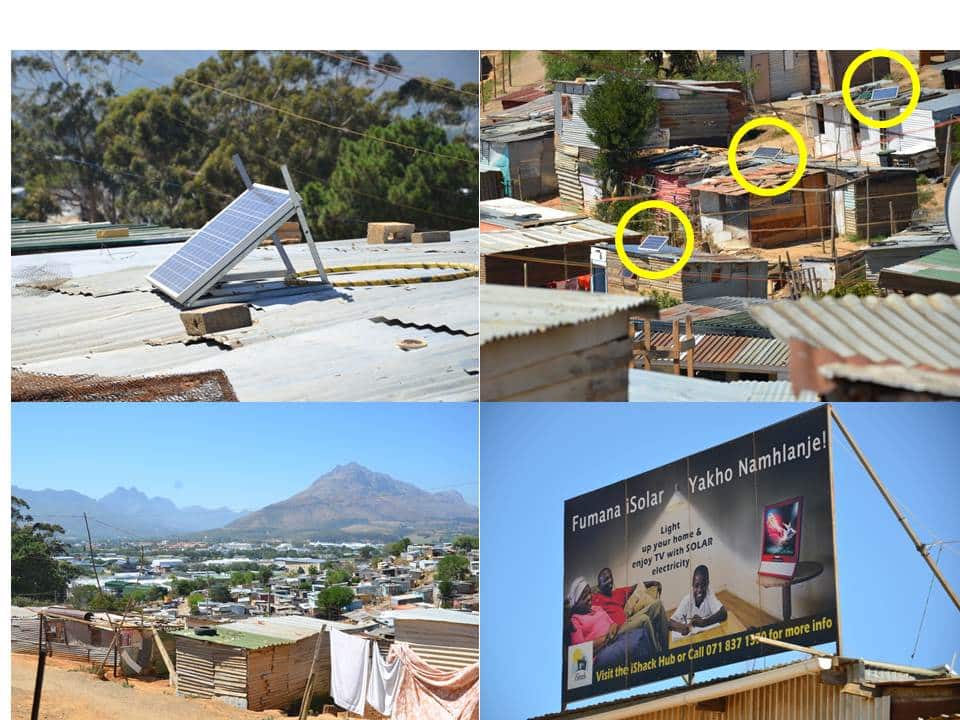
In this Brown Bag, Lauren Hermanus will introduce the work of the Massive Small Collective, which seeks to make connections between small-scale urban sustainable development and resilience thinking. The Massive Small Collective understands resilience as social, economic and environmental sustainability under conditions of dynamic complexity. As individuals, households, businesses, and governments are faced with increasing complexity, and more frequent destructive shocks, and new information and technologies, the context and need for resilience planning and implementation is growing. The assertion of the Massive Small Collective, is that top-down, large-scale, command and control strategies aimed to improve social well-being and manage ecological risks have not delivered the promised results. The collective believes that the ‘bigness’ of these projects is the source of their weakness. Local context and history are, by necessity, rendered marginal by end-state and solutions-focused wholesale reform. But we can now see that it has showed itself to be critical to long-term success. In response, the Massive Small Collective focuses on incrementalism and redundancy, dynamic interrelation, local context, learning from failure and responsive governance.  This Brown Bag will introduce the potential of small-scale urban sustainable development initiatives and investments to contribute to the resilience agenda in cities and towns around the world. This work is done in partnership with the Centre for Complex Systems in Transition, African partners of the Stockholm Resilience Centre.  About the Speaker: Lauren Hermanus is has a BA in Politics, Philosophy and Economics, and a MA in Complexity Theory and Philosophy. She is currently enrolled in MPhil in Development Policy and Practice. She is a Sustainable Development Specialist focused on urban resilience and energy innovation. Her experience is in policy, strategy and programme development in both the public and private sectors. She is interested in applying Complexity Thinking to development challenges. Date: 28th November Time: 1-2pm Venue: Davies Reading Room (library), EGS Building, Upper Campus, UCT

Brown Bag Event: Lagos a Plotted City Revisited

African Centre for Cities UCT Upper Campus, Cape Town, South Africa

ACC Brown Bag  – ‘mock PhD defence’   Thesis title: PLOTTING the prevalent but undertheorised residential areas of Lagos. Conceptualising a process of urbanisation through grounded theory and comparison   The ACC is pleased to welcome Lindsay Sawyer who has been hosted here as a visiting scholar for the past year in order to write up her thesis on Lagos. Now completed, Lindsay will present her work in a short 30min presentation that mimics her upcoming thesis defence at her university ETH Zurich. Edgar Pieterse and Sue Parnell will act as the jury.   This thesis attempts to contribute to an understanding of the urbanisation of Lagos and to arrive at a more satisfying representation of its complexities and specificities through the consideration of the prevalent residential areas of Lagos as a coherent spatial configuration, proposing Plotting as a heuristic theoretical category to account for them. Lagos still represents a significant challenge to current urban theory and methods. The gaps in knowledge about Lagos speak to the inadequate conceptual and methodological tools there have so far been to approach and analyse it as a ‘city of the global South’. This thesis forms part of the recent impetus in urban studies for new ways of producing knowledge about the urban with a revalorised focus on Southern urbanism and comparison. As such, this thesis works to formulate Plotting as a new conceptual tool to account for the production of the extensive residential areas where the majority of people in Lagos live, mostly in the ubiquitous form of rental housing called Face-Me-I-Face You by taking a grounded theory approach within a wider comparative framework. The prevalent spatial configuration of Lagos has not been adequately analysed and Plotting is an attempt to account for the piecemeal development and intensification of these areas through the contradictions, contestations and multiple systems of territorial authority of the dual land regime in Lagos. As such, Plotting is offered as a conceptual tool to account for aspects of Lagos that normative approaches have struggled to recognise and analyse such as the dual land regime, the role of customary authorities, moving beyond the formal-informal dichotomy, the growth of Lagos despite sustained political, economic and social instability, and the apparent lack of political organisation and demands from the people in the face of deep inequalities and an elitist and incapacitated state who does little to address their needs.   This research is part of the Planetary Urbanisation in Comparative Perspective project that undertook a theoretically and methodologically rigorous comparison of eight urban regions based the grounded empirical work of eight colleagues and myself. Plotting emerged as a new theoretical category through a comparison of Lagos, Istanbul, Kolkata and Shenzhen. This thesis adopts a grounded theory methodology, collecting and analysing qualitative data in order to build new theoretical categories through iterative rounds of data collection and analysis including comparative analysis. Data was primarily collected through intensive periods of fieldwork between 2012-2014. Desk-based methods were also used but there was an emphasis on fieldwork to address the lack of available data in certain areas and to allow concepts to emerge from the ground. The thesis undertakes a pattern and pathway analysis of Lagos, constructing a visual and spatial analysis of its current processes of urbanisation and a historical analysis of how these processes emerged. The thesis identifies the significant gaps in research on Lagos, linking to broader gaps in knowledge about informal rental housing and land delivery in unplanned areas of certain areas of urban Africa, showing there to be a blindspot in literature and policy towards prevalent but tolerated majority conditions. The main work of the thesis is conceptualising Plotting as a process of urbanisation through its regulatory, material and everyday dimensions with a particular focus on the dual land regime, contestations over land, and the emergence of the logic of ‘private/ network gain over public good’. Further, it is shown that through the conversation between this research and the comparison, Plotting is already proving applicable beyond the context of Lagos. Images and empirical accounts from the field and other sources are used throughout the thesis and form part of the analysis.    

Brown Bag Event: From Naartjies to Nando’s

African Centre for Cities UCT Upper Campus, Cape Town, South Africa

The ACC is excited to introduce Sarah Duff to the Brown Bag series. She will be discussing a history of Johannesburg's foodways as they relate to migration. Presentation: ‘From Naartjies to Nando’s: The Making of Johannesburg’s Foodways’ The history of Johannesburg’s foodways is, as in the case of most cities, entangled with histories of migration. As historians of both food and of migration have demonstrated, not only does migration shape the ways in which groups of people think about their identities in relation to food (and often how nations define themselves through food), but immigrants are often disproportionately involved in food industries. While historians of Africa have begun to turn their attention to histories of food, this remains a relatively new area of study for the region, and, more specifically, for South Africa. This essay begins to address this lacuna by considering how migration shaped how Johannesburg’s diverse population ate, bought, and thought about food. About Sarah Duff: Sarah Emily Duff is Researcher at the Wits Institute for Social and Economic Research at the University of the Witwatersrand. Primarily an historian of childhood and sexuality, she is the author of Changing Childhoods in the Cape Colony: Dutch Reformed Church Evangelicalism and Colonial Childhood, 1860-1895 (Palgrave, 2015). She is funded by a five-year Research Career Advancement Fellowship from the National Research Foundation and is currently at work on a project which traces the history of sex education in twentieth-century South Africa.  

Kigali and Rwanda: reflections on a capital city and its territory

African Centre for Cities UCT Upper Campus, Cape Town, South Africa

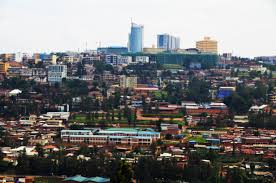
The ACC is honoured to welcome Professor Tomà Berlanda, an architect with extensive international academic and professional experience, to the Brown Bag Series. Unlike other African capitals, Kigali has not been established as a city by a colonial power. Even though it was founded under German rule, it became capital only after Rwanda’s independence from Belgium in 1962, and until 1994 remained relatively small. The Belgian occupiers always remained hostile to the development of urban centres, because they attributed to Rwanda the main function of providing work force, to be employed in their other neighbouring colony to the west. During the first and second Rwandese republic, the growing concentration of bureaucratic and administrative functions did increase the number of inhabitants, without though giving rise to an uncontrolled expansion. During that time the government further attempted to consolidate the secondary urban centres, and moreover maintain an economic and social structure based on agriculture. From the end of the 80’s onwards, though, following the introduction of the structural adjustment plans and the dismantling or privatisation of state owned industrial plants, that approach has been left. Today, urbanisation has become an intentional strategic goal of government policies, and, together with land tenure regularisation and the growth of private led industrialisation, this has a huge impact in the re-design of the entire territory. In official documents this transformation is considered a goal to be pursued and encouraged through the reorganization of agricultural activities, the concentration of investments in urban centres, the adoption of measures aimed at moving and grouping population. This direction is apparent in policies and programmatic indications at national level and is further confirmed in documents at the local level, from district plans to master plans. The territorial imbalance in growth between the capital city and the rest of the country is a reason for concern, and is at the same time the result, and an indication, of global phenomena and local circumstances. Furthermore, it highlights the need to consider Kigali's evolution in close connection to all that of the Rwandese countryside. Not only because of the migration of population, but also because the establishment of a "competitive city in the global market" such as is conceived and pursued today requires massive investments and a gigantic drainage of resources. At the risk of resulting in a macro-cephalous capital detached from the rest of the country.   About the speaker: Born in Venice, Tomà Berlanda is an architect with extensive international academic and professional experience. As of April 2015 he serves as Director and Professor at the School of Architecture, Planning and Geomatics at the University of Cape Town, where he pursues his research interests focusing on the implications that can be drawn from a non stereotypical reading of the African city and the practice of architecture in non- Western urban settings and landscapes. This follows upon his position as co-founder of asa studio in Kigali (2012-14), where he led an extensive design and build campaign to provide community based early childhood and health facilities across Rwanda. The award winning work has been published widely, and included in the Afritecture: Building Social Change (2013) and the Africa: Architecture, Culture and identity (2015) exhibitions. He has held teaching positions at various institutions, and has been Assistant Professor at Syracuse University (2009-10), Visiting Critic at Cornell University (2012) and Senior Lecturer at the Kigali Institute of Science and Technology (2011-3). He has been member of the editorial board of rivista tecnica, Lugano, and a regular contributor for de Architect, den Haag. He holds a Diploma in architecture from the Accademia di architettura in Mendrisio, Swtizerland (2002) and a Ph.D in Architecture and Building design from the Politecnico di Torino, Italy (2009). He is the author of "Architectural Topograhies" (Routledge, 2014), as well as number of articles and chapters in international publications.

Migration and African Cities

African Centre for Cities UCT Upper Campus, Cape Town, South Africa

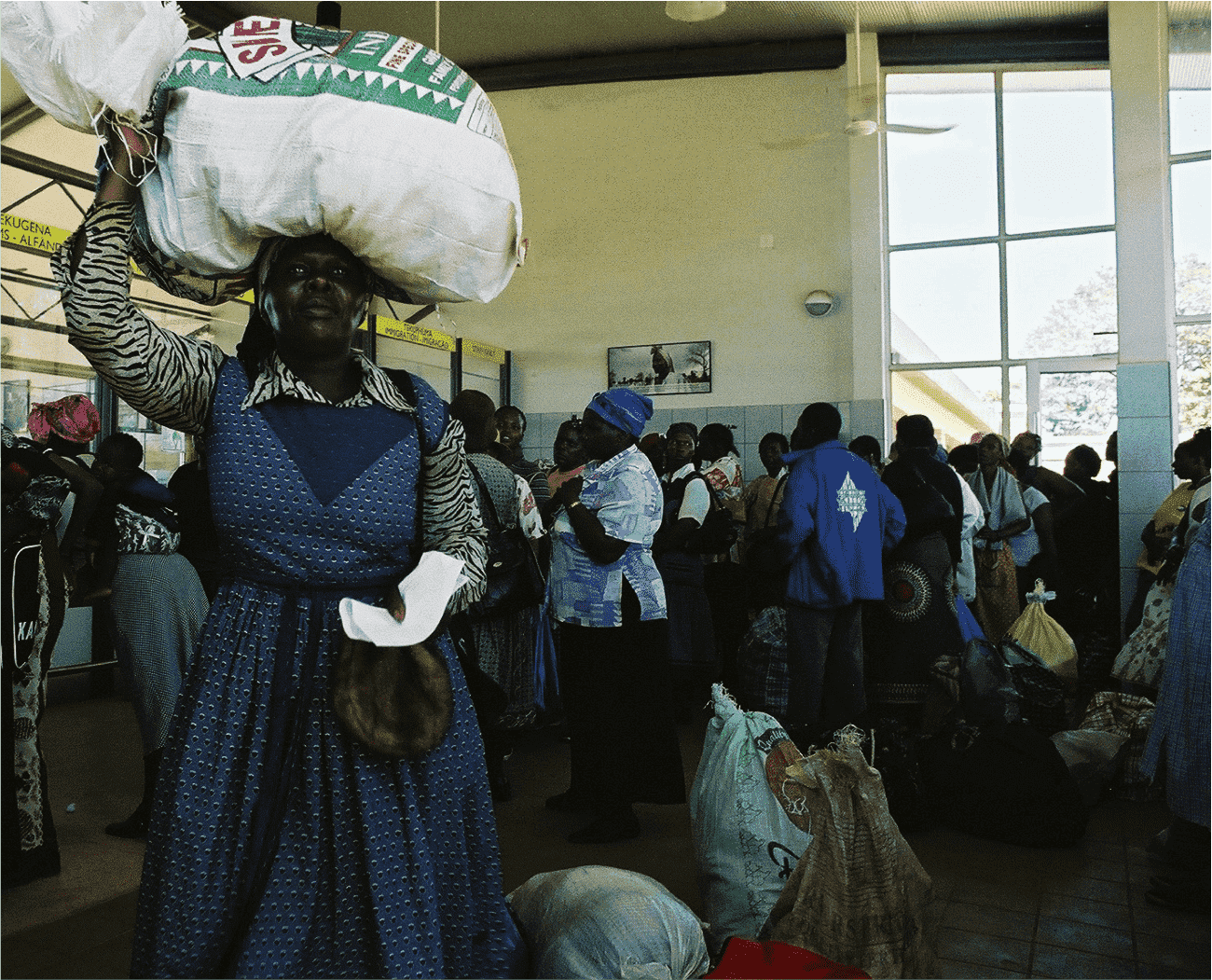
Oliver Bakewell, from the International Migration Institute, at the University of Oxford, will be on the changing relationship between migration, diasporas and global development in a fascinating Brown Bag titled, Migration and African Cities. Overview: This presentation will look at different aspects of the complex relationship migration and African cities, highlighting points of comparison and contrast with other regions of the world. Over the last century, rural-urban migration has played a major part in the growth of African cities, stimulating many debates about people’s cultural values and social practices changes as they move to urban areas. More recently, there has been much concern about the role of some African cities as a transit point prior to international migration - the city as a stepping stone. Two other aspects have been less explored. First, there is the role of cities as gateways into global markets, which rely on the mobility of African traders across the globe –most notably to China in recent years. Second, there is the movement across Africa that is creating distinctive ‘foreign’ populations to be found in cities in every part of the continent. Despite (or perhaps because of) having no policy, ‘integration’ is taking place and people are becoming part of new societies, contributing to the diversity and dynamism of many African cities.   About the Speaker: Oliver Bakewell’s research is centred on a broad interest in the changing relationship between migration, diasporas and global development. This encompasses a number of strands which he is following through various research activities: social theory and migration; examining the boundaries between ‘forced’ and ‘voluntary’ migration; mobility within sub-Saharan Africa; and African borderlands. He is the principal investigator for the project Theorising the Evolution of European Migration Systems (THEMIS) funded by NORFACE, which examines the conditions that encourage initial moves by pioneer migrants to become established migration system. He is also leading research into the formation of African diasporas within the African continent as part of the Oxford Diasporas Programme. In addition, he is undertaking ongoing research into the changing patterns of cross-border movements between Angola and western Zambia from the mid 1990s to today. Oliver is Co-Director and Senior Research Officer, and an Associate Professor at the International Migration Institute, University of Oxford holds a PhD and MSc in Development Studies from the University of Bath and a BA in Mathematics from the University of Cambridge. He has spent many years working with migrants and refugees as both a researcher and practitioner with a range of development and humanitarian NGOs. Immediately prior to joining ODID, he was Senior Researcher at the International NGO Training and Researcher Centre (INTRAC) in Oxford.