


Whose Heritage Matters? Mapping, Making and Mobilising Heritage Values for Sustainable Livelihoods in Cape Town and Kisumu

Studio 1 Environmental and Geographical Sciences Building, Upper Campus, UCT, Cape Town, South Africa

Cape Town and Kisumu are two secondary African cities with high levels of poverty, unemployment and inequality. There is much interest in developing sustainable approaches to harnessing tangible and intangible heritage to address these challenges. However, cultural heritage is a value-laden concept, particularly in the context of colonial histories and urban futures. Whose heritage matters? How can we negotiate competing and plural values? How can cultural heritage be mobilised to support sustainable livelihoods? Funded by the British Academy, this co-produced action research project will bring different stakeholders and communities together to map heritage values and develop creative interventions to harness tangible and intangible heritage for sustainable development’. This Brown Bag Seminar will introduce the project, and open up a conversation about the role and value of heritage in sustainable and just urban development. When: 10 April 2019 Time: 12:00 – 13:o0 Venue: Studio 1, Environmental and Geographical Science Building, Upper Campus, UCT


Bad Health in a Good Retreat: Life and Death in the ‘Worst’ Neighborhood of São Paulo, Brazil

Studio 1 Environmental and Geographical Sciences Building, Upper Campus, UCT, Cape Town, South Africa

Prof Jeffrey Lesser will be presenting a seminar entitled Bad Health in a Good Retreat: Life and Death in the 'Worst' Neighborhood of São Paulo, Brazil, on Monday, 25 February 2019, 12:30 to 14:00, in the Studio 1, Environmental and Geographical Science Building, Upper Campus, UCT. ABSTRACT Bom Retiro was (and is) a small neighborhood in the huge megalopolis of São Paulo, Brazil.  The mainly working class neighborhood has been populated since the end of the 19th century by immigrants, migrants from the impoverished Brazilian northeast, and Afro-Brazilian descendants of slaves. While the cultural backgrounds of the immigrants have shifted (from Italians, Spaniards and Portuguese Catholics in the early 20th century to East European Jews in the mid-20th century to Chinese, Korean, Paraguayan, and Bolivian immigrants today), the neighborhood has been viewed internally and externally as one where health (in the broadest sense of the word) is precarious. “Bad Health in a Good Retreat” analyzes the relationship between “Public Health” (as a state driven set of policies and linked enforcement) and “The Public’s Health” (how real people understand their own experiences).   By focusing on one square block of Bom Retiro from about 1900 to the present I use archival and ethnographic methods to analyze the daily practices of residents and health officials, and the stories they tell about life, death, and the spaces in between. BIOGRAPHY Jeffrey Lesser is Samuel Candler Dobbs Professor of Brazilian Studies and Director of Emory University’s Halle Institute for Global Research.  His research focus is on the construction of national identity in Brazil, focusing on how immigrant and ethnic groups understand their own and national space.   Lesser is the author of numerous prize winning books including, Immigration, Ethnicity and National Identity in Brazil (Cambridge University Press) A Discontented Diaspora: Japanese-Brazilians and the Meanings of Ethnic Militancy (Duke University Press); Negotiating National Identity: Immigrants, Minorities and the Struggle for Ethnicity in Brazil (Duke University Press);  and Welcoming the Undesirables: Brazil and the Jewish Question (University of California Press). 

Public Finance – the Life Blood of our Cities?

Studio 1 Environmental and Geographical Sciences Building, Upper Campus, UCT, Cape Town, South Africa

Bushbuckridge mayor embarks on debt collection exercise “The municipality has disclosed that it is owed R1 billion in unpaid municipal services such as water supply, refuse removal and property rates.” – Mpumalanga News, 1 October 2018   Heads Roll Amid VBS Municipal Probe “Cooperative Governance and Traditional Affairs (Cogta) Minister Dr Zweli Mkhize says several municipal officials have been suspended and in some instances, charged with fraud in relation to investments made in VBS Mutual Bank.”  – AllAfrica.com 23 October 2018   Join African Centre for Cities on Monday, 19 November 2018, from 15:00 to 17:00 for a lecture by Dr Matthew Glasser on public finance.  Across the globe, there is increasing emphasis on the role of cities and local government in delivering services, meeting the Sustainable Development Goals, addressing climate change, and equalizing opportunity. These assigned roles do not often translate into reality. Many South African municipalities are failing to provide effective services to their residents. Part of the reason for this are the regular financial crises which local governments face. Importantly, South Africa is one of very few countries in the world that has specific legislation intended to resolve fiscal problems at the municipal scale.  This legislation is little known and little used. In 2000-2003, Dr Matthew Glasser helped develop the legislation regarding financial problems in municipalities, as reflected in Section 139 (as amended) of the Constitution, and Chapter 13 of the Municipal Finance Management Act.  For the last two years, he has been working with National Treasury to take stock of the implementation of those provisions over the intervening 15 years. At this seminar, we will discuss the legal and regulatory framework that was developed to deal with financial emergencies in South African cities; review the experience to date with implementation of that framework; and reflect on the ways in which South Africa’s social and political context shapes local implementation. Glasser will discuss the genesis of the legislation, the divergence between legal framework and actual implementation, and the important Emalahleni litigation related to fiscal intervention in municipalities, which has set an important precedent in South Africa.  There will be ample time to discuss the fiscal challenges of South African local and city government, following the lecture. WHEN: Monday, 19 November 2018 TIME: 15:00 to 16:30 VENUE: Studio 1, Environmental and Geographical Science Building, Upper Campus, UCT
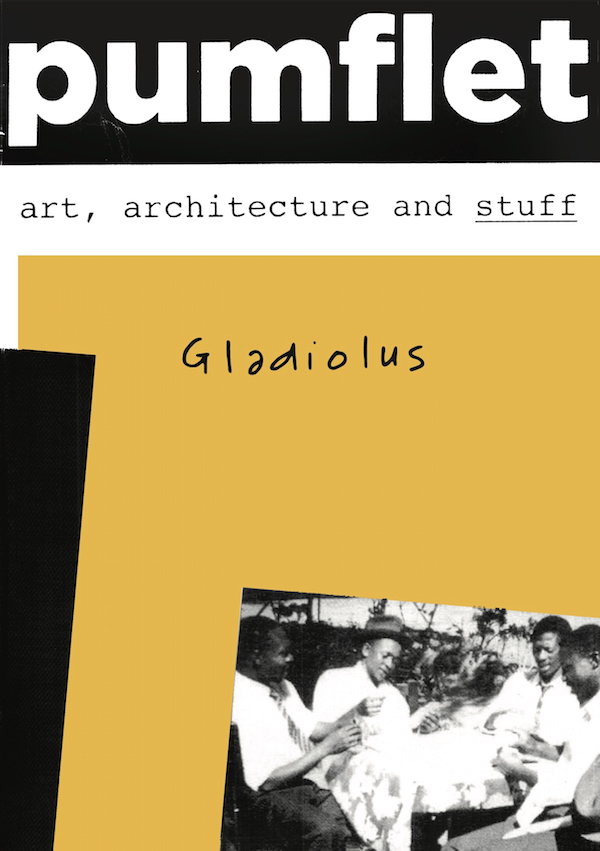
Urban Humanities Seminar Series: pumflet – art, architecture and stuff by Ilze Wolff

Studio 1 Environmental and Geographical Sciences Building, Upper Campus, UCT, Cape Town, South Africa

Ilze Wolff co-directs Wolff Architects with Heinrich Wolff and co-founded Open House Architecture (OHA), a research practice that documents and reflects on Southern Africa architecture in Cape Town. In 2016/7 she was the recipient of the L’erma C International Prize for Scholarly Works in Modern and Contemporary Art and Architecture, Rome, for her dissertation Unstitching Rex Trueform, the story of an African factory, published in 2018. The work of Wolff Architects has exhibited at the Venice Biennale; MOMA, New York; Louisiana MOMA, Denmark; Bi-City Biennale of Urbanism/Architecture, Shenzhen; and the Chicago Architecture Biennale. OHA/Wolff regularly host exhibitions, interventions, publications and talks in collaboration with artists and scholars so as to develop an enduring public culture around the city, space and personhood. In 2018 she was shortlisted for the Architectural Review’s Moira Gemmill Emerging Architect of the year award and is currently a fellow at the University of the Western Cape’s Centre for Humanities Research. ‘pumflet' was founded in 2016 by the pumfleteers collective (Wolff and Kemang Wa Lehulere) in order to publish interventions into the social imagination. The talk will show recent pumflet projects and reflect on some of the themes that ground the work and that are beginning to emerge such as, nostalgia vs histories of the present; the importance of the social imagination, aesthetics of repair and conversations as scholarly discourse. WHEN: Thursday, 6 September 2018 TIME: 12:30 to 13:30 VENUE: Studio 1, Environmental and Geographical Science Building, Upper Campus, UCT
Cities and Climate Change: Seminar 1

Studio 1 Environmental and Geographical Sciences Building, Upper Campus, UCT, Cape Town, South Africa

The first seminar in the academic seminar series on Cities and Climate Change reflects on the recent international conference on cities and climate change, the first of its kind convened by the Intergovernmental Panel on Climate Change. Through a panel discussion between representatives from the City of Cape Town, the African Centre for Cities, UCT’s Climate System Analysis Group and the African Climate and Development Initiative, who all participated in the conference, we will draw out key themes and debates surfacing within the climate change and cities field internationally, as well as reflect on any notable silences or gaps. We will also share a snapshot of what inputs we offered to the international science and policy community concerned with cities and climate change. This will establish the main contours of the climate change and cities research space, framing the three subsequent seminars in the series.   SPEAKERS Victor Indasi, climate science post doc, Climate System Analysis Group (CSAG) Amy Davison, Head of Environmental Strategy Implementation, City of Cape Town Alice McClure, FRACTAL coordinator, Climate System Analysis Group Lorena Pasquini, risk governance research fellow, African Climate and Development Institute DISCUSSANT Anna Taylor, urban geography post doc, ACC & CSAG