Urban Humanities: False Bay: Perspectives from the Environmental Humanities

Studio 1 Environmental and Geographical Sciences Building, Upper Campus, UCT, Cape Town, South Africa

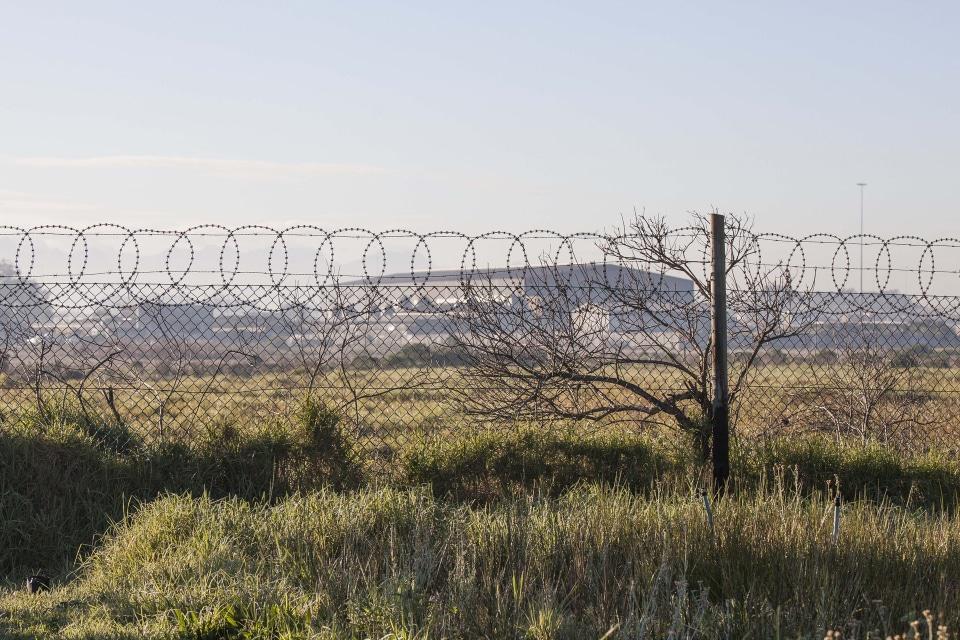
ACC is very excited to host Dr Shari Daya in conversation with Dr Hedley Twidle, reflecting on the Environmental Humanities through encounters with False Bay. Dr Twidle is a senior lecturer in the English Department at UCT. "I joined the department in 2010 as a lecturer in southern African and postcolonial literatures. Much of my current work addresses contemporary life-writing and non-fiction narrative. What, after all, does the word ‘literary’ signify in a phrase like ‘literary non-fiction’?  And how can one explore the array of non-fictional modes that are simultaneously drawn on, refashioned and blurred into each other in South African writing: experimental auto/biography, investigative journalism, the Struggle memoir, the diary, microhistorical and archival reconstruction. My research also explores the difficult relation between environmental thought and social history in southern Africa. Since 2013 I have been involved in the conceptualisation and planning of a new interdisciplinary M Phil in the Environmental Humanities, launched in February 2015. I am also a member of the Archive and Public Culture research initiative, a dynamic intellectual space where new research can be presented to experts in the field".
ACC NOTRUC Seminar Series: Producing water scarcity in São Paulo, Brazil: The 2014 Water Crisis and the Binding Politics of Infrastructure

Studio 1 Environmental and Geographical Sciences Building, Upper Campus, UCT, Cape Town, South Africa

The last instalment of the annual ACC NOTRUC Seminar Series is presented by Dr Nate Millington on Producing water scarcity in São Paulo, Brazil: The 2014 Water Crisis and the Binding  Politics of Infrastructure at 15:00 in Studio 1, Environmental and Geographical Sciences Building, Upper Campus, University of Cape Town. ABSTRACT In 2014, political intransigence combined with a severe drought to push São Paulo, Brazil, to the edge of a profound water crisis. In this paper, I consider the response to the crisis on behalf of the state government, focusing on both the way that the crisis was narrated as well as responded to. I consider the suite of actions taken to cope with scarcity, focusing specifically on the state’s employment of pressure reductions in the water pipes as opposed to a formal rationing. I argue that despite the state government’s claims that only a small minority was going without water, the reality was that residents of the urban periphery were facing consistent water shortages. I argue that these shortages are representative of a form of infrastructural politics, in which the seemingly most technically viable solutions to the crisis exacerbated inequality due to the inequity that is built into the city’s hydrological infrastructure itself. I conclude by thinking of the city’s crisis as indicative of the changing nature of daily life in contemporary cities in the wake of climate change at both the local and global scale. More on the full seminar series here. More on the NOTRUC programme here.

Realising the Just City

Studio 1 Environmental and Geographical Sciences Building, Upper Campus, UCT, Cape Town, South Africa

The African Centre for Cities in collaboration with Mistra Urban Futures is hosting a workshop on Realising the Just City. The signing of the Sustainable Development Goals in 2015 demonstrated that there is an increasing global pledge to foster just cities that are ‘inclusive, safe, resilient and sustainable’. Although there is a shared commitment to socio-spatial justice, how this can be realised is more complicated. This workshop aims to draw representatives from academic institutions, civil society and the public sector together to discuss how just cities are understood, and how to achieve them. Mistra Urban Futures is made up of five local interaction platforms in four cities around the world: Cape Town (based at ACC), Gothenburg, Greater Manchester, Kisumu and Malmö. The purpose is to develop coproduced, collaborative and comparative research across the cities. This workshop forms part of this research process. For more information, contact Rike Sitas on rike.sitas@uct.ac.za.

Comparing urban civic networks: Insights from Britain

Studio 1 Environmental and Geographical Sciences Building, Upper Campus, UCT, Cape Town, South Africa

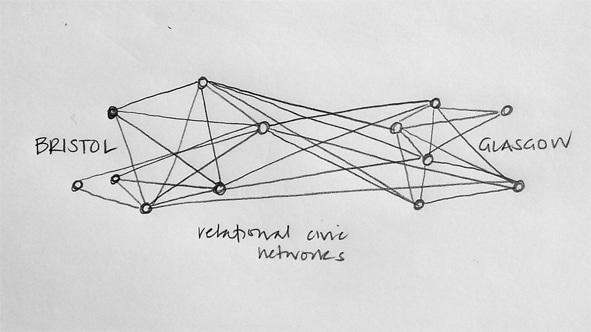
In this seminar Prof Mario Diani from the University of Trento and ICREA at the Universitat Pompeu Fabra, Barcelona will be presenting a paper entitled 'Comparing urban civic networks: Insights from Britain'. Abstract Comparative analyses of urban political civic networks are still relatively rare, and those available are mostly conducted by an “aggregative” rather than a “relational” logic. They focus, in other words, on the distribution of the characteristics of individual and organizational actors rather than on the patterns of relation and interdependence between them. Drawing upon my just published book The Cement of Civil Society (Cambridge UP, 2015), and focusing on civic networks in two British cities, Bristol and Glasgow, my talk illustrates how network analysis can contribute to a more nuanced understanding of local political networks. It shows in particular how the concept of “mode of coordination” may enable us to capture the differences between different styles of collective action. Bio Mario Diani is professor of sociology at the University of Trento, and ICREA research professor at the Universitat Pompeu Fabra, Barcelona. His research focuses primarily on social movements, collective action, and political networks. Publications include The Cement of Civil Society: Studying Networks in Localities (Cambridge University Press, 2015), Social Movements (with Donatella della Porta, Blackwell, 20062),  and Social Movements and Networks (co-edited with Doug McAdam, Oxford University Press, 2003), as well as articles in leading journals such as American Sociological Review, American Journal of Sociology, Social Networks, and Mobilization.