The Housing Affordability Challenge: What Are the Questions?

Davies Reading Room

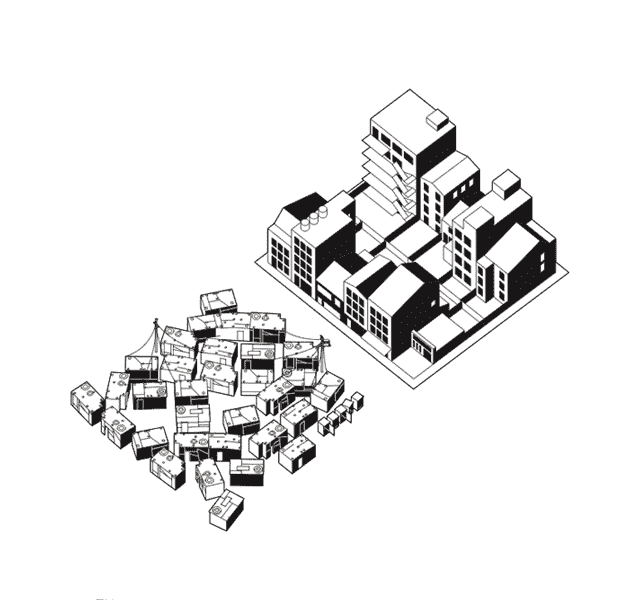
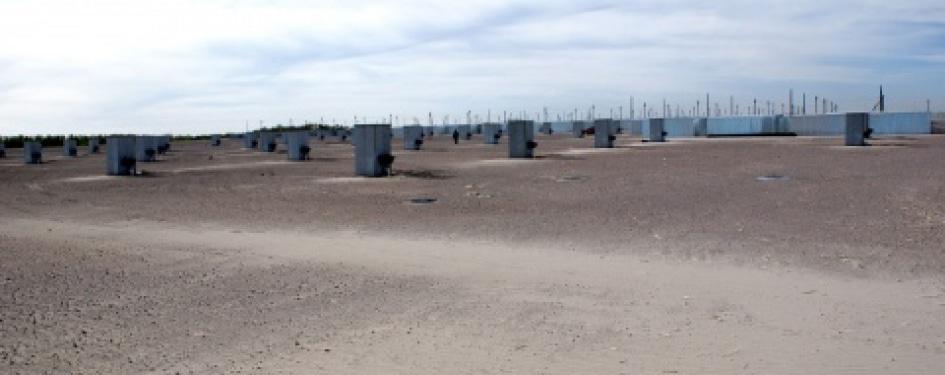
In this Brownbag presentation, Dr Robert Buckley will be presenting on 'The Housing Affordability Challenge: What Are the Questions?' Abstract In the past few years, sixteen developing countries have mounted multi-billion-dollar urban subsidy programs. Unfortunately, as currently structured, very few of these programs will help address the housing challenges faced by cities. They are deeply flawed even if they come with support from leading think tanks such as the McKinsey Global Institute and from foreign advisors and investors. They often repeat the now severely criticized approaches pursued by OECD countries in the early post–World War II years, when a similar moment in urban policy arose. Participants at the Rockefeller Foundation’s Bellagio Conference Center discussed the proposed approaches as well as why it is perhaps not surprising that few foreign investors take any of the risks inherent in plans to reshape the cities of the developing world. Biography Bob Buckley is a senior fellow in the Graduate Program in International Affairs at The New School. Previously, he was an advisor and managing director at the Rockefeller Foundation, and lead economist at the World Bank. Buckley’s work at both the foundation and the World Bank focused largely on issues relating to urbanization in developing countries. He is particularly interested in the policy issues related to slum formation and approaches to dealing with them (see more here).  

Josh Palfreman: Waste Ventures in East Africa

Studio 5 Environmental and Geographical Sciences Building, Upper Campus, Cape Town, South Africa

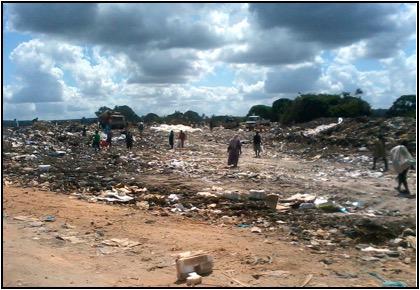
 Waste Ventures in East Africa: a critical examination of the science, collection models and innovative technologies being employed by urban planners in Kenya and Tanzania In this Brownbag, Josh Palfreman will be reflecting on the science, collection models and innovative technologies being employed by urban planners in Kenya and Tanzania in an effort to manage solid waste. Abstract: Josh Palfreman takes a market systems approach to develop a deeper understanding of solid waste management in Mombasa, Kenya and Dar es Salaam, Tanzania.  His presentation will provide insight into a waste characterization study. This study was conducted to underpin the formulation of strategic waste management policy, geospatial analysis and scientific research to map formal and informal waste management stakeholders.  It further brings to attention how action research is used to support innovation and entrepreneurship in municipal solid waste collection models while piloting various technologies designed, manufactured and maintained in East Africa that are tailored to local skill sets and infrastructure, to enhance waste collection and recovery operations across the region.    Biography: Joshua Palfreman is an urban planning and waste management professional with over six years of experience in East Africa. In 2009, he founded WASTEDAR, an NGO providing waste management services in Tanzania. Palfreman currently provides technical assistance to DFID on waste management programmes run by the development arm in Kenya and has recently published works relating to waste pickers and innovative collection models tailored to developing world waste characteristics and resources; work that will feature in this year's Fifteenth International Waste Management and Landfill Symposium in Sardinia, Italy.  

DALI project (DFID land based financing)

Seminar Room 1 Environmental & Geographical Sciences Building, UCT Upper Campus

Ian Palmer and Stephen Berrisford will share an overview of the key findings of the DFID land based financing project, focussing on land value capture and infrastructure finance in Sub-Saharan Africa. Overview: The rapid growth of African Cities brings with it a burgeoning demand for infrastructure. But the finance available to cities to build this infrastructure is constrained. Therefore opportunities offered by land-based financing are most important. A team based at the African Centre for Cities has recently completed a significant research project on this topic for the UK Department for International Development.  The findings from this research will provide the primary input for this brownbag session, which will deal with the nature of urban infrastructure, the institutions involved in providing infrastructure, an overview of capital financing options and specific opportunities for using land-based finance. It will also touch on the role of property developers in providing and/or financing infrastructure, the role of cities in raising finance associated with property developments and associated policy considerations.  Findings from case studies conducted in Ethiopia, Kenya and Zimbabwe will also be reflected in the presentation. Bios: Stephen Berrisford is an independent consultant working in the field of urban planning law and policy in Southern Africa. He holds BA LLB and MCRP degrees from UCT and an MPhil in Land Economy from the University of Cambridge. Prior to establishing Stephen Berrisford Consulting in 2000 he held the post of Director: Land Development Facilitation at the national Department of Land Affairs and before that worked in the planning departments of the Cape Town and Johannesburg municipalities. During 2010 he was a Visiting Scholar in the Department of Town and Regional Planning at the University of Sheffield. His clients include the major international development agencies as well as all three spheres of government in South Africa. Stephen’s work focuses on the identification of practical and just legal solutions to the challenges of rapid urban growth in Sub-Saharan Africa. He has regularly published academic articles and book chapters since 1996 and has presented papers at a wide range of international conferences. Ian Palmer is a founding partner of Palmer Development Group (PDG). PDG is a leading consultancy in South Africa in the field of municipal services policy, research, strategy and management. He has 37 years experience in the fields of civil engineering and development. Over the last 25 years, 19 of which he has been the managing partner and then managing director of PDG, he has been the team leader on over 100 projects in the realm of public sector service delivery including the fields of: municipal services planning, municipal finance, inter-governmental relations, water and sanitation, housing, roads and public transport. He has degrees in civil engineering, economics and environmental engineering. Ian is also an Adjunct Professor at UCT attached to the African Centre for Cities.

Contested Cartographies: Remapping Cape Town

Seminar Room 1 Environmental & Geographical Sciences Building, UCT Upper Campus

In this brown bag, Ian-Malcolm Rijsdijk will introduce a working concept for new ways of understanding Cape Town. Overview: This concept presentation considers the mapping, naming, routing, disambiguations, planning, and compartmentalising of contemporary Cape Town. Using as a basis the idea of an atlas containing multiple maps of the city, this project considers expansions, degradings, mergings and rendings that have transformed the city over time not only from a spatial perspective, but also culturally. How are people ‘emplaced’ in the city? What does the city look like to people based upon their distinct cultural belongings? What lies beneath our feet and flies above our heads? This concept is both multi- and trans-disciplinary, bringing together social scientists working in urban studies, activists, artists, and writers to re-think the way the city looks to those who live in it, to lift the map off the surface of the page and re-form it. About the speaker: Ian-Malcolm Rijsdijk is a senior lecturer in the Centre for Film and Media Studies, and director of the African Cinema Unit at the University of Cape Town. He has published widely on the filmmaker Terrence Malick (the subject of his PhD), as well as South African film, wildlife documentary and literary fiction. He is currently working on early South African cinema and film cultures in South Africa. As Director of the African Cinema Unit, he teaches in the MA in African Cinema and is also involved in developing postgraduate scholarship in African and South African screen studies. He is also a member of the Environmental Humanities South research program at the University of Cape Town. In 2013, he received a Distinguished Teacher’s Award from the University of Cape Town, and in 2014 a National Excellence in Teaching award from the Higher Education Teaching and Learning Association of South Africa. He is a fanatical birder and registered at lasser with the South African Bird Atlas project. One day he would like to see a Wandering Albatross.  

BROWN BAG POSTPONED: Dwelling on the edge of Ulaanbaatar, Mongolia

Seminar Room 1 Environmental & Geographical Sciences Building, UCT Upper Campus

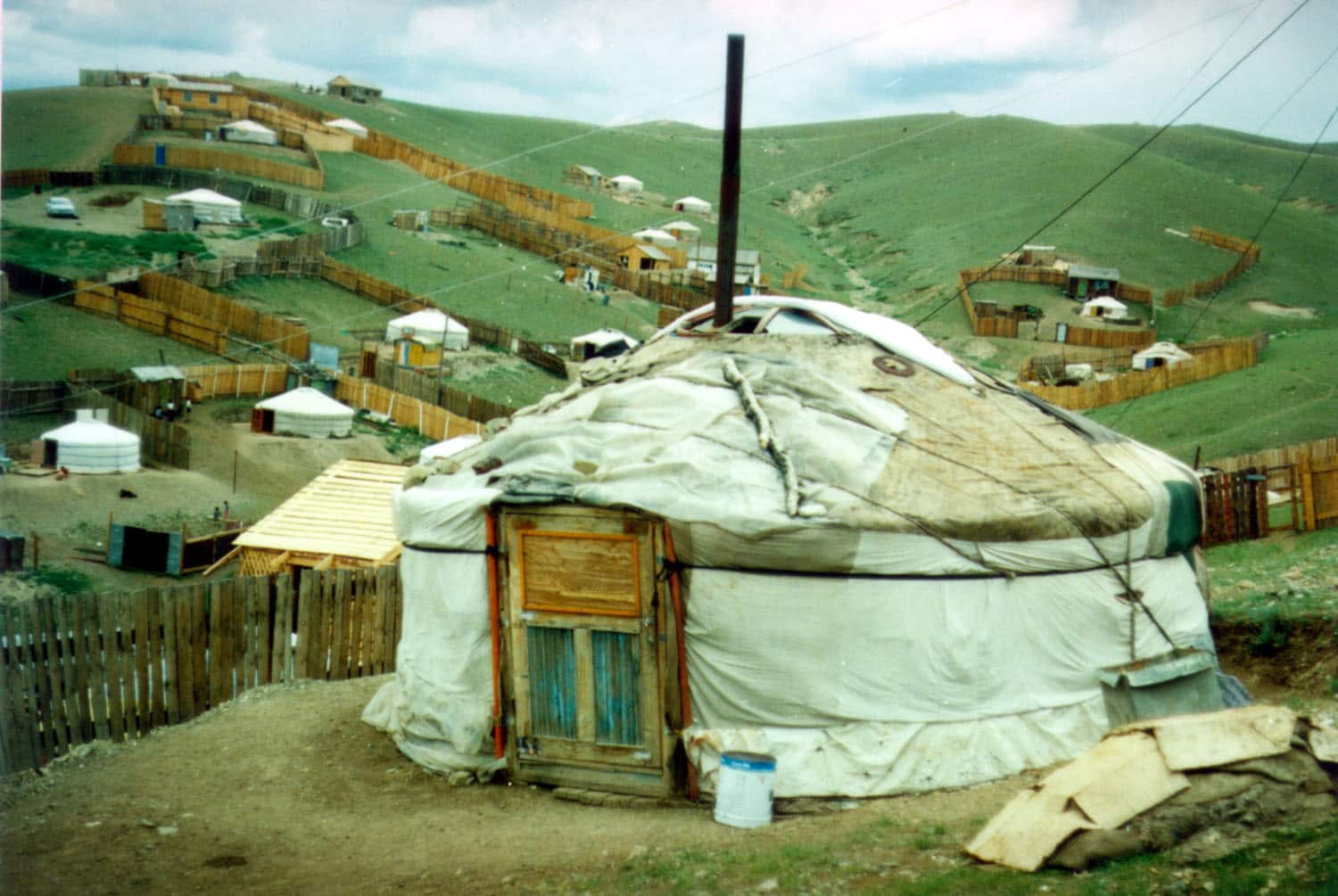
PLEASE NOTE THIS BROWN BAG HAS BEEN POSTPONED UNTIL FURTHER NOTICE AS UCT STUDENTS ARE PROTESTING FOR FAIR FEES. In this brown bag, Dr Rick Miller will be giving a talk on informal settlements in Mongolia. Overview This talk will begin by introducing informal settlement in Ulaanbaatar - the ‘ger districts’. I will start by noting how Mongolia’s forms of informality are unique, with the actual housing type of the ger being an accepted and even valorized emblem of domesticity, and the ger district settlement pattern itself  pre-dating much of the core, fixed structures of the city.  But Mongolia-specific characteristics aside, the issues of informal settlement in Ulaanbaatar may still provide a more generalizable model for extending urbanization in other cities struggling to house their citizenry, particularly for recalibrating legal regimes for making informality part of a solution to housing. Bio Rick Miller’s approach to studying informal settlements across cities of the developing world is informed by his training as both an architect and a social scientist.  Rick is a travelling faculty member of the School for International Training program on Cities in the 21st Century and a lecturer in the Department of Geography at UCLA, from which he received his PhD.

Resilient Urban Development: perspective of the Massive Small Collective

African Centre for Cities UCT Upper Campus, Cape Town, South Africa

In this Brown Bag, Lauren Hermanus will introduce the work of the Massive Small Collective, which seeks to make connections between small-scale urban sustainable development and resilience thinking. The Massive Small Collective understands resilience as social, economic and environmental sustainability under conditions of dynamic complexity. As individuals, households, businesses, and governments are faced with increasing complexity, and more frequent destructive shocks, and new information and technologies, the context and need for resilience planning and implementation is growing. The assertion of the Massive Small Collective, is that top-down, large-scale, command and control strategies aimed to improve social well-being and manage ecological risks have not delivered the promised results. The collective believes that the ‘bigness’ of these projects is the source of their weakness. Local context and history are, by necessity, rendered marginal by end-state and solutions-focused wholesale reform. But we can now see that it has showed itself to be critical to long-term success. In response, the Massive Small Collective focuses on incrementalism and redundancy, dynamic interrelation, local context, learning from failure and responsive governance.  This Brown Bag will introduce the potential of small-scale urban sustainable development initiatives and investments to contribute to the resilience agenda in cities and towns around the world. This work is done in partnership with the Centre for Complex Systems in Transition, African partners of the Stockholm Resilience Centre.  About the Speaker: Lauren Hermanus is has a BA in Politics, Philosophy and Economics, and a MA in Complexity Theory and Philosophy. She is currently enrolled in MPhil in Development Policy and Practice. She is a Sustainable Development Specialist focused on urban resilience and energy innovation. Her experience is in policy, strategy and programme development in both the public and private sectors. She is interested in applying Complexity Thinking to development challenges. Date: 28th November Time: 1-2pm Venue: Davies Reading Room (library), EGS Building, Upper Campus, UCT

Tackling Lighting Inequalities

African Centre for Cities UCT Upper Campus, Cape Town, South Africa

Tackling Lighting Inequalities: About Urban Lighting, Design and ‘the Social’ The ACC is excited to introduce Mona Sloane, a visiting scholar for the London School of Economics and Politics. Mona will be presenting her work on 'Configuring Light/Staging the Social', a research programme she founded at the LSE at the final brown bag of 2016. About the topic: Light is central to how people experience and use city spaces, and to how urban systems operate. Through light, we carve out spaces for social life. Light impacts on the public space in the crucial hours after dusk, enabling or problematizing social activity, economic and commercial development, security, safety and public order, access, participation and identification with urban public life. Furthermore, public lighting also has significant cost impacts on local authorities’ budgets while currently undergoing a massive technological revolution which puts it centre stage in a number of urban discussions, ranging from big data and urban governance, cutting down economic and environmental costs in relation to climate change and sustainable urban development, to aesthetics and city branding. This brown bag seminar discusses the of status public lighting and design in the UK and in London specifically. It outlines how public lighting is a barometer of developing socio-spatial inequalities in the urban context and allows rich insight into how urban inequalities are lived out and responded to. The speaker will suggest strategies for responding to these challenges. About the Speaker: Mona Sloane is a visiting academic at the ACC and a final-year PhD student in the LSE Department of Sociology. She is an ethnographer and works and publishes on the sociology of design, material culture, aesthetics and cultural economy as well as lighting design and public space. She holds an LSE PhD scholarship, an MSc in Sociology from the LSE and a BA in Communication and Cultural Management from Zeppelin University Friedrichshafen. She also is co-founder and former member of the LSE-based research programme Configuring Light/Staging the Social which explores the role of light and lighting in everyday life and urban design.

Friction in the Creative City: The Case of Bandung, Indonesia

Studio 5 Environmental and Geographical Science, Upper Campus, UCT,, Cape Town, South Africa

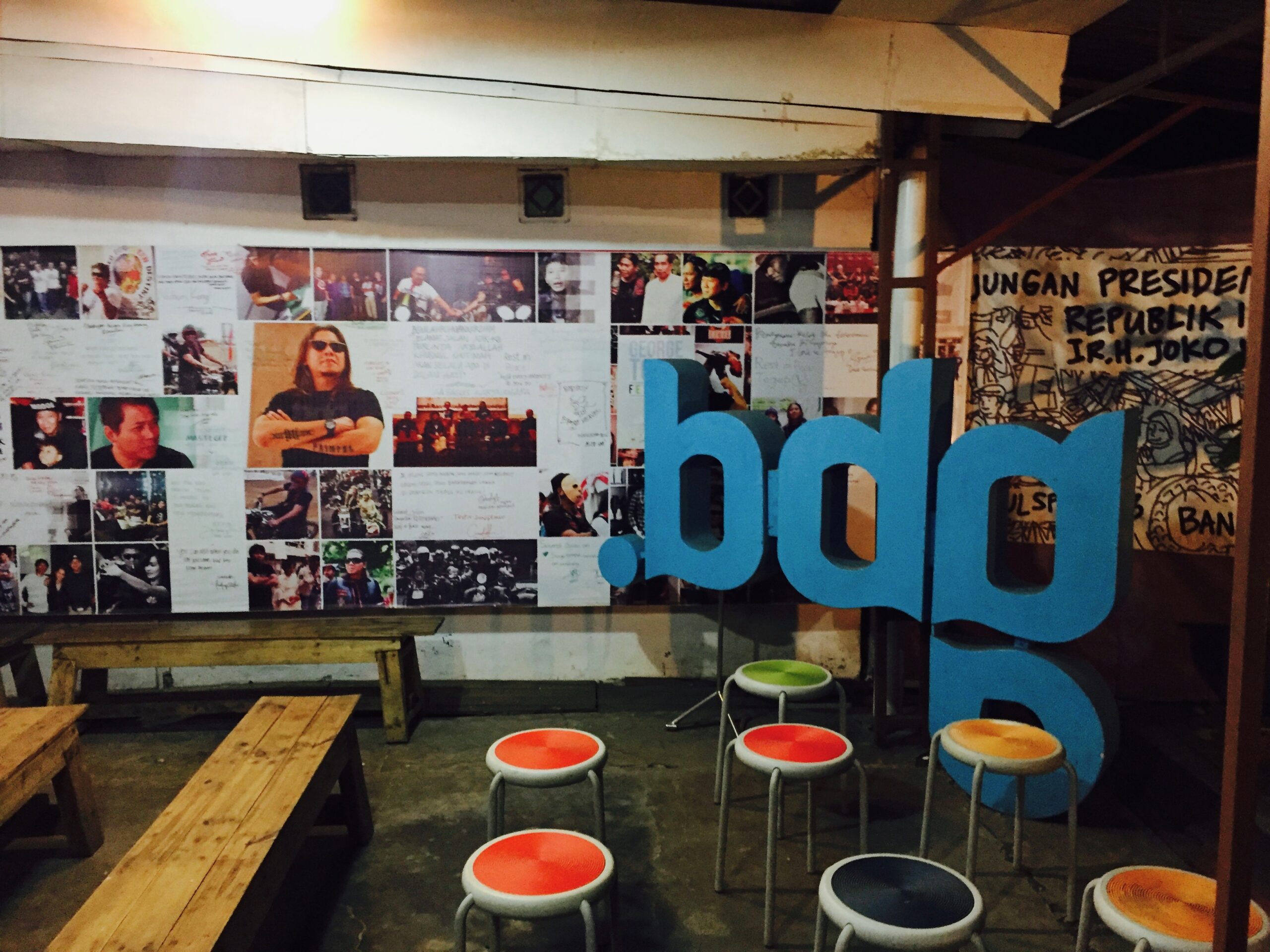
Join the African Centre for Cities for a Brownbag session on 29 January 2018 from 12:45 to 14:00 by Christiaan De Beukelaer on "Friction in the Creative City: The Case of Bandung, Indonesia" hosted in Studio 5, Environmental and Geographical Science Building, Upper Campus, University of Cape Town. Since the foundation of the Bandung Creative City Forum (BCCF) in 2008, the city of Bandung, capital of West Java has started referring to itself as an ‘emerging creative city’. Because of the significant role BCCF, a civil society organisation, played in developing this strategy, Bandung relied far less on top-down, consultant-driven strategies than most ‘creative cities’. While their largely bottom-up engagement with the ‘creative city script’ was well-received, the practical execution of their ideas poses challenges in terms of negotiating priorities and strategies. The implementation became more complex and complicated when Ridwan Kamil, BCCF’s first director, was elected Mayor in 2013. The ensuing tensions concealed two important questions: What is the creative city? How to execute creative city strategies? Rather than engaging with these unspoken questions, Bandung has become a creative city of many definitions and strategies, while maintaining its singular brand. I explain the ensuing ‘friction’ (Tsing 2005) in two overlapping ways. First, I contrast two notions of the creative city by building on the work of geographer Oli Mould. His book Urban Subversion and the Creative City distinguishes the uppercase ‘Creative City’ (the mainstream understanding of the term) – and the lowercase ‘creative city’ (the more grounded, subversive understanding of the term). Second, I build on the work of geographer Jamie Peck, who critiques the global flow of ‘policy-fixes’ as being prone to becoming ‘fast policy’ (often captured in buzzwords), which inevitably collides with ‘slow policy’ of existing bureaucracies and power structures.   More on the speaker and respondent: Christiaan De Beukelaer is a Lecturer in Cultural Policy at the University of Melbourne. He obtained a PhD from the University of Leeds and holds degrees in development studies (MSc, Leuven), cultural studies (MA, Leuven), and musicology (BA, Amsterdam). He won the 2012 Cultural Policy Research Award, which resulted in the book Developing Cultural Industries: Learning From the Palimpsest of Practice (European Cultural Foundation, 2015). He co-edited the book Globalization, Culture, and development: The UNESCO Convention on Cultural Diversity (Palgrave Macmillan, 2015, with Miikka Pyykkönen and JP Singh), and a special issue on Cultural Policy for Sustainable Development for the International Journal of Cultural Policy (2017, 23(2), with Anita Kangas and Nancy Duxbury). He is now working on the book Global Cultural Economy (co-authored with Kim-Marie Spence, forthcoming with Routledge). Laura Nkula-Wenz is an urban geographer with a keen interest in postcolonial urban theory, African urbanism and culture. Her research focuses on the transformation of urban governance and the construction of local political agency, as well as the diverse relationships between cultural production and urban change. She holds a PhD in Geography from the University of Münster/Germany, where she also completed a degree in Human Geography, Communication Studies and Political Science. Laura recently completed a postdoctoral fellowship at the Pôle de recherche pour l'organisation et la diffusion de l'information géographique (Prodig) in Paris and currently works on the Critical Urbanism Masters at the African Centre for Cities (UCT, in cooperation with the University of Basel).


ACC BROWNBAG Future Foreshore: are affordable housing and lowered freeways possible?

Studio 5 Environmental and Geographical Sciences Building, Upper Campus, Cape Town, South Africa

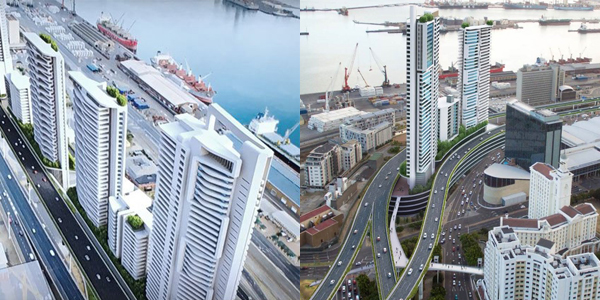
Join ACC on Thursday, 8 March at 13:00 for the first in a series of Brownbag seminars. The hot topic of discussion is the winning bid for the redevelopment of the Foreshore Freeway Precinct, Cape Town. SPEAKERS Lisa Kane Kane is a Honorary Research Associate with the Centre for Transport Studies at UCT and co-founder and board member of Open Streets, Cape Town. Her PhD thesis considered the history and politics of engineering of the Foreshore freeway projects from its initiation to the 1980s, and how that period has informed current thinking around road engineering in South Africa. Rob McGaffin McGaffin is a town planner and land economist.  He has worked as town planner with the City of Cape Town and the Gauteng Department of Economic Development, and in property finance at several financial institutions. He was a Mistra Urban Futures Researcher with the ACC. He lectures in the Department of Construction Economics and Management at the University of Cape Town and is a founding member of the UCT - Nedbank Urban Real Estate Research Unit. CHAIR Vanessa Watson WHEN: Thursday, 8 March 2018 TIME: 13:00 to 14:30 VENUE: Studio 5, Environmental and Geographical Sciences Building, Upper Campus, University of Cape Town