ACC Brown Bag: Taken for a Ride by Matteo Rizzo

Studio 3 Environmental and Geographical Science, Upper Campus, UCT,, Cape Town, South Africa

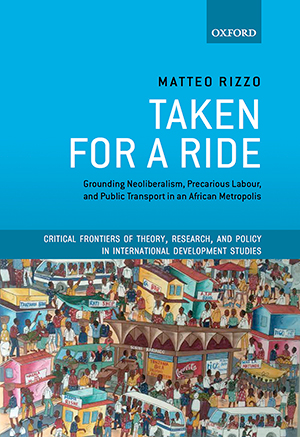
Join ACC on Tuesday, 17 April at 13:00 in Studio 3 in the Environmental and Geographical Sciences Building on Upper Campus for the second talk in a series of Brown-bag seminars. Matteo Rizzo will be discussing themes emerging from his latest book Taken for a Ride: Grounding Neoliberalism, Precarious Labour, and Public Transport in an African Metropolis.  How does public transport work in an African city under neoliberalism? Who has the power to influence its changing shape over time? What does it mean to be a precarious and informal worker in the private minibuses that provide such transport in Dar es Salaam? These are some of the main questions that inform Rizzo's in-depth case study of Dar es Salaam’s public transport system over more than forty years. According to the author Taken for a Ride "is an interdisciplinary political economy of public transport, exposing the limitations of market fundamentalist and postcolonial approaches to the study of economic informality, the urban experience in developing countries, and their failure to locate the agency of the urban poor within their economic and political structures. It is both a contribution to and a call for the contextualized study of neoliberalism." Matteo Rizzo is a Senior Lecturer in Development Studies at SOAS, University of London. Matteo has degrees in Political Sciences from "Orientale"(Naples, Italy)  and Development Studies and History from SOAS (MSc and PhD), where he also completed an ESRC postdoctoral fellowship. Matteo has taught at the LSE, at the African Studies Centre in Oxford and in Cambridge, where he was a Smuts Research Fellow in African Studies at the Centre of African Studies. Matteo is a member of the Editorial Working Group of the Review of African Political Economy and works on public transport for the International Transport Workers Federation. Taken for a Ride will be available for purchase at the Brown-bag session for a special price at only R250. Please bring along cash if you wish to purchase the book.  
Urban Humanities Seminar Series 2018

Environmental and Geographical Science Building South Lane, Upper Campus, UCT, Cape Town, South Africa

Academic Seminars (15:00 - 16:30) 7 August High Stakes, High Hopes: Creating Collaborative Urban Theory - Prof Sophie Oldfield 16 August Inclusive Cultural Governance: Integrating artistic and cultural practices into national urban frameworks - Avril Joffe with respondent Zayd Minty 30 August in search of thick mapping: listening to Cape Town's cities - Dr Sabina Favaro 18 September Vital Geopolitics - Gerry Kearns 20 September The invention of the 'Sink Estate': Consequential Categorization and the UK Housing Crisis - Dr Tom Slater 18 October Storytelling as method: migration, gender and inclusion in Durban - Dr Kira Erwin 1 November: Contextualising strategies to enable LGBT rights in Africa: legitimacies, spatial inequalities and socio-spatial relationships - Dr Andy Tucker 15 November Representing urban life in Africa and its diasporas - Dr Shari Daya and Dr Rike Sitas Brown Bags (13:00-14:00) 23 August 'Auditing' vernacular Cape Town as a sonic city - Valmont Layne 6 September pumflet: art, architecture and stuff - Ilze Wolff 27 September Speculative Indigeneity - A (K)new Now - heeten bhagat 11 October Conversations on cultural mapping and planning - Alicia Fortuin, Vaughn Sadie and Shamila Rahim 25 October False Bay - Dr Hedley Twidle

Urban Humanities Seminar Series: Valmont Layne on ‘Auditing’ vernacular Cape Town as a sonic city

Studio 3

We are excited to host Valmont Layne from the University of the Western Cape's Humanities Research Centre who will be reflecting on 'Auditing’ vernacular Cape Town as a sonic city' ABSTRACT: Cape Town offers a generative example of the postcolonial port city as an affective space – especially reading its vernacular musicking lifeworld as sonic expressions of oceanic and terrestrial worlds. In this talk, Valmont Layne share some of the opportunities and challenges of doing this work, and will reflect on the possible implications for new epistemic engagements with the postcolonial city drawing on literatures on affect and on sound studies. WHEN: Thursday, 23 August 2018 TIME: 13:00-14:00 VENUE: Studio 3, Environmental and Geographical Science Buildings, Upper Campus, UCT

Urban Humanities Seminar Series: pumflet – art, architecture and stuff by Ilze Wolff

Studio 1 Environmental and Geographical Sciences Building, Upper Campus, UCT, Cape Town, South Africa

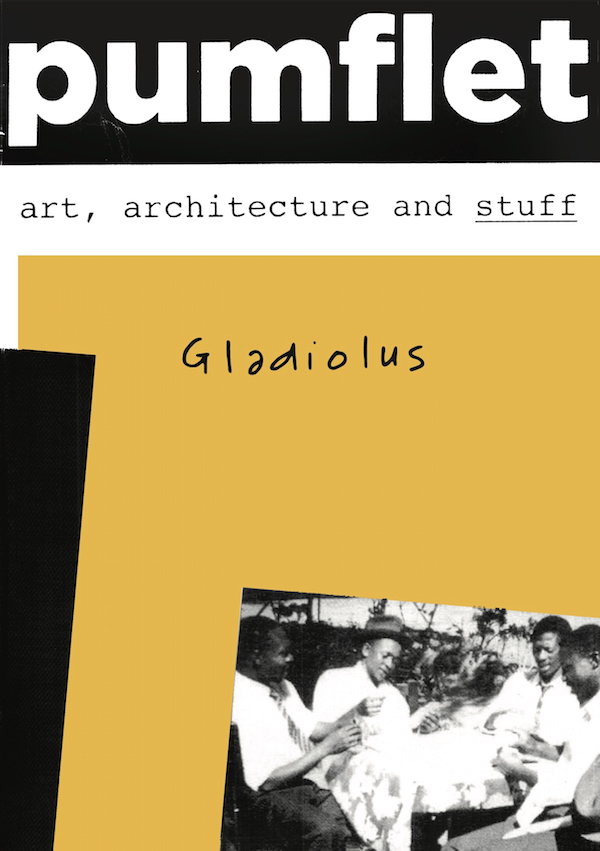
Ilze Wolff co-directs Wolff Architects with Heinrich Wolff and co-founded Open House Architecture (OHA), a research practice that documents and reflects on Southern Africa architecture in Cape Town. In 2016/7 she was the recipient of the L’erma C International Prize for Scholarly Works in Modern and Contemporary Art and Architecture, Rome, for her dissertation Unstitching Rex Trueform, the story of an African factory, published in 2018. The work of Wolff Architects has exhibited at the Venice Biennale; MOMA, New York; Louisiana MOMA, Denmark; Bi-City Biennale of Urbanism/Architecture, Shenzhen; and the Chicago Architecture Biennale. OHA/Wolff regularly host exhibitions, interventions, publications and talks in collaboration with artists and scholars so as to develop an enduring public culture around the city, space and personhood. In 2018 she was shortlisted for the Architectural Review’s Moira Gemmill Emerging Architect of the year award and is currently a fellow at the University of the Western Cape’s Centre for Humanities Research. ‘pumflet' was founded in 2016 by the pumfleteers collective (Wolff and Kemang Wa Lehulere) in order to publish interventions into the social imagination. The talk will show recent pumflet projects and reflect on some of the themes that ground the work and that are beginning to emerge such as, nostalgia vs histories of the present; the importance of the social imagination, aesthetics of repair and conversations as scholarly discourse. WHEN: Thursday, 6 September 2018 TIME: 12:30 to 13:30 VENUE: Studio 1, Environmental and Geographical Science Building, Upper Campus, UCT

Urban Humanities: Speculative Indigeneity – A (K)new Now by heeten bhagat

Studio 3, Environmental and Geographical Science Building, Upper Campus, UCT, Cape Town, South Africa

Join ACC for a brown bag lecture by PhD student heeten bhagat on entitled Speculative Indigeneity -- A (K)new Now.  Heeten holds a BA in Design and Merchandising from The American College in London and a Masters in Audio Visual Production from London Metropolitan University. His initial training as a pattern cutter has allowed him the chance to grow, and, to experience and work: designing period costumes; building sets for adventure programmes; making experimental films; curating a national gallery; teaching at a French university; providing strategic support to newer organisations; making curious podcasts; and inviting a provocative hybridity to his family’s cookbook. Currently journeying through a PhD, he simultaneously offer creative, strategic, and manual support to a number of organisations and communities regionally. His research delves into notions of indigenousness and indigeneity in contemporary Zimbabwe. Of particular focus is the objective to explore/engineer/imagine methodologies, through speculative research, that trouble indigenous essentialisms.

Urban Humanities: Storytelling as method: migration, gender and inclusion in Durban

Studio 3 Environmental and Geographical Sciences Building, Upper Campus, UCT, Cape Town, South Africa

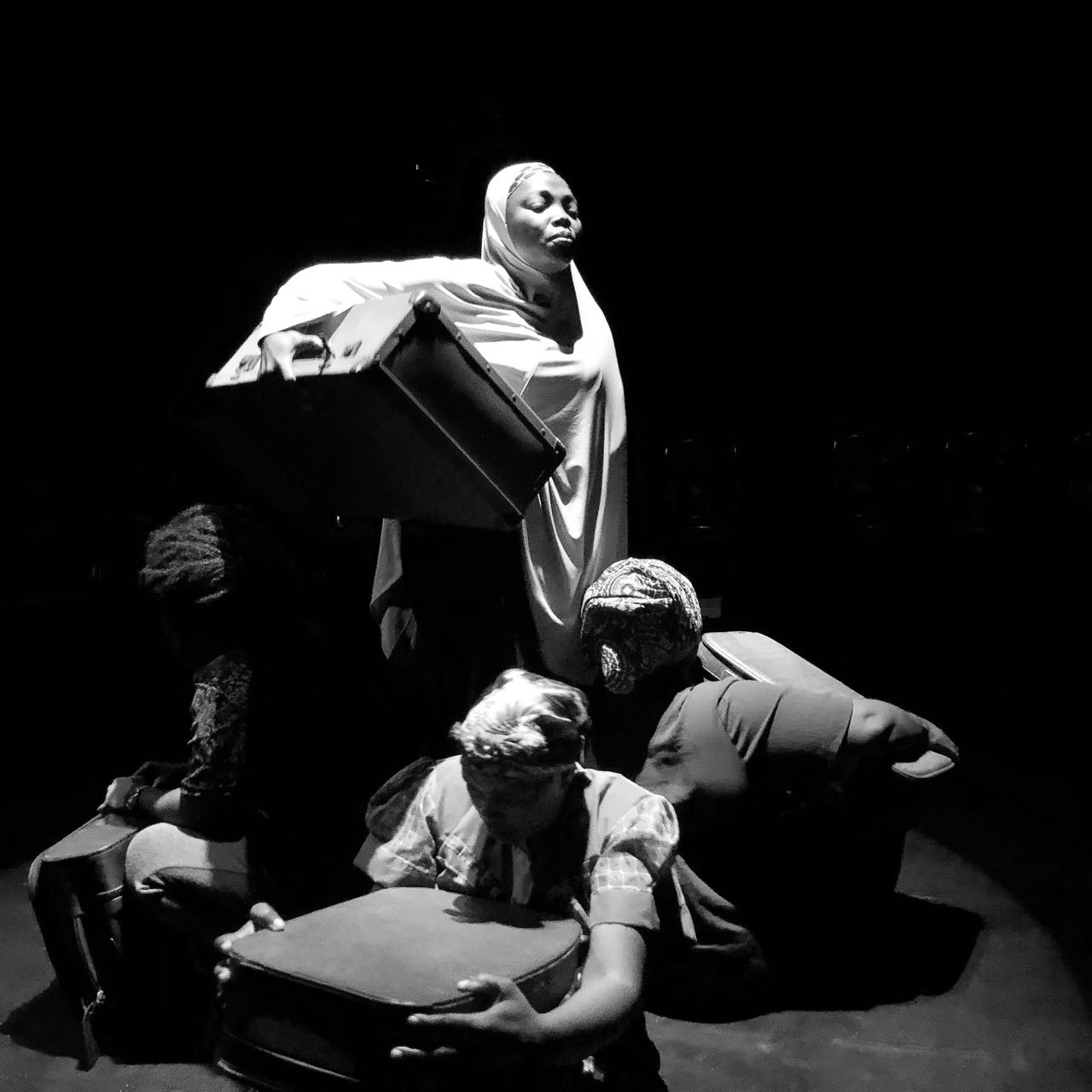
ABSTRACT Storytelling as a form of urban scholarship has the potential for empathetic ways of producing knowledge, understanding, seeing and being in the city. This seminar explores how storytelling in a multitude of forms can be a productive method for data collection, public dissemination and advocacy for social justice. It discusses this based on a year and half long partnership project between scholars and civil society organisations on Migration, Gender and Inclusion in the city of Durban. In this project women’s stories of arriving in the city and making it something like home were positioned at the centre of project activities. Thirty oral histories of migrant women, both South African women living in a Durban hostel and women arriving from the DRC, Zimbabwe, Nigeria and Uganda formed the primary data set. These narratives were then developed into a verbatim theatre performance titled The Last Country that was performed in many different settings around the city. The seminar outlines how the play was both a form of storytelling in itself, making accessible the oral history data to a broader public audience, and a form of data collection through discussion sessions with audience members and city officials. This seminar looks at the learnings and challenges we experienced through being a part of a project built around the idea of sharing stories in the city.   BIOGRAPHY Dr Kira Erwin is a sociologist and senior researcher at the Urban Futures Centre at the Durban University of Technology. Kira's research and publications focus largely around race, racialisation, racism and anti-racism work in South Africa. She is interested in how place identities related to space and the built environment impact on ideas of social difference. Kira makes use of creative participatory methods in her research and engagement projects, and collaborates with colleagues in the creative arts to design forms of storytelling that extend research findings beyond the walls of academia. WHEN: 18 October 2018 TIME: 15:00 - 16:30 VENUE: Studio 3, Environmental and Geographical Science Building, Upper Campus, UCT

Urban Humanities: False Bay: Perspectives from the Environmental Humanities

Studio 1 Environmental and Geographical Sciences Building, Upper Campus, UCT, Cape Town, South Africa

ACC is very excited to host Dr Shari Daya in conversation with Dr Hedley Twidle, reflecting on the Environmental Humanities through encounters with False Bay. Dr Twidle is a senior lecturer in the English Department at UCT. "I joined the department in 2010 as a lecturer in southern African and postcolonial literatures. Much of my current work addresses contemporary life-writing and non-fiction narrative. What, after all, does the word ‘literary’ signify in a phrase like ‘literary non-fiction’?  And how can one explore the array of non-fictional modes that are simultaneously drawn on, refashioned and blurred into each other in South African writing: experimental auto/biography, investigative journalism, the Struggle memoir, the diary, microhistorical and archival reconstruction. My research also explores the difficult relation between environmental thought and social history in southern Africa. Since 2013 I have been involved in the conceptualisation and planning of a new interdisciplinary M Phil in the Environmental Humanities, launched in February 2015. I am also a member of the Archive and Public Culture research initiative, a dynamic intellectual space where new research can be presented to experts in the field".

BROWNBAG SEMINAR: How Cities Respond to Climate Change: Ambition and Reality of European and African Cities

Studio 5 Environmental and Geographical Sciences Building, Upper Campus, Cape Town, South Africa

Join ACC and ACDI for a lunchtime brownbag seminar by Diana Reckien, Associate Professor, University of Twente, Netherlands entitled How Cities Respond to Climate Change: Ambition and Reality of European and African Cities. WHERE: Studio 5, Level 5, Environmental & Geographical Sciences Building (EGS) UCT Upper Campus, Rondebosch WHEN: 12.30 – 1.30pm, Monday 28 January 2019 Diana Reckien will present some of her latest research on local climate planning in European cities, that builds on a network of 30 collaborators across the EU-28. Building up a database of the climate change response of 885 cities in the EU-28 (representative of the urban profile in their country), Diana and colleagues were able to yield insights into which cities in Europe prepare climate (adaptation or mitigation) plans and what these plans entail. This provides information about, e.g., the mitigation targets/ambitions and whether these would be sufficient to reach 1.5/2C, prominent mitigation and adaptation sectors, and modes of implementation (mainstreaming or not). Diana will then move to some of her work in African cities, presenting recent research on mainstreaming in Kigali City (Rwanda) and on environmental urban migration in northern Kenya. She will close with ideas and plans for future research, e.g. potentially open up topics for collaboration, such as perception based climate change impact analyses in African cities using FCM, cascading impacts, socially sensible adaptation options, and/or the effectiveness of adaptation plans. BIOGRAPHY Diana Reckien is Associate Professor "Climate Change and Urban Inequality" at the University of Twente, the Netherlands. She specializes at the interface of climate change and urban research, with the aim to contribute to justice efforts. One of her current research question is how climate change mitigation and adaptation policies affect and interact with social vulnerability, equity and justice, and how to set up adaptation and mitigation policies in order to avoid respective negative side-effects. Other research interests include method development for impact and adaptation assessments, and modelling approaches, social vulnerability, and climate change migration. She mainly investigates urban areas in Europe, Asia (mainly India), and Africa. To do so, she employs large comparative studies using social science methods, such as questionnaires, case study analyses and multi-variate statistics, as well as Geographic Information Systems (GIS) and Fuzzy Cognitive Mapping (FCM). Diana is Coordinating Lead Author for “Chapter 17: Decision-making options for managing risk” of the Working Group II Contribution to the IPCC Sixth Assessment Report. She led parts of the Second Assessment Report for Climate Change in Cities (ARC3.2; Eds: Rosenzweig, Solecki et al.; Cambridge University Press) - those that relate to equity and environmental justice. She serves on the Editorial Board of “Renewable and Sustainable Energy Reviews”(IF 8.050). Her publication record comprises roughly 70 publications, including 25 peer-reviewed journal papers, a number of book chapters, and two special issues.

Whose Heritage Matters? Mapping, Making and Mobilising Heritage Values for Sustainable Livelihoods in Cape Town and Kisumu

Studio 1 Environmental and Geographical Sciences Building, Upper Campus, UCT, Cape Town, South Africa

Cape Town and Kisumu are two secondary African cities with high levels of poverty, unemployment and inequality. There is much interest in developing sustainable approaches to harnessing tangible and intangible heritage to address these challenges. However, cultural heritage is a value-laden concept, particularly in the context of colonial histories and urban futures. Whose heritage matters? How can we negotiate competing and plural values? How can cultural heritage be mobilised to support sustainable livelihoods? Funded by the British Academy, this co-produced action research project will bring different stakeholders and communities together to map heritage values and develop creative interventions to harness tangible and intangible heritage for sustainable development’. This Brown Bag Seminar will introduce the project, and open up a conversation about the role and value of heritage in sustainable and just urban development. When: 10 April 2019 Time: 12:00 – 13:o0 Venue: Studio 1, Environmental and Geographical Science Building, Upper Campus, UCT

Governing Cape Town’s Informal Economy

Studio 5 Environmental and Geographical Sciences Building, Upper Campus, Cape Town, South Africa

ACC invites you to a special Brownbag lecture by Dr Graeme Young entitled Governing Cape Town Informal Economy, on Friday 26 July at 13:00 to 14:00 in Studio 5, EGS Building, Upper Campus, UCT. Young, a visiting QES Scholar, has been working with the Office of the Premier of the Western Cape as part of the wider provincial food system strategy. This presentation will outline initial perspectives on research carried out to understand the institutional and policy landscape in which Cape Town’s informal economy is governed and offer theoretical insights that may be useful for engaging with broader questions surrounding urban governance in Cape Town and beyond. VENUE: Studio 5, Environmental and Geographical Science Building, Upper Campus, UCT DATE: Friday, 26 July 2019 TIME: 13h00 – 14h00