Presencing and publishing Urban Studies from Africa

Many urban studies journals publish few articles from African-based scholars: how can this be changed? While in "international" northern-based journals publishing the work of African based scholars seems to remain a challenge for editors, African scholars have organised many dynamic venues for publishing urban and African studies research. We have invited African-based scholars who have been involved in leading these initiatives to share their experiences; and editors working on Western-based journals to respond. We will hear from four African urban scholars, and then three editors of urban studies journals will respond. French Language translation will be available. Panelists- Edgar Pieterse (founding director of the African Centre for Cities; Professor of Urban Policy, University of Cape Town)- Saheed Aderinto (founder, Lagos Studies Association; Professor of African History at Western Carolina University)- Nadine Machikou (editor, Politique Africaine; Professor of political science at the University of Yaoundé)- Kingsley Madueke (Centre for Conflict Management & Peace Studies, University of Jos, Nigeria; PhD University of Amsterdam) Respondents- Vanessa Watson (Global South editor of Urban Studies; Emerita Professor of City Planning in the School of Architecture, Planning and Geomatics and a founder member of the African Centre for Cities)- Liza Weinstein (Editor, International Journal of Urban and Regional Research (ijurr); Associate Professor of Sociology and Chair of the Sociology and Anthropology Department at Northeastern University)- Nik Theodore (Interventions editor of the International Journal of Urban and Regional Research and past editor of Antipode: A Radical Journal of Geography; Professor and Head of the Department of Urban Planning and Policy, as well as the Director of the Center for Urban Economic Development, at the University of Illinois Chicago) This event is part of the RC21 annual conference is the main international urban sociology conference. It brings together scholars in urban sociology and neighbouring fields to discuss developments in urban social theory, methods and empirical research and stimulate discussion and cooperation by offering a variety of formats (plenary lectures, paper sessions, author meets critics sessions, roundtables and panels, walkshops, etc.). This years’ edition takes place from 14 July until 16 July 2021 and is hosted by the University of Antwerp (Belgium). The 2021 conference centers around ‘Sensing and Shaping the City’, focusing on how citizens experience the fragmentary, unequal and contradictory realities of global urbanity.  REGISTER HERE
UCT SDG Summit | Circular Economy Pre-Summit Workshops

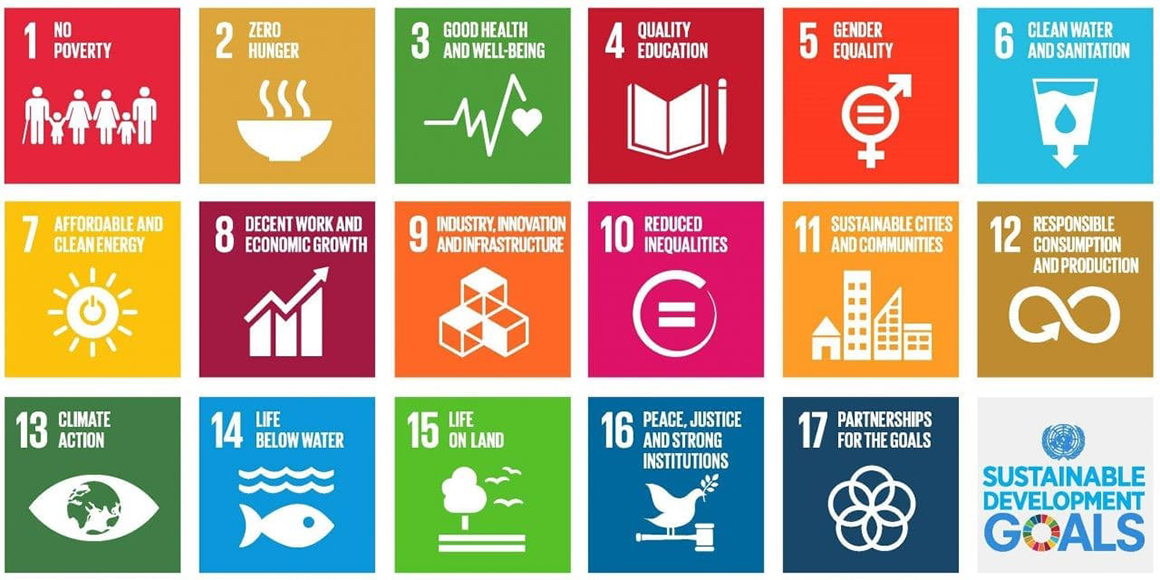
The Vice Chancellor of the University of Cape Town is convening an international summit on how the SDGs can best be realised in the African context with an eye on the role of science and mission-driven partnerships. In the build-up to the Summit, a series of workshops are being organised around seven themes, of which the Circular Economy is one. READ THE CONCEPT NOTE HERE WORKSHOP 1 | 17 August, 14:00 to 16:15 The first workshop will explore the definitional debates around the circular economy with an emphasis on the state of macro scholarship and policy positions adopted by select African governments and civil society actors. Speakers Prof Ester van der Voet – Leiden University & UN International Resource Panel Dr Willi Haas – BOKU, Vienna Bezawit Eshetu – African Circular Economy Network Reniera O’Donnell – Higher Education Lead at Ellen MacArthur Foundation Register here WORKSHOP 2 | 31 August, 14:00 to 16:15 The second workshop will be an exploration of circular economy applications through case studies with an eye on research questions and issues. Speakers Prof Christina Trois – University of KwaZulu-Natal Kirsten Barnes – GreenCape Paul Currie – ICLEI Africa Sudhir Pillay – Water Research Commission Prof Harro von Blottnitz – University of Cape Town Register here These workshops are open to all who are involved in Circular Economy related work and research.

UCT SDG Summit | Circular Economy Pre-Summit Workshops

The Vice Chancellor of the University of Cape Town is convening an international summit on how the SDGs can best be realised in the African context with an eye on the role of science and mission-driven partnerships. In the build-up to the Summit, a series of workshops are being organised around seven themes, of which the Circular Economy is one. READ THE CONCEPT NOTE HERE WORKSHOP 1 | 17 August, 14:00 to 16:15 The first workshop will explore the definitional debates around the circular economy with an emphasis on the state of macro scholarship and policy positions adopted by select African governments and civil society actors. Speakers Prof Ester van der Voet – Leiden University & UN International Resource Panel Dr Willi Haas – BOKU, Vienna Bezawit Eshetu – African Circular Economy Network Reniera O’Donnell – Higher Education Lead at Ellen MacArthur Foundation Register Closed: WORKSHOP 2 | 31 August, 14:00 to 16:15 The second workshop will be an exploration of circular economy applications through case studies with an eye on research questions and issues. Speakers Prof Christina Trois – University of KwaZulu-Natal Kirsten Barnes – GreenCape Paul Currie – ICLEI Africa Sudhir Pillay – Water Research Commission Prof Harro von Blottnitz – University of Cape Town Register Closed: These workshops are open to all who are involved in Circular Economy related work and research.

UCT SDG Summit | An Urban Lens on the Achievement of the SDGs

A Masterclass alongside the UCT SDG Africa Summit 2021The ACC Masterclass will be structured in three parts, comprised of 75min each. The first session will unpack the political and institutional backstory in ensuring that there was an SDG to address the imperatives of urbanisation, and connections were drawn with other SDGs. The second session will focus on the complexities and contradictions of implementing the SDGs when it is a nexus issue such as urban food security. The analytical focus will fall on the challenge of effective inter-governmental coordination and alignment across scales and sectors. The third session will focus on the practical policy tools that are being deployed at city-level to track the implementation of the SDGs at the local level, considered against the national reporting system of the South African government. This raises institutional questions about fostering a shared perspective when municipal officials remain deeply commitment to sectoral specialisms, as well as issues about alignment and meaningful societal engagement in tracking government performance in delivering on stated commitments. Across the three sessions participants will be exposed to the cutting edges of the interface between applied research and policy implementation. Session 1 | The genesis of SDG 11: Getting the urban onto the agenda10:00 to 11:15Edgar Pieterse (ACC) in conversation with Aromar Revi (Indian Institute for Human Settlements) and Monika Glinzler (International relations, Department of Human Settlements) By some estimates, getting the urban question right is a precondition to achieve up to 70% of the overall SDG agenda. However, until the last hour before the finalisation of the seventeen SDGs, there was great doubt that an explicit urban goal would be included. This session will pull the curtain on the backstage advocacy arguments, evidence and diplomatic work that was conducted to secure an urban perspective across the SDGs. It is a given that the multilateral system is not perfect, but for those on the frontlines of policy mainstreaming, it is indispensable and a permanent site of struggle.  Session 2 | Teasing out the tensions: SDGs as a national imperative, and SDG 11 as a city-level goal11:30 to 12:45Gareth Haysom (ACC) in conversation with Jane Battersby (University of Cape Town) and Julian May (University of the Western Cape)  The urban food lens offers a unique scalar perspective bringing the tensions and opportunities presented at the intersection between zero hunger (SDG 2), and sustainable cities (SDG 11), as well as health and well-being (3), education (4) and gender equality (5). The session will engage in both the challenges presented at these intersections between nexus and scalar issues, while attempting to engage the complexities and contradictions of implementing and measuring the SDGs when it is a nexus issue such as urban food and nutrition security, and what this might mean in context, but equally, effective inter-governmental coordination and alignment across scales and sectors.  Session 3 | Lessons towards SDG localisation and indicators14:00 to 15:15Andrew Tucker (ACC) in conversation with Alexis Schäffler-Thomson (Pegasys) and Natasha Primo (City of Cape Town)   It is a given that the SDGs will only find full expression if they become the focus of local action, established within enabling national parameters. There is great potential in using indicator frameworks and monitoring systems to establish productive alignment between national and local governments. This session will share research findings and potential of using local level indicator frameworks to track and reflect on policy efforts to implement the SDGs, whilst being mindful of the statistical challenges of generating local level data. The empirical reference point will be South Africa and Cape Town.